

HYBRIT iron and steel project receives Eur143 million EU funding
The HYBRIT project, whose stakeholders are Swedish specialty steelmaker SSAB, iron ore pellet producer LKAB and power producer Vattenfall, has received Eur143 million ($157 million) from the EU Innovation Fund.
LKAB said the HYBRIT project will receive the funds for an industrial- and commercial-scale demonstration of a complete value chain for hydrogen-based iron and steelmaking, from mine to fossil-free steel.
HYBRIT was granted support to further advance the development towards eliminating emissions from iron and steel production by using fossil-free hydrogen for direct reduction of iron ore in the process, the company said.
HYBRIT, or Hydrogen Breakthrough Ironmaking Technology, was created in 2016 with the goal of developing a technology for fossil-free iron and steelmaking. The project produced its first steel in late 2021 and aims to be supplying the market with zero-carbon steel at a commercial scale by 2026, after the conversion of SSAB’s Oxelösund BFs into an EAF.
The EU Innovation Fund is one of the world’s largest funding programs for the demonstration of innovative low-carbon technologies that help reduce greenhouse gas emissions.
In total, the EU is investing more than Eur1.1 billion in seven projects that cover a wide range of relevant sectors to decarbonize the European industry and energy sectors, such as chemicals, steel, cement, refineries, and power and heat.
LKAB said the HYBRIT demonstration project is the only iron and steel project to have been granted support in the first Innovation Fund call for large-scale projects.
“The support granted via the Innovation Fund is testament to the importance and potential of this technology, and the European Commission is convinced that this cutting-edge project will boost the European Union’s overall competitiveness,” Executive Vice President of the European Commission responsible for the European Green Deal, Frans Timmermans, said in a statement.
“Green steel has the future, and that future is already here.”
— Filip Warwick

Liege restructuring ‘made much more complex’ on energy costs, geopolitics: Liberty Steel
Restructuring Liberty Steel Group’s Liege unit in Belgium has recently become “much more complex” due to escalating energy and carbon prices and geopolitics, according to a Liberty Steel spokesperson.
Liberty Steel’s Flemalle steel galvanizing lines in Belgium — part of the Liege unit — have remained at a standstill since December 2021 due to lack of feedstock and the ongoing restructuring process, market sources and sources close to the company told S&P Global Commodity Insights April 1 and 4.
A court decision on a business plan presented to ensure the plant’s future is expected April 13, a Liberty Steel Group spokesperson said.
One market source indicated that doubts have grown over an eventual restart at the galvanizing installations. This follows a meeting between the company and the Liège Enterprise Court last week.
“At a meeting with the Liège Enterprise Court on 30 March, the management of LIBERTY Liège gave a detailed presentation on the company’s significant restructuring process and explained that it had been made much more complex due to the huge rise in energy and carbon prices over the last few months, supply shortages due recent geopolitical developments as well as excessive competition from imports into Europe,” a Liberty Steel Group spokesperson said in a note emailed to S&P Global over the weekend.
“Despite that, LIBERTY Liege has made good progress on its new business plan, which will support the sustainable future of the business, and remains committed to delivering the investment required to secure that future.”
Details of the business plan were not given due to their “commercially sensitive” nature.
“LIBERTY Liège calls on its stakeholders to support the business plan submitted to the court as it will avoid potential disruption of production,” the spokesperson continued. “The company now awaits the Court’s decision on 13 April which we hope will support the new business plan, which offers the best chance for a sustainable outcome for the plants, their 650 employees and their loyal customer base.”
Tinning line operating
The Liberty Steel spokesperson confirmed that production restarted as planned and announced mid-February at the 200,000 mt/year tinning line at its Tilleur site in Belgium, also part of Liberty Liege. This restart followed three months of maintenance work on this line and intermittent disruption in raw material supplies amid the coronavirus pandemic.
GFG Alliance, which groups together Liberty Steel Group and other metals and energy assets owned by magnate Sanjeev Gupta, had provided more than Eur40 million ($47 million) in funding to Liberty Liège since its acquisition from ArcelorMittal as part of an anti-trust deal in July 2019, Liberty Steel Group said in February. However, the investment plans were initially undermined by a weak steel market in 2019, before the business was negatively impacted by the pandemic and supply chain disruptions, followed by the collapse of Greensill Capital, GFG Alliance’s main financier, in March 2021.
Flemalle has two galvanizing lines: G4 and G5. Liberty Steel Group had previously said it had a “commitment” to the Liège authorities to restart the G5 plant.
Liberty’s intended restructuring of Liberty Liège follows the earlier granting of court protection from creditors – under a so-called judicial reorganization procedure requested in April 2021 – for both its Liège and Dudelange operations.
As part of a broader group restructuring announced late June 2021, Liberty Group merged its Liege, Dudelange in Luxembourg and Magona steel works in Italy into its larger Galati integrated steel operation in Romania.
Dudelange and Liege together have annual production capacities estimated at 1.6 million mt of galvanized/coated steel, 300,000 mt of cold-rolled coil, and 200,000 mt of tinplate, products sought after in recent months due to a tightness in European markets.
Magona restarted its cold rolled coil and hot dip galvanized lines in August 2021, using hot rolled coil supplied by Galati. Market sources have indicated that the need for galvanized material from Liège’s G4 line may now be less given Magona’s ramp-up.
Local press speculated last September that one galvanizing line at Flemalle could be mothballed, amid redundancies.
Platts North European hot-dip galvanized coil domestic ex-works price rose to a high of Eur1,550/mt ($1,699/mt) March 23, before slipping back marginally last week. Price of the product, used in the automotive, white goods and construction sectors, has risen 40% year-to-date.
— Diana Kinch, Benjamin Steven

German steel market expects significant decrease in inventory, output: survey
German steel producers, traders, and buyers were heard almost consistently bullish on pricing over April, with a unanimous expectation that production and inventory levels were going to drop, according to S&P Global Commodity Insights monthly steel sentiment survey data.
The index for inventory sentiment stood at 18.75, suggesting that market participants expected stored steel volumes for April to be significantly low. This followed the expectations that market participants had in March when the index stood at around 37, highlighting lower expected inventories compared to February.
Traders and producers equally agreed that inventory levels were expected to be significantly lower during April, especially on the longs steel side, where most mills were heard to be selling from stock.
Steel producers doubled down on their stance on depleting inventory levels for April with an index of 12.50, down from when the index stood at 35 for March. Traders expected inventory levels to be stable in March with an index of 50, but it fell to 25 for April emphasizing the market trend.
S&P Global heard market talk that long steel producers might decide to halt production for a while amid rising costs and transportation issues that might hinder their supply of scrap.
“Stoppage in production depends on energy price and scrap availability. Therefore, there are some indications that mills might stop production for a few weeks, but we have not heard any official announcements yet,” one distributor source in the Benelux region told S&P Global.
On the flats steel side, production capacities were near-unanimously expected to reduce in April due to sky-rocketing energy costs related to the war in Ukraine, with some Electric Arc Furnace mills heard as limiting production to three days a week, and energy surcharges imposed on some existing mill contracts.
As such, and with buyers limiting purchasing to necessary coverage, inventory levels were consequently expected to decrease through the quieter summer period into the second half of 2022.
Production outlook edged lower from March as the index slid 13 points to 29 for April, still suggesting mills were in no hurry to produce. Steelmakers continued to operate at a low level of capacity utilization, following several production cuts in Europe over the last few months.
German long steel prices seen rising
The survey saw traders and producers equally bullish on pricing for long steel products, while the market expressed mixed sentiment for flat steel, with the April index at 75 points, down 2.5 from March.
Most long steel producers were heard to be offering material in the market in intervals and selling mostly from stock, leading to a supply deficit, which significantly outweighed demand.
Sources noted that customers were more concerned about product availability as compared to prices. In the meanwhile, domestic steel mills were heard to be adjusting to rising energy costs and scrap availability issues amid transportations strikes driven by high fuel expense.
As a result, market participants expected prices to continue to rise, driven by the supply-demand imbalance and high costs.
However, some market participants in the flats steel industry noted that panic purchasing was subsiding, and market had already reached a peak. Hence, prices levels would either be stable or drop in April, while most remained bullish on price trends.
EU flat steel market saw prices weakening during week ended April 1, due to buyer resistance to further increases, insufficient credit lines, and existing high inventory levels for buyers across the market.
Transactional activity was heard to be limited due to buyers’ high inventory levels, with most mills and buyers in a wait-and-see mode and avoiding restocking at high cost.
— Rabia Arif, Benjamin Steven

Market awaits update on Turkish rebar imports into EU as quota period opens
Market participants were awaiting an update on the allocation of Turkish-origin rebar imports following the opening of European April-June import safeguard quotas, with volumes expected to exceed the country-specific quota because of strong demand.
Turkish rebar import volumes awaiting allocation at European ports stood at about 68,840 mt as of April 4, or 79.7% of Turkey-specific quota of 86,412 mt for April-June, according to data from the European Commission.
The quota is expected to fill up soon because of a shortage of long steel products in Europe amid the Russia-Ukraine war.
Some buyers in Europe might be willing to pay safeguard duties to receive Turkish rebar shipments, a European rebar buyer said.
The arrangement was, however, not workable for buyers in the Baltic region. “I hope that all cargo booked to Baltics will be cleared in such a way, that there will be less crowd on July 1,” the buyer said. Buyers in Europe need to pay 25% safeguard duty on cleared shipments that exceed country-specific quotas, according to the EU steel import safeguard policy.
Participants will have to wait until April 6 to get a better idea about the final allocation of Turkish-origin rebar import volumes, a EU rebar trader said. “[The volumes awaiting allocation] will quickly change,” the trader said.
The EC March 15 distributed the steel import quotas assigned to Russia to other countries, which fall under the EU safeguard quotas policy, following Russia’s military invasion of Ukraine. That boosted import quotas from countries, such as Turkey, India, and South Korea, of various steel product, including rebars, hot-rolled coil, plates, and wire rods.
Market sources have reported significant sales of rebars from Turkish mills to European destinations after the ban on Russian steel goods in March, and they expect the imported rebar volumes into Europe from Turkey to exceed the April-June quota.
S&P Global Commodity Insights assessed Turkish exported rebar at $955/mt FOB Turkey April 4, down $5/mt on the day. The index has risen $15/mt since March 14, a day prior to the EC’s ban Russian steel imports, and hit a record high of $970/mt FOB on March 24.
Sources in the European flats steel industry do not expect the allocation of imports to Europe to change much, as demand has been significantly met by domestic supply.
“I don’t think quota reallocations from Russia, or the refresh are going to make much of an impact on the domestic side,” a European flat steel trader said. “Everyone is focused on the short-term at the moment, so imports are not as attractive with longer lead times — there’s also a lot of uncertainty in the market generally so who can say if ordered material will even arrive, or if [domestic] prices will correct in the meantime.”
CRC imports show stronger volumes awaiting allocation
About 84,222 mt of Indian-origin hot-rolled coils imports awaited allocation as of April 4, amounting to 30.8% of India-specific 273,178 mt, the EC data showed. Turkish-origin HRC imports awaiting allocation were at 109,953 mt out of 430,246 mt.
Indian-origin cold-rolled coils awaiting allocation as of April 4 were at 90,659 mt, or 60.7% of India-specific quota of 149,296 mt.
S&P Global Platts assessed Northwest European hot-rolled coil stable at Eur1,390/mt ($1528.44/mt) ex-works Ruhr on April 4.
“The most interesting issue with imports is more to do with what isn’t under quota than what is,” a European mill source said. “A lot of Chinese slab is being imported into Italy by large re-rollers, driving up import trade, and isn’t subject to duties as a semi-finished product — it will be interesting to see if that remains the case or if there’s potential to destabilize the market.”
About 171,463 mt of Chinese-origin hot-dipped galvanized 4b were awaiting allocation as of April 4, exceeding China-specific quota of 117,372 mt.
S&P Global Platts assessed Northwest European hot-dipped galvanized down Eur10/mt at Eur1,540/mt ($1693.38/mt) ex-works Ruhr on March 30.
— Rabia Arif, Benjamin Steven
Iron ore ticks higher despite China holiday
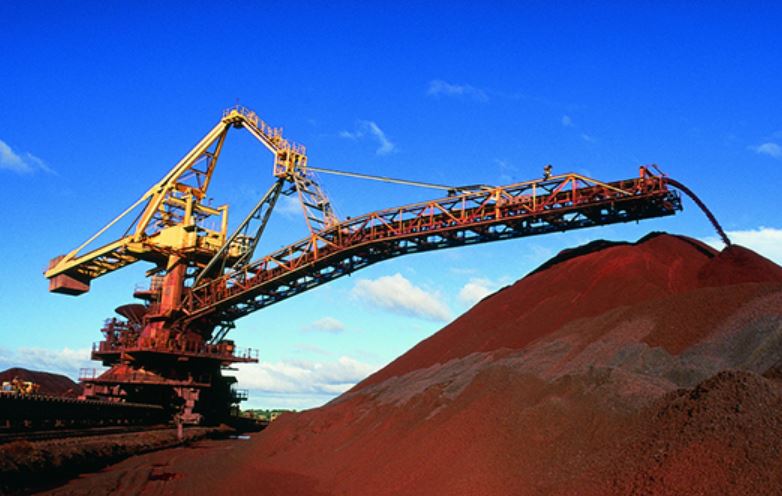
Seaborne iron ore prices continued to tick higher on Monday. Despite the Chinese public holiday and ongoing lockdowns, iron ore markets remain optimistic on future government support.
The Kallanish KORE 62% Fe index gained $0.58/t to $160.68/dry metric tonne cfr Qingdao. The Kallanish KORE 65% Fe index increased $0.89/t to $184.53/dmt cfr, and the KORE 58% Fe index slipped $0.17/t to $140.84/dmt cfr.
On the Singapore Exchange, May 62% Fe futures settled up $2.41/t at $163.75/t, while the same contract for 65% Fe and 58% Fe futures settled up $2.37/t at $186.51/t, and up $4.19/t at $144.89/t respectively.
China was on holiday for Tomb Sweeping Day, but overseas iron ore markets continued to tick higher. Shanghai remains under lockdown, along with many other cities. There has been some opening up in the northeast, in Jilin province. Key eastern Chinese markets however remain largely closed.
Demand is still very weak. Markets nevertheless continue to expect support later in the year to make up for weakness now. This has led any market priced more than a couple of months out to be bullish despite the current economic problems.

JFE, thyssenkrupp develop new high-tensile steel
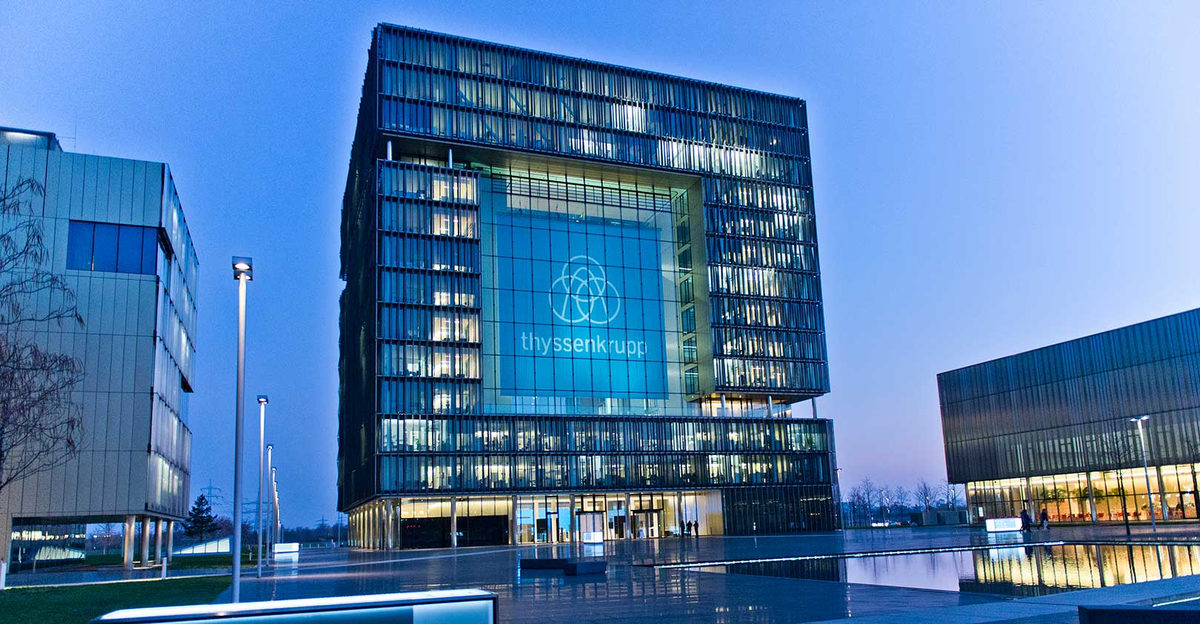
Japan’s JFE Steel Corporation and Germany’s thyssenkrupp Steel Europe have jointly launched a new 980 and 1180MPa class high-strength steel for cold forming.
These new products are designed for the wide applications of next-generation vehicles including battery electric vehicles, Kallanish understands. According to the partners, they represent higher yield strength and higher ductility, especially excellent local ductility, compared to conventional high-tensile steels.
These characteristics contribute to higher productivity and lower manufacturing costs at customers because the complicated components can be formed by conventional cold forming processes without using hot stamping.
The products feature a new steel composition and microstructure, focusing especially on the local ductility of steel and by establishing a new heat treatment method utilising the quenching and partitioning process. JFE and tk Steel continue to jointly develop products with even higher strength levels, they say.
Christian Koehl Germany
Tata UK supplies hollow sections to Siemens Gamesa
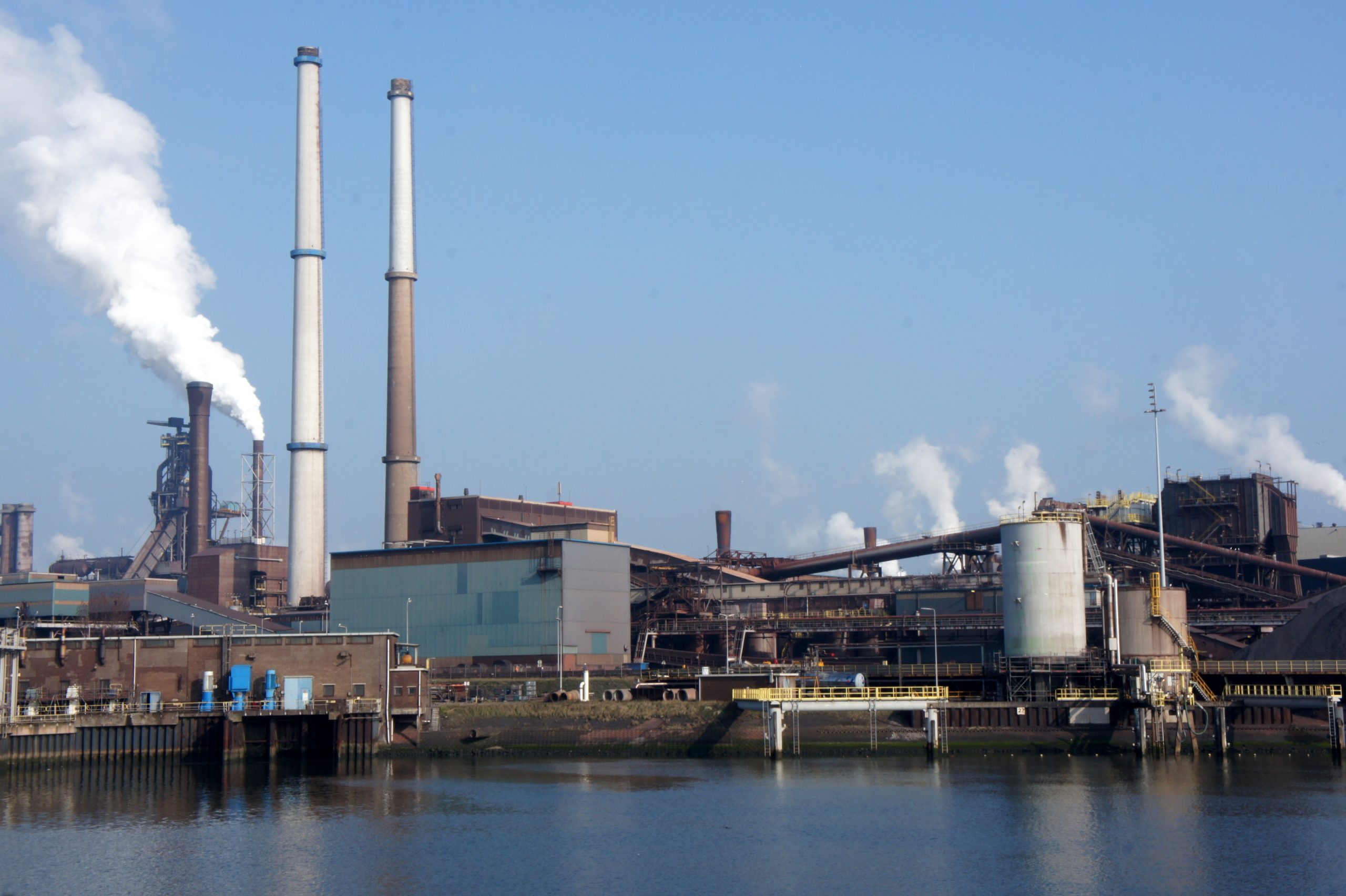
Tata Steel UK has supplied over 1,500 tonnes of high-strength structural hollow sections to help create a new extension to the off-shore wind turbine blade factory in Hull for Siemens Gamesa.
Wind turbine blades manufactured in the new expanded building will be used to develop growing wind farms in the North Sea.
“The off-shore renewable energy sector is a vital area helping the UK meet its decarbonisation goals and it is important we are able to play a part in making that happen,” Tata Steel UK chairman Henrik Adam says in a note seen by Kallanish. “The premium products we make right here in the UK are ideally suited to all aspects of the drive for net-zero from construction projects, like this, which support it to the steel used in renewable energy schemes themselves.”
Tata Steel Nederland has meanwhile completed the sale of building cladding, flooring profiles and roof panels producer Tata Steel France Bâtiments et Systèmes – also known as Monopanel – to Bremhove NV.
Adam Smith Germany
German stockholders’ sales fail to boom in 2021
Germany’s stockholding steel distributors caught up last year only slightly from the trough caused by the first coronavirus wave in 2020.
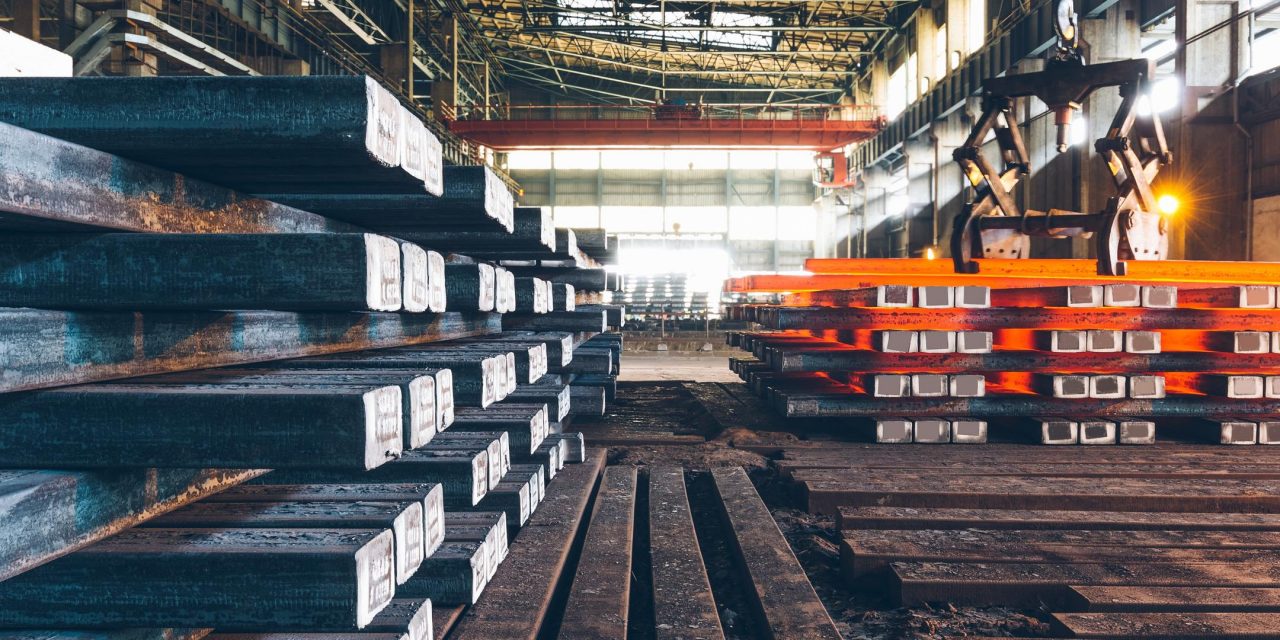
According to their federation, BDS, total sales in 2021 amounted to 10.62 million tonnes, up 2.7% on 2020. The strongest month, with 1.07mt, was March, which was characterised by the recovery of the economy that began in autumn 2020. Of the subsequent months, June was the strongest with 940,000t, while sales in the third and fourth quarters were weaker. In total, sales stayed below pre-pandemic levels, Kallanish hears from BDS.
A product that saw a particular increase was plate, which had seen declining deliveries in previous years but gained by a two-digit percentage in 2021. Rebar sales remained strong, but were still some 6% below the strong deliveries in 2020 that continued despite the coronavirus.
Stockholders kept their inventories low throughout 2021. The year began with the exceptionally low level of 1.92mt. Inventories were refilled only hesitantly in January and February, and then fell again, which is unusual for the spring months, BDS economist Jörg Feger notes. The year ended with a level of 2.07mt. Days of sale on average were 69 days, after 75 in 2020, which was also below the average of 2019.
Christian Koehl Germany
UK TRA proposes China, Russia CRC anti-dumping extension
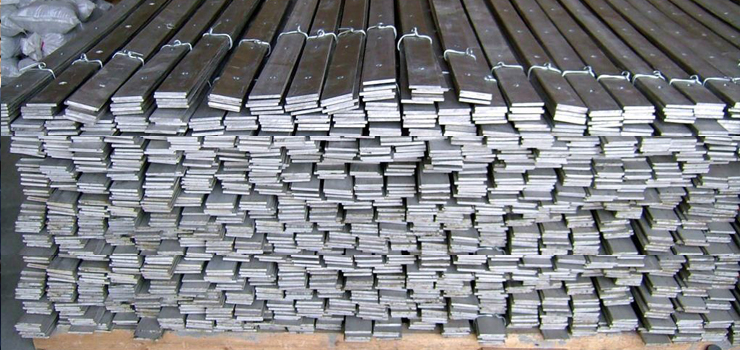
The UK Trade Remedies Authority (TRA) has proposed anti-dumping measures on cold rolled flat steel from China and Russia be kept for a further five years until 5 August 2026. A 30-day period for comments is now open, Kallanish notes.
The announcement follows a transition review, launched in April 2021, of a measure the UK previously applied when it was part of the EU.
The HS codes affected are 72 09 15 00 90, 72 09 16 90 00, 72 09 17 90 00, 72 09 18 91 00, 72 09 18 99 90, 72 09 25 00 90, 72 09 26 90 00, 72 09 27 90 00, 72 09 28 90 00, 72 11 23 30 10, 72 11 23 30 91, 72 11 23 30 99, 72 11 23 80 19, 72 11 23 80 95, 72 11 23 80 99, 72 11 29 00 19, 72 11 29 00 99, 72 25 50 80 00, 72 26 92 00 10 and 72 26 92 00 90.
The TRA probe concluded it is likely that dumping and injury would occur if the measure were no longer applied to China, Russia and Severstal. It has recommended duties of 19.7-22.1% for China-origin imports, 18.7% for MMK, 34% for Severstal and 36.1% for all other Russian exporters.
UK annual consumption of the products under consideration is estimated at between 399,000 and 470,000 tonnes. The UK market for cold rolled flat steel includes 40-50% made domestically. The remainder of demand is met by imports. A large proportion of sales are made through service centres that carry out processing to meet customer requirements. The remaining sales are direct to generally large customers in the automotive, construction and engineering sectors.
Adam Smith Germany

Benelux scrap falls due to weak exports
Scrap prices in the Benelux decreased on Monday as expected demand in largest export market Turkey failed to materialise.
On Monday, HMS 1&2 80:20 prices in Belgium were seen mostly at €500-510/tonne ($549.5-560), while in the Netherlands they were mostly at €500-515/t delivered, depending on the source.
An exporter tells Kallanish: “Turkey’s purchases are slower than expected. We have been forced to decrease our dock prices. I am curious how suppliers will react to these prices.”
Benelux scrap exporters’ demand for material from local collectors is also weak as the former are waiting for Turkish buyers to accept offer prices.
Another exporter says that the main yards are refusing to sell at €500/t delivered. This price is obtainable only from feeder yards.
European suppliers are seen offering HMS 1&2 80:20 at $645/t cfr Turkey levels. Turkey’s appetite for scrap purchases is, however, quite low due to the further increases seen in domestic electricity and natural gas prices as of 1 April. Turkey’s finished steel sales, moreover, remain weaker than expected.
Turkish mills have been forced to increase finished steel prices following the energy rate hikes. They were offering rebar at above $960/t ex-works on Monday, up from $950/t on Friday. Domestic demand remained stagnant on Monday, causing stockists to offer material at $920-930/t ex-works.
Turkish mills do not find higher prices for scrap workable given the conversion cost from scrap to rebar has increased to above $230/t. Most are expecting prices to follow a stable trend during May-shipment scrap purchases.
To India, suppliers are seen to have further increased offer levels for containerised shredded. Although offers have increased to $655-660/t cfr Nhava Sheva, buyers’ bids remained unchanged at $635-640/t cfr. UAE-origin HMS 1&2 80:20 offers are hovering at $555-560/t cfr Nhava Sheva, meanwhile.
Burcak Alpman Turkey