


AMKR increases ore output ahead of production restart
ArcelorMittal Kryvyi Rih (AMKR) will increase production of iron ore concentrate to 500,000 tonnes in April in preparation for resuming steelmaking, the company tells Kallanish.
“We are talking about plans for a gradual increase in iron ore concentrate, which is directly related to the company’s plans to systematically restore the production of AMKR,” the enterprise claims.
AMKR Mining and Processing Plant No2 has continued running throughout the Russian invasion of Ukraine, although it reduced production due to disruptions in logistics routes and the shutdown of blast furnaces, mining department deputy director general for production Volodymyr Tesliuk indicated on social media.
“We have reoriented production and, while previously concentrate was shipped to Europe in the amount of about 200,000 tonnes/month, in March we already shipped 320,000t, up 40% from before the war,” he noted. “Blast furnaces No.6 and No.8 will be launched in April. We also want to increase shipments of iron ore concentrate to Poland.”
The Kryvyi Rih-based enterprise is in a more favourable condition than most large exporters because, even before the war, it did not ship concentrate through seaports, but by rail in the direction of Poland, Tesliuk added. “Plans to further increase concentrate supplies to Europe at AMKR are due to the fact that ArcelorMittal plants are located in the EU,” he observed.
AMKR hopes that if hostilities end in May, it will be able to reach 80-90% of pre-war production.
Earlier, the plant announced it is preparing to resume production this month after a forced shutdown in March due to the Russian invasion (see Kallanish passim). AMKR said it will resume its operations step by step, prioritising the safety of its employees who are still working under the constant threat of air raids.
Because the ports of Odesa and Mykolaiv are still blocked, the company must switch to transportation by rail and establish new supply chains for coal and other critical materials, AMKR says.
Svetoslav Abrossimov Bulgaria

UK reviews China hot rolled flat steel trade measures
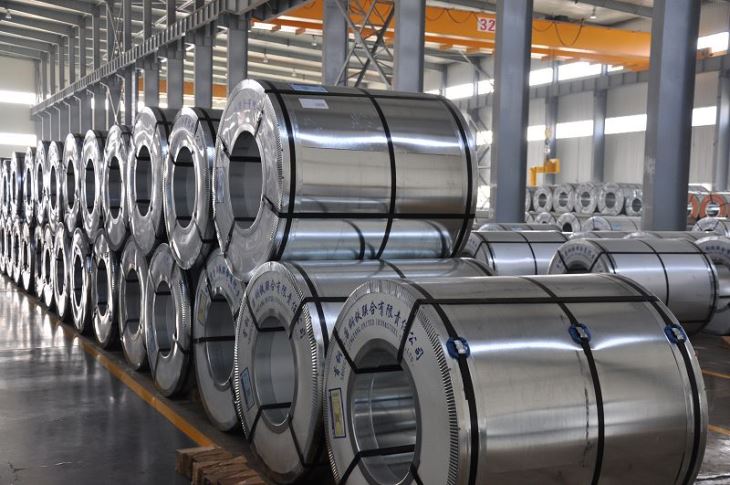
The Trade Remedies Authority (TRA) has initiated transition reviews into anti-dumping and countervailing measures on imports of hot rolled flat steel from China to decide whether the duties are still needed, Kallanish notes.
The HS codes impacted in each investigation are 72 08 10 00 00, 72 08 40 00 00, 72 11 19 00 10, 72 08 26 00 00, 72 08 52 99 00, 72 25 30 90 00, 72 08 27 00 00, 72 08 53 10 00, 72 25 40 60 90, 72 08 36 00 00, 72 08 53 90 00, 72 25 40 90 00, 72 08 37 00 10, 72 08 37 00 90, 72 08 54 00 00, 72 26 19 10 90, 72 08 38 00 10, 72 08 38 00 90, 72 08 39 00 10, 72 08 39 00 90, 72 08 40 00 10, 72 08 40 00 90, 72 11 13 00 00, 72 26 91 91 00, 72 11 14 00 10, 72 11 14 00 90, 72 26 91 99 00, 72 11 19 00 90, 72 08 25 00 00, 72 08 52 10 00 and 72 25 19 10 90.
For each investigation, the period of investigation is 1 April 2021-31 March 2022. In order to assess injury, the period from 1 April 2018-31 March 2022 will be examined.
Excluded products are products of stainless steel and grain-oriented silicon electrical steel; products of tool steel and high-speed steel; products, not in coils, without patterns in relief, of a thickness exceeding 10mm and of a width of 600mm or more; products, not in coils, without patterns in relief, of a thickness of 4.75mm or more but not exceeding 10mm and of a width of 2.05m or more.
Adam Smith Germany

Italian scrap market lull continues
The Italian scrap market remains in a lull this week, with little or no sales occurring and mills refusing merchants’ offers at increased prices.
The trend in other European countries seems to be for a €40-50/tonne ($43-54/t) month-on-month increase on account of strong demand and high prices of finished products. However, Italian mills are not yet requesting material and some would like to decrease their scrap prices.
Grades such as E8 new arisings have become particularly expensive for merchants to buy. Merchants are offering to mills in April at €610-620/t for the mixed grade, but local mills have refused these offers. Exporters to Italy who spoke to Kallanish say local steelmakers are enquiring about prices but retreat when they are confronted with the proposed April quotes.
Sources say mills ordered low volumes in March on the domestic and import markets, and requested less expensive grades. Steelmakers continue to be plagued by the high cost of energy and therefore remain in wait-and-see mode.
In March, domestic old thick scrap E3 was sold in Italy at €480-495/t delivered. The lower E1 grade was at €440-450/t delivered depending on quality. Italian steelmakers paid for E40 shredded mixed low-grade material at €540/t delivered and at €560/t delivered for the high automotive grade. E8 transacted at €520-540/t depending on grade.
Natalia Capra France

Rouble payment requirement would slash exports
The Russian government requirement to take payments for all exports in roubles will lead to a loss in market share, said NLMK owner Vladimir Lisin in comments confirmed to Kallanish.
“The idea to sell metal products for roubles will lead to the fact that NLMK will be thrown out of international markets,” Lisin said in an interview with Kommersant. “The consequences of expanding the list of goods that can be sold to other countries for roubles have not been analysed in full.”
According to him, NLMK fought hard for export markets over decades. “We have built relationships with thousands of clients in 70 countries and it is difficult to imagine what can convince our buyers to switch to rouble settlements and bear currency risks,” he said. “Logistical problems have already complicated the delivery of products to the consumer.”
Lisin noted that many measures are being taken “too quickly”, adding: “Their consequences have not been fully analysed and it seems to me that speed should give way to accuracy, so that the consequences do not turn out to be devastating for the domestic industry, which employs millions of people.”
“Fixing prices for steel products in the domestic market and abandoning formula pricing based on market indices does not make life easier for business,” Lisin observed. “We see, for example, that in recent weeks, suppliers of materials, equipment, and components have raised prices many times over. Under such conditions, the freezing of prices for final products will lead to the fact that production will simply stop due to losses.”
On Tuesday, Lisin became the richest Russian, according to Forbes, with a fortune estimated at $18.4 billion. However, it was reduced by $7.8 billion on-year.
NLMK also announced that S&P, Moody’s and Fitch have withdrawn the company’s credit ratings. These decisions were initiated by the rating agencies in light of the requirements set out by EU regulators.
NLMK, with its flagship steelworks in Russia and a number of re-rolling flat product assets in the EU and US, is not under sanctions after the Russian invasion of Ukraine and neither are its regularly exported products, mainly slab and pig iron.
Svetoslav Abrossimov Bulgaria

Conflit en Ukraine: Quels enjeux pour les Conseils d’administration?
Au fur et à mesure de l’évolution du conflit russo-ukrainien, les entreprises ont dû agir rapidement pour assurer la sécurité de leurs équipes tout en se préservant des impacts économiques et des perturbations opérationnelles à venir. De nombreuses entreprises réévaluent maintenant leurs activités en Russie, certaines y limitant leurs opérations ou décidant de quitter totalement le pays. Pendant ce temps, les entreprises ayant des activités en Ukraine ont suspendu leurs activités. Même pour les entreprises qui n’opèrent pas dans la région, le conflit ajoute de nouveaux risques à une économie mondiale déjà aux prises avec l’inflation et les perturbations de la chaîne d’approvisionnement.
Bien que les implications pour les entreprises varient selon le secteur et l’implantation géographique, le présent document examine un certain nombre de points d’attention que les conseils d’administration doivent examiner.

Automotive sector remains volatile: Ori Martin
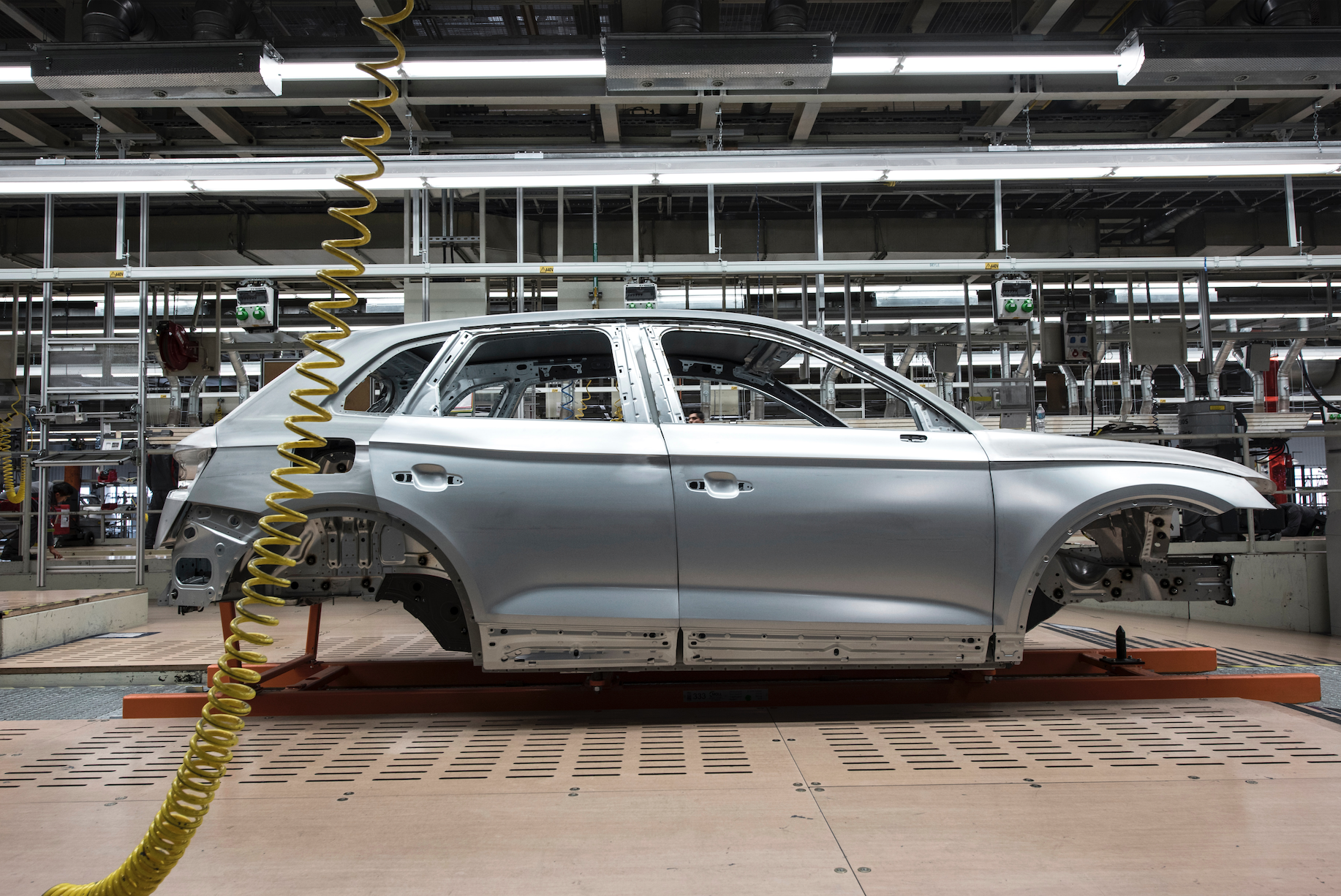
The steel sector that serves the automotive industry must be quick to react to OEMs’ requests to supply them, Roberto De Miranda, executive member of special long producer Ori Martin, said in a virtual Siderweb event covered April 5 by S&P Global Commodity Insights.
“Sometimes our customers don’t have their materials, like microchips, so they slow down their production, but when they have materials, they increase their steel demand, so we need to react quickly to their requests,” he explained.
De Miranda sees volatility in the automotive market at the moment and said the sector is recording as well a slowdown in apparent demand, with demand that is particularly on the low side for light vehicles, while trucks and yellow goods still have good momentum, he added.
De Miranda said that, due to the uncertainties stemming from Russia’s invasion of Ukraine, steel prices would try to find stability and would likely move sideways rather than sharply increase again.
Regarding long products, EU rebar prices surged, according to the weekly Platts benchmark, from Eur822.50/mt at the end of February to Eur1340/mt base ex-works on March 28, with sources saying prices are stabilizing. In flat products, prices of HRC ex-works Ruhr started falling from peaks of Eur1460/mt March 21 and then moved sideways closing on April 5 at Eur1392.50/mt.
“Raw material costs are constantly increasing,” de Miranda said. “We as steelmakers are forced to ask customers for increases even at a time when there is a general slowdown in the demand precisely because of higher costs.”
Ori Martin is working hard to keep its margins at a good level, he said, and it lost 5-6 points in its EBITDA in 2021 due to it mainly being exposed to the automotive sector.
The company will nevertheless continue to invest in the revamping of its Ospitaletto mill in Brescia province, northern Italy.
ORI Martin has two main sites, one in the city of Brescia and one in Ospitaletto. According to its website, over 80% of its special steels are used in the production of components within the automotive industry. The most common applications are cold-heading steels for screws, bolts and non-standard pieces, suspension springs, case-hardened and quenched-and-tempered pieces.
Other holdings include Trafiliti Martin, specializing in cold finishing for automotive applications; Meccanica Trafilati, specializing in the deep drilling of bars for automotive industry applications; Novacciai Martin, a special steel bar finisher; Siderugica Latina, a high carbon wire and prestressed concrete strand producer, and Tension Technology Martin, provider of post-tensioning systems and strand and bar anchors.
— Annalisa Villa


EU coils market holds steady, concerns over energy costs
The EU coils market was reported as “static” April 5, with market demand reduced in the wake of the recent price rally, though new uncertainties relating to sanctions and energy costs were heard on the day.
Reports about demand were mixed between stockists and end-users. One mill source considered demand as higher than the week ended April 1, trading smaller volumes of material for project-focused end-users.
“Demand is still reduced, but the needs of the market are strong in terms of end-users,” said the source. “Stockists are reluctant to buy at these prices, but buyers that need material for projects are still accepting offers.”
A distributor source reported the same, describing buyers as “holding their breath” due to perceived market risk and volatility.
New uncertainties were heard on the day from one distributor source, reporting that market participants were concerned about the effects of potential new sanctions against Russia.
While semi-finished products are not currently affected by sanctions, the source speculated that renewed issues with domestic production could hit the EU coils market if Russian semi-finished supply chains – upon which a reported 3 million mt of EU production depends – were further disrupted.
The source also confirmed ongoing issues with energy costs, reporting that EAF mills would have to further reduce production if prices continued to escalate. Mills were already reported as moving to short-work — preferring to sell from stock due to the unsustainable costs of fulfilling orders from fresh production.
As such, energy surcharges were at the forefront of source discussions on the day, with one service-center source expecting mills to impose surcharges on yearly contracts, as they “do not have any other chance” to recoup growing costs.
A mill source denied any internal discussions or plans relating to surcharges.
HRC in Northern Europe was assessed up Eur2.5 on the day at Eur1,392.5/mt ex-works Ruhr. HRC in Italy was stable at Eur1,350/mt ex-works Italy.
— Benjamin Steven