

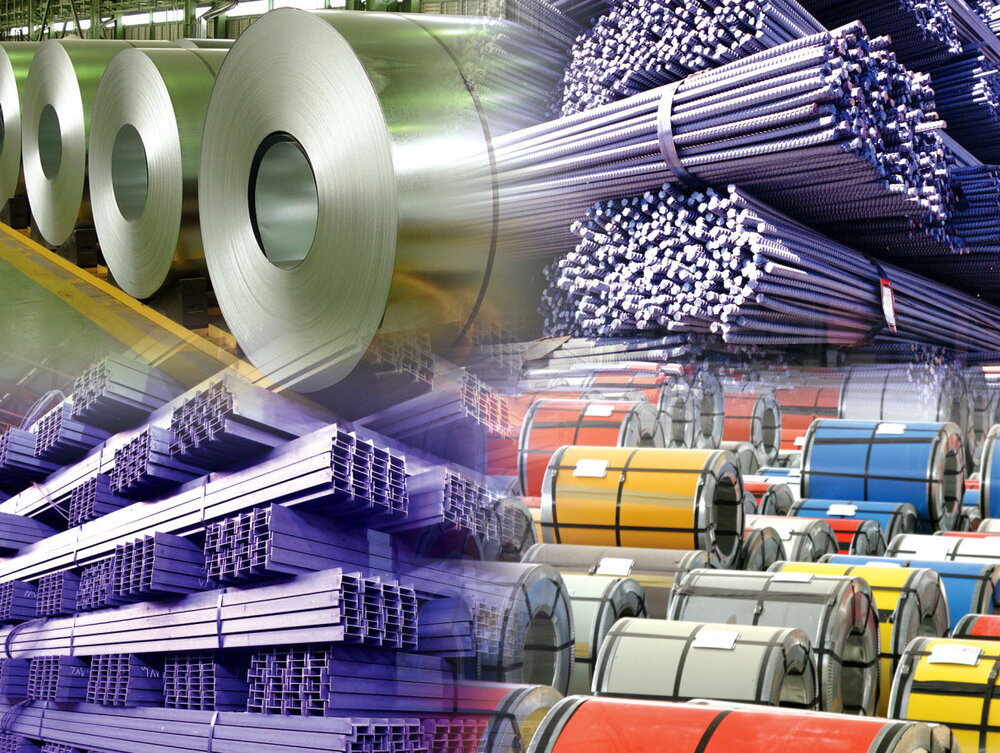
EU HRC trading remains limited, buyers wait for prices to cool
The EU coils market remained quiet April 11 as buyers continued to sit behind sufficient inventories in resisting recent price highs.
Buyers reported price levels as much unchanged week beginning April 11 with sources anticipating a market correction.
A service center source reported tradable value at Eur1350/mt ex-works Ruhr, stable from offers heard the previous week. Hot-rolled coil in Northern Europe moved down Eur22.5 to Eur1365/mt April 8, with mill offers heard as softening against buyer resistance to higher levels.
In Northern Europe, one service center source reported mill offers between Eur1350-1400/mt ex-works. The source reported concern in the market that mills would have to renegotiate longer-term contracts due to rising productions costs.
Energy costs have been heard as the primary price driver at current, with some Electric Arc Furnace mills moving to three-day per week short-work in order to manage rising electricity prices.
In South Europe, prices were heard further reduced on the day, with mill offers reported in the Eur1280-1300/mt range according to one Italian service center source. The source reported trading of “very low volumes”, with much market activity heard as stopped given buyer reluctance to restock at current levels.
Italian mills were heard as re-entering the market week ended April 8, offering at lower prices to win back customer good faith, having previously cancelled contracts in the wake of the war in Ukraine and its subsequent impact on supply chains.
S&P Global Commodity Insights assessed HRC in North Europe stable at Eur1365/mt ex-works Ruhr, HRC in South Europe was assessed down Eur10 at Eur1310/mt ex-works Italy.
— Benjamin Steven


Coking coal to remain elevated, Australia benefits: Moody’s
Australian producers are set to benefit from increased pricing and restricted supply of coking coal due to the Russia-Ukraine war and EU ban on Russian coal imports effective from August, says Moody’s.
Russia was expected to be a source of supply growth for metallurgical coal over the coming years and the market was already experiencing record prices before the war in Ukraine. These record prices largely reflected weather-related supply problems in Australia and Canada, at a time when global steel production was rebounding, Moody’s observes.
“While we expect supply from these nations will normalise over time, the potential for reduced exports from Russia has caused prices to surge,” the credit rating agency says in a report sent to Kallanish. “We now expect them to remain elevated, even after supply rebounds from Australia and Canada.”
The Australian hard coking coal price index peaked at around $670/tonne fob during March, compared with around $120/t in March 2021. While prices have declined in recent weeks from record highs, they remain above Moody’s price assumption for the next 12 months of $275/t.
In the US, meanwhile, some coking coal producers will also benefit from higher prices. High international thermal and metallurgical coal prices not only drive a favourable export environment, but also affect the domestic supply and demand balance by driving up domestic prices. However, only those miners with better access to global markets through the Eastern shipping ports stand likely to benefit, Moody’s concludes.
Adam Smith Germany

Former minister Gabriel chairs thyssenkrupp Steel supervisory board
Thyssenkrupp AG has appointed Sigmar Gabriel and Elke Eller as new shareholder representatives to the supervisory board of thyssenkrupp Steel Europe. Gabriel was also elected as the new chairman of the supervisory board, Kallanish learns.
Gabriel was chairman of the Social Democrats SPD from 2009 to 2017 and German vice chancellor from 2013 to 2018. In 2005, he was appointed environment minister, and in later years became economy minister. In his last two years in government, 2017 and 2018, he was foreign affairs minister.
Eller was human resources officer at TUI AG from 2015 to 2021, and previously held various management positions at Volkswagen Group.
In a separate move, thyssenkrupp Steel Europe AG decided on an expansion of its executive board. As from 1 May, Heike Denecke-Arnold will become chief operating officer. She will be responsible for the operating production areas and thus the entire area from iron and steel production, down to the finishing stages, as well as quality and logistics.
Christian Koehl Germany
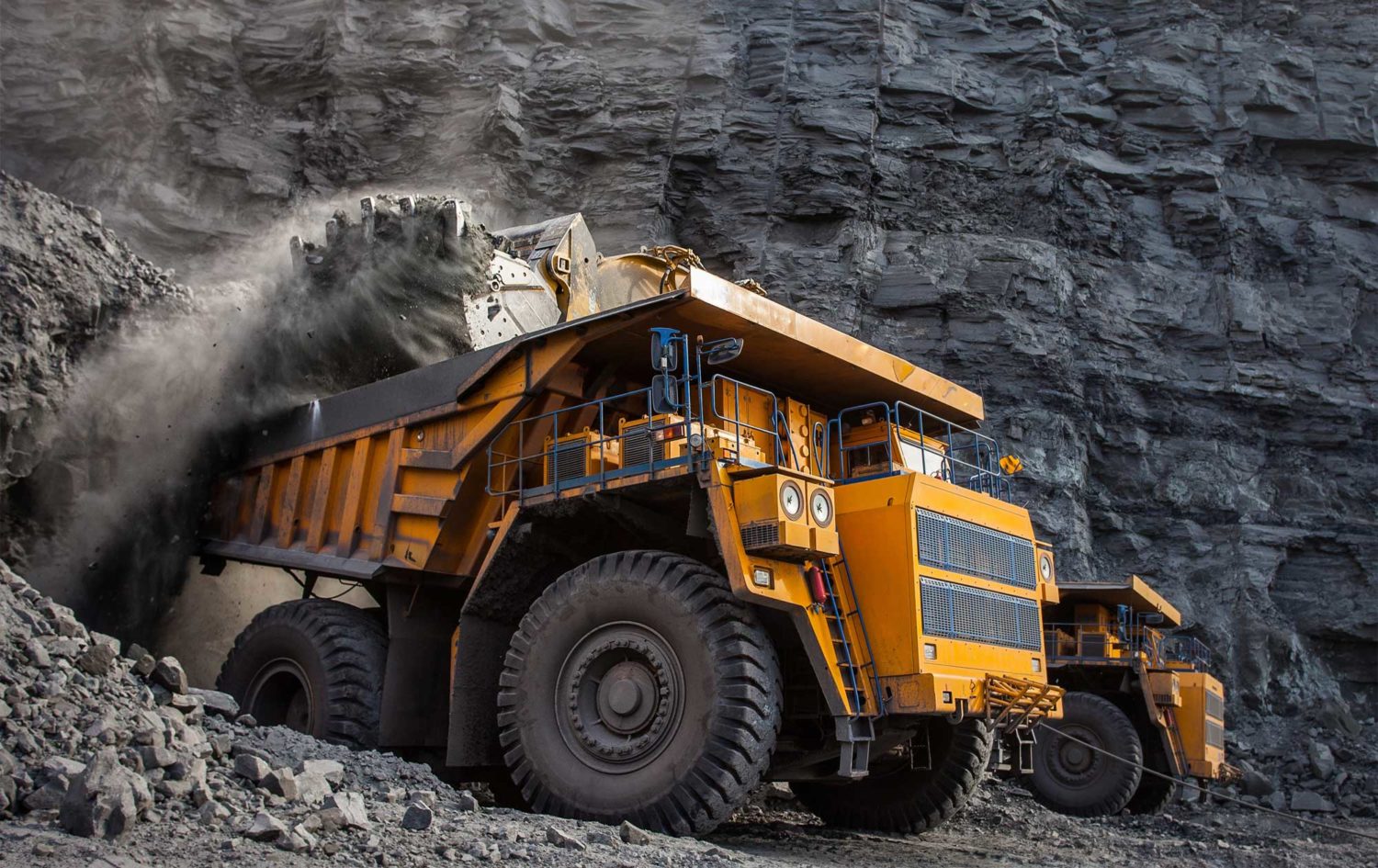
Mining equipment maker secures SSAB fossil-free steel supply
Swedish mining equipment maker Epiroc has signed a deal to procure fossil-free steel from SSAB. The Swedish steelmaker plans to begin commercial fossil-free steel production by 2026, in conjunction with its Hybrit “green” direct reduced iron-making joint venture with LKAB and Vattenfall.
Epiroc will initially use fossil-free steel for material for a prototype underground machine produced at its facility in Örebro, Sweden, and plans to increase the use of fossil-free steel over time.
“Sustainability is integrated in everything we do, and we are committed to halving our CO2 emissions by 2030. This exciting partnership with SSAB will support us and our customers on the journey to reach our very ambitious climate goals,” Epiroc chief executive Helena Hedblom says in a note seen by Kallanish.
Earlier this month, Hybrit received €143 million ($157m) in funding from the EU as one of seven innovative projects under the Innovation Fund (see Kallanish passim).
Adam Smith Germany
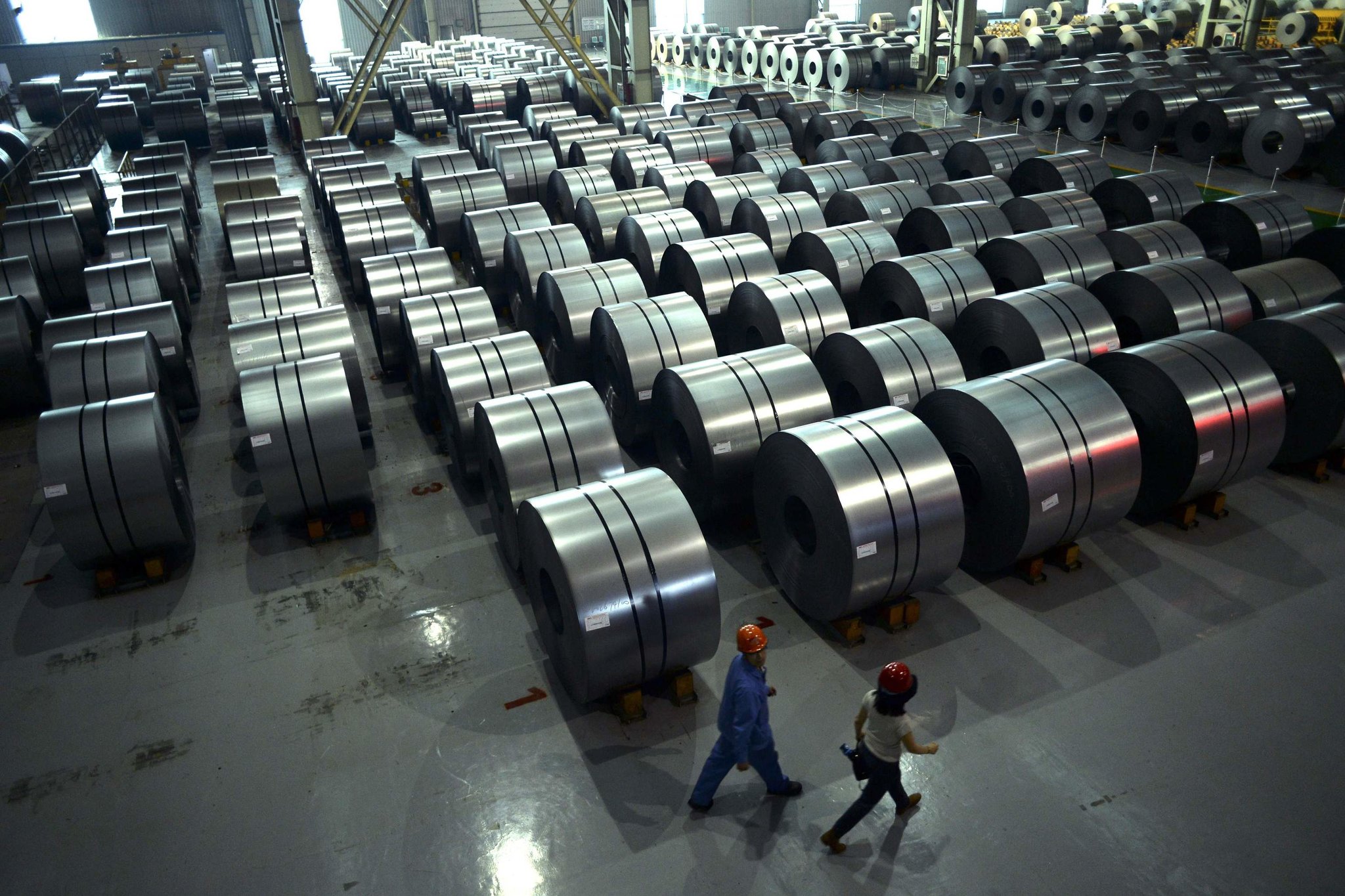
Europe demand will lift Ukrainian steel exports: Zaporizhstal
Significant changes have taken place on the world steel market due to Russia’s invasion of Ukraine, not least the opening up of the EU market to Zaporizhstal exports, says company general director Oleksandr Mironenko in comments confirmed to Kallanish by Metinvest.
“Before the war, European markets were blocked for the plant’s products, but since they have refused to purchase steel from Russia, there is constant demand for Ukrainian steel products,” Mironenko told Ukraine 24. “Zaporizhstal has refocused the chain of raw materials delivery and shipment of products through the western border crossings. However, there are problems at border points with the accumulation of products and, therefore, alternative ways of delivery are being considered.”
The western border crossings are not designed for the large tonnages being shipped at present. “Besides our steel exports, coal and iron ore shipments are also passing through. Therefore, it takes time to set up all these chains and transhipments, because we work on a broad-gauge railway track, while throughout Europe it is narrow,” Mironenko noted.
Another issue is that coke companies in Ukraine, and in particular Metinvest, are experiencing a shortage of sulphuric acid and intend to organise its import from the EU, Mironenko continued. According to him, Ukraine’s capacity is not enough to supply all domestic sulphuric acid coke plants. In addition, coal itself is also a scarce raw material.
“At Metinvest alone, there are three coke chemicals units that need this acid,” Zaporizhstal’s general director said. “We need to bring in this raw material in order to increase the production of coke, which allows us to produce additional volumes of pig iron. That’s why we need to increase the import of coal and sulphuric acid, to increase production of coke.”
Svetoslav Abrossimov Bulgaria
Raw material prices, freight to remain high: Eramet
The global mining and metals market will continue to grow in 2022 after a positive first quarter, says French miner Eramet in its 2021 integrated report monitored by Kallanish. The company’s facilities however may be impacted by surging global metallurgical coke prices caused by persistent tight supply.
Stainless and carbon steelmaking raw materials prices, such as for nickel and manganese, should also remain at high levels together with freight costs, with logistics delays and disruptions also continuing. “Developments in energy costs, in particular those of gas and electricity, remain uncertain for 2022. Continued price increases could have an impact on the Group’s profits,” the report states. It adds that this outlook does not consider the potential consequences of the war in Ukraine.
In 2022 Eramet aims for record production of 7.5 million tonnes of manganese ore, over 4m wet metric tonnes (wmt) of nickel ore exported and approximately 15m wmt of nickel ore produced at Weda Bay, Indonesia.
Eramet’s 2021 turnover stood at €3,668 million ($3,990m), a 31% increase versus 2020. The company achieved a €1,051m Ebitda, which represents as much as a 101% hike compared to the previous year (see Kallanish passim).
Natalia Capra France
Most Ukrainian steelmakers resume production despite war continuation
Seven weeks after the Russian invasion of Ukraine, most Ukrainian steel plants have restarted steel production, Kallanish notes.
Ukrainian pipemaker Interpipe is the latest enterprise that has resumed production at its facilities in Dnipro, Nikopol and Novomoskovsk.
“First of all, the facilities for finishing operations will be launched to finalise semi-finished pipes, railway wheels and wheel sets,” the company says. “The bulk of the finished products will be exported to the European market.”
At the end of March, the company began to ship products manufactured even before the start of the Russian invasion by road to Europe, it says. “The capacity of logistics channels in Ukraine is limited, so the volume of cargo cannot be compared with the volumes before the war,” Interpipe adds.
ArcelorMittal Kryvyi Rih (AMKR) plans to launch blast furnace No.8 on 2 May, AMKR chief executive Mauro Longobardo says in the company’s corporate newspaper.
“We have already resumed the operation of blast furnace No.6, which will go down in history, as we are doing it during the war,” he notes. “In addition, by the end of April, the plant expects to bring the mining department to 100% capacity, and by 10 May will be able to export iron ore concentrate from ore processing plant No.1.”
Longobardo says the extent of operations all depends on the military situation, as well as the restructuring of raw materials and finished products logistics. “The mining department has been launched at the plant and the work of the coke production is also supported,” he adds.
Metinvest’s Zaporizhstal has already restarted blast furnaces No.3 and No.4 after an idle period (see Kallanish passim). Production at sister firms Zaporizhkoks, Zaporizhvognetriv and ZLMZ was also restored.
Pellet producer Ferrexpo continues to produce and ship product by rail to customers in Europe.
Seamless stainless pipe producer Centravis resumed single-shift production, but faces logistics problems with its shipments.
However, DMZ is still idled, as are Metinvest’s Mariupol-based Ilyich and Azovstal plants.
Svetoslav Abrossimov Bulgaria