


AMKR decreases March output amid war
ArcelorMittal Kryvyi Rih (AMKR) decreased crude steel production in the first quarter due to the plant’s shutdown in March after the Russian invasion of Ukraine, the company tells Kallanish.
Steel output was down 22.5% on-year to 930,000 tonnes. Pig iron production decreased 27% to 1 million tonnes and rolled products output fell 25% to 860,000t.
In January-February, the plant had increased steel production to 830,000t, up by 12% on-year, and pig iron was up 5.7% to 930,000t. Output of rolled products increased by 6.7% on-year to 800,000t.
In February alone, AMKR produced 410,000t of steel, 440,000t of pig iron and about 380,000t of rolled products.
In 2021, AMKR saw steel output increase by 5.2% on-year 4.92 million tonnes.
The company is currently resuming production despite continuing military hostilities in Ukraine. AMKR blew in blast furnace No.6 on Monday, after more than a month of downtime.
On Tuesday, the plant intended to produce its first 1,000t of pig iron per day, and in future to ramp up to five or six days of production per week, the head of AMKR’s military administration, Alexander Vilkul, says on social media. Coke-chemical and mining departments are also increasing output volumes, he adds.
AMKR also plans to launch blast furnace No.8 on 2 May (see Kallanish passim). By the end of April, the plant expects to bring the mining department to 100% capacity, and by 10 May it eyes to be able to export iron ore concentrate from ore processing plant No.1. The firm previously said it will increase production of iron ore concentrate to 500,000t in April in preparation for resuming steelmaking, and also aims to increase shipments of iron ore concentrate to Poland.
However, the extent of operations all depends on the military situation, as well as the restructuring of raw materials and finished products logistics, the company said.
Svetoslav Abrossimov Bulgaria

Liberty Steel foresees 50 UK net job reductions
Liberty Steel is envisaging a net reduction of some 50 jobs in the UK as part of its ongoing restructuring process. 162 roles will be scrapped at the High Value Manufacturing Stocksbridge plant and 45 at the Performance Steels business in West Bromwich, while up to 161 positions will be added at Rotherham.
The Stocksbridge and West Bromwich sites are part of Liberty’s non-core special alloys businesses, for which the company previously announced it was seeking either an outright sale or partnership. Investment into the ramp-up of “GREENSTEEL” production at the electric arc furnace-based Rotherham steelworks will meanwhile require an expanded workforce.
“LIBERTY’s special alloys are unique, high potential businesses, and their quality products are prized by customers in strategic sectors such as aerospace and energy. The steps we’re announcing today will help ensure they are competitive in the future, with job creation at our Rotherham plant enabling us to mitigate a large percentage of role reductions at other sites,” Liberty Steel Group chief transformation officer Jeffrey Kabel says in a note seen by Kallanish.
“It sets a strong platform for LIBERTY’s GREENSTEEL expansion in which we will increase recycling of steel scrap in low carbon electric arc furnaces to meet growing demand in infrastructure and construction,” he adds.
Further shareholder capital was injected last month into steelmaking across Liberty Steel UK (LSUK)’s High Value Manufacturing, Narrow Strip, Engineering Bar and Merchant Bar operations. This followed last October’s restart of the UK unit’s core Rotherham EAF following the injection of £50 million ($68m) of new funding (see Kallanish passim). Steelmaking at Rotherham and Stocksbridge continued over the first quarter following the restart of operations.
Adam Smith Germany

Ferroalloys shortage, costly HBI hit Italian steelmakers: Assofermet
Italian hot-briquetted iron demand is decreasing due to the skyrocketing prices registered since the beginning of the war in Ukraine. High HBI values have made the raw material uncompetitive compared to scrap, says Italian trade association Assofermet in its monthly report monitored by Kallanish.
Steelmakers’ ferroalloys procurement has also been impacted by the conflict. As mills are looking for alternative sources of supply, modifying the entire procurement flow is proving to be a sluggish process. If the war continues, Italian producers will be forced to buy from Far Eastern countries such as Malaysia and India, resulting in longer lead times.
Deliveries coming from Russia are slow and limited in tonnage due to the latest EU sanctions. Prices for some ferroalloy grades have increased by as much as 40% compared to pre-war levels. The ferroalloys market in Europe remains in a phase of stagnation April, with prices high.
Meanwhile, in the scrap sector, Italian mills kept domestic buying values low in March but paid elevated prices for imported material from France and Germany. The further scrap price increases being registered in the rest of Europe risk pushing prices up to record highs this month. However, both finished products and scrap have reached levels that are unsustainable for the current uncertain economy, which is strongly impacted by inflation and the consequences of the war in Ukraine, the report continues.
“Raw materials at an all-time high, expensive energy, procurement difficulties, the war at the gates of Europe and related financial difficulties connected to skyrocketing prices: if these are the fundamentals of the current economy, the real question is not if, but when the wind will change and how much damage it will do,” Assofermet warns.
Natalia Capra France
EU second-quarter safeguard quota usage confirms import slowdown
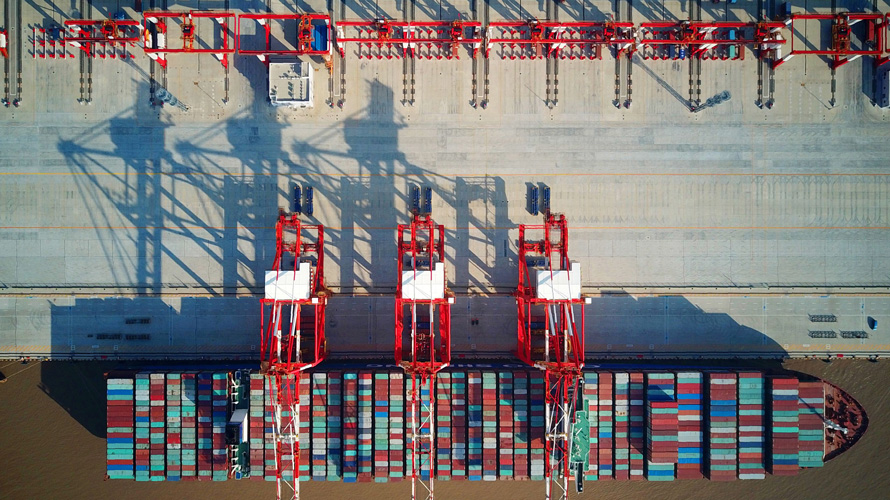
EU imports of steel products subject to safeguard measures slowed in the first days of the second quarter, according to official EU data compiled by UK Steel.
During the first eight days of April, as new safeguard quotas became available for the quarter, EU customs authorities cleared some 2.4 million tonnes of steel. This was over 300,000t below the level cleared during the first days of January 2022 and 200,000t less than in early October 2021.
The slowdown in imports was widely anticipated, mainly due to the ban on imports from Russia and Belarus, as well as the limited possibilities for Ukrainian suppliers to ship material since the country was invaded by Russia, Kallanish notes.
The latest available import data from Eurofer are for January 2022. That month, overall EU imports of carbon and stainless steel finished products surpassed 3.5mt. In comparison, imports of all products in October 2021 reached a record level of over 4.7mt.
During the first days of April, Turkey used up a large part of its available second-quarter quotas for long products, including rebar, wire rod, sections and angles.
For flat products, China exhausted available quotas for electrical steel as well as metallic coated in category 4b. Quotas for organic coated sheet from India for the entire quarter were also exhausted during the first days of April.
Emanuele Norsa Italy
Saarland mills’ costs rise on coal, gas shortages
Saarland-based mills Dillinger and Saarstahl have started the new financial year enjoying good demand and continued high margins, and still expect good capacity utilisation in 2022. However, coal and gas shortages resulting from CIS supply disruptions are likely to increase costs.
However, Russia’s attack on Ukraine and the resulting war and its consequences may have a massive impact on businesses, and the coronavirus may continue to influence the economy. Hence, executives expect further significant price increases in procured raw materials, as well as energy costs, they said during Tuesday’s Stahl-Holding Saar (SHS) press conference.
With a view on the challenges caused by the war in Ukraine and its limiting effect on raw materials supplies, SHS chief executive Karl-Ulrich Köhler said the companies had to adjust technical processes considerably. “We are suddenly lacking 1.2 million tonnes of injected pulverised coal [PCI], and partly have to substitute with other materials that are fit for a furnace,” Kallanish heard him say.
He explained how the mills heavily depend on gases, whose use can be reduced but not totally disposed of, even for shorter periods. Although the mill group covers most of its needs with off-gas from internal processes, certain burners work only with natural gas, and cannot easily be converted. All such technical adjustments are costly, create irregularities, and will bring CO2 emissions back up, he explained.
At Saarstahl, high demand has led to positive price development in the individual segments. This trend was already apparent for Saarstahl’s wire rod and bar steel in the final months of 2020 and continued steadily in 2021, primarily due to the restart of production in the automotive industry.
Saarstahl lifted its shipments from a low of 1.75 million tonnes in 2020 to 2.42mt in 2021, and revenue from €1,684 million ($1,835m) to €2,777m. It turned the 2020 operating loss of €70m into a 2021 profit of €282m.
Christian Koehl Germany
Long steel markets uncertain amid war in Ukraine, Irepas says
The International Rebar Producers & Exporters Association (Irepas) has described the war in Ukraine as a major game-changer for the global long steel market in its most recent short-range outlook, published on the group’s official website.
“The war in Ukraine has changed sentiment in the global long steel products market as well as fundamentally altering the flow of raw materials and finished products almost overnight,” it said in the post on April 5.
“There is more demand than secure supply in the market,” it added. “Before the war, the expectations were that demand would determine the direction of prices, contrary to 2021, when supply was the driving factor. Today, however, supply has definitely taken the lead again and the market is in fact distorted.”
Under the current circumstances, the association described the market as fluctuating and unstable, and added that the outlook was very uncertain because the fundamentals could change daily.
The absence of Ukraine from the global raw materials and steel market, due to disruptions to production, as well as the absence of Russian suppliers, which were facing growing numbers of sanctions measures, has quickly changed the supply-demand balance in favor of suppliers in other countries, thus opening new opportunities.
“Disruptions to supplies of semi-finished and finished products have opened new opportunities for others, especially for Turkish mills which share the same geographical region,” Irepas said.
“Nobody has any clue how far this madness will go, but one thing is for sure: the sanctions on Russia will remain in place for some time to come,” it added.
“Scrap exports from Russia and Ukraine are almost at a standstill. European steel mills have refused to pay more for scrap, and have reduced their capacity utilization rates. There have even been complete shutdowns in some cases, creating extra supply of scrap in the market for Turkish mills,” it said.
“As a result, the Turkish mills have compensated for the missing quantities from Russia and Ukraine with the extra availability of European scrap, which has helped them to keep scrap prices under control, while at the same time they are exporting extra volumes of steel to the EU market,” the association added.
Besides Turkey, the association noted an increased flow of Asian material into Europe.
“European steel prices are now the highest in the world,” the association said. “Asian and especially Chinese prices are substantially lower than anywhere else. The steel trade is changing direction from selling to Asia to buying from Asia.”
Fastmarkets’ most recent weekly price assessment for steel wire rod (mesh quality), domestic, delivered Northern Europe, was unchanged at €1,300-1,350 ($1,416-1,470) per tonne on April 6. This price was the highest recorded by Fastmarkets, beating the previous record of €900-930 per tonne set on August 18, 2021.
Meanwhile, the price assessment for steel wire rod (mesh quality), export, fob China main port, was $850-860 per tonne fob on the same day, up by $20-30 per tonne week on week. It remained at that higher level on April 12.
The cost of freight from Asian ports to Europe was recently reported to have doubled to around $200 per tonne because carriers demanded payment for the return trip as well.
Even considering this fact, however, Chinese prices were still attractive for European buyers.
In the United States, supply and demand of long steel products was satisfactory, the association said. But considering that mills were running at full capacity, it was fair to expect that any increase in demand would have to be met by imports, it added.
“Import restrictions and therefore prices from regular suppliers have increased dramatically in the US due to the war in Ukraine,” Irepas said. “With this, the prices in the US are also on an upward trend, catching up with the rest of the world.”
Published by: Vlada Novokreshchenova


Turkey could fill EU steel supply gap from Russia sanctions
Economic sanctions imposed on Russia by different countries, particularly the European Union, due to the war in Ukraine have changed the balances in the global iron and steel sectors and Turkey could fill the gap left in the EU, according to Erhan Ozdemir, vice general manager of Yildiz Demir Celik, one of Turkey’s largest coated coil producers.Highlighting that Russia had been one of the EU’s largest steel suppliers, Ozdemir said in a statement that EU buyers were having to focus on different regions to meet their steel demand.
“Turkey has come into prominence in this environment, as one of the important business partners of the EU. This could contribute to Turkish mills’ steel exports to the region, especially in flat steel,” he said.
Pointing out that Russia was a key hot-rolled coil and coated coil supplier at 2.14 million mt and 368,000 mt respectively, Ozdemir said Turkey could fill this gap.
“As Turkey is a large producer of these steel products, the crisis will not have a negative effect on the Turkish steel sector, instead it will raise our export volumes,” he said.
Turkish mills’ flat steel prices rose by more than $300/mt since the start of the Russian invasion on Feb. 24, in line with the sharp rise seen in energy and scrap costs, as the supply chain from the CIS region collapsed.
S&P Global Commodity Insights’ weekly assessment for Turkish domestic HRC was at $1,290/mt EXW on April 8, while assessment for Turkish domestic HDG was at $1,385/mt EXW.
Highlighting that Yildiz Demir Çelik reached a high export tonnage in the last three years, Ozdemir said the Turkish steel sector had a chance to fill the gap in the sector, as new balances in the global steel sector had been at an establishment phase.
“As Yildiz Demir Celik, we are continuing our production and investments without slowing down in this environment,” he said.
Yildiz Demir Celik’s cold-rolling mill complex in Kocaeli, western Turkey, started production on its new continuous pickling tandem line in late 2019, with a capacity of 1.5 million mt/year.
The company currently has production capacity of 400,000 mt/year for HDG coil and 150,000 mt/year for pre-painted galvanized iron, as well as 300,000 m/year of cold-rolled coil.
The company is targeting 900,000 mt/year of galvanizing capacity with a new line to be started in the second quarter of 2022.
Yildiz Demir Celik is also planning to start HRC production in the coming three years by building a melt shop with a liquid steel capacity of 4 million mt and a hot-rolling mill with a finished product capacity of 3.5 million mt, following the approval of the company’s project on environmental basis by the Ministry of Environment and Urbanization.
— Cenk Can


EU coils market bears mixed expectations, Italian HRC softens
The EU flat steel market was heard as in wait-and-see mode April 12, with participants bearing mixed expectations for the near-term.
In general, sources expected prices to stabilize in the near-term, with mills lacking space to move prices downward given rising production and energy costs.
According to one supplier source, prices were expected to stabilize, with an offer spread reported on the day at Eur1350-1450/mt ex-works. Established customer relationships with mills remain as paramount in accessing material at cheaper prices – the source considered tradable value at Eur1400/mt with large producers reported as holding strong around the Eur1400/mt mark for HRC offerings.
The market was reported as largely settled by a trader source expecting a market correction.
“Nothing is really changing at the moment and everyone is waiting for large players to make a move, stock levels are still high so purchasing is at a minimum. There’s cheaper material out there in the market post-quota clearances so I think domestic mills will have to relax their positions.”
In the South, prices softened further from recent peaks, with offers heard in a range of Eur1280-1300/mt ex-works Italy.
Mills were reported as having re-entered the market at lower levels in order to win back customer favor, having cancelled contracts following supply chain disruptions caused by the war in Ukraine. Sources expected prices to correct in the coming weeks, with one mill source predicting near-term tradable value as low as Eur1200/mt ex-works Italy.
S&P Commodity Insights assessed HRC in Northern Europe stable at Eur1365/mt ex-works Ruhr. HRC in South Europe was down Eur10 on the day at Eur1300/mt ex-works Italy.
— Benjamin Steven