

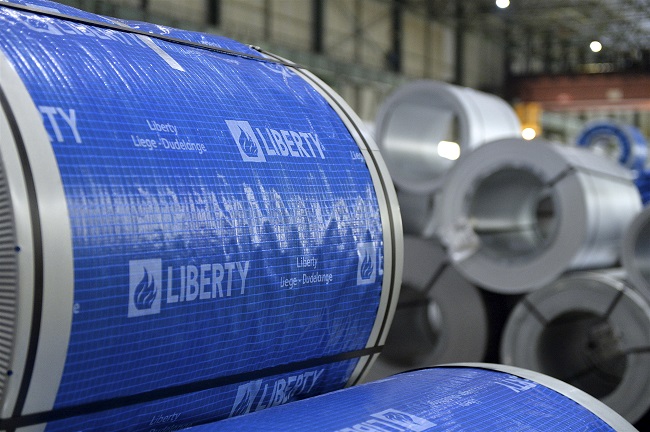
Liberty Steel vows to appeal after court rejects restructuring plan, orders liquidation of Belgian assets
The Commercial Court of Liège in Belgium has rejected a restructuring plan for Liberty Steel’s Belgian assets and ordered the liquidation of its Liberty Liège subsidiary, Fastmarkets understands.The court proceedings involved Wallonia district-owned investment company Sogepa and local trade unions, according to local media reports.
In June 2021, the management of Liberty Liège secured a loan through Sogepa for the further development of the business. And from September, the company was in negotiations to sell a 49% stake in the Liege operations to Sogepa in an exchange for further financial aid, sources told Fastmarkets.
Liberty has had problems with its Belgian sites since spring last year when it started to ask for upfront payment for its steel products and even canceled orders.
The problems with Belgian assets were preceded by turmoil surrounding a creditor of Liberty Steel’s UK-based parent company, the GFG Alliance.
Liberty Liège comprises the Flémalle and Tilleur production sites in Belgium, which each produce cold-rolled coil, hot-dipped galvanized coil and tinplate.
Liberty Steel said it was “disappointed” with the court’s decision of Wednesday April 13 and said it would appeal.
“We continue to believe our transformation plan provides the business with a long-term, sustainable future and preserves 650 jobs,” a Liberty spokesperson said.
The Tilleur site can produce 200,000 tonnes per year of CR steel and tinplate, while Flémalle operates two galvanizing lines with a capacity of 950,000 tpy, producing hot- and cold-rolled galvanized steel.
The packaging line in Tilleur was restarted on February 14, 2022, while the galvanizing lines in Flemalle have remained idle since December 2021 due to a lack of feedstock.
Liberty’s plan for the sites includes developing a new business model for the tinning line at Tilleur, including closer partnerships with major customers to manufacture specialist packaging, and using the G5 galvanizing line at Flémalle to generate short-term profits.
Liberty’s parent company, GFG Alliance, claims to have provided funding of more than €80 million to Liberty Liège since July 2019, €28 million of which has been provided since December 2021, according to a statement from the company seen by Fastmarkets.
GFG’s said its long-term investment plans for the Belgian plants were undermined by the poor steel market in 2019 before the business was adversely affected by the impact of the Covid-19 pandemic, along with the related supply chain disruption, and now by the war in Ukraine.
And investigations into GFG Alliance’s main financier, Greensill Bank, have also affected the company’s plans, Fastmarkets understands.
Liberty acquired the Liege sites from ArcelorMittal in 2018.
Published by: Julia Bolotova

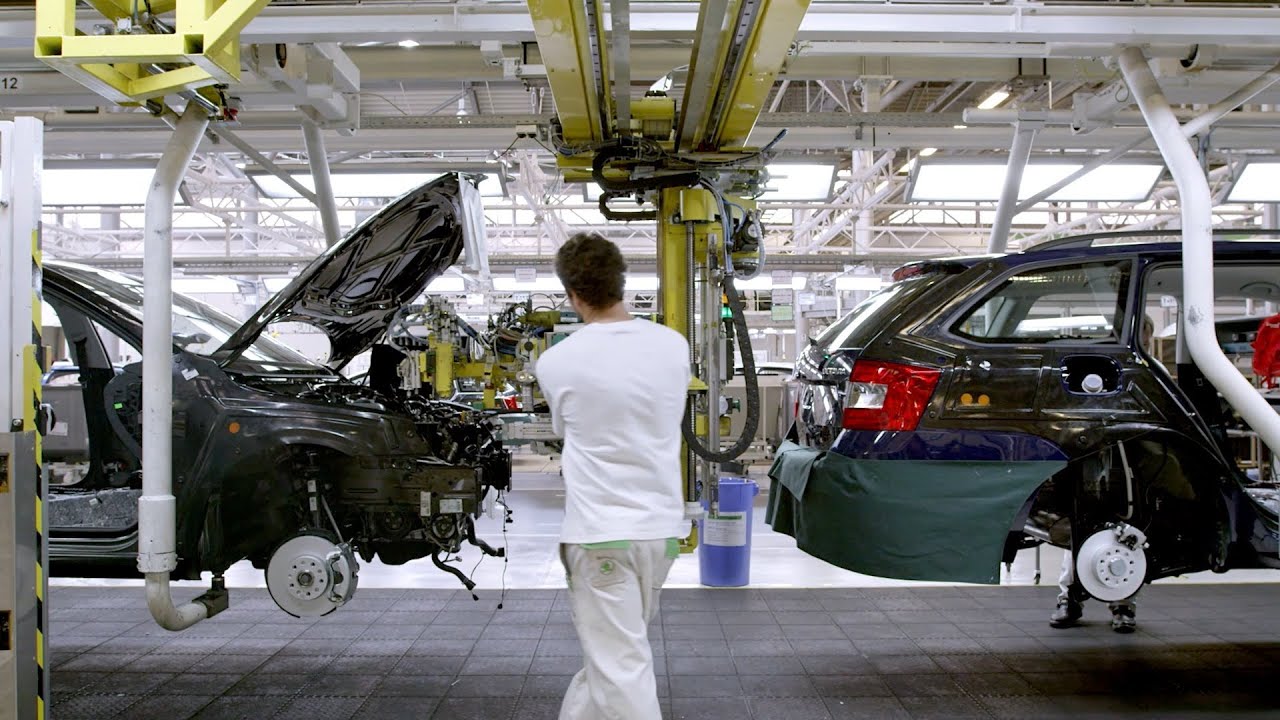
Ukraine war to delay automotive sector recovery: worldsteel
The expected recovery of the global auto industry is still being hampered by the microchip shortage. The situation was expected to ease by the second half of this year; however, the war in Ukraine is likely to delay the return to normal of the supply chain, especially in Europe. So said worldsteel director general Edwin Basson during Thursday’s short-range outlook conference attended by Kallanish.
“Last year was disappointing for the automotive sector. The microchip shortage led to reduced demand and increased prices,” the executive commented. “It had been expected that the supply bottlenecks would dissipate in the second half of 2022. However, the war in Ukraine is likely to delay the recovery.”
Automotive production in China is estimated to continue to grow between 2022 and 2023, after rising 4.8% on-year in 2021. Meanwhile, the recovery in the US market in this period is likely to be driven by higher demand for light vehicles. Both markets are in line with the global increasing production share of electrical vehicles in developed economies.
“EVs will continue raising their presence in 2022. The new technologies and materials used in their production do not threaten the consumption of steel in the automotive industry. We see a positive development in the sector, which is already anticipating an evolution from EVs towards fully automated vehicles,” Basson explained.
Global sales of EVs in 2021 reached 6.6 million units, almost 100% higher on-year. Their share in overall shipments increased from 2.5% in 2019 to almost 8.6% in 2021.
Todor Kirkov Bulgaria

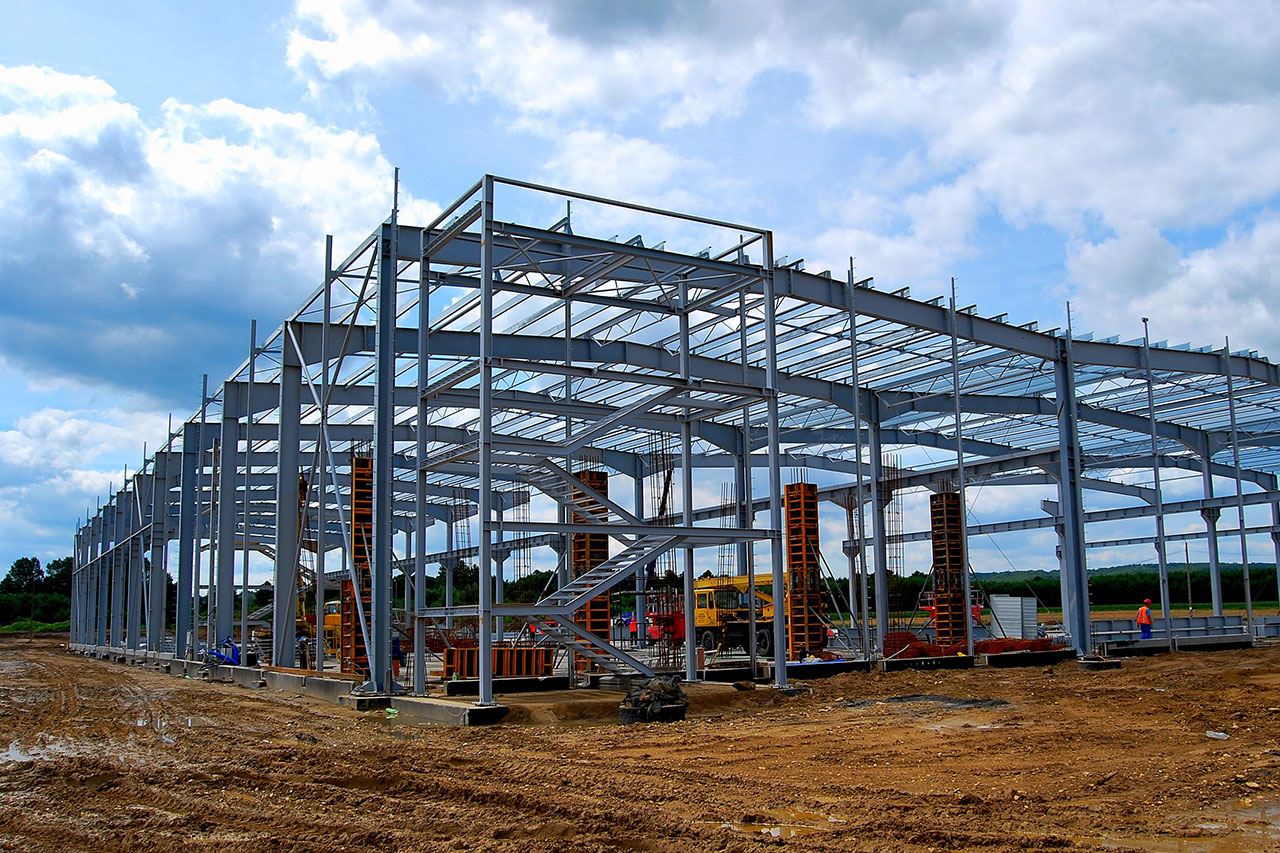
Worldsteel sees improving global construction activity in 2022
Global construction activity will continue growing this year despite a contraction in China observed in 2021, according to worldsteel.
The association’s positive perspective is supported by strong infrastructure initiatives observed in many countries, as well as upcoming investments related to the energy transition. However, construction faces headwinds from rising costs and interest rates, Kallanish notes.
“Like other sectors, the global construction sector is experiencing supply problems, leading to increasing costs,” worldsteel observes. This along with the move of central banks to raise interest rates to fight inflation may play a negative role in the growth of construction activity between 2022 and 2023.
“The residential sector was performing well due to low interest rates and the expansion of working from home practices. Accelerated inflation is forcing buyers to rush into property markets, using them as a hedge. However, rising housing prices might undermine future housing affordability for some social groups,” the association comments.
In the non-residential sector, while office buildings suffered from remote working practices, e-commerce and IT-related investments supported the sector.
“We see strong growth in the multi-unit segment in the US. Large infrastructure investment and recovery in energy-related projects are also expected to boost construction activities in the country,” worldsteel continues.
Meanwhile, in China, government policies to combat the housing bubble should fuel the recovery of the construction sector, with infrastructure projects being the main factor. In India, the increase in activity will be supported mainly by the building of new highways, railways, water infrastructures and housing. Worldsteel sees the construction sector in Brazil as having moderate growth in 2022 due to the monetary tightening cycle and the US interest rate hikes.
Todor Kirkov Bulgaria

Global demand growth plunges on Ukraine war: worldsteel
Worldsteel has revised down its 2022 global steel demand growth forecast to 0.4% on-year, giving 1.84 billion tonnes. This follows 2.7% growth in 2021. The correction is due to the impact on trade of the Russian invasion of Ukraine, which has created devastating effects on Ukraine, consequences for Russia and a major impact on Europe.
Furthermore, the war will also impact the steel supply chain, and steel raw materials and energy prices in 2022, worldsteel said during Thursday’s short-range outlook press conference attended by Kallanish. Other downside risks come from the continued surge in Covid-19 infections in some parts of the world, especially in China. The expected tightening of US monetary policy and rising interest rates will hurt emerging economies financially.
“In 2021, recovery from the pandemic shock turned out to be stronger than expected in many regions, despite continuing supply chain issues and Covid waves,” said worldsteel economics committee chairman Maximo Vedoya. “However, a sharper-than-anticipated deceleration in China led to lower global steel demand growth in 2021. For 2022 and 2023, the outlook is highly uncertain. The expectation of a continued and stable recovery from the pandemic has been shaken by the war in Ukraine and rising inflation.”
Despite the Covid-led economic slowdowns and the manufacturing sector’s supply chain constraints, steel demand in the advanced economies recovered strongly in 2021. However, owing to inflationary pressure coupled with the Ukraine war, demand growth has weakened in 2022.
Steel demand growth outlook in the EU has plunged due to its high dependency on Russian energy, as well as refugee inflows. After a surge of 16.5% in 2021, steel demand growth in the developed world is seen being restricted to 1.1% and 2.4% in 2022 and 2023, respectively.
Owing to stringent measures in the real estate industry by the Chinese government, Chinese steel demand witnessed a major slowdown in 2021. However, on the back of the government’s efforts to boost infrastructure investment and stabilise the real estate market, demand is expected to remain flat in 2022. The stimuli introduced in 2022 are likely to support small positive growth in steel demand in 2023.
Developing economies – excluding China – will continue to face challenges from the Covid-led worsening external trade environment, the Russia-Ukraine war and the US monetary tightening. Owing to this, steel demand in the developing economies will grow by only 0.5% in 2022 and then 4.5% in 2023, worldsteel said. ASEAN and Middle East and North Africa will see marginal growth of 3.5% and 3.2%, respectively, in 2022.
Sayed Aameer India
ArcelorMittal buys voestalpine Texas HBI plant majority stake
After exploring strategic options for over a year for its direct reduction plant in Texas, USA, voestalpine is now selling 80% of its shareholding in the plant to rival steelmaker ArcelorMittal, Kallanish notes.
The hot-briquetted iron project in Corpus Christi was announced in 2012 and started operating four years later. The costs of construction amounted to around €870 million ($1.012 billion at the exchange rate at that time). It was necessary to make unplanned write-offs totalling €372m in 2019 and 2020, in response to the difficult market environment, voestalpine notes.
The plant has an annual capacity of 2 million tonnes of HBI, which is used to produce high-quality steel grades in an electric arc furnace, but which can also be used in blast furnaces. According to both companies, the enterprise value for 100% of the shares in voestalpine Texas is approximately €900m ($1 billion at today’s exchange rate).
The new partnership secures a long-term agreement for voestalpine to annually procure 420,000 tonnes of HBI produced at the plant. This provides the basis for further decarbonisation of steel production at Linz and Donawitz, it says.
According to ArcelorMittal, the remaining balance of production will be delivered to third parties under existing supply contracts, and to ArcelorMittal facilities, including AM/NS Calvert in Alabama. The latter will commission its 1.5m t/year EAF in the second half of 2023.
“The facility is world-class and is ideally located, with its own deep-water port. There is also unused land on the site which provides interesting options for further development,” says ArcelorMittal chief executive Aditya Mittal.
The plant currently uses natural gas but has the potential to transition to 100% hydrogen, with the Texas coast presenting advantageous weather conditions to produce renewable energy-powered green hydrogen, ArcelorMittal notes.
Christian Koehl Germany

Italy’s Tenaris writes off investment in Russian JV with Severstal
Italian steel pipemaker Tenaris said it has written off its investment in a Russian joint venture it had with Russian steelmaker Severstal and had suspended all sales to and purchases from Russia.
The companies’ joint venture, announced in February 2019, was expected to come online in 2022 and reach full capacity of 300,000 mt/year of welded oil country tubular goods by 2024. However, in March 2021, both companies said they were putting on hold the construction of their joint pipe plant in Surgut, West Siberia, until they had a better understanding of market changes.
In February, Tenaris said it produced 2.8 million mt of tubes in 2021, up 17%. Production of seamless tubes rose 31% to 2.5 million mt in 2021, although output of welded tubes fell 40% to 289,000 mt.
In terms of its 2022 outlook, the company said in February it anticipated further sales increases in the first half of 2022 on higher prices in North America and shipments to an offshore pipeline in Europe.
It also said it expected to see a significant recovery of sales in the Middle East and Africa in the second quarter and, despite higher energy costs in Europe, it also expected its EBITDA margin to continue to increase in H1 2022.
— Filip Warwick

Steel demand to rise just 0.4% in 2022, 2.2% in 2023
The World Steel Association forecasts steel demand to edge up 0.4% in 2022 to 1.84 billion mt and grow a further 2.2% in 2023 to 1.88 billion mt, according to its Short Range Outlook released April 14.
Steel demand rose 2.7% in 2021 to 1.83 billion as recovery from the pandemic was stronger than expected in a number of regions, although there had been a sharper-than-anticipated deceleration in China, worldsteel Economics Committee Chairman Maxino Vedoya said in a statement.
“For 2022 and 2023, the outlook is highly uncertain. The expectation of a continued and stable recovery from the pandemic has been shaken by the war in Ukraine and rising inflation,” Vedoya said.
The association expected reduced demand growth in 2022 due to impacts from the war in Ukraine, with further downside risks from the continued pandemic, especially in China, and rising interest rates.
“We expect growth to start coming in 2023 and this is on the presumption that the war in Ukraine will come to a conclusion sometime in this year and at least the end of this year we will begin to see a recovery in the steel use in those markets, but throughout our forecasts we have assumed that steel use in Russia and Ukraine is going to be way down from previous years, and that the impact will flow over,” worldsteel Director General Edwin Basson told a press briefing April 14.
He said the war was most likely to impact Europe due to its reliance on Russian energy and its geographic proximity, but other regions would see less of an impact depending on their direct trade and financial exposures to Russia and Ukraine.
In the EU and the UK, steel demand was expected to fall 1.3% in 2022 to 161.5 million mt due the region’s high dependence on Russian energy and refugee inflows, although demand was expected to grow 4% in 2023, the association said.
In the developed world, steel demand was expected to increase by a lower 1.1% in 2022 and 2.4% in 2023, after rising 16.5% in 2021.
There was expected to be a global impact from the war causing continued supply chain disruptions, higher energy and commodity prices, especially for steel raw materials, and financial market volatility and uncertainty undermining investment.
“The geopolitical situation surrounding Ukraine poses significant long-term implications for the global steel industry. Among them are a possible readjustment in global trade flows, a shift in energy trade and its impact on energy transitions, and continued reconfiguration of global supply chains,” worldsteel said.
It said emerging economies outside of China would face challenges from the worsening external environment, the war, and US monetary tightening, leading to low growth of 0.5% in 2022 to 484.4 million mt and 4.5% in 2023, down from a growth of 10.7% in 2021.
“The expected tightening of US monetary policies will hurt financially vulnerable emerging economies,” worldsteel said.
China demand flat in 2022
Chinese steel demand slowed in 2021 due to government measures on real estate developers and worldsteel expected demand in 2022 to remain steady at 952 million mt, as Beijing looked to boost infrastructure investment and stabilize the real estate market. These stimuli are then due to support steel demand growth of 1% in 2023 to 961.6 million mt.
“We do not see strong recovery in China, so the stabilization that we started seeing in the latter half of 2021 in China, we think will continue through for most of 2022,” Basson said.
Despite a contraction in China, the global construction industry recovered in 2021 to a record growth of 3.4% as many countries required infrastructure as part of their pandemic recovery programs, with the energy transition expected to drive the sector’s growth for many years, worldsteel said.
Inflation was a problem in many markets and could have a dampening effect on steel use, particularly in the construction markets, Basson said.
Supply chain bottlenecks
The global automotive industry remained disappointing in 2021, impacted by supply chain bottlenecks, with the war in Ukraine likely to delay any return to normal of the supply chain issues, especially in Europe, the association said.
“The continued stickiness in the supply chains, particularly in the auto industry, has still had an impact in the early parts of 2022, but as we go through the rest of the year, we expect that to dissipate and demand to normalize in those markets,” Basson said, adding that the automotive sector consumed about 12%-13% of all steel used, or around 200 million mt.
Global electric vehicle sales almost doubled year on year in 2021 to 6.6 million units, or a share of 8.6%, up from 2.5% in 2019, wordsteel said.
“What we’re seeing so far is that EVs are using the same technology as previous vehicles and in some cases use a little bit more steel to make the cars stronger for the heavier batteries they are carrying, so, so far we’ve seen no impact on steel use from EVs and I think most likely this is going to be the trend for the next number of years,” Basson said.
Steel use was also expected to play a part in automated vehicles in the future.
“Steel, if anything is going to play a stronger role into the future than in the past, so we’re quite positive about the role of steel in the automotive market and also not worried about the EV market in the steel industry,” Basson said.
— Jacqueline Holman