

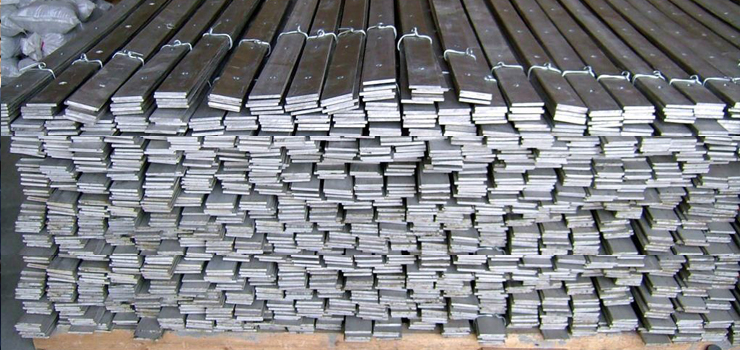
EU flat steel distributor shipments show small decline for Jan-Feb 2022
European distributors of flat steel products reported a minor year-on-year drop in shipment volumes for January-February 2022, regional steel industry association Eurometal said on Tuesday April 19. In the first two months of 2022, flat steel shipments in the EU decreased by 0.3% year-on-year, compared with a rise of 4.3% for the month of January.
European coil prices were largely flat at high levels in January-February, gaining strength from good order books and high costs at mills. But late in February, prices started to increase further on “hysterical demand” due to Russia’s war against Ukraine.
The war in Ukraine, followed by sanctions against Russia and its ally Belarus, have interrupted global supply chains, including supplies of raw material, especially to Eastern European mills.
Fastmarkets’ calculation of its daily steel hot-rolled coil index, domestic, exw Northern Europe, averaged €920.41 ($993.24) per tonne in February 2022, up month on month by €4.01 per tonne from €916.40 per tonne, and up year-on-year by €222.62 per tonne from €697.79 per tonne.
Market sentiment, however, has soured recently due to slowing automotive demand, and competitive import offers. Automotive output has been in decline recently due to component shortages, notably semiconductor chips.
Eurometal’s stock index for flat steel service centers in the EU was 106 in February 2022, compared with 86 in February 2021. The index uses the 2018 average as its 100-point basis.
Stock levels at EU steel service centers averaged 72 days’ worth of supply in February 2022, compared with 64 days in the corresponding month of 2021.
Multi-product distributor shipments in the EU and UK decreased by 9.40% year-on-year in January-Februry 2022, Eurometal data showed. Only merchant bar, rebar, stainless steel and plate showed higher shipments, while all other products showed declines.
Published by: Julia Bolotova


EU, UK flat steel shipments edge 0.3% lower year on year in Jan-Feb 2022
Flat steel shipments from steel service centers in the EU and the UK were 0.3% lower year on year in the first two months of 2022, stockholder and distributors’ association Eurometal said April 19.
Shipments in January were up 4.3% year on year, Eurometal said.
Eurometal did not provide the percentage of February’s fall in shipments but said that, when expressed in days of shipments, stocks at steel service centers in the EU and UK reached 72 days in February, compared to 64 days a year earlier.
The index of stock volumes rose to 106 in February, up from 86 a year ago, with the average 2018 index being 100.
Meanwhile, long products shipments by distributors fell further 9.4% in January and February, due to only merchant bars, rebars, stainless steel and plates showing higher shipments, Eurometal said.
In February alone, stocks of long products climbed 8.3% year on year, with only profiles, merchant bars and stainless steel products seeing a drop in stocks, according to Eurometal.
— Jacqueline Holman


Mexico extends HRC quotas on China, Germany, France
Mexico has extended a compensatory quota on imports of hot rolled coils originating from China, Germany and France. This is according to a document from the Ministry of Economy published in the Official Gazette of the Federation (DOF) on 19 April. The compensatory quota was originally implemented in December 2015.
Mexico’s Secretary of Economy (SE) accepted Altos Hornos de México (Ahmsa) Ternium México’s complaint that the removal of duties would negatively impact domestic production, according to a note seen by Kallanish.
SE maintains a compensatory quota for Tangshan Iron and Steel HRC imports at $335.60/tonne and of $354.92/t for all other Chinese companies. German entries remain fixed at $166.01/t for most exporters and $137.0/t for those coming from ArcelorMittal Bremen, while HRC imports from ArcelorMittal Méditerranée and all other French companies are put at $67.54/t and $75.59/t, respectively.
Anti-dumping measures are in place for up to five years, commencing from 23 December 2020.
The products under investigation are classified under HS codes 7208.36.01, 7208.37.01, 7208.38.01, 7208.39.01, 7225.30.02, 7225.30.03 and 7225.30.99.
Todor Kirkov Bulgaria


Vale’s iron ore reserves decrease in 2021
Brazilian miner Vale’s total iron ore reserves fell by 13.4% year-on-year to 12.495 billion tonnes in 2021, the company says on its form F-20 to the US Securities and Exchange Commission monitored by Kallanish.
According to Vale, the 1.927 billion tonne variation in iron ore reserves compared to 2020 reflects the new geological data, study and technology developments, economic assumptions, mining plans and regulatory updates, among other factors. From total iron ore reserves, proven represented 3.858 billion tonnes at 58.5% Fe-grade content on average, or 55.3% less compared to the 8.636 billion tonnes in 2020.
“Variations in iron ore reserves resulted primarily by the depletion resulting from mineral production at operating mines corresponding to approximately 414 million tonnes of iron ore, downgrades resulting from strategic review of long-term projects and geotechnical, market and processing factors,” Vale explains.
The Northern System, which accounted for almost 48.9% of Vale’s total iron ore reserves in 2021, saw these reduced by 4.5% on-year to 6.11 billion tonnes. The decrease is mainly explained by the incorporation of new geological information and depletion of material at the Serra Sul`s S11D unit and of Serra Norte Complex by 3.5% and 7.4%, respectively.
Vale’s reserves at the Southern System amounted to 3.63 billion tonnes or just 1.1% less over 2020, while those at the Southeastern System decreased by 36.7% on-year to 2.74 billion tonnes. This was due to a review of a long-term project to process low grade material from the Mariana operations “considering new technical solutions, including ceasing the transfer of run of mine from the site to the Itabira beneficiation plants,” Vale comments. As a result, approximately 1.3 billion tonnes of previously reported reserves have been reclassified as resources, the miner observes.
The miner adds that, as a result of mine scheduling and production plan reviews, the estimated exhaustion of Itabira Complex has been extended up to 2041.
Todor Kirkov Bulgaria

US contractors decry Biden’s “Buy America” guidelines
US construction contractors with the Associated General Contractors (AGC) of America are lambasting President Joe Biden’s guidelines requiring the use of domestic steel for federal infrastructure projects, Kallanish reports.
According to the AGC, the strengthening of Buy America provisions will undermine the increased funding granted by the Infrastructure Investment and Jobs Act (IIJA).
“It makes no sense to place unrealistic limitations on firms’ ability to source key materials at a time when prices for those products are skyrocketing and supplies are limited. Supply chain shortages are already prompting firms to avoid bidding on new projects,” says AGC ceo Stephen Sandherr.
In contrast to the construction industry, President Biden’s guidelines have received applause from several representatives of the domestic steel industry (see related story).
Zach Johnson USA
EU hot-rolled coil market pauses for Easter break, trading scarce
The EU coils market remained stable April 19, with market activity much reduced following the holiday period.
Hot-rolled coil in North Europe was assessed stable at Eur1,350/mt ex-works Ruhr. In the South, hot-rolled coil was also stable at Eur1,265/mt ex-works Italy.
The market was talked largely quiet on the day, with most buyers out of the market for the Easter break. Sources provided tradable values and offer levels as indications, with no transactional activity reported.
“There’s barely any activity this week for the Easter holiday, we’ll be coming back to the market to look for June volumes in the near-term but for now there’s no demand at all,” one mill source said.
A distributor source agreed that demand was much reduced.
“Demand is down, because of Easter for one thing, but also because many think the market is going to move soon,” the distributor said. “No one’s going to buy when anticipating a correction.”
In the import market, demand remained reduced due to long lead-times, though offers for HRC into Antwerp on a CIF basis were down Eur15 on the day, with one trader stating HRC import prices were softening.
Sources have been consistently reluctant to look to the import market in recent weeks because of geopolitical uncertainties and long lead-times that expose buyers to risk from EU safeguarding quotas – a primary factor in the large spread of offers on the market, a second distributor source said.
— Benjamin Steven

Metinvest eyes Ilyich post-war restoration
The restoration and restart of Metinvest’s metallurgical plants in the besieged city of Mariupol is quite real, says Ilyich’s Steelwrks general director Taras Shevchenko in comments confirmed by the company to Kallanish.
“We do not have a complete picture of the damage to the plants, but there is damage and broken infrastructure,” he said to Ukraine 24. “However, I am sure that as soon as the metallurgists from Mariupol have the opportunity to get to our beloved city and our enterprises, we will definitely be able to restore and put into operation our metallurgical plants. This task is quite real.”
According to him, the nature of the actions of the Russian army in Mariupol and in Ukraine in general is clearly a deliberate, systematic destruction of industry and cities of Ukraine.
“In particular, in Mariupol, two metallurgical plants were destroyed – Azovstal and Ilyich, and the city itself,” he adds.
Last week, Russian Ministry of Defence representative Igor Konashenkov claimed that Moscow’s forces and units of the self-proclaimed Donetsk Peoples Republic (DPR) had completely seized Ilyich Steelworks in Mariupol (see Kallanish passim). Metinvest did not confirm that claim.
On Tuesday, the head of DPR Denis Pushilin announced his intention to resume production at the Ilyich steel plant, he said on Russian tv Russia 1. He added that “now the territory of the plant is being protected, and the damage is being assessed.”
“We plan to conduct an assessment now and to renovate the plant – it should work, because the products produced there are in demand now,” Pushilin said and announced his intention to modernize the production.
Earlier, the Metinvest Group stated that its companies in Mariupol would never operate under Russian occupation.
Metinvest flat steelmaker subsidiary Zaporizhstal started pig iron smelting, after the restart of blast furnaces No. 3 and No.4, the company says. In the future, it is planned to gradually restore production processes at the steelmaking and rolling departments.
So far, three of the six sinter production plants have been launched.
Now all the efforts of the plant are aimed at updating logistics for the continuous receipt of raw materials and shipment of products, Zaporizhstal claims.
Svetoslav Abrossimov Bulgaria
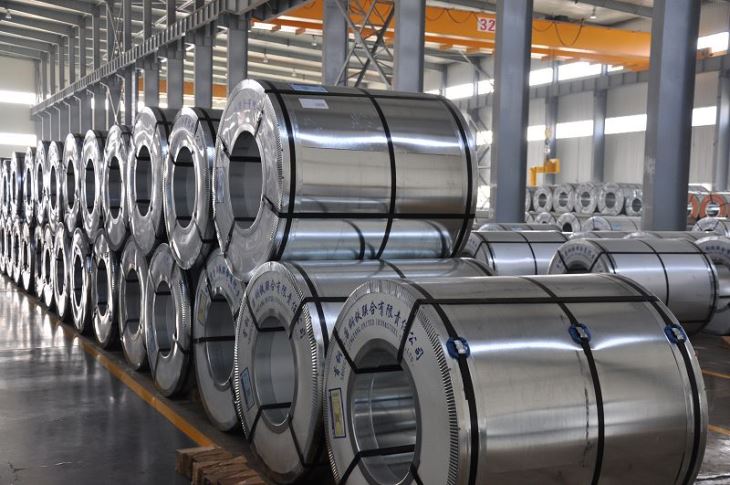
Severstal-metiz increases corrosion resistance of galvanized products
Severstal’s metalware arm, Severstal-metiz, has started the production of galvanized steel blanks with a diameter of 9mm to 18mm, the company says.
According to the results of laboratory tests, the durability of the zinc coating has become 1.82 times higher, so it is preserved during further processing at all stages of the production cycle until the release of finished products, the enterprise claims.
The Severstal-metiz enterprise in Cherepovets Steelworks produces a wide range of products for the construction and agricultural industries from large-diameter blanks. In particular, ropes for shrouds and wire of various types and purposes.
In order to produce the production of large-diameter galvanized wire rod, the specialists of the enterprise modernized one of the hot-dip galvanizing units and installed additional cleaning systems.
“In recent years, we have worked hard to improve the resistance of zinc coating and, as a result, increase the durability of our products,” says Svertsal-metiz general director Sergey Kovryakov. “The modernization of the unit allowed not only to master the production of a new product – galvanized billets of large diameters, but also to increase the production of galvanized product.”
Earlier, Severstal said it plans to redirect its exports to Asian and South African directions due to sanctions stemming from Russia’s invasion of Ukraine (see Kallanish passim).
The steelmaker, through its majority owner Alexei Mordashov, has been severely hit by Western sanctions in the wake of Russia’s invasion of Ukraine.
Severstal cannot currently export or import practically anything from the EU and the US, and is re-directing its non-domestic sales to other markets, including Asia and the Middle East.
The closure of part of the export markets should not become a global problem for Severstal and the company redirects commodity flows to alternative world directions, Mordashov later said.
The firm had penned around $1.6 billion in investments for 2022, up 38% on-year. In 2021, revenue rose 69% to $11.64 billion, tripling net profit to $4.08 billion, while profitability gained 16 percentage points at 51%.
Severstal announced it will not publish its financial performances for the first quarter.
Svetoslav Abrossimov Bulgaria
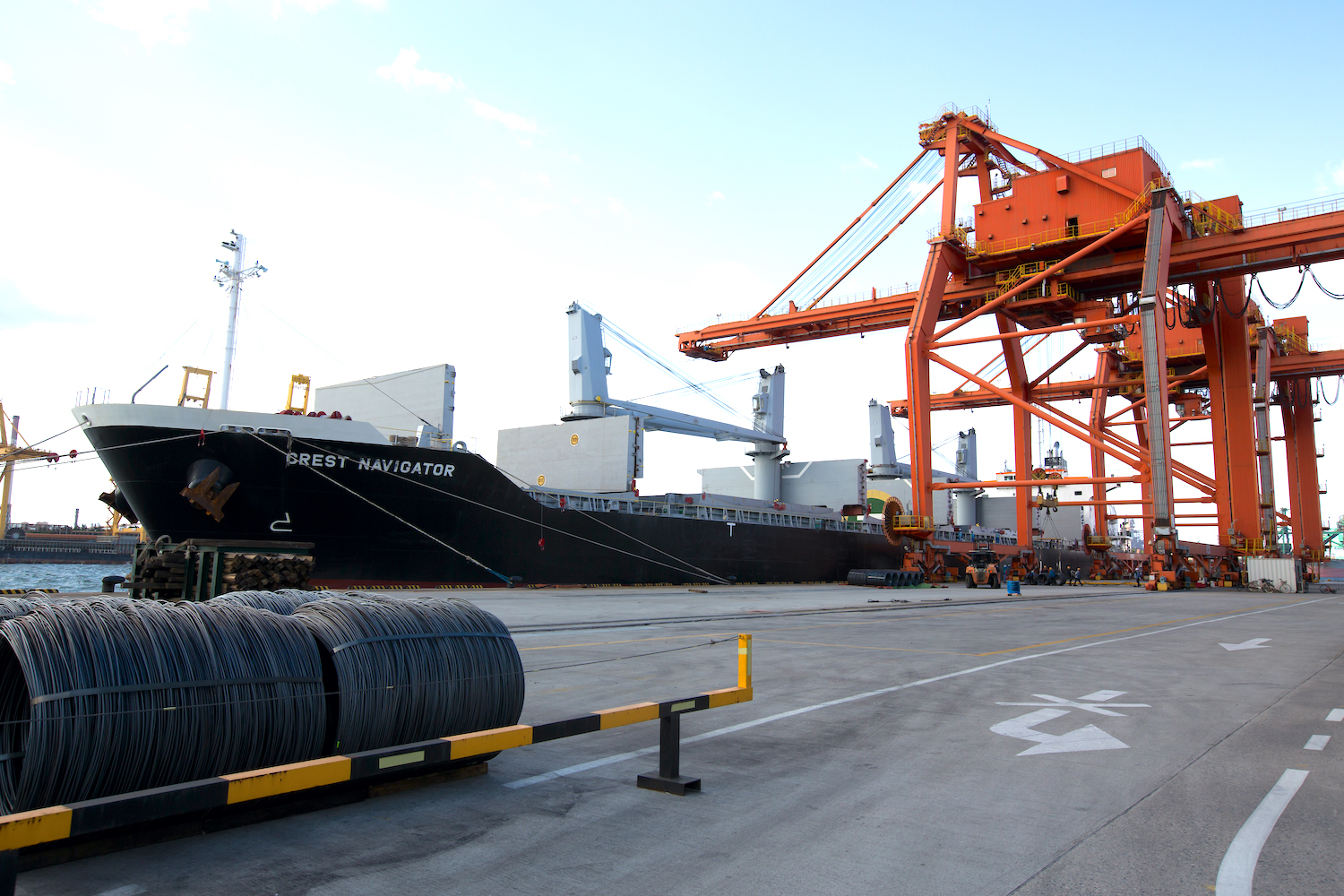
Shipments of EU distributors suffer in Jan-Feb
Steel shipments from European stockholders and distributors suffered significantly in February, according to the latest data published by Eurometal.
Steel service centres for flat products saw their shipments moving down -0.3% y-o-y during the two-month period. In January alone, shipments had increased 4.3% y-o-y, confirming the negative activity registered since February.
Multi-product distributors and stockholders saw their shipments during the Jan-Feb period falling -9.4% y-o-y, Kallanish understands.
“Only merchant bars, rebars, stainless steel and plates had a positive run, registering higher shipments. All other products had a negative run,” Eurometal explained.
Emanuele Norsa Italy