


Polish government seeks EU-wide scrap monitoring
Polish economic development and technology minister Waldemar Buda has written to the European Commission to appeal for a discussion at EU level about the problems facing the steel industry, namely the availability of scrap feedstock.
The industry has been hit in recent years by the Covid-19 pandemic impact and rising energy costs. Steel shortages have meanwhile hampered sectors such as construction, machine-building, automotive and white goods.
Polish authorities have already begun discussions with their Italian counterparts over stabilising the steel market, and plan to hold meetings with representatives of other EU nations. Italy carries out very close monitoring of its scrap exports.
“I think that the worst of the market instability is behind us – there’s no problem with the availability of this raw material [scrap], but its prices are not satisfactory,” Buda said last week. The comments came after he met with Polish steel industry representatives, Kallanish notes.
Polish scrap export restrictions could be ineffective if material is trans-shipped through neighbouring EU countries. “EU-wide action is needed in order to secure the raw material that is scrap. It should be treated as a strategic raw material over the medium term,” Buda said.
As for energy-intensive industries compensation, Poland has submitted its programme to the Commission. “The compensation system should stabilise the costs on the part of producers and provide an opportunity for production at reasonable prices,” Buda commented.
“We must maintain good economic performance and projected GDP growth. This requires access to raw materials at a predictable level in particular industries. We cannot allow for a halt in the construction market or in the steel production sector,” he added.
The minister said authorities want Polish steel users to switch to domestic procurement, while scrap sales should be carried out to EU partners. This will increase self-sufficiency and security in the event of interrupted supply chains, as the bloc is now dealing with due to the war in Ukraine.
In 2021 Poland exported 2.8 million tonnes of scrap, with Germany taking 0.91mt, Turkey 0.53mt and Czech Republic 0.36mt.
Adam Smith Germany


Global output falls versus 2021, rises on February
Global crude steel production dropped 5.8% on-year in March to 161.05 million tonnes, due to reduced EU, Asian and CIS output, the latter a direct consequence of the Ukraine war. Output however grew 13% versus February, according to worldsteel data.
Chinese output fell 6.4% on-year in March to 88.3mt, but Indian production grew 4.4% to 10.94mt. Japanese and South Korean production declined 4.3% and 6.1% respectively to 7.96mt and 5.69mt. Output in all four countries grew versus February, Kallanish notes.
EU27 production meanwhile fell 8.5% to 12.79mt, with German and Italian output down 11.8% and 8.6% respectively to 3.33mt and 2.11mt. These tonnages were however up versus February. French and Spanish output are also estimated to have declined on-year.
Turkish output was down for a fourth consecutive month, by 3% to 3.32mt, but rose versus February. Serbia reported the largest confirmed on-year output increase in Europe, by 11.8% to 153,000t.
US production saw its first drop in multiple months, by 1.7% to 6.98mt, but this was up on February, while Brazilian output is estimated to have rebounded 5.4% on-year in March to 2.96mt.
CIS output fell an estimated 19% to 7.43mt, with Russian output estimated down 1.8% to 6.59mt and Ukrainian output estimated at only 200,000t versus 1.78mt a year earlier. This is the result of Ukrainian steelmaking coming to an almost complete standstill in March following Russia’s invasion of Ukraine on 24 February.
Global crude steel output in the first quarter thus fell 6.8% on-year to 456.63mt.
Earlier this month, worldsteel revised down its 2022 global steel demand growth forecast to 0.4% on-year, giving 1.84 billion tonnes.
Adam Smith Germany
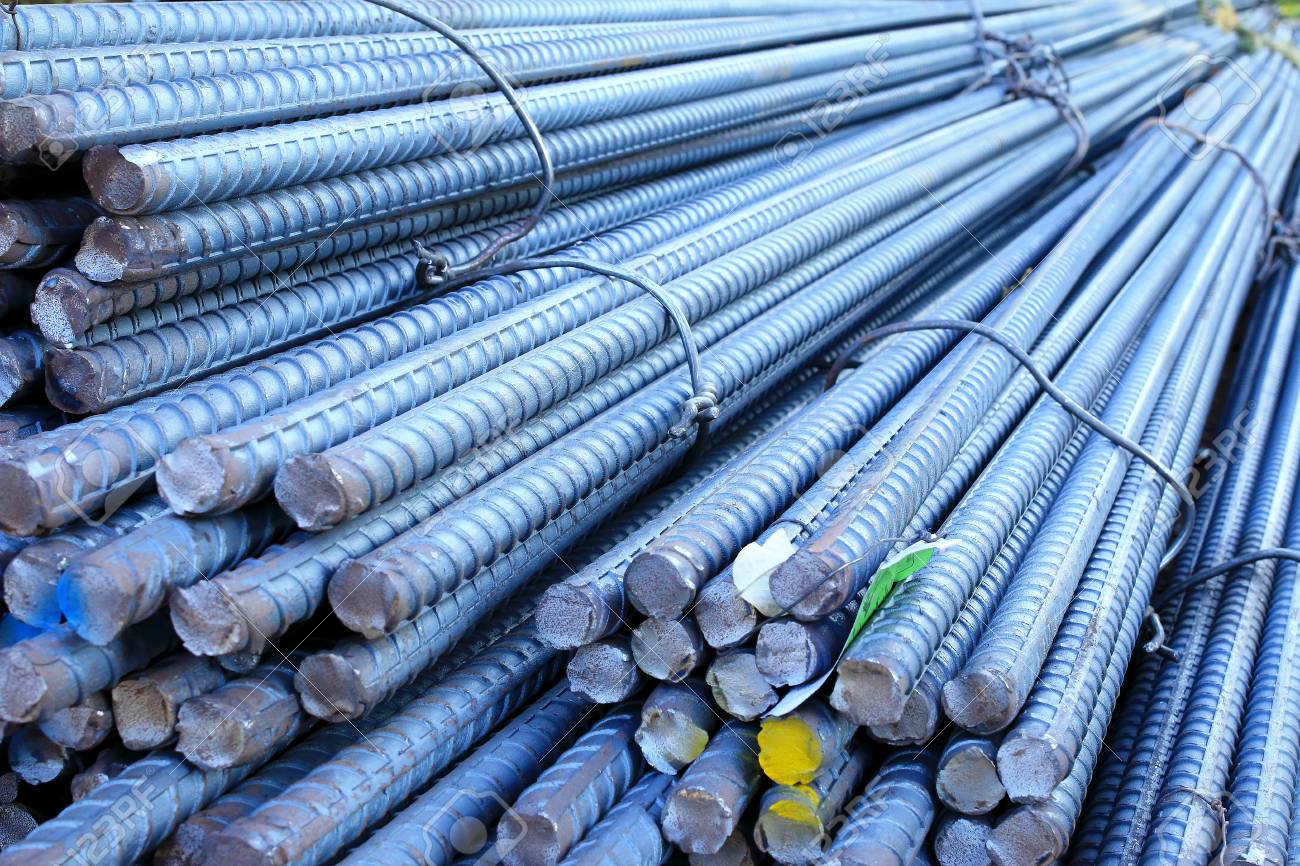
German construction slows on rising rebar prices
Construction companies in Germany are facing falling orders, a suspension of ongoing activities, and planned project stoppages.
According to a poll published by construction association Bauindustrie, 30-40% of member companies report effective suspensions, and as much as 70% report delays in ongoing projects. The association attributes this to construction material shortages and price increases that have been aggravated by the Ukraine war.
Kallanish hears the same view from rebar benders. “Project customers are shying away from long-term planning. Many projects will be completed around September/October, and then there will be a drop, for lack of new projects,” one rebar bender manager says.
The same echoes from Austria, where one manager is sure that autumn will bring a decline in construction activities. “Many planned projects were cancelled, and some big projects have been frozen,” he says. He adds that the erratic increases in prices prevent normal financing in line with the country’s regulation for loans.
The Austrian level for rebar is actually still far below that in Germany, where base prices in April went up by a respectable €300/tonne in some cases, after the magic mark of €1,000/t ($1,072) was reached in March. Many offers and transactions will now occur at above a base price of €1,200/t.
Christian Koehl Germany
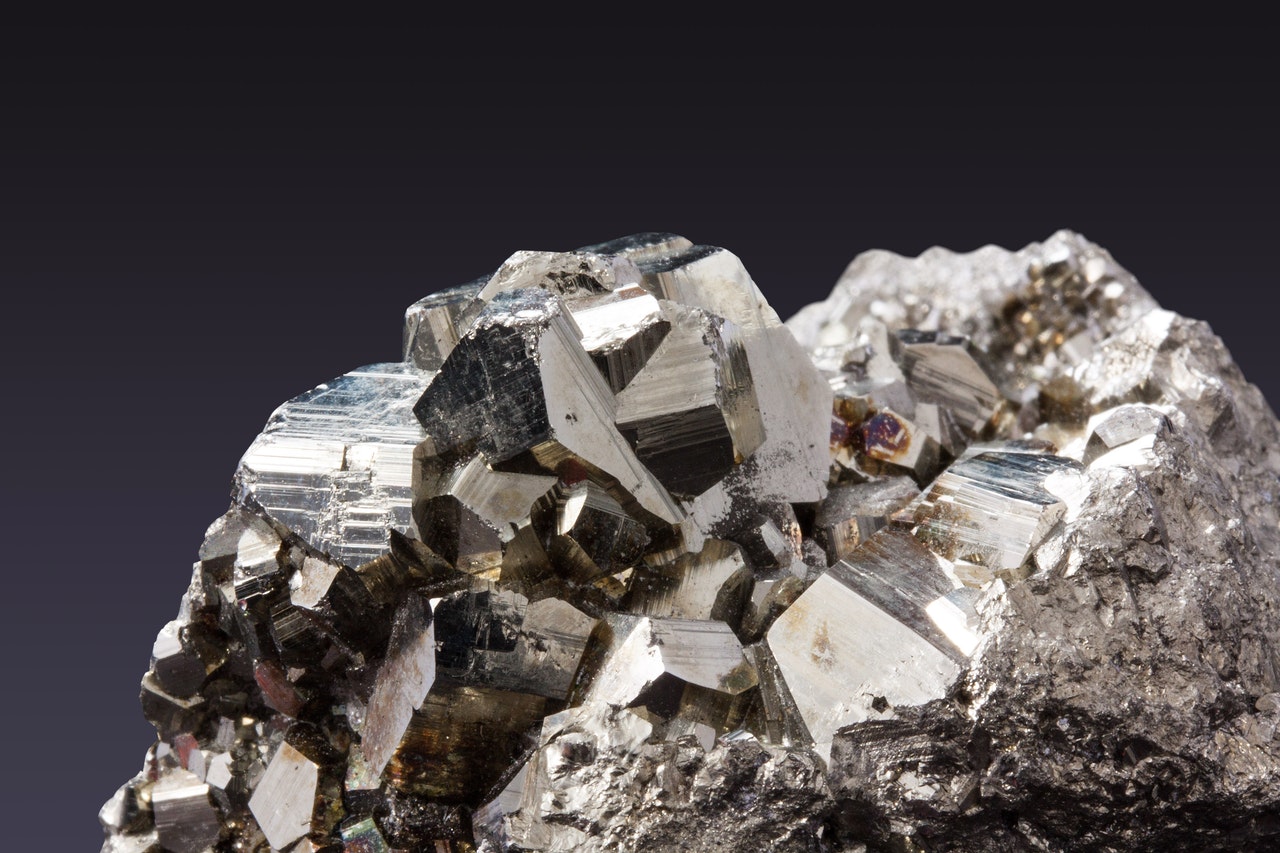
Iron ore collapses on recession fears
Seaborne iron ore prices collapsed on Monday as markets increasingly expected both higher US interest rates and missed Chinese GDP targets.
The Kallanish KORE 62% Fe index slumped $12.81/t to $138.54/dry metric tonne cfr Qingdao, the lowest level since a short-lived dip in mid-March. The Kallanish KORE 65% Fe index dropped $12.90/t to $162.30/dmt cfr, and the KORE 58% Fe index fell $10.10/t to $123.89/dmt cfr.
On the Dalian Commodity Exchange, September iron ore settled down CNY 60/t at CNY 830/t ($126.70/t), while on the Singapore Exchange May 62% Fe futures settled down $14.60/t at $136.17/t. The same contract for 65% Fe and 58% Fe futures settled down $14.53/t at $158.92/t, and down $12.56/t at $122.81/t respectively.
Chinese scrap and billet prices were also falling. 6mm+ heavy scrap delivered to mills in the Yangtze River Delta dropped CNY 25/t to CNY 3,916/t. In Tangshan, billet prices fell CNY 40/t over the weekend and CNY 50/t on Monday to CNY 4,700/t.
The bloodbath in iron ore mirrored a number of other financial and commodity markets, which are struggling to readjust to expectations of a possible global recession and further Covid-19 outbreaks in China.
In China, Beijing is now the focus of attention as growing case numbers there have triggered panic buying and fears of a lockdown. The country is only just beginning to escape the most serious economic consequences of lockdowns in the financial hub of Shanghai.
The addition of lockdowns in another major economic hub, plus any knock-on impacts of policymaking and the fear that Covid may continue to circulate through to at least the summer, have left financial markets very nervous. Chinese bankers continue to promote a stimulus agenda, but stimulus cannot be effectively implemented until Covid has eased.
Added to this is the fear that a rapid increase in US interest rates may trigger a global economic recession. At the very least, higher US interest rates are likely to draw funds away from commodity markets outside the US. The prospect of a German recession as it weans itself off Russian gas has added to fears that any aggressive move by the Fed may launch a wave of disruption globally.

European stainless coil hikes again, pricing formula questioned
European stainless steel hot and cold rolled coil prices are increasing due to hiking alloy surcharges. Contract prices remain firm amid continued short supply, Kallanish hears from market sources.
Demand in Europe, however, has reached a standoff due to unsustainably high alloy surcharges that still continue to increase. Sources say mills are now quoting for July delivery but it is proving difficult to fill order books based on the usual price calculation of base price plus alloy surcharges.
Outokumpu has increased its surcharges for May. The new figure for grade 304 (1.4301) is €3,844/tonne ($4,123), up from €3,251/t in April. According to the formula applied by all steelmakers to calculate coil prices, €3,844/t will be added to the base price of €1,600/t. This gives a new value for CRC of over €5,400/t delivered, a price considered unacceptable by many buyers.
Large buyers in Europe are withholding local purchases and only buying imported material from the Far East. Some smaller buyers are nevertheless implementing mixed CRC purchases, buying some imported material and low tonnages in Europe at between €4,900-5,400/t delivered.
Mills are refusing to give up their pricing formula officially, but some are accepting discussions with their customers and are making tailor-made offers that may differ from buyer to buyer, depending on payment conditions and tonnages. The practice of allocating material with “open prices,” or no prices, until the monthly alloy surcharges are published, is also a widespread habit. Three sources, however, agree that the current price situation is unsustainable and mills will have to accept a fixed price for future sales.
Re-rollers and service centres throughout Europe say they have strong order books for flat products and some of them are reporting September lead times. The gap between European CRC and values from the Far East remains significant. Material from China and Taiwan is offered at €4,300-4,400/t cfr Europe, meaning a differential of over €1,000/t, sources suggest.
While some European mills are trying to negotiate with customers, others are reported not to be quoting. While CRC in Europe remains in short supply, HRC is more available, at more reasonable European prices of €4,300-4,400/t delivered, depending on customer.
Natalia Capra France

SPAIN DATA: Steel production slows 12% in February
Spanish steel production slowed for a fourth consecutive month in February, falling 12% year on year to 969,000 mt, data from industry association Unesid showed April 25, as rising energy costs impacted production.
The volume of scrap recycled in the month also decreased 12% year on year to 772,000 mt, Unesid said.
Both figures are the lowest monthly totals, with the exception of the December holiday month, since August 2020.
Following an uptick in production for January through October 2021, production began to slow in November, with some producers halting early for the holiday season as energy prices continued to breach record highs. The metal sector is Spain consumes around 16% of all power supply.
Since the start of 2022, the high price scenario has continued and started to impact inflation. A number of steel producers have either halted units or adapted production to meet demand, while a transport workers strike during March and holidays in April continued to impact industrial activity.
The steel output slowdown is reflected in power demand figures from the iron and steel sector published by the grid operator Red Electrica de Espana which show an 18% year on year decline in power demand in February, widening to a 26% decline for March, which has contributed to an 11% overall slump for the industrial sector in the month.
Spain steel production, recycling volume to Feb
Month Steel production (million mt) YOY change (%) 12-month volume (million mt) Scrap recycling (million mt) YOY change (%) 12-month volume (million mt) Scrap:Steel proportion (%)
Feb-21 1.11 0 12.32 0.87 NA NA 79
Mar-21 1.32 14 12.53 1 NA NA 76
Apr-21 1.31 109 12.68 1.02 105 0.78 78
May-21 1.35 68 13.40 1.08 59 0.83 80
Jun-21 1.31 57 13.91 1.08 51 0.86 82
Jul-21 1.09 59 14.17 0.82 57 0.87 75
Aug-21 1.20 69 14.68 0.85 36 0.89 71
Sep-21 1.25 27 15.22 1.01 16 0.92 81
Oct-21 1.28 9 15.52 1.03 5 0.94 80
Nov-21 1.14 -3 15.48 0.92 -2 0.93 81
Dec-21 0.86 -4 15.17 0.60 -9 0.90 70
Jan-22 0.99 -6 15.26 0.70 -13 0.91 71
Feb-22 0.97 -12 15.18 0.77 -12 0.90 79
Source: Unesid
— Gianluca Baratti

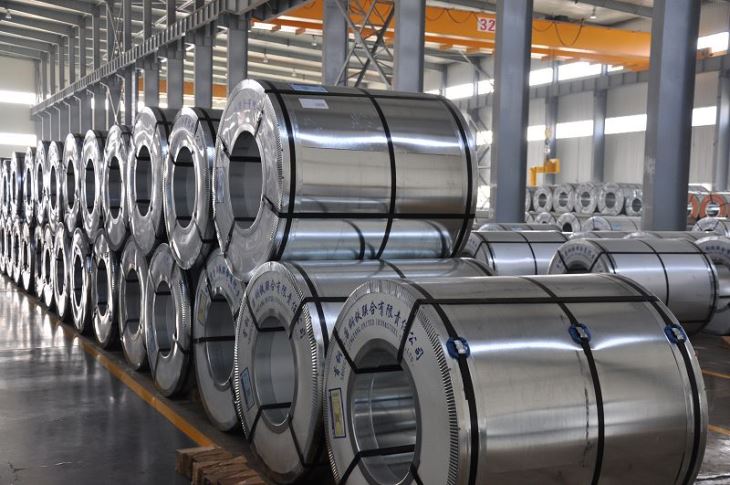
EU hot-rolled coil market cools, reductions expected
Market sources reported expectations of a pricing downtrend for hot-rolled coil April 25, as demand remained reduced off the back of the holiday period.
Sources in Northern Europe reported a quiet market with muted demand on the day, with most preferring to wait and see whether prices would correct in resistance to restocking at current levels.
“Everyone is expecting price decreases, so we’ve had hardly any enquiries,” one mill source said. “Buyers prefer to wait – most are looking toward Q3 – we may see buyers return next week to order for June but its difficult to forecast at the moment.”
When asked about price direction, the same source said production costs were too high for a collapse, and that producers would elect to reduce production rather than slash offer levels.
However, other market sources disagreed that mills would reduce production.
“Mill can decrease the prices, and they will, but I don’t think they’ll cut production yet as the current price decline doesn’t justify it,” a service center source said.
“Prices are overheated,” a trader said. “Yes, mills have higher costs, but not so much as to increase prices by what they have.”
The trader also reported mills were ready to accept lower bids, if at reasonable volumes.
Sources confirmed demand was much reduced, especially from the automotive industry, with expectations mixed as to the return of the sector. A second trader reported potential pickup toward the end of May from one OEM, whereas a second service center source said there was no hope for the automotive industry to recover this year.
Multiple sources reported a need for prices to soften further to stimulate demand, considering a maximum tradable value at Eur1,200/mt ex-works.
HRC in Northern Europe was assessed down Eur15 on the day at Eur1,310/mt ex-works Ruhr. HRC in Italy was stable April 25 at Eur1,250/mt.
— Benjamin Steven