


EU steel sections prices stable amid quiet demand
European domestic steel sections prices were stable in the week to April 27, as buyers held back from booking orders at consistently elevated prices.
S&P Global Commodity Insights’ assessment of the Platts European medium sections price (category 1, S235 JR) was at Eur1,500/mt delivered April 27, stable week on week.
Market sources continued to cite stable prices for most long steel products in the domestic European market as mills maintained elevated offers amid limited availability of stock, while buyers held back amid softening scrap.
Sources also reported that Russia had decided to ban gas supply to Poland and Bulgaria, which house significant steel production, demanding payment in Russian rubles instead of euros. The development raised concern in the market, where sources noted that if the issue persisted, it might start to impact other European countries as well, thus increasing energy costs, which will offset any decrease in scrap prices.
Market participants unanimously cited workable levels for category 1 medium sections at Eur1,500/mt delivered, which were stable week on week.
One distributor source in the Benelux region noted that demand is coming back after two quiet weeks of holidays because of Easter. However, with the unstable political situation between Russia and Ukraine, “it is making the financial markets very nervous,” he said.
“There is an increasing pressure from buyers [to lower prices] because of softening international scrap prices,” one European mill source told S&P Global. However, he noted that the trend in prices needed to be monitored so mills for now were maintaining levels. He also noted that if the European countries face any issues in gas supply, the high energy costs could offset any decrease in scrap levels.
Another mill source also noted that prices for medium sections were mostly stable week on week.
“Of course, we hear some imports coming in from here and there, but it is not a big issue,” he said.
Elsewhere, Northwest European domestic rebar prices were also stable in the week to April 27. The assessment of Platts TSI Northwest Europe Rebar was flat at Eur1,320/mt ex-works April 27.
One Italian mill source noted that weakening international scrap prices had started to affect scrap levels in Italy, where levels were expected to move Eur30-Eur40/mt lower in the near term, which will also in turn impact scrap prices in Germany.
S&P Global assessed Platts Turkish imports of premium heavy melting scrap down $5/mt to $565/mt CFR on April 27.
“But for the moment, I don’t see any lower prices for rebars because of lack of offers,” the mill source said, adding, “Prices are not going down, but no one is buying at the moment.”
The source also noted that not everyone in the market expected prices for long steel products to move down in the near term as because of Russia stoppage of gas to Poland and Bulgaria.
“It might affect other European countries as well where gas prices might rise again,” he said.
The source indicated domestic rebar workable prices in Germany around Eur1,370-Eur1,400/mt delivered, with deals probably happening around Eur1,370/mt delivered from local suppliers.
One seller source noted that prices were stable week on week for domestic rebars in Northwest Europe around Eur1,310-Eur1,360/mt delivered, while one European trader put mill offers in Germany for rebars at Eur1,400/mt delivered.
— Rabia Arif, Staff


Voestalpine studies hydrogen plasma for green steel production
Voestalpine will investigate the use of hydrogen plasma in a carbon neutral steel production process at a new pilot facility at its Donawitz site in southern Austria, the steelmaker said April 27.
The project is part of the Austrian company’s goal to produce carbon neutral steel by 2050 amid its “sustainable steelmaking,” or SuSteel, research project.
S&P Global Commodity Insights assessed the cost of producing renewable hydrogen via alkaline electrolysis in Europe at Eur11.46/kg ($12.17/kg) April 26 (Netherlands, including capex), based on month-ahead power prices, down from a peak of Eur29.40/kg March 7.
Voestalpine is currently Europe’s only steel manufacturer conducting research into the use of hydrogen plasma in steelmaking.
Conventional steel production uses coke, coal or natural gas as a reducing agent for ores, and the SuSteel project replaces these with hydrogen. Hydrogen plasma is used to simultaneously reduce iron ore and smelt it into crude steel in a special direct current electric arc furnace. The advantage of using green electricity and hydrogen as the reducing agent is that water vapor is the only end product, completely avoiding carbon dioxide emissions, according to the statement.
“We are working at full speed on novel processes which will allow us to achieve the breakthrough of decarbonizing steel production at the sites in Linz and Donawitz,” Voestalpine CEO Herbert Eibensteiner said.
Voestalpine’s target is to partially replace the existing blast furnace route with hybrid steel production using electricity as of 2027, and then to successively increase the share of green hydrogen used in the steel production process to 2050.
“The requirements for realizing this revolutionary vision are clear: Green electricity and hydrogen must be available in sufficient quantities and at prices which reflect market conditions,” Eibensteiner added.
At Donawitz, in Styria, the company’s metal engineering division produces about 1.65 million mt/year of high-quality raw steel, which is processed into billets or pre-blocks. Most of the production is used as raw material for the group companies Voestalpine Rail Technology, Voestalpine Wire Technology and Voestalpine Tubulars, while the export share is around 15%.
The Platts daily billet assessment fell $5/mt day on day to $710/mt FOB Black Sea April 26, according to S&P Global Commodity Insights data.
— Annalisa Villa

EU downstream coils market slow, poor outlook for automotive
The value-added coils market was reported as “silent” April 27, as sources reported minimal demand and poor prospects for the automotive sector.
Cold-rolled coil in North Europe was assessed down Eur10 on the day at Eur1,390/mt ex-works Ruhr. In Italy, CRC was down Eur15 at Eur1,350/mt ex-works.
Hot-dipped galvanized material was down Eur75 in the North at Eur1,425/mt ex-works Ruhr, HDG in South Europe was also down on the day, assessed at Eur1,400/mt ex-works Italy.
Sources reported demand as scarce due to an absence of automotive from the market.
“Demand for automotive is completely gone, with little chance of return in the near-term,” said one service center source. “Not only are automotive not offering new contracts due to component shortages, they are also informing customers that the contents of some agreed contracts are now unavailable. They are being asked to wait as long as 18 months or face cancellation of contracts.”
Another service-center source confirmed the absence of demand: “The downstream coils market is dead.”
While cold-rolled material was in previously tight supply, availability was reported as strong across the market with one source saying CRC had turned from “gold to dirt.”
Cheap CRC import offers were heard from Turkey to Spain on the day at Eur1,200/mt – while these offers are yet to be seen in the Italian market, prices are regarded as competitive.
— Benjamin Steven

China’s manufacturing steel demand worsens as COVID-19 hits consumption
China’s manufacturing activity and steel demand in April extended the decline from March levels as widespread COVID-19 cases sent the country reeling, a development that would continue to keep the manufacturing sector under pressure in May.
China’s manufacturing production index of steel consumption published by S&P Global Commodity Insights stood at 128 points in March, up 16 points on the month due to seasonal factors. However, the index was down by 18 points on the year, indicating the pandemic continues to weigh on the steel sector.
Lockdown measures were extended to more Chinese cities in April compared to March, and the year-on-year decline in manufacturing activity and steel demand is expected to deepen in April.
The production index is based on production data from China’s National Bureau of Statistics for 17 steel-related manufactured goods, categorized into seven sectors and weighted according to their share of steel consumption. The monthly production average in 2018 is used as the baseline of 100.
In March, only the production of shipbuilding and power generation facilities saw a year-on-year increase, while that of machineries, vehicles, home appliances, containers and railway facilities were all lower than a year earlier.
Decline in April
China’s production of manufactured goods in general fell in April from March, as over 50 major cities across 21 provinces imposed certain social restrictions to tackle the COVID-19 resurgence, disrupting both supply chains and end-user demand for these goods, sources said.
Diminished demand could be indicated from the bearish expectations for China’s car and excavator sales in April. Both sectors are major consumers of steel.
China’s passenger car retail sales in April are expected to drop 31.9% on the year, worsening from the 10.5% year-on-year decline seen in March, according to the China Passenger Car Association.
Meanwhile, China’s Construction Machinery and Equipment estimated domestic excavator sales in April would fall by roughly 60% on the year, similar to that in March. The excavator sector is an indicator of construction-related machineries and sets the tone for the construction activity in the near term.
Some market sources said sales of freezers in some of the COVID-19-affected regions surged in April as people rushed to stock up food in fear of lockdowns. However, these one-off purchases were not big enough to reverse the downward trend in the home appliance sector, mostly caused by slowing property sales and stalled household income.
Moreover, a source targeting steel end-users in southwestern China’s Chongqing municipality said orders received by some local producers of passenger cars, heavy trucks and motorcycles dropped by 40%-60% on the year in April, although orders for shipbuilding, wind power and environmental protection equipment were stable.
So far this year, Chongqing hasn’t been hit by the pandemic. Therefore, the slowdown in its manufacturing sector indicates that social restrictions in the COVID-19-affected areas have impacted national economic activity adversely, the source said.
Some sources expect the recovery in manufacturing activity to be slower in May, as lockdowns in some major Chinese cities, such as Shanghai, would almost certainly continue into early or even mid-May, while places that reported no COVID-19 cases would be careful about lifting social restrictions.
Steel consumption weakens
China’s steel-related consumption in the first quarter of 2022 dropped 9.5% on the year to 235 million mt, according to the China Iron & Steel Association.
S&P Global’s calculations, based on crude steel output, net exports and steel inventories, showed steel-related consumption dropped 6.3% on the year in Q1, while March saw a 3.8% decline on the year.
Steel-related consumption in April is expected to fall by up to 20% on the year, calculations by S&P Global showed.
— Staff
Aperam pushes up alloy surcharges again
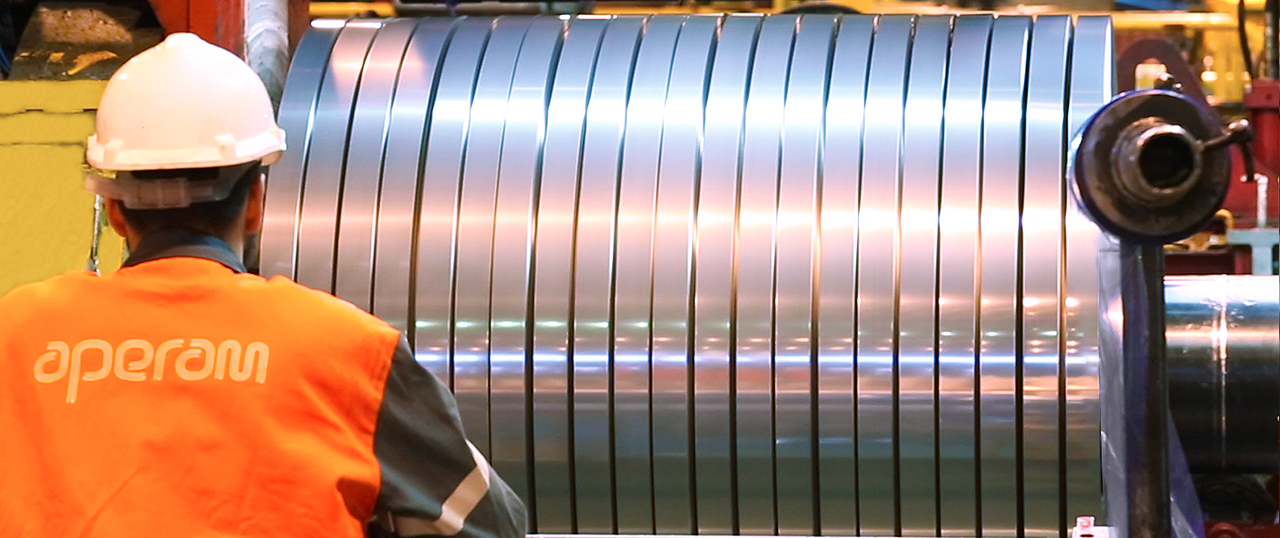
French stainless steel producer Aperam has increased alloy surcharges again for May, for its austenitic range of flat stainless steels for Europe, by over €400/tonne ($424) on average versus April, Kallanish notes.
The surcharge for grade 304 (1.4301) has gone up from €3,282/t in April to €3,656/t, effective 1 May. For grade 316, it has increased from €4,817/t to €5,338/t. Grade 309S, a heat-resistant stainless steel used in high-temperature applications, has also seen its value increase from €4,531/t for April to €5,328/t in May. The surcharge for the most popular ferritic grade, 409, has gone up from €1,071/t in April to €1,180/t, the company reveals.
Offers for nickel cash buyers reached $32,825/t on 26 April, Kallanish notes.
European stainless steel hot and cold rolled coil prices are increasing due to hiking alloy surcharges. Demand in Europe, however, has reached a standoff due to unsustainably high prices.
Outokumpu has also increased its surcharges for May. The new figure for grade 304 (1.4301) is €3,844/t, up from €3,251/t in April. According to the formula applied by all steelmakers to calculate coil prices, €3,844/t will be added to the base price of €1,600/t. This gives a new value for CRC of over €5,400/t delivered, a price considered unacceptable by many buyers (see Kallanish 25 April).
Natalia Capra France


UK steel distributor continues operations after pre-pack sale
UK-based steel service centre and distributor Bemaco Steel, which was declared insolvent last month, has been acquired through a pre-pack administration process by FXSteel for £4.6 million ($5.8m). The latter is a connected party, Kallanish notes.
The accelerated sale of the Cardiff-based business, which became insolvent after a ruling against the firm in a contractual case, was managed by business advisory firm FRP.
Under the deal, the business will continue to be led by Bulent Unal, previously the sole director of Bemaco Steel, alongside fellow directors Murat Unal and Mark Halley.
Bulent Unal says: “This deal represents a fresh start for what was historically a profitable business with a strong client base. Under the FXSteel banner, we remain a major steel broking, distribution and specialist laser cutting of tubular steel products business based in Cardiff Docks and our combined years of experience within the steel industry mean we are a trusted partner for product sourcing, material financing and distribution.”
Bemaco Steel was founded in 1987 and achieved revenue of £40m in 2019, though turnover was subsequently impacted by the pandemic. The firm’s stocking facility at Cardiff Dock carries in excess of 6,000 tonnes of steel. Bemaco says it offers hollow sections, merchant bar and hot rolled sheet for next day delivery.
Adam Smith Germany
EU to suspend trade barriers for Ukrainian steel
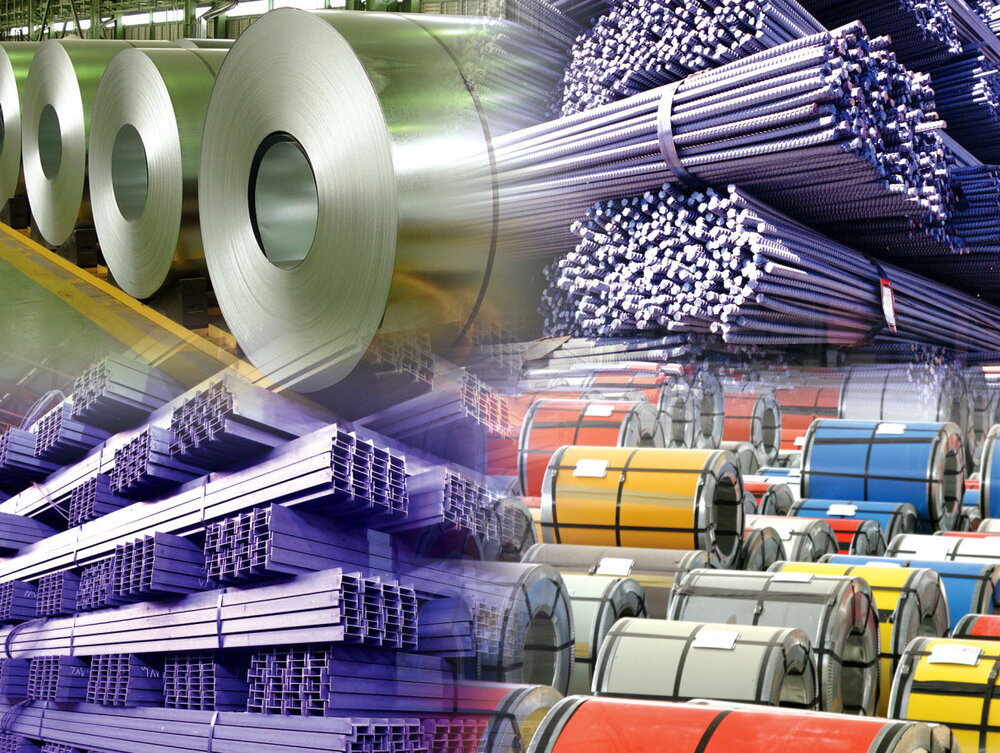
The European Commission proposed on Wednesday the suspension of all trade barriers against Ukraine-origin steel imports for a period of one year, to support the country during the ongoing war with Russia, according to a Commission release seen by Kallanish.
The proposal needs to be ratified by the European Parliament, but it would be an unprecedented measure to support a country’s economy affected by war.
As part of the suspension, the Ukrainian steel sector would benefit from being excluded from the existing safeguard measures system. In addition, other trade restrictions would be suspended, such as the anti-dumping duties in place on hot rolled coil from Metinvest, and certain steel tube.
“The EU has never before delivered such trade liberalisation measures, which are unprecedented in their scale: granting Ukraine zero tariff, zero quota access to the EU market,” said EU trade commissioner Valdis Dombrovskis.
“Since the start of Russia’s aggression, the EU has prioritised the importance of keeping Ukraine’s economy going – which is crucial both to help it win this war and to get back on its feet post-war. These measures will directly help Ukrainian producers and exporters. They will inject confidence into the Ukrainian economy and send a strong signal that the EU will do whatever it takes to help Ukraine in its hour of need,” he concluded.
Emanuele Norsa Italy

German scrap market expects price decrease in May
German scrap prices increased in April due to the Russian invasion of Ukraine and short supply, according to German scrap market participants. However, most sources expect prices to fall in May despite uncertainty continuing to impact the market.
Prices in southern Germany and in most other parts of the country increased this month by €20-30/tonne ($21-31/t), a Bavarian buyer tells Kallanish.
Nationwide average prices for old thick scrap sort 3 are up from €560/t to €590/t. The price for new scrap sort 2/8, meanwhile, has reached €620/t.
The price for E40 shredded scrap has reached €600/t.
However, in Austria, scrap prices increased significantly in April, by €50-70/t. Old thick scrap sort 3 has thus reached €585/t and new scrap sort 2/8 is at €595/t.
“We expect that prices in May will probably fall by €30-50/t, to the levels of March,” another German market participants notes. “Turkish and Italian scrap prices have already started to decrease.”
Supply continues to be pressured further by persistent semiconductor shortages, which have led to production halts in the automotive industry, sources say.
Market participants continue to describe the situation as very turbulent, because everything depends on the Russia-Ukraine war, new sanctions against Moscow and high energy costs. “Another factor will be if Russia continues to stop natural gas deliveries, like it already did with Bulgaria and Poland. This will also impact the market,” a merchant observes.
German steelmaker Salzgitter already announced plans in April to increase its scrap consumption in the coming years (see Kallanish passim). The plant will expand its scrap activities by 50% from the current 2 million tonnes/year by 2030 and the intermediate target is 2.5mt by 2025. Salzgitter will buy more high grades, such as new scrap E8.
Svetoslav Abrossimov Bulgaria

Austrians question German rebar price craze
Rebar prices in Germany have been surging in April without much restraint, and without much resistance from the market. Most German players have signalled acceptance for a base price level of €1,200/tonne ($1,270) from local mills, and some concede they have paid more or are prepared to do so.
In Austria, buyers are much more reserved. “Prices here were never that high,” one manager tells Kallanish. “It may have been the wish of the steelworks [to reach these price levels]. They have pointed that high, but not because they believe in it, but to safeguard the previous price step,” he adds. German and Austrian mills have fetched around €1,050/t in the Austrian market, but not much more. Adding the standard size extra of €265, the highest delivered price he has heard is €1,300/t.
Another buyer of reasonable volumes sees base prices inching above €1,100/t. Both, however, doubt the validity of the current price level, and believe that a downward correction is the next logical step – quite in contrast to the sentiment among German players. “I think the limit has been reached, and I expect prices to fall by €80-90 over the next week,” the second buyer says.
Austria is of course sandwiched between the solid German market, with its enormous price leaps, and Italy, where values are hovering at a little over €900/t. Apparently, Italian mills are trying to gain more business further north, due to low demand in their own country. According to the first manager, an Italian load to Austria recently cost him €1,000/t.
Christian Koehl Germany

Slab prices soften on sufficient supply, flats softness
Global merchant slab prices have diverged considerably, as material origin has become the value identifier amid Russia’s invasion of Ukraine and consequent sanctions on Moscow.
The addition of religious holidays in various regions throughout April have further emphasised the split, as China became the largest buyer of Russian slab. Small volumes of the same origin were traded in the Mediterranean and offered to Latin America, where regional material is offered and sold at much-higher-than-Russian values, Kallanish learns from market participants.
Prices of slab from Asia into Europe and Turkey have softened somewhat, but offers were sparse due to Ramadan and previously acquired vast tonnages. These came at around $950-1,050/tonne cfr for Chinese, Iranian, Indonesian, Malaysian and Vietnamese slab, depending on destination and grade. Around 0.5 million tonnes were acquired in six weeks between March and April, in the absence of Ukrainian slab and difficulties sourcing Russian material.
The replacement of missing CIS volumes by Asian-origin material at relatively acceptable prices in Europe has calmed the frantic sentiment that formed in early March. It also satisfied the need for Brazilian-origin imports into the eastern hemisphere – a pricey and long-lead-timed exercise, as Brazil continues to supply the US and the region at considerably higher prices, traders note.
Although lower by around $100/tonne versus mid-April, Brazilian slab is still at some $1,200/t fob this week to the US and $1,080/t fob to other North America, including Mexico. In the latter, Russian slab is available at lower prices, but contains reputational and logistical risks. Mexican slab offers were surfacing at a lower, $950-980/t fob over the past fortnight.
Meanwhile, Russian slab is currently directed to Asia, and mostly China, at prices not exceeding $700/t cfr, and in volumes almost matching early-Covid-19 pandemic levels. Again, up to 0.5mt of Russian slab is heard to have been contracted to China in the past two months, starting from $800/t cfr at the beginning of March and moving towards below $700/t cfr in bid targets in the last few days.
Turkey, a staple CIS slab buyer, is not in the market for Russian slab, according to various sources, but Europe is still buying small quantities from the non-sanctioned Russian firm. Supply is difficult due to logistical and financing constraints, and prices are not exceeding $800/t fob Black/Baltic Sea, but “possibly lower”, according to several sources, who cite weakening sentiment in the European flat products market.