


Some Turkish mills sharply cut HRC offer prices: sources
Some Turkish producers of hot-rolled coil reduced their offer prices significantly on April 29, sources told S&P Global Commodity Insights, as falling prices at Chinese mills and a slump in imported scrap pricing raised the pressure on Turkish mills amid a sluggish market.
Other producers, however, are still waiting to gauge market direction after the three-day Ramadan holiday starting May 2.
A large Turkish producer on April 29 began to offer HRC as low as $1,050/mt EXW for July rollings, a manager of a major Turkish pipe producer told S&P Global.
This is down more than $100/mt from HRC list prices from Turkish mills last week.
S&P Global’s assessed domestic HRC at $1,245/mt FOB on April 22.
A manager of a major Turkish HRC producer told S&P Global April 29 that it is not officially offering $1,050/mt EXW. “But we will accept it, if someone says he will buy it at that price,” he said.
An executive of another HRC producer said it has been exporting HRC at $1,100-$1,120/mt FOB, although it is not currently offering HRC to the domestic market as there is no ahead of Ramadan.
A service center manager said Russian mills were heard to be offering extremely low prices to Turkey. “They don’t have any other options for exports, besides Turkey and China,” the manager said. “So they are giving crazy prices to these countries.”
A pipe producer source told S&P Global on April 27 that he had heard a Russian producer had recently sold some HRC tonnage to Turkey at $1,000/mt CFR.
“Chinese suppliers have been offering HRC as low as $970/mt CFR Turkey, while Indian mills’ offers have been in a range of $990-$1,000/mt CFR in recent days,” the manager also said.
Confirming an HRC offer by a Turkish producer at $1,050/mt EXW on April 29, a manager of a Turkish steel producer said prices for hot-dip galvanized coil also fell significantly in a bearish market.
“Because of the Ramadan holiday starting next week, there are next to no transactions in the market,” one coated coil producer said, adding that scrap prices were also weak, with the market expecting scrap prices to soften further.
Turkish deepsea import ferrous scrap prices have declined gradually in recent weeks due to a sluggish finished product market. S&P Global assessed Turkish imports of premium heavy melting scrap 1/2 (80:20) at $560/mt CFR April 28, down a further $5/mt on the day.
A trading source said cold-rolled coil prices in Turkey are currently above those of hot-dipped galvanized steel, noting that high demand and less availability of CRC in the domestic market, along with low demand and more capacity for galvanized products, continued to put pressure on HDG prices. The source put mill offers for HDG 0.50 mm thickness at $1,160/mt EXW.
A coated coil producer said its offer price for 0.50mm thick HDG was at $1,150-1,200/mt EXW on April 29.
Another producer source, however, said some producers have already begun to offer HDG below $1,100/mt EXW amid sluggish market sentiment.
— Cenk Can

LME scrap contracts see big falls on week, volumes rise
Most near-term ferrous scrap futures contracts on the London Metal Exchange saw sharp falls over the week to April 28, while trading volumes increased.
The April contract was up $1/mt week on week by Platts to $620.50/mt on April 28, S&P Global Commodity Insights data showed, but the May contract fell $50/mt to $540/mt while June was down $52.50/mt to $527.50/mt and July dropped $30.50/mt to $519.50/mt.
The backwardated structure over April-June strengthened, suggesting players continued to expect physical prices to soften in the near term.
The backwardation over June-July softened, meanwhile, suggesting expectations of weakening physical prices into the summer months were slightly less firm.
Spot prices for physical imports of premium heavy melting scrap 1/2 (80:20) dropped $55/mt week on week to $560/mt CFR Turkey on April 28, as most mills continued to hold back from buying, hoping for lower prices.
“All scrap recyclers have offers, and all scrap price levels are possible soon, even $500/mt CFR and below, but mills do not want to buy now,” a Turkish mill source said.
“Mills are trying to focus on finished steel sales but there is no action and it is difficult to sell in the domestic and export markets ahead of the [Eid al-Fitr] holidays.”
LME scrap futures trading volumes over the week to April 28 totaled 49,570 mt, up from 12,450 mt in the previous week, which was shorter due to Easter holidays. The volume was the highest since week ending March 31.
Rebar
Most near-term rebar futures contracts also saw big falls over the week to April 28. Platts assessed the April contract up $1/mt on week at $940.50/mt. The May contract fell $29.50/mt to $840/mt, while the June contract lost $33/mt to $825.50/mt. The July contract dropped $28/mt to $820.50/mt.
The backwardation over the April-June portion of the forward curve continued to strengthen, suggesting futures traders still expected prices to soften in the near term. The backwardated structure over the June-July portion of the curve softened.
Turkish physical rebar export prices fell $30/mt week on week to $897.50/mt FOB on April 28, as poor demand in the export as well as domestic markets ahead of the Eid al-Fitr holidays kept pressure on prices. Eid holidays were expected to begin on May 2.
Most European buyers held back after the safeguard import quota for Turkish rebar for April-June was exhausted.
However, Turkish export rebar prices were still considered workable into the EU with a 25% safeguard duty given high domestic EU prices. Turkish mills, therefore, maintained elevated prices for the European market, leading to a clear disconnect between expected tradable levels between EU and non-EU markets.
One trading source indicated higher workable levels for Turkish rebar in Europe compared to other export destinations.
“But no deals from anywhere as everyone is waiting and seeing. Also, with the new cancellation of Ukrainian antidumping duties for EU, some cheap stock material should enter Europe from Ukraine,” he said.
Rebar futures weekly trading volumes in the week on the London Metal Exchange totaled 8,170 mt on April 28, up from 630 mt the previous week to the highest since the week ending March 31.
The daily outright spread between Turkish export rebar and import scrap was assessed at $337.50/mt on April 28, up $25/mt week on week.
Elsewhere, Indian scrap futures, which settles basis the Platts CFR Nhava Sheva shredded scrap assessment, traded 300 mt by April 28. The contract has seen a total volume of 4,680 mt traded since its launch in July 2021.
— Rabia Arif, Viral Shah

Turkey’s Colakoglu sets two world records in stainless steelmaking: Primetals
A vacuum oxygen decarburization (VOD) plant supplied by Primetals Technologies to major Turkish steel producer Colakoglu achieved a heat size of 298.2 mt — a world record in stainless steelmaking, and also reached a carbon content of 5 parts per million (ppm) after decarburization, which marks another world record for VOD plants, according to a Primetals statement sent to S&P Global Commodity Insights April 29.
“Together with Primetals, we create value by recycling stainless scrap, thus creating stainless steel for the Turkish industry — and we will contribute to reducing Turkey’s trade deficit by replacing imports,” Ugur Dalbeler, CEO of Colakoglu said.
The plant was upgraded from an existing vacuum degassing plant also supplied by Primetals and Colakoglu is able to produce special steels like IF grades, ULC grades and stainless steel at the plant.
Immediately after start-up, for the first time in Turkey, stainless steel grades 304 and 304L were produced by Colakoglu in 2021, S&P Global reported earlier.
Colakoglu operates an electric arc steel plant in Dilovasi, western Turkey. The main products there are slabs for a hot rolling mill, and billets for producing rebar and rock bolts.
The company currently has a bar output capacity of 1 million mt/year and an HRC production capacity of 3 million mt/year.
Colakoglu is also on track to reach hot-rolled coil output capacity of 4.5 million mt/year in 2023 with its ongoing investments, CEO Ugur Dalbeler told S&P Global.
With Colakoglu’s increased HRC production and steelmaker Tosyali Demir Celik’s new 3.5 million mt/year HRC mill project, Turkey’s installed HRC output capacity is expected to exceed 23 million mt/year by 2023, reducing the country’s need to import HRC.
However, low-priced import offers, the declines seen in Chinese mills’ HRC pricing, and a slump in imported scrap prices have raised the pressure on Turkish mills’ HRC prices in recent days.
At least one Turkish hot-rolled coil producer has started to offer HRC as low as $1,050/mt EXW on April 29, sources told S&P Global, while an HRC producer source said their HRC offers fell to $1,100-$1,120/mt EXW. These prices reflect an over $100/mt decline on the week.
S&P Global’s weekly price assessment for domestic HRC was at $1,245/mt FOB on April 22.
— Cenk Can
EU plate stable, muted demand expected to recover on week.
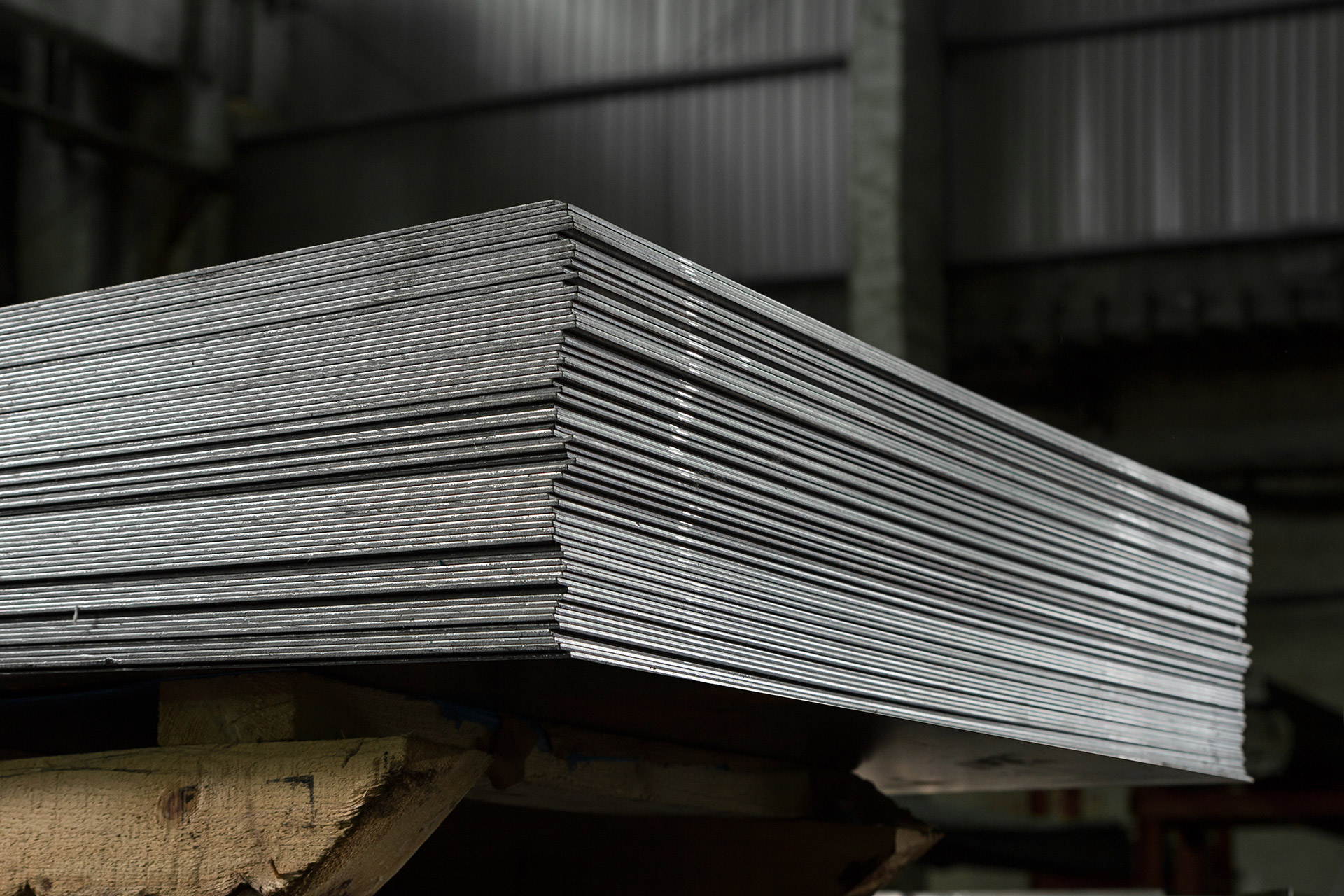
Plate prices remained stable across Europe April 29 with Northern European plate assessed at Eur1800/mt ex-works Ruhr.
Sources reported a stabilization in prices in the short-term, but emphasized inherent uncertainties in the current market.
In Northern Europe, mills remained committed to long-term projects, with small tonnages reportedly offered to spot buyers at Eur1800/mt ex-works, according to one mill source.
“Demand weakened in the last week but is expected to recover in the short-term due to low buyer stock levels. I’d forecast prices as stable in the near-term, but there’s still room for a possible rebound.”
A central European re-roller was reported as asking to revise prices on confirmed orders due to logistical issues surrounding slab supply. A distributor source said there may be tighter supply in the market if said issues impacted relevant production capacities.
A central European integrated producer was heard as offering at Eur1650/mt ex-works, though deals were not finalized due to market uncertainties and perceived volatility.
Mill sources disclosed ongoing negotiations for the next round of slab purchasing, with one Italian mill reporting slab prices as “inching down” on the day.
In the Southern market, the plate price also remained stable at Eur1725/mt ex-works Italy.
Deals were heard from a mill source around Eur1750/mt, for small tonnages circa 500mt.
The source saw prices as slowing down as suppliers successfully re-routed their raw material supply chains alongside a dissipation of panic from the market.
“The locking out of Russian suppliers is largely resolved so buyers are looking to new opportunities. It can’t be denied there’s been an inching down on the slab price, but we shouldn’t forget that comes off the back of a historic price rally – I see the trend as a stabilization rather than an impending correction,” said the source.
Demand was reportedly “not where it should be,” and the quieter market was attributed in part to recent holidays.
— Benjamin Steven, Maria Tanatar
Lower import offers, poor demand drags down EU HRC prices
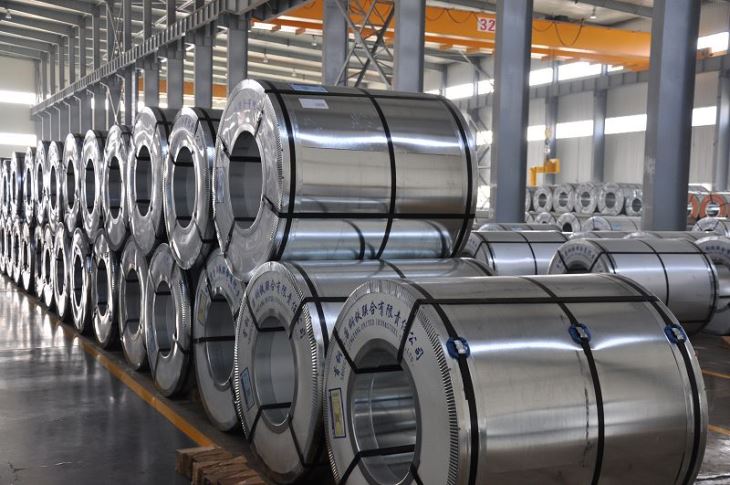
EU steelmakers were ready to accept lower hot-rolled coil prices due to falling import offers and slow trading activity, market sources said April 29.
HRC in Northern Europe was assessed down Eur15 at Eur1,275/mt ex-works Ruhr.
Although mills have been giving their official offers at largely stable levels — Eur1,300-Eur1,350/mt ex-works Ruhr — they were also reported to accept firm bids at Eur1,250-Eur1,300/mt ex-works Ruhr, according to sources. A trader said that prices as low as Eur1,200/mt ex-works Ruhr could be accepted.
“If anyone wants to buy it is easy to approach mills with firm bid and they would accept almost any price,” a Dutch trader said. “Demand is bad, automotive industry is pronounced dead and other end consumers refuse to buy at such high prices and prefer to wait.”
HRC in Italy dropped Eur25 to Eur1,175/mt ex-works Italy.
Official offers in Italy were at Eur1,250/mt ex-works, sources said. Mills were ready to accept Eur1,200/mt ex-works and buyers expect to see prices drop to Eur1,100-Eur1,150/mt ex-works over the short term.
Buyers have been holding back from making new deals with overseas suppliers due to long lead times, while expecting import prices to move down further. Buyers were also avoiding bookings with European steelmakers as they anticipate domestic prices to drop due to competitive import offers.
“There is a huge gap between domestic prices and import, so mills must decrease prices to remain competitive,” an Italian pipemaker said. “But I also do not think that offers from Asia have reached the bottom, I think import prices will drop by Eur20/mt next week.”
HRC imported in Northern Europe was assessed at Eur1,125/mt CIF Antwerp, down Eur10, based on offers for the material from Asia heard at Eur1,100-Eur1,130/mt CIF Antwerp.
Import offers ex-Japan, Taiwan decreased to Eur980-Eur990/mt CFR Italy, down Eur50/mt. HRC offers ex-Turkey were reported at prices “slightly above Eur1,000/mt CFR”, down from previous offers of Eur1,100/mt CFR Italy, including anti-dumping duties.
Offers from India were heard at Eur980/mt CFR Italy.
— Maria TanatarBenjamin Steven
Italian longs prices hold despite sluggish market
The uneventful market and little appetite to buy are slowing Italian long products trading. Sources who spoke to Kallanish say that sales occurred only back-to-back in April and the distribution sector has adopted a wait-and-see attitude, due also to unsustainably high prices.
This follows the booming month of March when a significant re-stocking process was responsible for very high sales volumes.
No more price increases are envisaged for the moment in Italy. Despite the sluggish demand, however, sales prices remain stable month-on-month and elevated on account of the production stoppages implemented by steelmakers during energy peak hours.
Merchant bar is currently at €800-890/tonne ($845-941/t) base ex-works, mostly stable compared to the previous week. The level of €890/t has been achieved for very low quantities. Including size extras, domestic contracts are hovering at €1,220-1,310/t ex-works, sources suggest.
Meanwhile, stable prices are also reported for sections. The first category of sections remains at €1,500-1,540/t ex-works, including size extras. Limited availability continues to persist for both merchant bar and beams. Some sources forecast that if the slow demand continues in May, longs prices will decline some €20-30/t.
Natalia Capra France

Thyssenkrupp Schulte invests in high-rack storage system
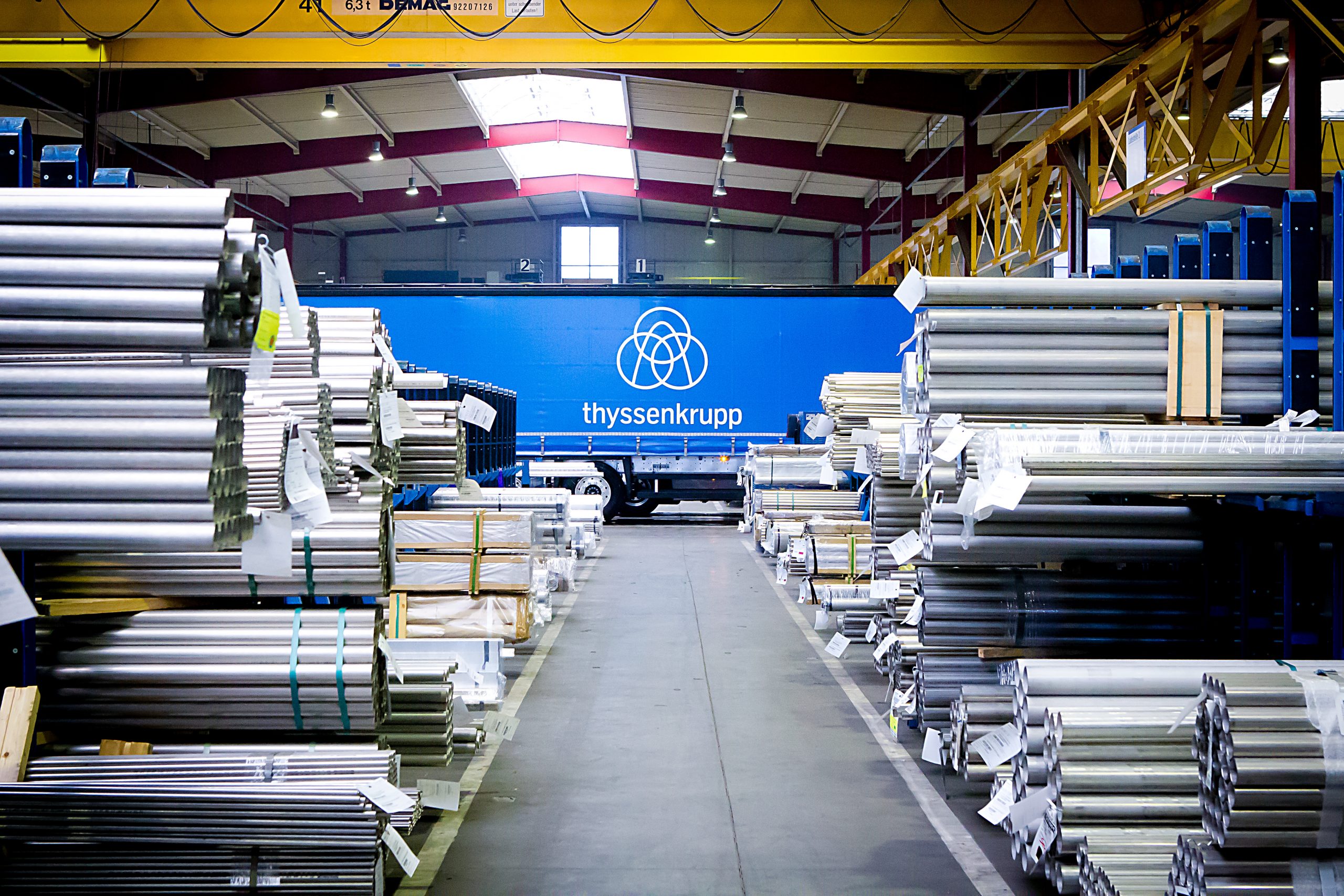
Thyssenkrupp Schulte, the German distribution unit within the thyssenkrupp Materials Services division, has invested in a new high-rack storage system at its Radebeul site.
The new system paves the way for automated materials warehousing. In the future, this will allow the loading sequence and warehouse handling to be optimised with the help of a system, Kallanish learns from the company.
With dimensions of 21 metres high, 17m wide and 59m long, the high-rack offers an efficient use of space that creates additional storage capacity for tk Schulte’s eastern regional chapter, the company points out. In total, over 6,000 tonnes of long material can be stored in the 2,020 cassettes of the high-rack.
The storage system supports the company-wide goal of CO2-savings, since energy is recovered via dynamic energy storage systems during automated processes. The increased storage capacity for materials will also significantly reduce transports from other warehouses in future. These are small but important steps towards achieving the goal of climate neutrality at thyssenkrupp Schulte by 2030, the firm concludes.
Christian Koehl Germany

Salzgitter, cold-roller Mendritzki jointly develop steel grades
Salzgitter and German cold-roller company Mendritzki have signed a partnering agreement in the field of low CO2 steel products and downstream product processing.
Mendritzki has signed up for securing a defined tonnage of low-carbon steel produced by Salzgitter as from the end of 2025, as part of the SALCOS (Salzgitter Low CO2-Steelmaking) scheme. Furthermore, both companies intend to cooperate in advancing and refining the development of steel grades, Kallanish learns from the steelmaker.
In the context of the agreement, Salzgitter chief executive Gunnar Groebler reiterates that the transformation towards low-CO2 steel production under the SALCOS programme is a pillar of the corporate “Salzgitter AG 2030” strategy. Partnering agreements like the one with Mendritzki “show that customers trust us in the course we are charting”, he says. Earlier this year, the steelmaker signed a similar agreement with white goods maker Bosch Siemens Hausgeräte (BSH).
On the joint development of steel grades, Salzgitter’s head of steel production, Ulrich Grethe, notes: “Companies operating in the cold rolling industry represent a very important target segment in the hot strip area. Due to this strategic direction, this customer segment is a perfect fit for our portfolio of highest quality grades.”
Christian Koehl Germany

CBAM needs work, safeguards must stay: Polish conference
The incoming Carbon Border Adjustment Mechanism (CBAM) needs more work before it is rolled out in the EU and should run parallel to safeguard measures, not replace them. So said steel industry panel participants at last week’s European Economic Congress in Katowice monitored by Kallanish.
CBAM comes into force from 1 January 2023 but only in a transitional phase, with importers needing to fulfil transitional reporting obligations, without the need to purchase CBAM certificates. The certificate purchase requirement and therefore increase in costs will start from 2026.
Current EU safeguards expire in mid-2024, meaning an 18-month period where the EU market is unprotected from imports, said Polish Steel Association (HIPH) president Stefan Dzienniak. The association will therefore, together with Eurofer, request the European Commission provide further protection.
“We fear CBAM because we don’t understand the mechanism,” said Cognor chief executive Przemyslaw Sztuczkowski. It may not be sufficient to protect the EU market, especially since producers are seeing free CO2 emissions allocations phased out each year, he added.
Polish economic development and technology ministry undersecretary of state Mariusz Golecki said CBAM should not replace free allowances but complement them. “We will do everything we can to extend the period of free allowances,” he observed.
ArcelorMittal Poland (AMP) head of corporate governance & government affairs, head of energy & environment office Tomasz Slezak pointed out that CBAM is an environmental measure, not something to replace safeguards. Removing the latter would “not end well”, he commented. The emissions allowances phaseout must be complementary to CBAM.
He also added that CBAM is an incomplete system as it provides no solutions for EU businesses exporting steel outside the bloc – these will require some form of compensation.
Polish Union of Steel Distributors (PUDS) ceo Iwona Dybal meanwhile said that although various EU steel user groups have requested for safeguards to be removed, PUDS is not among them. This is because it wants to support the bloc’s market by maintaining stability, which would be threatened if safeguards were removed. Following the redistribution of Russia’s quotas, Turkey and India have only used up around half of their hot rolled coil allocations – this suggests supply is sufficient, she concluded.
Adam Smith Germany
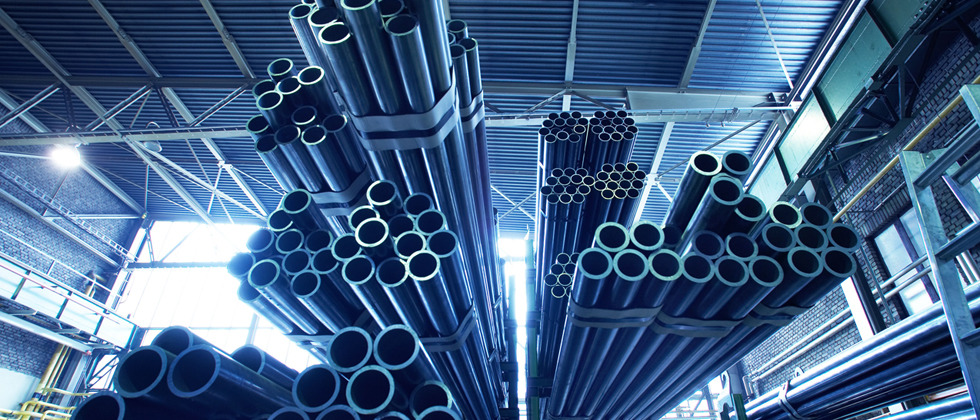
European welded tube prices decline
European welded tube prices are sliding, in line with declining values of hot rolled coil. A similar demand slowdown has been noticed by re-rollers in all European countries despite demand from some end-use sectors remaining bullish, distributors and re-rollers tell Kallanish.
Prices for welded tube are forecast to continue sliding in the coming weeks amid a general steel price adjustment in Europe. This adjustment, however, may entice buyers to purchase at more reasonable price levels, supporting a new wave of demand.
While tube demand is stalling in some sectors, such as the automotive and mechanical engineering industry, other areas remain bullish. Demand from the oil and gas, and construction sectors is said to be strong. A re-roller says its order books are full for both segments, until October in the case of the energy sector.
The distribution sector has strongly reduced its purchases throughout Europe over the past weeks. Despite discounts in Europe increasing by 2-3 points last week on average, reaching 15-16 points, re-rollers report medium-to-low levels of stocks and constant demand from distributors, although for low volumes.
Natalia Capra France