

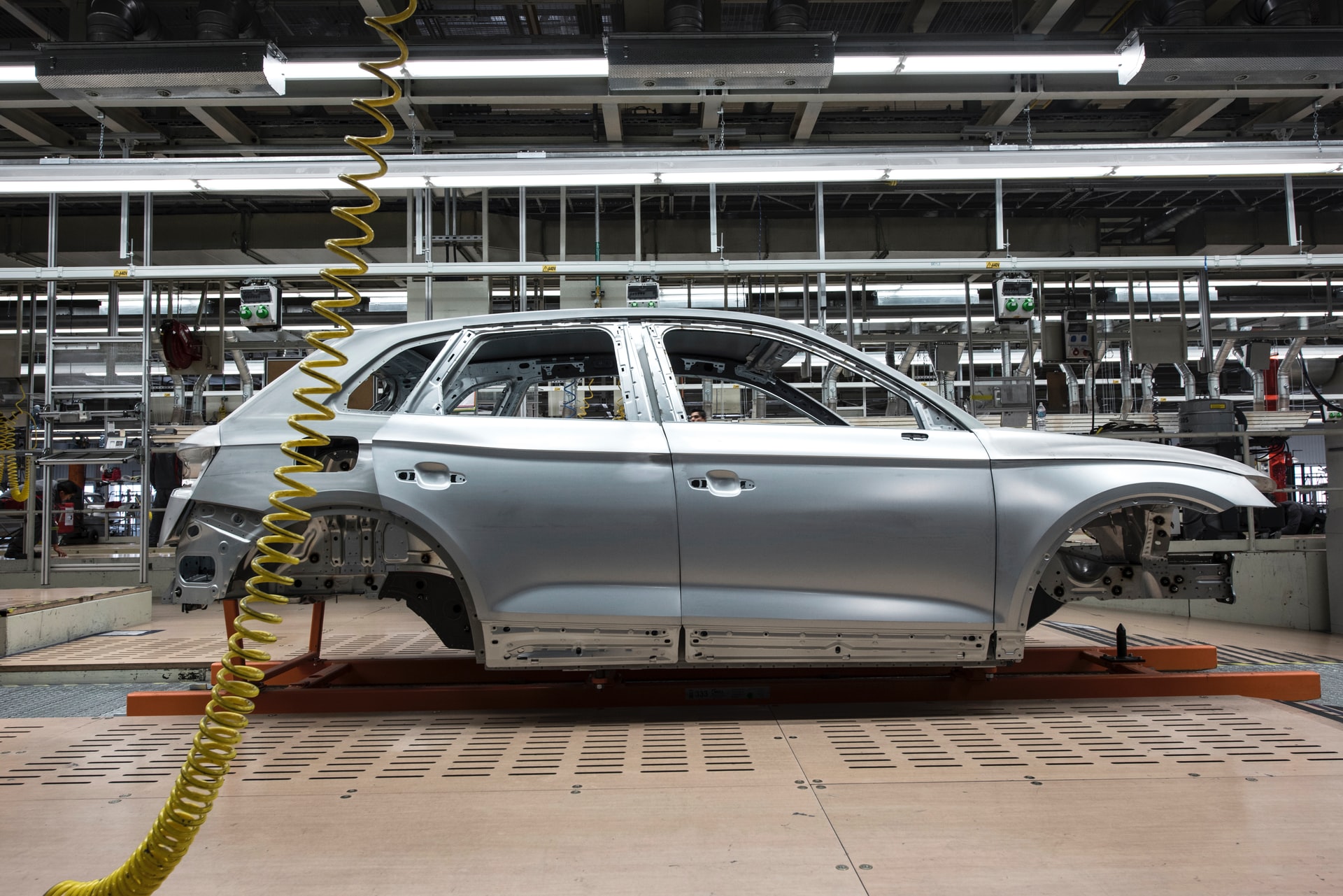
VW Q1 passenger vehicle sales down 26% on year, BEV sales up 74%
Automaker Volkswagen sold 1 million passenger vehicles globally in the first quarter of 2021, down 25.6% year on year, due to the war in Ukraine, the global semiconductor shortage and renewed COVID-19 measures in China, according to its Q1 interim report released May 4.
However, it said the backlog of orders across all drive types had reached a historic high of more than 670,000 vehicles in Europe alone and VW was working on keeping delivery times as low as possible and trying to process the large backlog of orders swiftly.
Despite the fall in overall sales, Q1 sales of battery electric vehicles rose 74% on the year to 53,400 units, most of which were its fully electric ID.41 model, which made up more than one in two EVs sold, VW said.
On the back of this, the automaker will expand production capacity of the model, with its Emden plant in Germany due to start ID.4 series production May 20, with production to start in Chattanooga in the US in the second half of 2022.
Increased demand for EVs has been one factor boosting battery raw material prices, with S&P Global Commodity Insights’ Platts seaborne lithium carbonate and lithium hydroxide assessments up 121.9% and 152.4% respectively since the start of 2022 to $75,000/mt CIF North Asia and $80,000/mt CIF North Asia on May 4.
China, including Hong Kong, was VW’s largest market in the first quarter, with sales down 23.8% on the year to 557,900 units.
This was followed by Western Europe at 215,400 units, down 20.5% on the year, then North America at 95,800 vehicles, down 24.8%.
South America sales fell 52.1% on the year to 52,300 units, while sales in Central and Eastern Europe dropped 36.8% to 34,000 units and 26,500 units were sold in the Middle East and Africa, down 27.4%.
The only region to see a year-on-year rise from Q1 2021 was the rest of Asia-Pacific at 30,200 vehicles, up 2.1% on the year.
The company managed to improve its economic efficiency in a difficult environment, Volkswagen CEO Ralf Brandstatter said.
“This underscores that Volkswagen has chosen the right path for achieving a lasting improvement in its competitiveness and profitability with the ACCELERATE strategy. We have therefore laid a very solid foundation for the accelerated transformation to zero-carbon and fully networked mobility,” he added.
VW’s operating profit before special items for the quarter rose 4.7% on the year to Eur513 million ($540.1 million), while sales revenue dropped 15.3% to Eur14.9 billion, although operating return on sales before special items rose to 3.4%, up from 2.8% in Q1 2021.
Looking ahead, VW said it was working on improving its cost efficiency to strengthen its competitiveness in the long term.
“We are currently facing different challenges such as the geopolitical uncertainty, commodity and energy price hikes and the effects of the pandemic in China,” Volkswagen CFO Alexander Seitz said.
He added that the company was using cost-cutting measures and improving the quality of its operating result in specific areas to counter these risks.
While VW was maintaining its target of an operating return on sales of 6% in 2023, Seitz said this was contingent on the evolution of the war in Ukraine and its impact on the global economy.
— Jacqueline Holman

US steel market sentiment turns more neutral on prices: survey
Bullish sentiment for finished steel prices cools in the US ahead of May, as concerns around the sourcing of raw materials have started to dissipate and scrap prices have fallen under pressure, according to the latest S&P Global Commodity Insights US steel market participant survey.
Buyers are still facing higher transportation costs and logistical bottlenecks.
In the survey of US producers, distributors, traders, and end-users, 50% of those surveyed expected prices to remain flat, compared with 91% expecting increases in April, with 32% expecting prices to fall slightly in May with only 9% of participants bullish on prices for the month.
Most respondents attributed the stability in prices to decreasing scrap prices, but the Russian invasion of Ukraine and changes in the supply chain could add further volatility to pig iron imports later in the year, demand was also expected to remain strong in the near term. Service centers have been more actively inquiring in the spot market, but mills were still holding firm on offers.
“We are expecting to buy more steel month on month on stronger orders,” a flats distributor said.
Steel flats and longs market participants continued to see tightening inventories month on month, with only 10% seeing a slight increase in inventories. This dynamic of the flats market has come as higher inventories were the main driver of the price decline that started in September 2021.
The daily TSI US hot-rolled coil assessment was steady for most of April, rising $50 by April 12, then falling slightly, last settling at $1,440/st May 3 as buyers held out for lower levels and await lower input costs, according to the Platts assessment from S&P Global, adding to now two consecutive months of rises.
The May scrap buy week kicked off with all grades offered down $75/lt as mills assess if they can bid some grades even lower.
Finished steel production is expected to remain steady again this month, as 70% of participants expected it to remain flat and 2% expected a rise. Mills and distributors of flats were mainly seeing production steady to slightly lower.
Around 85% of those surveyed expected inventories to shrink or remain level.
Longs distributors and traders were more constructive on inventories than they have been previous, but supply still remains tight, especially in Florida.
Mills have announced price increases on 20-foot rebar to become more competitive with imports along with increases in freight rates as even imports are facing “nasty” port congestion and higher trucking costs from the ports.
“We expect prices to remain stable with no immediate foreign pressure to push domestic mills,” a longs distributor said.
Other distributors throughout the US are still very constructive on demand outlooks, with scrap supply becoming more available.
Long steel market participants were not expecting mills to increase again in May, but are continuing to see tight domestic supply.
Scrap prices were again in focus, with 65% of participants expecting prices to fall and 2% expecting a decline of 5% or more during the May buy week.
Mill margins in the US were under pressure to start the year, with rising input costs and the continued push to utilize more scrap in furnaces and incorporate more obsolete grades in the mix, but mills have been able to raise their offers as the import arbitrage has started to disappear, or even flip, for some products, thus supporting recent margins even before the decline in prime and obsolete grades of scrap.
— Nick Ruggiero

German EV sales fall 13.6% on year in April: VDA
Sales of passenger electric vehicles in Germany fell 13.6% year on year and 12.1% month on month to 43,900 units in April, according to the latest data released by the country’s auto industry association VDA on May 4.
The EV sales fell to the lowest level since January, but their market share rose to 24.4% in April, from 23.3% in March and 22.1%, a year ago.
New registrations of battery EVs fell 7% year on year in April, while sales of plug-in hybrids EVs declined 20% year on year during the same period.
Generally higher demand for EVs has boosted battery raw material prices. The Platts seaborne lithium carbonate and lithium hydroxide assessments from S&P Global Commodity Insights surged 121.9% and 152.4%, respectively, since the start of 2022 to $75,000/mt CIF North Asia and $80,000/mt CIF North Asia on May 4.
Germany’s total new vehicle registrations fell 21.5% year on year and 15.9% month on month to 180,260 units in April.
The VDA said a lack of primary products due to supply bottlenecks in the wake of the war in Ukraine had a “dampening effect” on the industry’s production.
Total new passenger car sales for the first four months of the year fell 9% year on year to 806,200 units. The sales were down 32% compared with the corresponding pre-pandemic period in 2019, the VDA said.
EV sales volume over January-April represented about 25% of the total vehicle volume at 195,400 units, up 1% year on year.
The data showed 183,700 vehicles were exported during April, down 23% from a year ago and 8.2% from March.
The VDA said April passenger car production fell 13% year on year and 3.7% month on month to 257,600. The production in the first four months of the year declined 12% year on year to 1.1 million vehicles.
Plug-in light duty EV sales in Germany are expected to reach 771,990 units in 2022, 1.1 million units in 2025 and 1.9 million units in 2030, according to S&P Global.
— Jacqueline Holman
Germany’s Klöckner optimistic about Q2, sees steel product sales rising
German distributor and metal producer Klöckner & Co is optimistic about the second quarter, despite the challenging economic environment, and expects stable to slightly increasing shipments in the period, it said May 4.
The company also expects a considerable increase in sales in the quarter, “based on the steel price dynamics and significantly supported by the consistently executed margin-over-volume strategy and the disciplined inventory management,” it said in its first-quarter results statement.
The company will also continue to focus on the implementation of its new strategy and focus on green steel transformation.
The company made “great progress over the initial months of the year in the implementation of our Group strategy,” CEO Guido Kerkhoff said in the results presentation. “With the recognition of our net zero targets by the Science Based Targets initiative (SBTi), our new green steel categorization metric and a further acceleration of our digital transformation, we have put in place the key building blocks for the years ahead to lead Klöckner & Co into a sustainable and digital future.”
Klöckner & Co has become the first company in the world to have all net-zero carbon targets recognized as science-based targets in the standard validation process in accordance with the latest SBTi standards. It has also presented its own green categorization metric.
In the first quarter shipments stood at 1.3 million mt, down 2.3% year on year but up 13.4% from Q4 2021 due to seasonality and despite a consistent margin-over-volume strategy. The positive price development, especially in Europe but also in the US in connection with renewed supply tightness, drove sales to Eur2.4 billion in the first quarter, up from Eur1.5 billion in Q1 2021.
S&P Global Insight assessed hot-rolled coil in Northern Europe down Eur10 at Eur1265/mt ex-works Ruhr on May 3 on weak demand. Prices have weakened since the record high of Eur1,460/mt on March 14, but are still very high.
— Annalisa Villa
EU downstream coils down on ‘cratered’ demand
Downstream coil prices moved down across Europe May 4, as sources cited achievable prices at a substantial discount to official offer levels with some transactional activity reported in Northern Europe.
In Northern Europe, hot-dip galvanized material was down Eur75/mt on week, assessed at Eur1,350/mt ex-works Ruhr. Cold rolled coil was assessed stable at Eur1,345/mt ex-works Ruhr.
A trader source reported deals at around Eur1,320/mt ex-works for 5,000 mt, negotiated from offers at Eur1,400/mt ex-works. The source said mills were consistent in offering at Eur1,400/mt, but that substantial discounts could be achieved on bids for sufficient volumes given currently muted demand.
“We’re still in the waiting game, but the end is in sight,” the source said. “Negotiations are happening behind closed doors, and no one wants to advertise price cuts but sooner or later the market will restart properly when buyers have to cover next quarter. If everyone keeps trying to undercut each other without trading, we’ll be in a broken market.”
The source said demand for value-added coils had “cratered,” with the automotive sector in particular failing to reserve regular volumes due to component shortages. Benelux mills were heard as undercutting import offers, even offering fresh production cold-rolled material at below Eur1,200/mt due to minimal interest from buyers.
In South Europe, HDG was also down Eur75/mt May 4 at Eur1,350/mt ex-works Ruhr. CRC moved down Eur50/mt at Eur1,300/mt ex-works Ruhr.
Demand remained scarce in the Italian market with no transactional activity reported on the day. Mill sources cited achievable prices as lower on negotiation, heard as low as Eur1,300/mt and Eur1,250/mt for HDG and CRC, respectively.
While sources remained relatively pessimistic on demand, one mill source reported rumors of a large automotive plant returning to the market in the near-term, having covered component shortages recently plaguing the sector.
Sources had reported little hope for the return of automotive in 2022 due to aforementioned component shortages stemming from the war in Ukraine and pre-existing semi-conductor shortages – recovery may be sooner than expected.
— Benjamin Steven, Maria Tanatar
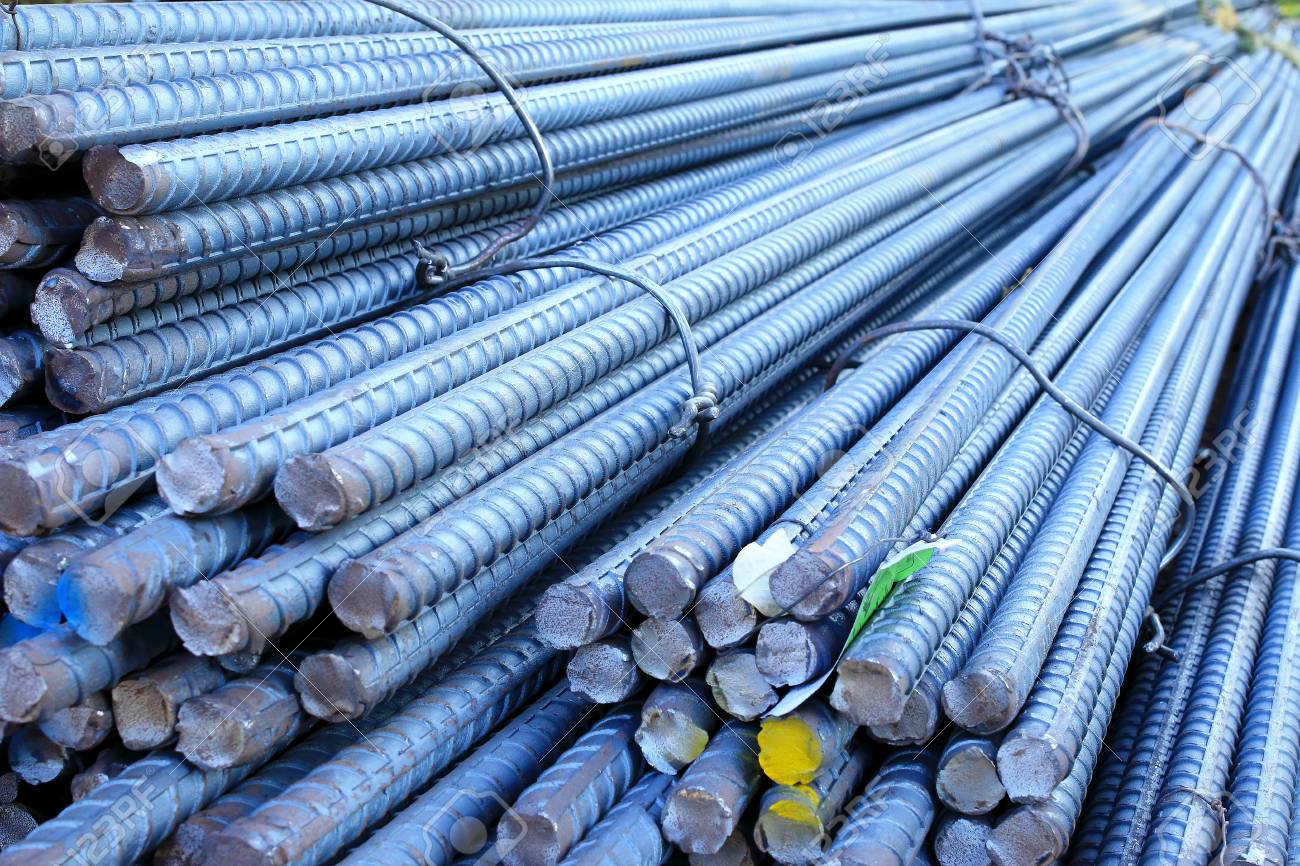
EU long steel prices remain firm amid strong mill order books
EU long steel prices remained strong over the week to May 4, with mills holding offers firm amid healthy orderbooks, but buyers remained reluctant to buy at high prices amid relatively long lead times, sources said.
Platts assessed TSI Northwest Europe Rebar at Eur1,327.50/mt ex-works May 4, up Eur7.50/mt on week, according to S&P Global Commodity Insights.
A distributor in the Benelux region bought 500 mt of rebar at Eur1,355/mt delivered, adding that rebar was still available for end-May delivery from certain non-German mills.
“I think that rebar prices can come slightly down in May as scrap is coming down,” the distributor added.
Platts benchmark Turkish import premium heavy melting scrap 1/2 (80:20) market on May 4 was assessed at $539/mt CFR, down $115/mt from $654/mt CFR on April 4.
The sharp drop in Turkey has led some market sources to expect May EU domestic ferrous scrap contracts for shredded and HMS grades to drop by anywhere between Eur60-85/mt on month from April prices. Negotiations were not close to concluding, sources said.
“Rather than talking about rebar prices, but we should talk about the delivery time – a number of German mills are fully-booked, and they are now delivering for the end of June so it’s no surprise that buyers aren’t buying material two months ahead,” an Italian mill source said, adding that they were selling regularly into Germany/Benelux at Eur1,360/mt delivered for end-May shipment.
German mill offers remained firmly above Eur1,360/mt delivered, the Italian mill source added.
Another European mill source said rebar was workable at Eur1,300-1,320/mt delivered Germany, with most buyers considered to be in a “wait-and-watch” mode, amid some expectations of near-term price softening.
“[A near-term drop in] scrap prices may provide some respite, but crude steel production costs are still strong,” the European mill source said.
Mills held European domestic steel sections prices firm over the week to May 4.
Platts assessment of the European medium sections price (category 1, S235 JR) was Eur1,500/mt delivered May 4. The price has been unchanged at this level since March 30.
“Orderbooks for May production are strong, so I don’t see lower prices in the short-term, but maybe more in the medium-term,” a third mill source said. “There isn’t much buyer activity, it depends on the next few weeks.”
A second distributor in the Benelux region reported a deal for 200 mt booked the week ended April 29 at Eur1,500/mt delivered.
“Mills have a good orderbook and they are fully booked for May rolling – there is also no import pressure due to the small allocation of the import safeguard quota,” the second distributor added. “We’re expecting EU domestic long steel prices to remain largely stable over May, but perhaps with some small corrections.”
— Viral Shah
Klöckner maintains steady volumes amid ‘panic’ buying attempts
Klöckner & Co achieved very good sales and profit in the first quarter, and actually recorded some growth in customer business as a side-effect of the Ukraine war.
The steel distribution group is only minimally impaired directly by restrictions resulting from the war. Russia, as well as Ukraine, are neither source nor export markets for Klöckner’s steel, chief executive Guido Kerkhoff said during a conference call on Wednesday.
On the contrary, Klöckner was able to gain new customers among buyers who typically order in Russia. Kerkhoff told of cases of European companies that had so far relied on single sourcing from Russia and suddenly had to absorb a total loss of supplies. Such cases “suddenly had quite a problem when they had to complete a project,” he said on the call attended by Kallanish.
Another phenomenon in this crisis period is panic buying, which Klöckner had to appease in many cases. “Some customers quadrupled their order volume, but we did not comply with that,” Kerkhoff recounted. The firm assured customers of stable deliveries, but continued to adhere to its margin-before-volume philosophy, reassuring clients that delivery capability was guaranteed.
Although the share of digital sales rose slightly to around 46% (versus 45% in the first quarter 2021), Klöckner observed a detrimental effect brought about by the crisis. While the Covid-19 pandemic spurred online buying, the war-related crisis has many customers preferring to reach for the phone rather than ordering online. “If there is supply uncertainty, customers avoid digital channels, preferring to clarify over the phone whether there is any supply availability at all,” Kerkhoff said.
Christian Koehl Germany


Klöckner sees stable-to-increasing volumes for rest of 2022
Following a highly successful first quarter, Klöckner & Co expects stable to slightly increasing shipments in Q2.
In Q1, the distributor’s shipments came to 1.26 million tonnes, down 2.3% on-year but surging by 13.4% on the preceding quarter. Revenue increased by around 60% on-year to €2.4 billion ($2.5 billion), largely on the back of rising prices. The operating result (Ebitda) adjusted for special effects was €201 million, far above the previous year’s €130m.
Klöckner is optimistic for the current quarter and also the rest of the year, executives said at a conference call on Wednesday monitored by Kallanish. In the long run, it sees demand in Europe good to slightly up in most of its customer groups, and forecasts an increase in orders of 1-3%. In the USA, it sees orders rising even by 3-5%.
Apart from the group’s typical customer sectors, construction, mechanical engineering, energy and automotive, chief executive Guido Kerkhoff agreed that defence could also play an increasing role going forward.
Klöckner highlighted its ambitions amid the steel industry’s transformation to low-carbon steel. It claims that it is the world’s first company to have all its net zero carbon targets recognised in the standard validation process, in accordance with the latest standards of the Science-Based Targets initiative (SBTi).
Christian Koehl Germany
Flats prices to correct, not collapse: UK distributors
There will be a downward flat product price correction but no collapse since costs of producing steel and receiving slab prevent this from happening, was the conclusion of a meeting last week of UK steel distributors’ association NASS’s flat products group.
The upward price curve is now starting to flatten slightly, with businesses taking it a bit more slowly, although the outlook is still positive. “Prices to customers are pretty static … lead times are coming back down and there is room for EU mills to come down in price,” the association says in its minutes of the meeting seen by Kallanish.
The flats market weakened in April and there are still stocks at ports that have not yet filtered through the system. Plate is however still in short supply.
NLMK is trading as normal as a UK-registered EU business and Russian slab is not under sanctions. “The only restrictions are on shipments because NLMK cannot charter Russian vessels; it can charter EU ones but then availability and cost become an issue,” NASS says. NLMK is shipping more volumes to the UK; however, this is EU, not Russian, material, it adds.
“From a coil point of view, if slab prices rise again, margins will become very tight. [We’re] not quite out of the woods yet, in regard to slab supply,” NASS observes. The talk of a market crash will not materialise due to rising production costs. Hot rolled coil is however coming under pressure and there will be a price correction.
Adam Smith Germany

Italian wire rod market sluggishness continues
The Italian wire rod market continues to be sluggish, with sales thin and customers adopting a wait-and-see attitude or purchasing on the import market thanks to competitive offers.
Quotes from local steelmakers last month of €1,200/tonne ($1,263/t) for drawing-quality material are now reported to be unachievable, and producers are now asking for approximately €1,150/t. Some end-use sectors have stopped buying altogether, sources say. The general market trend is now to wait for prices to decline further in May.
Distributors tell Kallanish their sales were extremely high in March before April turned quiet. Producers still managed to sell acceptable volumes in April however as demand resumed towards the end of the month. Sales in May are weak so far, say sellers, but end users and distributors are expected to come back to purchasing because of the lower volumes ordered last month.
Import offers are reported at below the level of €1,000/t cfr Italy. Some offers from North Africa are reported at €1,120/t cfr.
Italian domestic drawing-quality wire rod prices are flat compared to the end of April at €1,100-1,150/t ex-works, sources suggest.
Meanwhile, northern European wire rod prices are also flattening and some sources expect prices to decline slightly in May. Domestic transaction prices for drawing-quality wire rod are at €1,250/t ex-works on average.
Natalia Capra France