

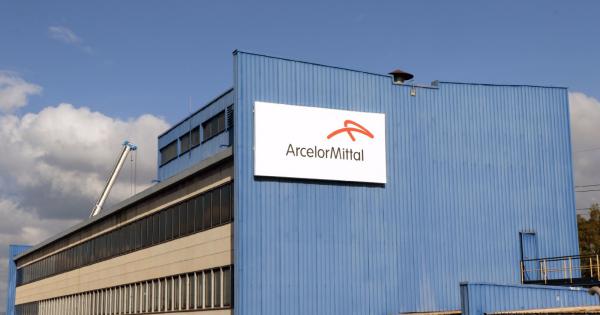
ArcelorMittal posts 7% fall in Q1 crude steel output over Ukraine war
ArcelorMittal manufactured 16.3 million mt of crude steel in the first quarter of 2022, down 7.4% year on year and 1.2% lower quarter on quarter, the Luxembourg-based steelmaker said May 5.
The company’s first-quarter performance was overshadowed by the war in Ukraine, CEO Aditya Mittal said, as crude steel output fell 9% on year to 2.5 million mt in Q1 for its ACIS division, “primarily due to the suspension of production in Ukraine.”
ArcelorMittal Kryvyi Rih shut its blast furnaces at the onset of Russia’s invasion of Ukraine. On April 11, it restarted one out of three furnaces, BF No. 6, with low levels of pig iron production, running at about 50%-60% of capacity.
ArcelorMittal Kryvyi Rih was due to have a new 5 million mt/year pellet plant built with production slated for Q4 2023 but the completion date “will depend on when the project can be effectively resumed due to the Russian invasion of Ukraine,” ArcelorMittal said.
“We now forecast a significant contraction in demand in the CIS region, which includes Commonwealth of Independent States and Ukraine, by more than -10%, from the previous range of +0% to +2%,” ArcelorMittal said.
For its European operations, ArcelorMittal cited stable Q1 crude steel production of 8.67 million mt against 8.62 million mt in Q4, but down 10.4% from 9.70 million mt in Q1 2021. The annual fall was due to the formation of a public-private partnership between Invitalia and AM InvestCo Italy, renamed Acciaierie d’Italia Holding in April 2021, during which ArcelorMittal “deconsolidated the assets and liabilities.”
For its NAFTA operations, ArcelorMittal projected that a new 1.5 million mt/year electric arc furnace at its AM/NS Calvert venture in Alabama will be completed in the second half of FY 2022-23 instead of the first half. ArcelorMittal is considering an option to add 1.5 million mt/year of capacity to AM/NS Calvert, a 50-50 joint venture between ArcelorMittal and Nippon Steel Corp.
— Clement Choo


Vitkovice Steel pauses deliveries, halts production on slab supply disruptions
The Czech Republic’s heavy plate re-roller Vitkovice Steel has notified its customers that it will pause deliveries due to impacts from the EU’s April 8 sanctions against Russia, according to a letter sent by the mill to its customers early in the week and seen by S&P Global Commodity Insights.
The sanctions, announced by the EU on April 8, resulted in slab supply disruptions, and as a result, “the quarto mill will be presumably halted for 10-12 business days,” the letter said. Consequently, shipments of the plate will also be delayed.
The round of sanctions against Russia included measures against JSC GTLK, the owner of the carrier vessels Astrol-2 and V. Smyslov. The vessels carried 15,400 mt of slab that were supposed to be unloaded in Gdansk and Szczecin ports in Poland “last weekend,” the letter said.
“The above mentioned restrictions came into effect immediately, without any grace period,” the steelmaker said.
“The vessels’ captains had no other option but to turn back to their loading port, where they will be ported again and the goods will [be] re-loaded onto another, safe vessels,” the letter said. “Even if we are doing our best to find alternative vessels with safe ownership (which is a challenge by itself due to the dynamically changing circumstances) this incident will lead to short-term raw material shortage at our plant.”
In Northern Europe, the assessment for heavy plate was stable at Eur1,800/mt ex-works Ruhr on April 29. On May 5, a German distributor said that prices for plate in Northern Europe were Eur1,700-1,800/mt ex-works, and that absence of the Vitkovice Steel that has traditionally been focused on sales to Germany is likely to support the prices.
The region’s mills have been committed to long-term projects and had small tonnages available for the spot buyers.
— Maria Tanatar, Benjamin Steven

UK sanctions Russian steelmaker Evraz
The UK government has placed sanctions on Russian mining and steel company Evraz due to its operations in sectors of strategic significance to the Government of Russia.
Evraz’s core operations are in Russia and it produces 28% of all Russian railway wheels and 97% of the country’s rail tracks, which were “of vital significance as Russia uses rail to move key military supplies and troops to the frontline in Ukraine,” the government said in a May 5 statement.
“Along with existing measures, this action will further deter companies operating in strategic sectors in Russia,” the UK said, adding that the asset freeze meant that no UK citizen or company could do business with Evraz.
“These sanctions will further chip away at Putin’s financial reserves and siege economy, and support Ukraine’s continued resistance,” the government said.
Steel prices have been boosted by reduced supply from Russia due to sanctions, with S&P Global Commodity Insights assessing Northwest European hot-rolled coil down at Eur1,250/mt, ex-works Ruhr May 5, up 36% since the start of 2022.
The UK ruled March 10 to freeze the UK assets of a few Russian oligarchs, including Evraz shareholder Abramovich, and prohibited them from entering the country and having any business with UK citizens and companies.
On March 11, all Evraz non-executive directors — Alexander Abramov, Alexander Frolov, Alexander Izosimov, Deborah Gudgeon, Eugene Shvidler, Eugene Tenenbaum, Karl Gruber, Maria Gordon, Sir Michael Peat, and Stephen Odell — resigned.
Evraz said at the time that Abramovich holds a 28.64% stake in the company and, over the last five years, appointed only two board directors.
Evraz also said it did not consider Abramovich as a person exercising effective control of the company, as he did not hold more than 50% of the shares and had no right to appoint or remove a majority of the board of directors. Evraz, therefore, considers UK sanctions against a shareholder shall not apply to the company itself.
Furthermore, Evraz denied in the statement that it had been involved in providing services, funds, resources, goods or technology toward destabilizing Ukraine, and said it had not supplied steel to the Russian military, which may have been used in the production of tanks. Evraz sells steel to infrastructure and construction sectors only, it added.
The company’s listing on the London Stock Exchange was temporarily suspended March 10.
This was followed by Evraz indefinitely suspending the spinoff of its coal business March 11, which was then canceled in early-April.
On April 6, the UK’s Trade Remedies Authority launched a review of steel imports from Russia and Belarus to assess whether the tariff rate quotas for the two countries should be reallocated to avoid a potential shortage of steel.
The TRA said at the time that due to sanctions imposed on some imports from Russia and Belarus, exporters may not be able to fulfil their quotas and reallocating them to other countries “could help ensure a regular supply of steel needed for construction, engineering, the automotive industries and other uses.”
— Jacqueline Holman, Ekaterina Bouckley