


HRC prices inch down in Northern Europe, downtrend to continue
Domestic prices for hot-rolled coil in Northern Europe declined slightly on limited demand and bearish trend that were likely to persist, market sources said on May 9.
Hot-rolled coil in Northern Europe was assessed down Eur5 day on day at Eur1,170/mt ex-works Ruhr.
Some buyers have received offers from the region’s producers at Eur1,160-1,170/mt ex-works Ruhr, and others claimed that the offers had been higher at Eur1,200-1,210/mt ex-works Ruhr.
Achievable prices were estimated by buyers at Eur1,150/mt ex-works Ruhr. One steelmaker, however, said that the workable prices were Eur1,200-1,250/mt ex-works Ruhr.
Negative sentiment in the market has been supported by reduced demand from majority of end consumers, including automotive and white goods segments, sufficient stocks of distributors and competitive import offers, particularly in southern Europe.
The downtrend could be slowed down by high energy costs and restocking activity, sources said.
In addition, steelmakers in Northern Europe were reported offering limited volumes with short validity times of the offers in the attempt to limit volumes in the market and maintain prices under control, sources said.
“Honestly, I think that Eur1,150 ex-works will be the final level, but if it’s already in the market in deals and offers the mills will have to expect very hard negotiations for the second half of 2022 contracts,” a German trader said. “The discussions will start soon, and if now the spot price is that low I think they cannot keep similar levels for 6 months contract.”
Domestic HRC in Italy was stable day on day at Eur1,150/mt ex-works.
Official offers were reported at Eur1,150/mt ex-works and buyers believed that prices of Eur1,050-1,100/mt ex-works would be achieved soon.
Import offers of HRC from Turkey, Egypt and Asia were heard at Eur960-980/mt CFR Italian ports. The prices include anti-dumping duties where applicable.
— Maria Tanatar, Benjamin Steven


US suspends tariffs on steel imports from Ukraine
The US on May 9 suspended for one year its 25% Section 232 tariffs on steel imports from Ukraine, noting the importance of that industry to Ukraine’s economy as the country continues to defend itself against Russia.
“We need to have their backs and support one of the most important industries to Ukraine’s economic well-being,” Commerce Department Secretary Gina Raimondo said in a statement announcing the tariff suspension. “For steel mills to continue as an economic lifeline for the people of Ukraine, they must be able to export their steel.
“Today’s announcement is a signal to the Ukrainian people that we are committed to helping them thrive in the face of Putin’s aggression,” she added.
Commerce said Ukraine’s steel industry employs one in 13 Ukrainians.
In a similar move, the European Commission proposed April 27 to suspend for one year its import duties on all Ukrainian exports to the bloc, according to a statement on its website. However, an official move has not yet been made.
Ukraine’s output of crude steel in 2021 rose 3.6% year over year to 21.4 million mt, according to the country’s steelmaking industry association Ukrmetallurgprom.
The US has not previously imported a significant volume of steel from Ukraine. Steel imports from Ukraine totaled 130,636 mt in 2021, less than 1% of the US’ 28.58 million mt overall steel import volume that year.
Since 2010, the US’ highest annual steel import volume from Ukraine reached 325,391 mt in 2011.
— Nick Lazzaro
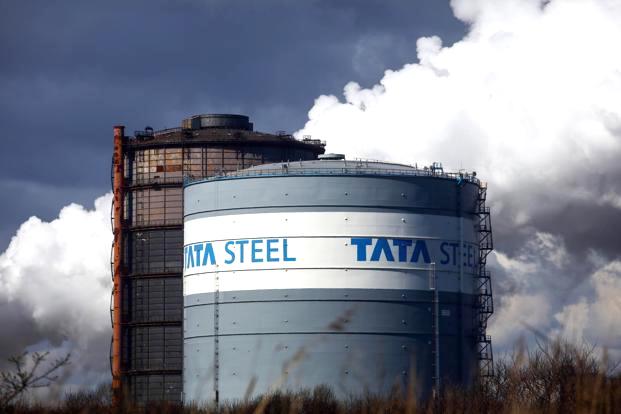
Tata prefers growing organically over acquisitions this decade
Tata Steel aims to expand the capacity through organic growth at its existing facilities to grow its steel production capacity to 40-50 million tonnes/year through 2030, from the existing 20m t/y, it says. It doesn’t need to acquire new assets to reach its production goals, Kallanish notes.
“Most of our growth in the last few years has been through the inorganic route (acquisitions),” Tata Steel ceo and managing director TV Narendran informed local media. “Currently, we are in a position where all our growth ambitions can be met through organic growth in our existing sites.”
Recently acquired Neelachal Ispat Nigam (NINL) will see production capacity ramped up to 10m t/y from the existing 1m t/y, the ceo said. Whereas, the Kalinganagar plant will see an expansion to 8m t/y from 3m t/y, and later to 16m t/y.
Tata Steel announced it is cutting all business ties with Russia amid the Russian military invasion of Ukraine. “We typically buy close to 15 MT of coal annually, of which around 3 MT used to come from Russia… which can be easily be sourced from countries like Australia, Indonesia, and Canada,” Narendran concluded.
Tata Steel also aims to install electric arc furnaces in the north, south and west of India to achieve its target of doubling its existing steelmaking capacity to 40m t/y by 2030 (see Kallanish passim). The move will result in the steelmaker using significantly more scrap as feedstock and thus be good for the environment.
Tata Steel India’s crude steel production surged 13% on-year to an annual record 19.06mt in the fiscal year ended 31 March 2022 (FY22), against 16.92mt produced a year earlier. Deliveries picked up by 6% to 18.27mt, mainly on the back of strong domestic demand generated from the automotive, industrial and retail sectors.
Sayed Aameer India


EU coil prices dodge import harm
Prices of EU coil mills keep giving in – but only slightly and slowly – not least because the influence of imports remains limited, despite considerable gaps.
“Even with the addition of the EU’s import levy, there was still a difference of approximately €150/tonne ($158/t) in April to the advantage of Asian prices,” a Dutch manger notes. The extremely high prices in Europe have local causes – extremely high energy and scrap prices for many months, aggravated by the war in the east. Hence, they have risen by their own rules, and detached from the international level, many observers say.
Still, the disappearance of relatively reliable source countries Ukraine and Russia has strengthened mainly the local central and western European mills – and Turkey. The country “is less influenced by Russia because it traditionally sources slab from China,” a trader tells Kallanish. This explains unusual moves reported by Turkish trade data like a delivery of 15,000 tonnes of hot-rolled coil to Switzerland, a rather unusual destination for Turkish steel.
Imports for cold-rolled and hot-dip galvanized coil are offered between €1,100-1,200/t cif Antwerp, with especially low prices from Vietnam, compared to the €1350-1,400/t from EU mills, according to the trader. But then, Vietnam is on the verge of losing its transitory special status and soon may face the same duties as others, he says. With the new year for safeguards commencing on 1 July, “it will be difficult finding a source country without a safeguard risk.”
Finally, the Dutch manager points out that there is still the risk that the dollar-to-euro ratio will gradually creep closer to 1 to 1, which will increase import prices and make imports less attractive.
Christian Koehl Germany

EU coil price dips downstream first
The softening of coil prices from extremely high levels in northwestern Europe is progressing at distributors, while mills keep claiming relative stability.
“With every call I make, I bring prices down by €10/t ($10.53/t),” a manager at a southern German distributor tells Kallanish. He notes that the sale price level is still very high and profitable, based on restocking made early this year. Hence, distributors are more prepared to make concessions, whereas mills are striving to keep prices up under the pressure of still-rising input and energy costs.
Ex-works price asked for hot-rolled coil is now at €1,300/t.
“I have not heard of anyone paying that,” a trader describes the upstream market lull. A Dutch source sees €1,250/t as the more likely price fetched locally now. Prices of cold-rolled coil and galv are seen at €100/t above HRC by many, though the Dutch source believes that they are weakening faster, with only €80/t premium over HRC.
One northern mill source claims that colour-coated coil and processed galv meant for colouring is actually high in demand for construction, and compensated losses on the automotive end.
The lack of demand from the automotive industry leaves especially the service centres with full shelves of CRC and galv, and an inclination to catch orders that otherwise would be made at mills. This again will force the mills to adjust their prices to keep their share in the market.
According to a Scandinavian source, the current mill prices are only paid for guaranteed back-to-back business, and not at all for restocking inventories.
“When the curve points downward, everyone buys only what he needs,” he says.
Christian Koehl Germany

Italian coils demand continues to stagnate
Italian cold rolled and hot-dipped galvanised coil sales continue to be particularly slow with customers buying very little material and expecting prices to continue to decline this week, in line with international coil prices.
While demand for HDG is reported slightly livelier over the past days with some domestic sales for low tonnages, CRC demand is said to be flat with values that have gone below the level of €1,300/tonne base ex-works ($1,368/t). With hot rolled coil contracts going below the level of €1,200/t base ex-works in Italy, reaching €1,140-1,180/tonne base ex-works, CRC is being transacted at €1,250-1,300/t base ex-works, but demand is so weak that some sources believe the high point of the range will not be a workable price this week. HDG is still hovering at €1,300/t base ex-works, sources suggest. Some import offers for Asian CRC are reported at about €1,100/t cfr, but the appetite for imported material in Italy is also low, Kallanish hears.
Some sources believe that service centres in Italy will resume buying when HRC goes down to the level of €1,000/t. Others say that service centres will have to resume buying in May after a long destocking process.
HDG and CRC producers are currently offering material for Q3 delivery.
Natalia Capra France
Benelux scrap market eyes Turkey, prices under pressure
Pressure on Benelux scrap prices is increasing each day due to the prolonged absence of Turkish mills.
Although market participants were expecting to see a recovery in Turkey’s scrap demand after the Eid holiday, this has yet to materialise. Turkey’s silence is causing Benelux exporters to slow their collection and decrease their dock prices.
On Monday, exporters’ dock prices for HMS 1&2 80:20 in Belgium stood mostly at around €405-410/t ($425-430.5/t) levels, while in the Netherlands prices were around €410-420/t delivered. Although there are also higher prices quoted in both countries, they come mostly from exporters who are late updating their quotes, with sources expecting them to come down imminently.
A Benelux supplier tells Kallanish: “Amid a frozen market, it is really hard to talk about a price level. I think exporters will want to restock at €400/t levels. But please keep in mind that flow is very weak even at €410/t.”
A Benelux exporter who does not foresee a recovery in prices says: “Flow is weak but on the other hand exporters’ buying appetite is lacking due to the silence in Turkey. No exporter wants to commit today without seeing the clear picture in Turkey. I am really unsure at what level Turkey will start, but a definite decrease seems inevitable due to the high number of exporters that are ready to book prompt shipment cargoes. Dock prices will most probably fall below €400/t this week.”
“Sentiment is getting worse each day. Today we have seen sharp falls in steel prices in Turkey. This means Turkey will exert stronger pressure on scrap prices,” says a Turkish mill who thinks European HM 1&2 80:20 prices should not be higher than $500/t cfr.
Although there was a scrap buying tender in Egypt, it is heard to have been cancelled. Although Egyptian mills received EU-origin HMS 1&2 80:20 offers at around $515-520/t cfr levels, they did not rush to buy. Some market participants think that Egyptian mills will halt scrap purchases until they see Turkey’s buying prices.
The situation is no different in India. While prices are free-falling and sentiment is quite bearish, mills’ buying interest is weak. UK-origin containerised shredded price fell to $570/t cfr on Friday from $590/t cfr the week before. UAE-origin HMS 1&2 80:20 is offered at around $540/t cfr levels.
Burcak Alpman Turkey