

Longs markets deteriorate, steep scrap drop inexplicable: Irepas
Rapid and steep price hikes, as well as high energy prices impacting manufacturing activity in Europe and inflation hampering consumption are causing the long products market to deteriorate. However, it is difficult to understand why the market has been so silent in recent weeks and what has been causing prices of scrap to drop by such significant margins. So says the International Rebar Exporters and Producers Association (Irepas).
Despite the weak demand and dropping international values, EU rebar mills are in a good position to maintain their prices at high levels thanks to Turkish and Algerian imports being out of the market since quotas expired in April.
EU prices are also supported by no sign of safeguards being relaxed. “Brussels is responsible for the detrimental usage of the ‘all other countries’ quota in April because of the strange handling of the Russian and Belorussian quotas,” Irepas says in its May short-range outlook seen by Kallanish.
The pricing premium on ferrous scrap, which was an effect of the Russian invasion of Ukraine, deteriorated during April as Russian semi-finished products have been able to find destinations in Asia and Turkey via trading intermediaries, Irepas observes. Russian ferrous materials trade at a steep discount to other suppliers, with fewer destinations available.
There has been a slowdown in China, meanwhile, due to the Covid-19 lockdowns and property developers still being in trouble after the Evergrande crisis, which is putting pressure on global raw materials prices. The post-Covid situation in major Western markets is, on the other hand, boosting consumption.
“Competition in the global longs market remains very regional due to trade measures. But Russian exports have been causing significant disruptions as far as pricing is concerned. The war in Ukraine and the worldwide uncertainty does not help the markets to resume their normal business mode. The situation is very challenging when trade is very intermittent and so competition is not very intense,” Irepas concludes.
Adam Smith Germany

H2 Green Steel pre-sells 1.5mt
H2 Green Steel, the greenfield low-carbon steelmaking project in Sweden, says it has already signed off-take supply agreements for over 1.5 million tonnes of steel to be produced from 2025 onwards.
The company confirms its customers are willing to pay a premium for green steel. “When a reasonable polluters-pay-principle is in place and put in product cost calculations, the business case for green steel will be even stronger,” H2 Green Steel says in a note sent to Kallanish.
“Presently, the term green steel can mean different things. To us it means steel produced from a combination of a significant amount of green virgin iron and scrap in a production process which uses electricity from renewable energy sources and where the total CO2 emissions are more than 90% lower than that of traditional steelmaking in a blast furnace process,” says H2 Green Steel chief executive Henrik Henriksson.
“Recycling scrap is part of the equation, but it will not be enough to meet the global demand for steel. We need to make sure that all the new steel is truly sustainably produced,” he adds.
So far, customers that have signed supply agreements include Electrolux, Kingspan, Miele, Scania, Marcegaglia, Klockner, BMW and Roba Metals.
“Most of the customers pioneering the green transition with H2 Green Steel have signed up for science-based targets covering not only scope 1 and 2 but also scope 3 emissions. This accelerates their determination to change,” the firm says. “These companies want to drastically reduce the carbon footprint within their products because they realise that this is what their customers are demanding in turn, both today and in the future, and they are willing to pay a premium for it.”
Emanuele Norsa Italy

AMKR to increase iron ore exports to EU
ArcelorMittal Kryvyi Rih (AMKR) will increase shipments of iron ore concentrate to European countries by reducing its own demand for raw materials, the company tells Kallanish.
In May, AMKR plans to export 450,000 tonnes of this concentrate, of which 100,000t will be loaded through a new loading point worth UAH 10 million ($334,000).
“We have updated the equipment for loading concentrate in our mining department, which makes it possible to increase the volume of exports of this raw material,” an AMKR spokesperson says.
Previously, the company used 80% of the concentrate for its own steelmaking. However, after Russia’s invasion of Ukraine, AMKR was forced to switch its production units into hot conservation mode.
On 11 April, the company resumed production of pig iron at one of the three blast furnaces, No.6, which provides approximately 20% of total capacity. AMKR iron ore mines are currently operating at 50-60% of capacity.
“The launch of a new concentrate loading point is a prerequisite for our mining department to send 50% more concentrate to Europe than before the war,” says AMKR general director for mining Volodymyr Tesliuk.
Last month, AMKR said it will increase production of iron ore concentrate to 500,000t in preparation for resuming steelmaking (see Kallanish passim).
The company is actively working with Ukrainian railway carrier Ukrzaliznytsia to increase its shipments to Europe. Before the Russian invasion of Ukraine, AMKR exported almost 80% of its product through Black Sea ports, but this is now impossible due to the war.
Earlier, the company announced it had started negotiations with the Polish government over using Poland’s Baltic Sea ports to export steel produced in Ukraine.
Since the outbreak of war and risks involved, AMKR has postponed the construction of its new captive iron ore pelletising facility.
Svetoslav Abrossimov Bulgaria
US temporarily repeals tariffs on Ukraine steel
The US Secretary of Commerce Gina Raimondo has announced the temporary repeal of its Section 232 tariffs, for one year, on Ukrainian steel imports.
The US’s gesture may be more symbolic than strategic. The US only imported about 7,800 tonnes from Ukraine in 2021 through April, and about 40,000t this year in the same period. By comparison, the US imported 2.09 million tonnes and 2.06mt, respectively, through April in 2021 and 2022.
“Steelworkers are among the world’s most resilient—whether they live in Youngstown or Mariupol. We can’t just admire the fortitude and spirit of the Ukrainian people—we need to have their backs and support one of the most important industries to Ukraine’s economic well-being. For steel mills to continue as an economic lifeline for the people of Ukraine, they must be able to export their steel,” Raimondo says.
It remains to be seen whether the US will begin to import more products from Ukraine given these new, more favourable terms for US importers.
“The US never imported much steel from Ukraine, so this should not have much impact on inventory. The biggest problem the mills in Ukraine will have is assuring potential buyers the orders will arrive when scheduled,” says a US service centre principal to Kallanish.
Raimondo’s statements discussed making opportunities for Ukraine steel mills, but did not outline specific security measures the US will take to be sure products can be safely distributed.
Kristen DiLandro USA
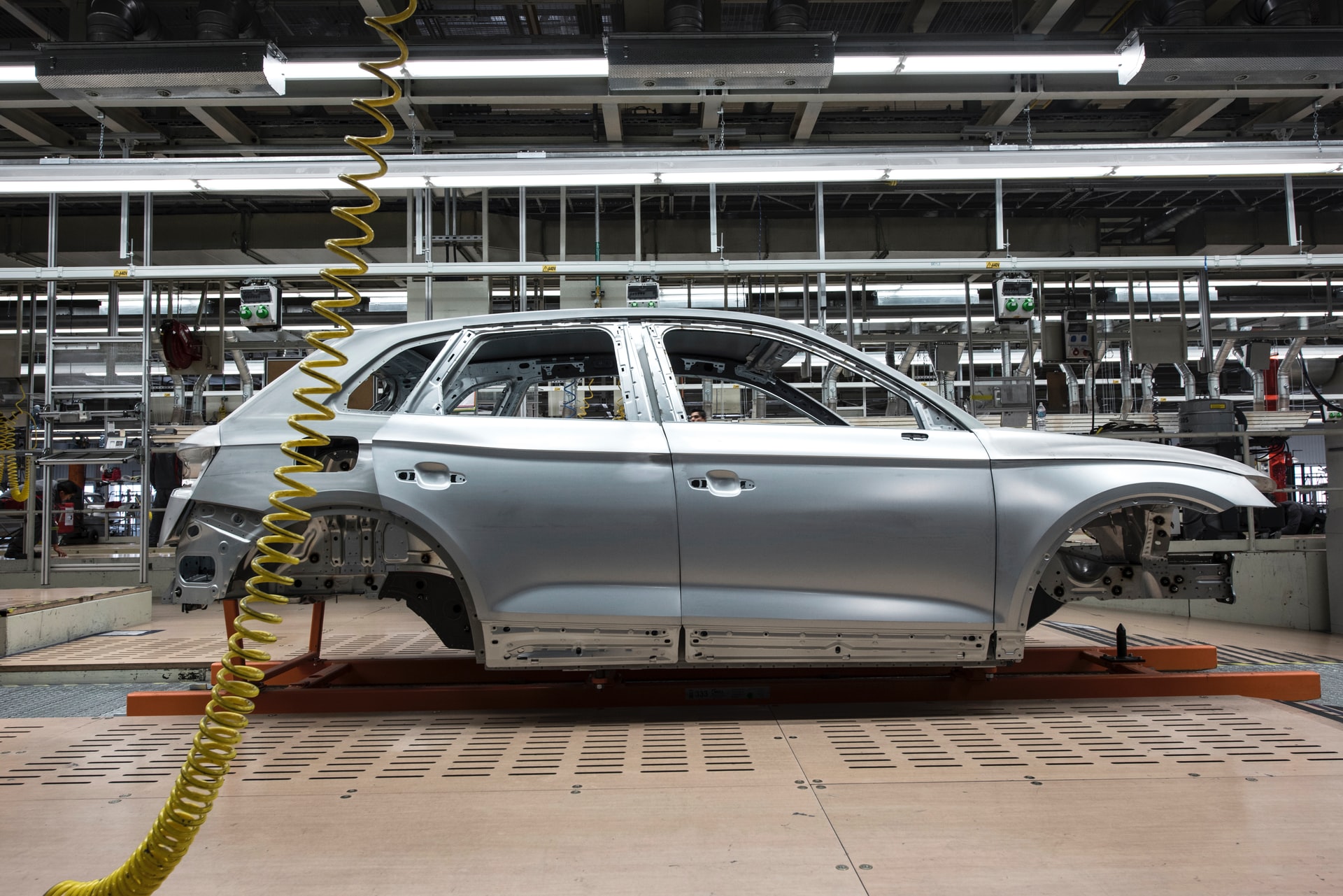
New cars sales in Russia hit 15-year low in April as sanctions bite: Autostat
The sales of new cars in Russia dropped to the lowest monthly level in 15 years to just 28,000 units in April, auto analytics agency Autostat said May 10, as the industry suffers the fallout of the sanctions on Moscow over its invasion of Ukraine.
New car purchases were down 64.5% on the month, and 83.9% lower on the year, due to reduced production by several automakers, ceased imports, expensive bank loans and significantly higher car prices, according to Autostat.
The previous low was 54,500 units recorded in April 2020, owing to the COVID-19 pandemic.
Lada, Kia, Hyundai and Renault brands comprised just over half of the cars bought in April.
In January-April, Russians bought roughly 291,900 new cars, down 44.5% on the year.
Russian domestic hot-rolled coil price was assessed at Rb 60,500/mt May 4, down 3.20% on the week, S&P Global Commodity Insights data showed.
Since the start of the invasion Feb. 24, many automakers suspended supplies to Russia, and disruptions to the supply of components caused stoppages at a few car plants. Car prices have also increased by 35%-45%, reflecting a fall in the ruble over late February-early March, said Autostat.
In March, the EU placed an embargo on the supply of luxury goods to Russia, which includes cars worth Eur50,000 and more. Similar bans were imposed on the import of cars from the US and Japan.
Since the invasion, nearly 1,000 overseas companies have curtailed operations in Russia, according to the Yale School of Management.
The reduced availability of foreign goods prompted the Russian government to legalize parallel imports end-March, including luxury car imports.
Parallel imports refer to original goods that are imported without documented permissions of the intellectual property owners.
According to Autostat, establishing these imports may take up to six months, as goods are to be shipped not through accredited distributors, but through alternative channels.
Before the May public holidays in Russia, the production of passenger cars was carried out at four plants only — UAZ, Haval Motor Rus, Mazda Sollers and Avtotor, which continue to produce Kia and Hyundai models, while the BMW assembly line was suspended. The majority of car plants in Russia remained idled, according to Autostat.
The Russian government expects foreign automakers, which have not formally withdrawn from Russia, to make a final decision with regards to their operations in the country by June.
— Ekaterina Bouckley

EU HRC holds stable in wait-and-see market
The EU hot-rolled coil market remained in a wait-and-see mode May 10 as buyers refrained from restocking and mills saw threats to production on the current price direction.
HRC in Northern Europe held stable on the day, assessed at Eur1,170/mt ex-works Ruhr. HRC in Italy was down Eur25 at Eur1,125/mt ex-works Italy.
In a market characterized by uncertainty, buyers were reported targeting Eur1,150/mt ex-works Ruhr, although demand was still considered minimal.
A trader source said mills were ready to accept lower bids on reduced demand.
“Buyers are targeting Eur1,150/mt, and I think some mills are ready to accept this level with certain customers,” the source said. “There is some demand revival expected, but given the poor prospect of automotive and the generally unstable situation I don’t think mills have a chance to keep prices at previous levels.”
A distributor source confirmed reduced demand, saying that exhausted credit lines due to record high pricing in recent months had reduced buyers’ purchasing capacity by as much as 40%.
“There is no real restocking activity now,” the distributor said.
Import material was heard to be unattractive to Northern buyers despite competitive offers as low as Eur960/mt ex-Taiwan. Long lead-times and logistical issues both in ports and with deliveries on land were cited as major factors by the distributor source.
“Buyers in Germany are not really booking imports as it is too risky with long lead-times into September earliest, and troubles with logistics,” a mill source said.
High stocks across Northern Europe were reported as a major barrier to bookings, with mill production cuts looming in the static market.
“Energy costs are extremely high – I think current coil prices are really close to the point where mills will have to shut down production,” the mill source said.
Demand in the Italian market was heard as higher on smaller inventories, but the increased interest was directed more toward the import market than the domestic market, according to the same mill source.
“Stocks in Italy are a bit lower, so the activity is higher there, but pressure from imports offsets any positive influence of the restocking,” the mill source added.
A trader source reported a deal on the day at Eur950/mt CFR Italian ports out of the Far East.
— Benjamin Steven, Maria Tanatar

Rod prices in Med/Black Sea slide under pressure from India, China
Wire rod mesh quality prices in the Mediterranean and Black Sea region fell on the back of lower offers from India and China and the wider downtrend in the long products in the global markets, sources said.
According to a European mill source, buyers in Europe imported large volumes of Indian wire rod recently. The last booking price he was aware of was Eur870-875/mt CIF Netherlands for Indian-origin wire rod.
The mill source added that Indian wire rod imports were not included in the EU safeguard tariff-free quota system, but considering the rapid growth in the imported volumes, this may change if India’s import exceeded 3% of the total.
A trader reported a recent offer for Indian wire rod at Eur880/mt ($927/mt) CFR Constanta. Another trading source cited Indian offers at $940/mt CFR Antwerp. This likely netted back to $840-$860/mt FOB India, the trader added. Another trader said that $840-$850/mt FOB was roughly what sellers quoted for Indian wire rod.
Wire rod from China was offered at $800/mt FOB, a trading source said. He believed this level was competitive in certain markets, including Africa and Latin America. The last indications for Russian wire rod were already below $800/mt FOB Black Sea.
A mill source put the workable range at $780-$820/mt FOB Black Sea but also heard a rumor that prices from a Russian supplier tainted by the European sanctions were already $770/mt FOB. A European source said he had heard of a Russian wire rod sale to Serbia recently.
“Russia is offering a lot but selling little,” a market observer said. According to a trader, Russian wire rod suppliers were actively looking for orders in Latin America, where they were facing strong competition from China.
Turkish wire rod offers were largely unchanged from last week. However, some traders said that a drop was inevitable as the target level of $900/mt FOB Turkey had no chance to stick against much lower offers from India and China.
“Buyers are aiming $850/mt FOB Turkey but they know they can’t get it so they are waiting,” a trader said. He added that it was easy to find cheaper material. An even higher offer was heard from Egypt, at $920/mt FOB, a trader said.
In some cases, Turkish mills were reluctant to give offers but were inviting bids and were flexible on a price against a firm bid, one source said.
Some market players, particularly in the EU, were waiting for wire rod offers from Ukraine as a couple of Ukrainian mills were looking to resume inland exports.
Market players reported no offers this week. A European source said that most wire rod would probably go to Romania or Poland, two neighboring countries. Seaborne export from the Black Sea coast is unlikely to be resumed, as Ukrainian ports were reported to be in a war zone.
— Wojtek Laskowski