

Flats service centres’ March shipments recover slightly: Eurometal
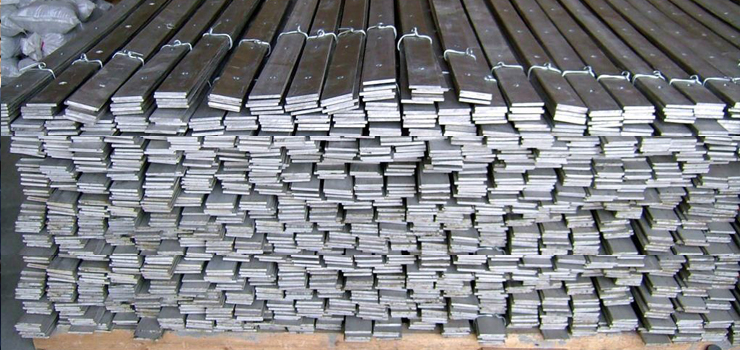
Eurometal says shipments of flat products from steel service centres recovered some 2.3% year-on-year in the first quarter. During the first two months of 2022 alone, shipments actually inched down 0.2% y-o-y.
Multi-products and proximity distributors registered an opposite trend during Q1. Shipments fell 8.2% y-o-y, with only rebar and plate shipments increasing while all other products had a negative run.
Overall, the steel distribution segment in Europe is currently suffering from the uncertainty created by the ongoing war in Ukraine and the weak momentum in China. After an important jump in shipments from distributors in 2021, 2022 is expected to register a negative correction overall, Kallanish notes.
Emanuele Norsa Italy


Poland registers record white goods output, demand declining
Poland remained Europe’s largest white goods producer in 2021 and overtook Germany to become the world’s second-largest exporter after China. Demand for these products could however drop in the near term due to changing lifestyles following the end of Covid-19 pandemic restrictions, as well as higher input costs, says the Polish Economic Institute (PIE).
Polish plants produced an annual record 27.2 million units of white goods last year, accounting for 39% of EU output. Exports amounted to 26m units, up 15% on 2020. Shipments abroad generated €5.3 billion ($5.6 billion) and accounted for 1.85% of overall Polish exports. Germany was the largest market, taking in 26.3% of Polish white goods exports, with France taking 10.1%.
Going forwards, however, “the source of demand growth for durable consumer goods, which was the change in lifestyle during the pandemic, is being exhausted. Production costs are increasing rapidly due to increases in prices of raw materials, including steel, and problems with the continuity of supplies of parts and components,” PIE says in its latest weekly economic report seen by Kallanish.
“Russia’s invasion of Ukraine only increased tensions in commodity markets and worsened economic growth forecasts for most countries in the world,” it adds.
Earlier in May, Eurofer halved its forecast for EU steel-using sectors’ output to 2% on-year growth in 2022, with domestic appliances to be the biggest drag on growth, with output expected to fall 3.3%.
Adam Smith Germany

Ukraine war to cost Duferco $20-25m: Bolfo
Bruno Bolfo, president of the holding that controls steel trading company Duferco, says there will be significant impact on the steel business as a result of the Ukraine war.
The executive notes that Duferco is reorganising, taking into account business with Russia is no longer possible and supply from Ukraine will continue to be disrupted by the war.
“We calculate that the impact for our operations will be a loss of margins worth $20-25 million within steel and raw materials. We can recover these lost margins from other parts of the business, but it will not be easy,” Bolfo said in an interview with Italian-Swiss television seen by Kallanish.
“I have never seen a situation comparable to the one we witness now, having been in business since 1979,” he added. “What is happening could lead to the end of globalisation and exacerbate the division of the world into blocks.”
Duferco is one of the largest steel and raw materials traders in the world, but its holding is also active in other businesses such as energy. In 2020, the holding group posted a profit of over $110m.
Emanuele Norsa Italy

Eurofer voices concern over ETS phaseout acceleration vote
The European Parliament’s environment committee voted on Tuesday in favour of further accelerating Emissions Trading System (ETS) free allocations. European steelmakers association Eurofer voiced its concerns over the vote. The proposal is now set to be voted on by the European Parliament in June where further changes could be applied.
The committee voted to end carbon ETS free allocations by 2030, and substitute them with the Carbon Border Adjustment Mechanism (CBAM). The previous proposal involved a total cancellation of ETS free allocations by 2036.
“The Environment Committee missed the opportunity to develop an ambitious framework that would both allow deep cuts in CO2 emissions and secure manufacturing and jobs in Europe. In their current form, these extreme proposals approved by a tight majority risk disrupting all this without any additional gains for the climate if emissions are just leaked abroad,” Eurofer director general Axel Eggert says in a note sent to Kallanish.
“Our industry has very ambitious plans to reduce emissions by more than one third by 2030. This would be a truly new industrial revolution requiring massive capital investment of over €30 billion and decarbonised energy and hydrogen in unprecedented quantity. Climate legislation needs to accompany this transition with balanced measures and realistic timelines rather than impose disproportionate costs that overburden companies before they can even implement their decarbonisation plans,” Eggert concluded.
Emanuele Norsa Italy
Eurofer calls EU parliament to fix carbon market reforms vote
European steel association Eurofer on May 17 asked the European Parliament to “fix” what they are calling a “disruptive vote” on the European Commission’s proposed reforms to the Emissions Trading System, or ETS, and Carbon Border Adjustment Mechanism, or CBAM.
On May 17, the European Parliament’s environment committee backed the European Commission’s proposed reforms to the EU ETS and CBAM, ahead of a full parliament vote in June, which will be followed by negotiations with the EU member states later in the year.
According to Eurofer, the decision to reduce free allocation by 40% for transitioning plants would be impossible to implement in just three years.
Eurofer called “an abrupt ETS free allocation phase out of CBAM” affecting the sector and said that there is no solution for exports competing with production from countries that do not have the same strict climate legislation as the EU.
“The Environment Committee missed the opportunity to develop an ambitious framework that would both allow deep cuts in CO2 emissions and secure manufacturing and jobs in Europe,” Eurofer’s Director General Axel Eggert said in a statement.
“In their current form, these extreme proposals, approved by a tight majority, risk disrupting all this without any additional gains for the climate, if emissions are just leaked abroad,” he added.
According to Eurofer, the steel industry will risk losing at least 20 million tons of exports worth Eur45 billion ($47 billion).
The parliament’s environment committee adopted five reports under the EU’s so-called Fit-for-55 package, which seeks to deliver on the bloc’s 2030 emissions goal.
The association stressed how cutting emissions by more than one-third by 2030 is a real “industry revolution” that required funds and legislation to sustain it.
“… climate legislation needs to accompany this transition with balanced measures and realistic timelines rather than impose disproportionate costs that overburden companies before they can even implement their decarbonization plans,” said Eggert.
EU carbon allowance prices for December 2022 delivery rose as high as Eur92.75/mtCO2e ($97.71/mt) May 17, the highest since Feb. 24. That compared with Eur89.56/mtCO2e at the close May 16, according to S&P Global Commodity Insights data.
Platts HRC in Northern Europe was down Eur50 May 17 at Eur1,100/mt ($1,158.74/mt) ex-works Ruhr, according to data from S&P Global.
— Annalisa Villa

Turkish mills to object to EC’s antidumping decision on HDG imports
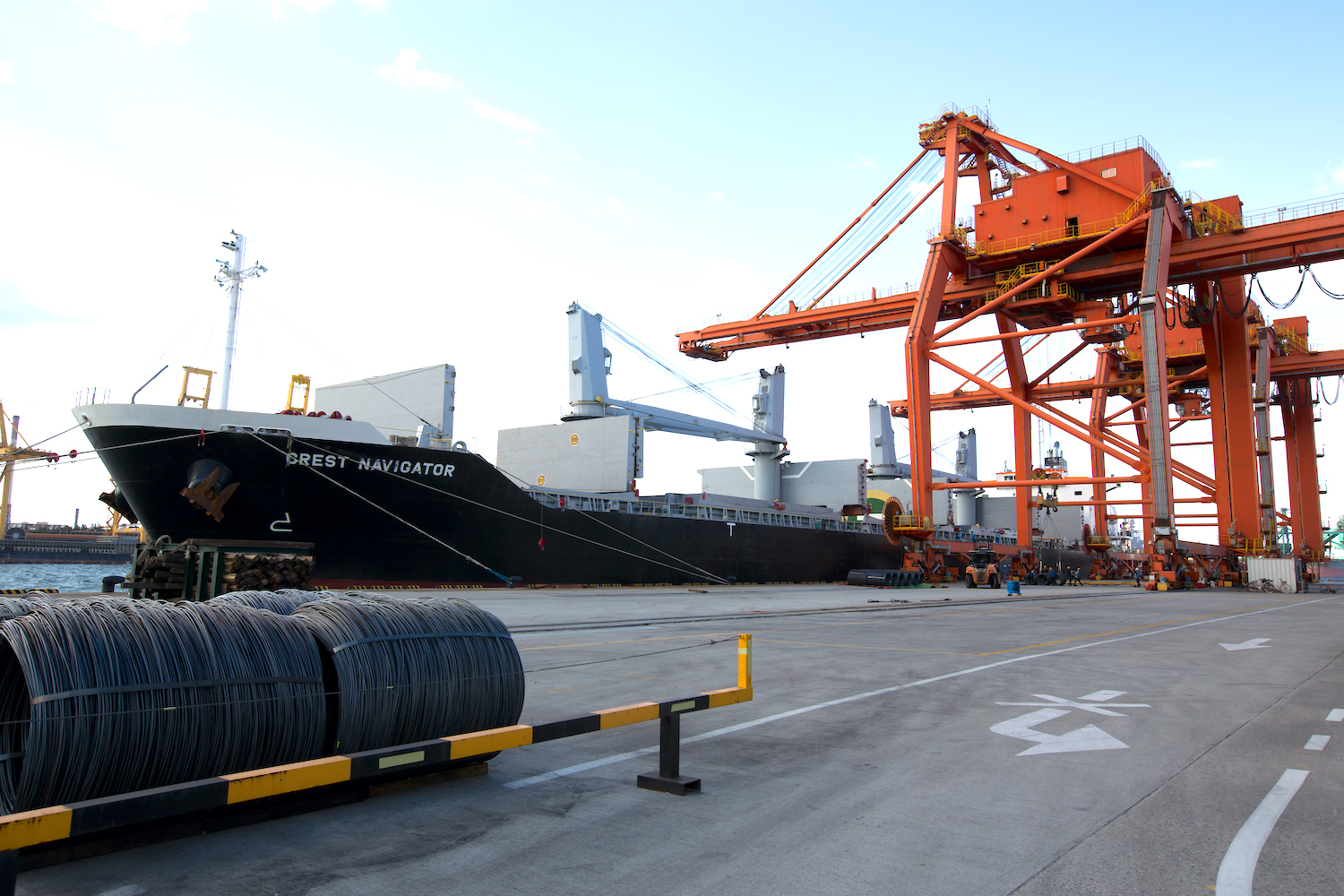
Turkish hot-dipped galvanized coil producers will object to the European Commission’s decision May 10 to impose definitive antidumping duties on HDG imports into the EU from Russia and Turkey, sources told S&P Global Commodity Insights May 17.
One of the producer sources said they have already filed an appeal with the commission.
“A negotiation with the EC will be held on Friday this week. We will express our objections to the Commission decision. We are hoping that the duty rate will be removed following this negotiation, as we are thinking that our dumping rate [was] calculated wrongly by taking into account … our galvalume exports in that period,” the source said.
A manager of another Turkish coated coil producer said all of the Turkish coated coil producers will object to the commission’s decision soon, adding that they expect the commission to change the decision in favor of Turkish mills.
The definitive antidumping duty rates, expressed by the EC on the CIF Union border price, customs duty unpaid, were put on Turkish producers as follows on May 10: MMK Metalurji 10.6%, Tat Metal 2.4%, Tezcan Galvaniz 11.0%, other cooperating Turkish companies 8.0% and all other Turkish companies 11.0%.
Interested parties are being granted a period within which they can make representations subsequent to the EC’s latest disclosure.
The dumping duty decision by the EC has raised the price pressure and uncertainties in a sluggish market environment, and has widened a large Turkish coated coil producer’s hot-rolled, cold-rolled and coated coil discounts to other domestic mill offers, a producer source said.
According to an advertisement published in some newspapers on May 15, the company has started offering hot-rolled coil at $799-$829/mt EXW, cold-rolled coil and hot-dip galvanized coil at $899/mt EXW and color-coated coil at $999/mt, notably lower than other domestic mill offer prices.
Confirming this, a source at the company told S&P Global that the aim is to reduce their stocks.
“The [summer] promotion received notable interest from the market. There is a daily maximum amount of 100 mt on each booking. However, buyers could book 100 mt every day until the end of the promotion,” the source said May 17.
Although other Turkish mills didn’t pull down their HDG offer prices to the same extent, a manager of a large Turkish coated coil producer said 0.50 mm thick HDG prices could be available at $960-$970/mt EXW for large tonnages, a more than a $50/mt decline on the week.
S&P Global Commodity Insights’ weekly assessment for 0.50 mm thick HDG was at $1,030/mt EXW on May 13.
A service center manager said he had received an offer for 2 mm thick HDG from a Turkish producer at $920/mt on May 16, adding that due to the sharp decline seen in prices, some traders have started to face serious losses.
The manager expects prices to rebound in the coming weeks with the return of Chinese mills with higher prices.
“Delayed demand in China during COVID-19 lockdowns could support prices,” he observed.
— Cenk Can
EU hot-rolled coil prices fall further, mills mull production cuts
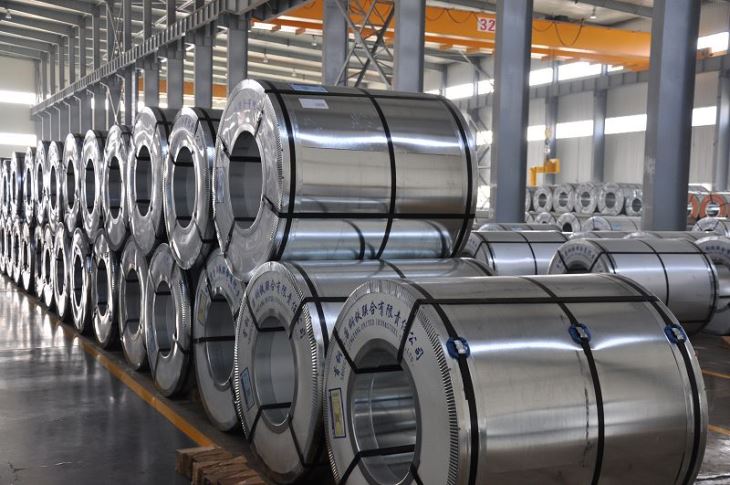
Hot-rolled coil prices in Europe fell further May 17, with one mill source describing the market in “freefall.”
Platts HRC in Northern Europe was assessed down Eur50 on the day at Eur1,100/mt ex-works Ruhr.
Northern sources reported offers on a range of Eur1,100-1,200/mt ex-works. Buyers were heard as rejecting offers at the Eur1,200/mt mark, with negotiations starting at Eur1,150/mt ex-works. A German mill was heard as offering at Eur1,050/mt ex-works, although sources were unable to confirm whether offers were representative of the wider market.
Mill and buy-side sources considered prices of Eur1,100/mt as achievable on the day, although most buyers refrained from restocking as prices continued to fall on the bearish trend.
“There’s no purchasing at all, we’re trying to sell out material as stocks are strong and prices are reducing – inventories across the market are too high and there’s no availability to store new stock anywhere,” a Danish distributor said. “It would only hurt us to buy right now.”
The source expected mills to cut production to suit market demand as buyers pushed to deplete stock levels before devaluation.
A mill source expected buyers to wait until September for substantive purchasing, expressing concern that price direction and muted demand would render current production levels unsustainable.
A second mill source agreed, citing communication of unspecified production cuts to customers. According to the source, production cuts now presented the only means to combat the negative price trend.
Reduced demand was heard extending into the import market, where competitive offers could not stimulate buyers to order material, given longer lead-times into October and market uncertainties. Import offers were heard on the day at Eur920-950/mt CIF Antwerp ex-South Korea and Egypt, with South Korean offers reported as particularly aggressive.
In South Europe, the Platts HRC was assessed down Eur50 at Eur1,000/mt ex-works Italy, according to S&P Global Commodity Insights data.
Offers were reported by market sources at Eur1,000/mt ex-works, with one trader source seeing prices close to the floor.
“Last week demand was zero, this week the market started moving with at least some deals done,” the trader said. “I think buyers have realized that prices are close to bottom, and they are unlikely to move down much further.”
A second distributor source disagreed on both demand and price direction, seeing prices as susceptible to further pressure from sliding import offers.
“The market is totally frozen — no enquiries, no prices,” the distributor said. “Buyers may return in June to restock but the war and the lockdown in China bring too many uncertainties. HRC imports could slide as far as Eur900/mt and drive the domestic market down further.”
Import offers were heard on the day at Eur900-950/mt CFR Italian ports ex-India and Turkey.
— Benjamin Steven, Maria Tanatar