


EUROMETAL at ECCA Spring Meeting in Marseille


Daniel Guinabert represented EUROMETAL at the 56th ECCA Spring Meeting (prepaintedmetal.eu) the 18th May in Marseille.
Our former general manager, presented the challenges of European Steel Distribution in 2022.
This event, which has around 150 participants, allowed a better understanding of the prepainted metal products sector and a introduction of our sector.
Among the participants we were pleased to meet our former president, Jens Lauber, currently Managing Director Business Unit Colors at Tata Steel in Europe.

EU should avoid short-term gas supply disruptions: Eurofer
The European Union should avoid disruptions to gas supplies for now “as long as alternative infrastructure is not available”, according to the latest statement issued by steelmakers’ association Eurofer.
The association published the statement on Wednesday, in response to the presentation by the European Commission of REPowerEU, a new plan to reduce dependence on Russian fossil fuels and speed up the green transition, Kallanish notes.
“Without strategic industrial energy consumers such as steel on board, the energy transition will not be successful. Energy intensive industries need to be integrated across all levels of policy making and political discussions as the key enablers of the decarbonisation and the independence of the European energy system,” says Eurofer director general Axel Eggert.
“Rapid access of the steel industry to green hydrogen will boost hydrogen markets in Europe. But alternative gas supplies other than from Russia will remain crucial as long as no hydrogen infrastructure at affordable costs is available. We need a revision of the EU energy strategy for the sake of cohesion, cooperation, and cross-sectoral dialogue,” he adds.
EU talks over a ban on imports of Russian oil and gas have been ongoing in recent weeks, but a decision is yet to be taken by authorities. While there is widespread support for accelerating the green transition to limit the dependence of Europe on imported fossil fuels, sources also point out that targets need to be realistic to be achieved and implemented by industry.
“For the time being, no hydrogen economy or infrastructure exists for the steel sector. Our industry alone will need over 150TWh of ‘clean’ electricity – half of which for the production of hydrogen – by 2030 to run its 60 low carbon projects across the EU. These needs are the equivalent of two times the electricity consumption of Belgium,” Eggert concludes.
Emanuele Norsa Italy

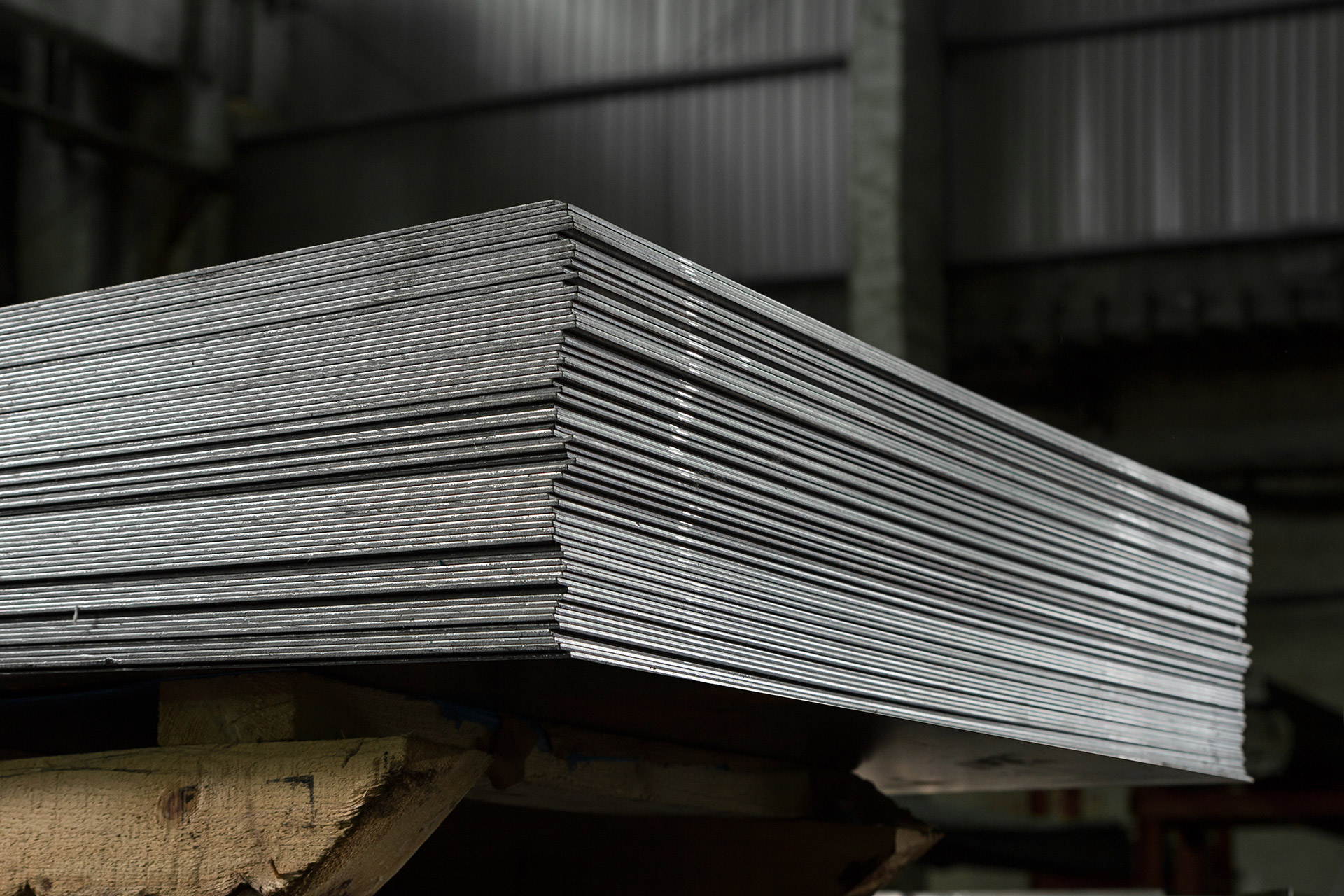
Italian plate market reaches standoff
The Italian heavy plate market has reached a standoff after prices began to decline a few weeks ago following unprecedented increases in March and April, sources tell Kallanish.
The lull is due to the international wave of falling prices for all flat products, uncertainty and competitive import offers from Asian countries. This has caused apparent demand to completely disappear in Italy and the entire value chain to freeze. Both producers and distributors lament an almost complete lack of demand, which is spreading some fear and pessimism throughout the market.
The latest workable price for the basic grade S275 from domestic players some ten days ago was €1,600-1,650/tonne ($1,683-1,735) base ex-works, with Asian-origin import deals done at an average of €1,400/t cfr Italy. Towards the end of March and April, the high point of the range for domestic S275 was as high as €2,000/t ex-works.
Today, prices are unclear as there are virtually no sales taking place. Producers are keeping their cool and not offering material, satisfied with full order books until July. They admit however that the market is correcting downwards.
Sources in the industry forecast that demand and sales activity will resume in June, and expect domestic prices to align with import values, somewhere in the range of €1,400-1,450/t for S275.
Despite the current uncertainty, plate prices are not seen collapsing thanks to strong European end-use demand. The current lull is a necessary price adjustment period that should help restart demand in the coming weeks, sources point out.
High energy and transport costs persist, worsened by longer slab procurement lead times and disruption, which have caused two producers to idle their plants. The 355 grade remains in short supply because of supply difficulties for the high-grade slab needed to produce 355. The European market is also missing some 1.1 million tonnes of plate typically sourced from Russia and Ukraine.
Some northern European producers are said to have long lead times, to the end of the third quarter. Order books are being filled with supply to infrastructure and wind farm projects throughout Europe.
Natalia Capra France

European stainless market reaches deadlock
The wind has changed in the European stainless flat steel market as prices are declining due to extremely sluggish demand, Kallanish hears from market sources.
Uncertainty is dominating buyers’ mood. Service centres and end-users across Europe have stopped purchasing due to the unsustainable price levels for hot and particularly cold rolled coil. The imminent coil price decline is seen by multiple players as a needed downward adjustment.
European mills are said to have orders until June but no new orders for July delivery. They are in the process of reviewing their formula of surcharge plus base price to calculate coil values. Because of skyrocketing monthly alloy surcharges in recent months, the traditional formula pushed CRC up to over €5,000/tonne ($5,260) for May and June delivery.
Meanwhile, Asian CRC quotes are extremely competitive at €4,400-4,500/t cfr Europe duty paid. The attractive import offers and high-priced domestic material have caused service centres and re-rollers to stop buying domestically in May.
Domestic stainless CRC for May and June delivery has been sold across Europe at €4,800-5,300/t delivered, while HRC is sold at €4,300-4,400/t delivered on average, sources suggest. European mills’ CRC offers for July delivery are expected to decrease and align with import values. Sources forecast new European prices at €4,500-4,600/t delivered.
Meanwhile, prices for coil derivatives such as sheet and tube are also decreasing, by some €200-250/t on average compared to the end of April. Sales volumes are said to be low and demand weak, with customers adopting a wait-and-see attitude.
The service centres who spoke to Kallanish however do not see a price collapse coming and are not too concerned by the standoff. They notice that their customers are reluctant to buy because they believe prices will fall, but end-use demand is still evident.
Natalia Capra France

EU passenger car registrations fall 20.6% in April
New passenger car registrations in the European Union fell 20.6% year on year to 684,506 units in April, as supply chain issues weighed on car production, data from the European Automobile Manufacturers’ Association showed May 18.
Except for 2020, when registrations were hit by the pandemic, this was the weakest April in terms of volumes sold since records began, with all major markets posting a negative performance: registrations declined in Italy by 33%, France 22.6%, Germany 21.5%, and Spain 12.1%.
New car registrations in the EU dropped 14.4% to 2,930,366 units over January-April. The decline in registrations during the first four months of the year was led by Italy at 26.5%, followed by France at 18.6%, Spain at 11.8% and Germany at 9%.
The automotive sector is a key industry for steel producers. On an average, 900 kg of steel is used per vehicle.
S&P Global Insight Commodity assessed hot-rolled coil in Northern Europe down Eur50 at Eur1,100/mt ex-works Ruhr on May 17. HRC prices reached a high Eur1,460 in March, rising from Eur922/mt at the start of 2022.
The automotive sector’s steel turnover represents over 8% of the EU’s gross domestic product, generating a trade surplus of Eur74 billion ($90 billion) for the region.
— Annalisa Villa

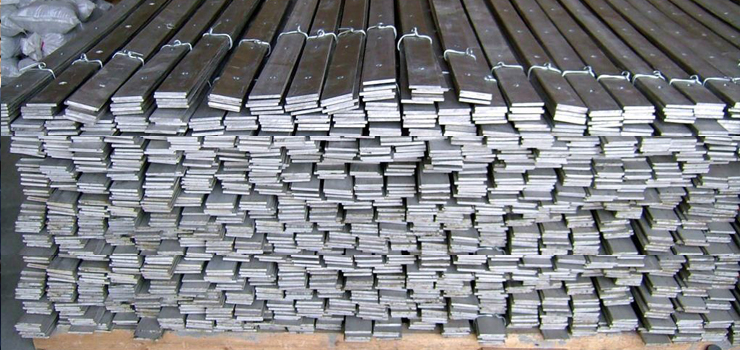
Flat steel shipments from EU and UK up 3.3% on year in Q1
Flat steel shipments from steel service centers in the EU and the UK went up by 3.3% year on year in the first three months of 2022, stockholder and distributors’ association Eurometal said in its latest report.
When expressed in days of shipments, stocks at EU flat steel shipments reached 64 days in March 2022, compared to 55 days in March 2021, the association said March 17. The index of stock volumes rose to 104 in March, up from 83 a year ago, with the average 2018 index being 100.
Stocks increased by 7% in March compared with a year ago. Only Long Steel products noted a drop, the association said without specifying the percentage.
Longs products shipments in Q1 were down by 8.2% year on year with the exception of rebars.
Platts HRC in Northern Europe was assessed down Eur50 on May 17 at Eur1,100/mt ex-works Ruhr, according to S&P Global Commodity Insights. In Q1 HRC Ruhr moved from Eur922/mt to Eur1,390 and on March 21 reached the historical level of Eur1,460/mt.
— Annalisa Villa

EU HRC buyers tie reduced demand to overstocking factors
Hot-rolled coil prices remain stable across Europe Buyers report overstocking amid reducing demand
Hot-rolled coil in Northern Europe remained stable May 18, assessed at Eur1,100/mt ex-works Ruhr, according to S&P Global Commodity Insights data.
The majority of offers were heard in a range of Eur1,100-1,120/mt ex-works, as reported by mill and service center sources.
A mill source said producers were limiting offers and refraining from responding to general inquiries, instead quoting on a single-customer basis and only if there was “a real need.” The source expected offers to generally circulate around Eur1,100/mt ex-works.
Buy-side sources saw tradable values lower but varied as to the depth of price direction. One service center source the considered market price was just below Eur1,100/mt ex-works, with prices of Eur1,050-1,100/mt ex-works viewed as negotiable if not now then in the near-term.
Another service center source expected Eur1,000-1,050/mt ex-works to be tradable against import prices heard below Eur900/mt CFR Antwerp. While interest in the import market was reduced, given long lead-times and logistical uncertainties, buyers and end-users were reportedly citing these lower offers in negotiations across the market stream.
On price direction, sources expected prices to continue to fall given the influence of import offers in the market. A second service center source speculated that import prices could be driven even lower due to the re-routing of trade flows of sanctioned Russian material to Asia, allowing foreign mills to offer and export their own material at a discount into the European market.
On sentiment, inventory levels presented the major issue of the day for buy-side sources, with overstocking and effects from the coronavirus preventing stockholders from depleting inventories and reviving demand.
“The market is overstocked at the moment,” a third service center source said. “Everyone has too much material and we can’t get material out fast enough as the [coronavirus] effect in Germany is very strong. Service centers can’t produce at full capacity on reduced workforces and contracted material is leaving stock much slower than planned – it’s affecting customers too reducing consumption and overall demand as well as processing rates.”
Other service center sources reported the same overstocking issue, but from different perspectives.
“Stock levels are very high for this point in the year given reduced demand – automotive isn’t running, the lockdown in China means material is stuck in ports and there are still uncertainties to emerge from the war in Ukraine,” a fourth service center source said. “Delivery of import material has also been delayed meaning import buyers are still receiving material regularly – it makes no sense to buy on a downtrend in such a context.”
A fifth service center source reported a complete lack of storage for material in Germany also heard the same in Denmark earlier in the week. Relevant freight costs and capacities were also deemed problematic on the day.
In South Europe, the Platts HRC price also remained stable, assessed at Eur1000/mt ex-works Italy.
Demand was similarly muted in the Italian market, with a trader source estimating a 20-50% reduction in demand from service centers and end-users.
“Nobody is willing to buy right now, prices are on the slide and as I see it – we’re still well above the price floor,” the trader said.
— Benjamin Steven, Maria Tanatar