


End-use demand supports Italian HRC sales, prices drop
End-use demand is forecast to support hot rolled coil sales but at significantly decreased prices, say some Italian service centre sources. Despite the sluggish flat steel market throughout the entire local value chain, real consumption is said to be sustaining.
Sources tell Kallanish the current steep decline in HRC prices is mostly the result of speculation in recent months that ballooned prices to unprecedented levels. One service centre says his customers are refusing to pay for high-priced sheet “out of principle”. Demand is seen gradually returning to pre-Covid-19 levels. Service centres say shipment levels are satisfactory in May despite the slow market.
Domestic material prices continue to fall amid a market standoff created by economic uncertainty. Domestic contracts are now at €1,000-1,050/tonne ($1,066-1,119/t) base ex-works. Prices are forecast to go below this level in the coming days, towards €970-980/t base ex-works, including from other European producers. Local producers are officially asking for €1,100/t base ex-works but willing to negotiate, sources say.
HRC is offered from the Far East at €870-950/t cfr Italy for July loading but “nobody is buying anyway, apart from some small lots”, a buyer comments. Sources believe prices will bottom out when European producers reduce their levels to €900/t base ex-works.
Natalia Capra France

Spain’s rebar market sees prices going down
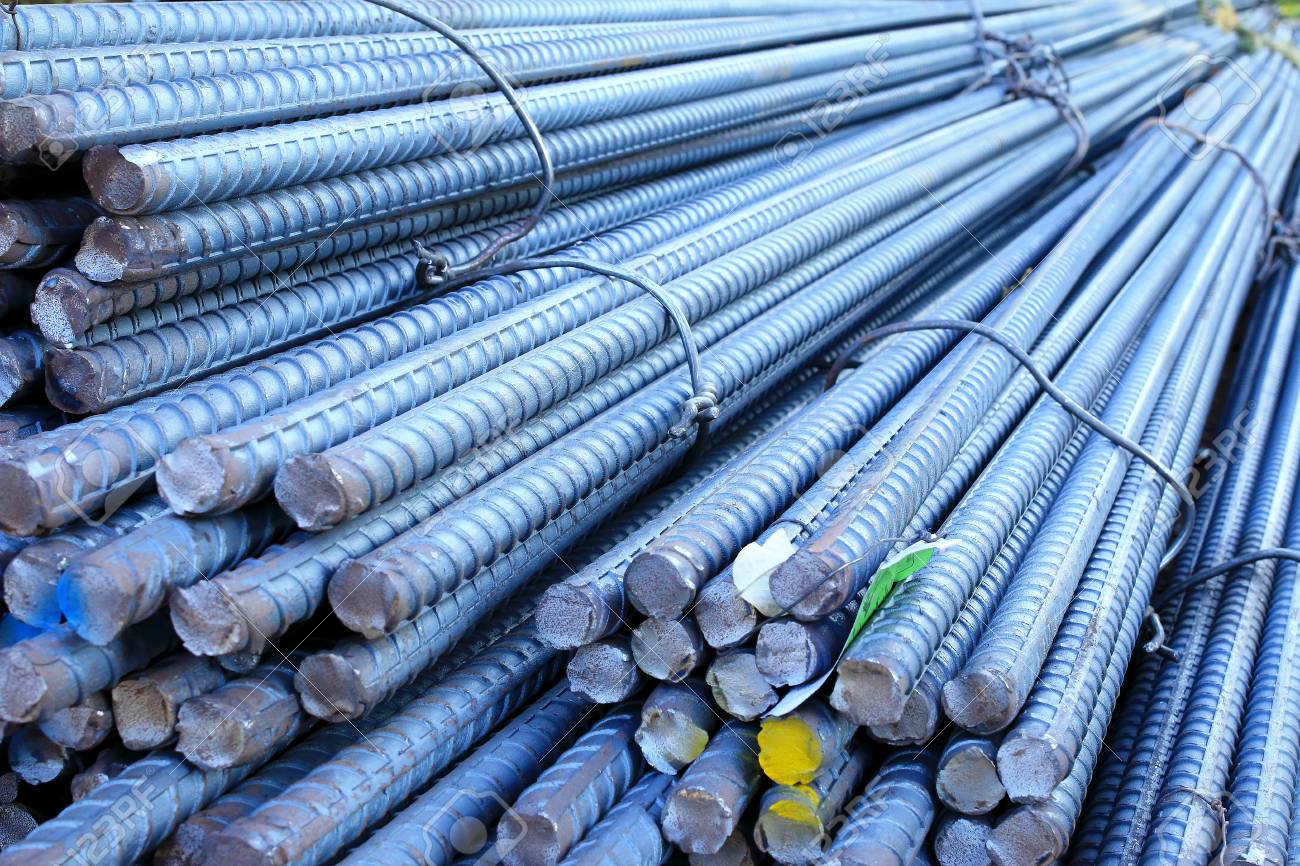
Spanish rebar prices are expected to drop below €1,000/tonne ($1,066/t) in the coming days. The market is going down, influenced by recent international movement. However, it will take time for direct customers to feel the price adjustment, since distribution centres and traders are taking advantage of the moment to recover their margins, sources tell Kallanish.
“Rebar prices are falling day by day, while distributors maintain stocks at a minimum to avoid risk of loss,” one source comments. “Demand is weak. The situation is similar to when prices were rising. Nobody is buying. The entire chain is waiting to see where the market will touch bottom to make their purchases.”
May, June and July are typically months of very high construction activity in Spain, but the price volatility is impacting the sector and deals remain weak, another market participant says.
“The recovery in demand looks to be postponed for another month,” he continues. “It is difficult to assume that traders can lower prices much, since distributors are taking advantage of the international market adjustment to up margins that they had lost in recent months. Thus, for end customers the situation continues to be difficult to accelerate the recovery of activity.”
Rebar is currently sold domestically in Spain at €800-810/t ($853.5-863.7/) base ex-works. Including €262/t size extras, transaction values are at €1,062-1,072/t ex-works. Some offers have also been heard at €1,000/t delivered for 16mm rebar.
Todor Kirkov Bulgaria
Scrap metal prices may have bottomed out after volatility: BIR president
Scrap metal prices may now be bottoming out following recent high volatility, the president of the Bureau of International Recycling, Tom Bird, said during a press briefing May 22 at the start of a BIR congress in Barcelona.
Prices rose dramatically as a result of Russia’s invasion of Ukraine Feb. 24, on fears of a shortage of material, followed by a more recent significant price reduction, particularly for ferrous scrap, Bird said.
There’s now more material around compared with immediately after the war erupted and “mills have to come back [to the market] and buy” ferrous scrap, Bird said. There are signs this is happening in Europe, including among Spanish mills which are putting prices out now, he said.
“For the last 10 days or so prices weren’t available, you couldn’t get a bid, but now mills are prepared to put a number on material,” Bird said.
Turkey is still trading with Russia and there is a lot of cheap Russian material at the ports in Europe, Bird said. Russian scrap is still moving, impacting the market and dampening it, the BIR president said.
Turkey is a major importer of ferrous scrap.
“But the overhang will be consumed,” Bird said. “We’re seeing potentially a bottom to the market.”
Platts assessed Turkish imports of premium heavy melting scrap 1/2 (80:20) May 20 at $460/mt CFR, down $5/mt on the day, according to S&P Global Commodity Insights data. While this price still showed a fall, sell-side sources indicated lower workable levels, expecting buyer demand to resurface soon.
Prices for this product had skyrocketed to an all-time high of $665/mt March 16 on fears that a shortage would be provoked by the war.
Prices for non-ferrous scrap products have generally fluctuated less, Bird said.
— Diana Kinch

EU scrap metal export curbs would be backwards step in global decarbonization: BIR
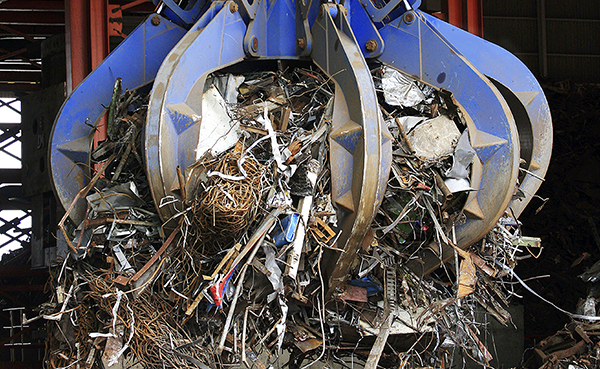
Scrap metal export controls out of the European Union would be a step backwards in the global decarbonization drive and could also result in lower scrap arisings within the European region, speakers at the International Bureau of Recycling, or BIR, convention in Barcelona said May 23.This could fly in the face of the aim of the current revision to the European Commission’s Waste Shipments Regulation, which sets out to boost the competitiveness of scrap supplies to EU industry to facilitate decarbonization, the convention heard.“Export controls would be the most tragic development in the industry for the last 40 years,” said Michael Lion, chair of BIR’s International Trade Council at the event, attended by some 1,200 delegates representing 500 companies and recycling organizations from 60 countries.EU-28 was by far the world’s biggest steel scrap exporter in 2019 – the latest year for which data is available – exporting 21.79 million mt. Exports had been on a rising trend for years. The US was the second biggest exporter that year, with 17.68 million mt.Turkey was by far the world’s biggest ferrous scrap importer in 2019, taking 18.86 million mt, mainly from EU nations and the US.Murat Bayram, board member of BIR’s non-ferrous committee, said the export controls currently proposed by the EC would mean fewer scrap arisings and less available technology within the region. Reducing scrap exports would also reduce the price incentive to produce scrap within the EU as there would be more local availability, he indicated.The European Parliament’s Environment Committee is expected to vote on the proposed WSR amendments in October, after these were presented by rapporteur Pernille Weiss May 11. As well as attempting to ensure availability of high-grade scrap within the EU, the amendments aim to ban exports of EU-origin scrap to countries which don’t have EU waste treatment standards. Non-OECD countries would be obliged to conduct independent audits of their processing facilities. Cross-border shipment of waste between EU nations would be facilitated for reuse, recycling or disposal.
Brought forward as a result of the EU’s Green Deal of 2019, the review aims to improve environmental standards in recycling industries, tackle illegal waste shipments and ensure the EU doesn’t export its waste challenges to third countries, the EC has said.
Merchant consolidation foreseenThe global scrap industry’s fear is that the proposed export curbs would distort market flows and prices in an increasingly controlled market. The amendments — widely expected to be approved due to the weight of the steel mills and metals smelters they would favor — have been opposed by European Recycling Industries’ Confederation EuRIC, which represents some 5,500 companies in all waste areas, and by BIR which has also proposed some amendments, Ross Bartley, BIR environment and technology director, said at a press briefing. Many scrap merchants and processors worldwide are relatively small companies, often family-owned, which could be subject to consolidation if the review passes.According to Bartley, the EC ‘s main intention with the WSR is to reduce purchase scrap prices for domestic consumers including steel mills and non-ferrous metals smelters of scrap metals available in or entering Europe, to assist their production and decarbonization processes.The review will in first place favor EU steel mills and smelters, in second place OECD countries, and lastly, developing countries, Bartley noted, with a major concern being what will happen to scrap availability in non-OECD countries.“We’ve encouraged the developing world to reduce emissions but they don’t have the local supplies of scrap needed to decarbonize effectively,” noted BIR president Tom Bird, describing the proposed changes as “protectionist.”OECD countries including Turkey, Australia, Canada, Japan, the UK and the US will see trade flows altered due to the review.“We foresee the market will foreclose [if the review is approved] and access to international markets won’t be the same,” said EuRic representative Antoine Stilo. “We will have internal capacity [in the EU] for which there will be no demand.” Local demand might need to be stimulated by operating a mandatory recycled content rule, he noted.The review needs to differentiate the approach taken for different waste, or scrap materials, Stilo said. A general prohibition would seem to make sense only for more “problematic” materials such as plastics, batteries, electric and electronic assemblies and end of life motor vehicles and tyres, while there should be free trade for raw materials from recycling meeting quality specifications, he said.
Closing the loopWhile the WSR review aims, in circular economy terms, to “close the loop,” it will essentially achieve this only on a regional basis.
“Closing the loop is important but closing the loop doesn’t mean closing markets,” Bayram said, noting a “more aggressive” tone has emerged from both the steel and nonferrous sectors “to influence governments to ban scrap exports.”
“The EU plan is to close the loop in the EU,” said Hannu Heiskanen, vice president, recycled raw material, at copper producer Aurubis, with production facilities in various European nations.
“Aurubis is generally in favor of the free market but considers that it makes sense to close the loop in materials recycling, which is in the interests of everyone,” Heiskanen said on the event’s sidelines.
Aurubis is the world’s second-largest producer of copper cathode, which is on average 50% recycled within the company’s installations. It is a net buyer of copper and brass scrap and aims to grow more in the recycling area, he said.
— Diana Kinch

Downward mood in EU HRC market prevails on low demand
Sentiment in the European hot-rolled coil market has remained bearish due to low demand from both distributors and end consumers, sources said on May 23.
Platts assessed domestic HRC prices in Northern Europe at Eur1,060/mt ex-works Ruhr, down Eur5 day on day.
Transactions for small tonnages of coil and achievable prices have been heard at Eur1,050-1,070/mt ex-works Ruhr. Some sources expected that the deals in the region would soon be done at Eur1,000/mt ex-works Ruhr.
“I think I would be able to get HRC at Eur970-980/mt ex-works from Central European mill soon, and with such demand prices from German mills will drop to Eur1,000/mt ex-works soon,” a trader said.
Steelmakers were planning to cut capacities and possibly stop some equipment if HRC prices in the north of Europe reach Eur1,000/mt ex-works, market sources said. The reduction of steel output would allow the balancing of supply with lower demand and, therefore, support domestic prices.
In Southern Europe, Platts assessed domestic HRC prices at Eur990/mt ex-works Italy, stable day on day.
Achievable prices and offers have been heard at Eur980-1,000/mt ex-works Italy.
Demand for flat steel has been low across Europe due to lower consumption from the automotive industry caused by components shortage and distributors’ high stocks.
Pressure from low importing, however, might ease after India imposed export duties on HRC of 15%. India is one of the key suppliers of HRC to both south and north of Europe.
“I think steel import from India will drop,” an Italian trader said. “Due to duties India will lose its competitiveness. For now, it is unclear what is going to happen to the orders that were not shipped.”
At the end of the previous week, offers of HRC from India had been heard at Eur850/mt CFR Italy, while no offers from the country were heard on May 23.
Offers of the material from Turkey, Egypt and Asia have been heard at Eur850-900/mt CFR Italy. The prices included anti-dumping duties where applicable.
— Maria Tanatar