

Grain competition complicates Ukrainian steel exports: GMK’s Tarasenko
The EU, US, UK and Canada’s decision to lift import duties previously imposed on Ukraine may not lead to a significant increase in Ukrainian steel and raw materials exports, says GMK Center chief Analyst Andrii Tarasenko.
Export logistics in Ukraine remain restrictive and the situation is compounded by steelmakers’ difficulties in importing 4-5 million tonnes of coking coal previously provided by Russia and now supplied partly by Poland, Tarasenko said at Monday’s Kallanish European Steel Markets 2022 conference in Milan.
The bottlenecks created by grain cargos and global pressure to export grains are providing further obstacles to steel exports. However, if Russia allows foreign countries to provide a military escort for grain cargos leaving Ukrainian ports, this may also ease steel exports, Tarasenko commented.
Before the war, Ukraine was the world’s second-largest pig iron exporter, the fourth-largest iron ore supplier, the third-largest semi-finished products exporter and the sixth-largest supplier of hot rolled coil. Steel and pig iron production was concentrated in four cities, at the now-lost Mariupol plants; Zaporizhshia, about 50km from the frontline; ArcelorMittal’s Kryvyi Rih; and Dnipro, which is far from the hostilities but a target of periodical shelling.
Since March, Ukraine has lost over 40% of pig iron and 100% of slab and plate exports, and over 1 million tonnes of iron ore exports mainly to China, Tarasenko affirmed. Steelmakers in the country are trying to resolve the current logistical issues by planning for exports from the Constanta seaport in Romania. However, despite its proximity, Constanta has limited capacity and strong competition from grain cargos.
Another route is by railway through Poland to Baltic ports with larger capacities, but this is extremely expensive. Shipping iron ore through Baltic ports costs $100/tonne. In March and April, Ukrainian companies doubled their railway exports to the EU. However, bottlenecks have become the norm because of the limited capacity of European railway and port infrastructure, which is unprepared for such high volumes of cargo.
Natalia Capra France

European steel decarbonisation faces huge challenges: conference
Technologies to decarbonise steelmaking require greater use of clean energy, scrap and green raw materials; however, supply of these continues to be limited, creating uncertainty over whether steelmakers can meet EU decarbonisation targets. So said participants at the Kallanish Europe Steel Markets 2022 conference in Milan on Monday.
“The way the steel sector’s production to become CO2 net-zero passes from the increase in natural gas use in the short term to getting completely hydrogen supplied in the long term,” commented ArcelorMittal climate change head Stephane Tondo. “The decarbonisation of primary steelmaking remains the key for reaching our reduction in emissions target”.
The transition from blast furnace method to DRI technology also requires a greater share of scrap and new sourcing of clean energy, he observed.
“Securing scrap and renewable power will be critical, since other sectors are also trying to procure regular supplies. The access to electricity is seen as the centre of the battle,” Tondo observed.
ArcelorMittal’s objective to transform 32 million tonnes of its steel output in Europe, however, is also facing legal and funding issues. “Our investments in decarbonisation projects are surpassing €10 billion, and we need the support of local governments and national funds to carry out this process,” Tondo appealed. He confirmed the steelmaker is already discussing the support with some countries where ArcelorMittal has a presence.
Meanwhile, Gilles Calis, managing director of Steel Consult International, estimated that the short-term solution to the carbon-neutral way should be led by raising scrap use rates in the BOF, while decreasing reductants through hydrogen and coke gas injection, plastics, waste and biomass charging. In the long-term, hydrogen-based DRI technology will play the main role.
“Europe has a scrap surplus of around 20 million tonnes/year that is currently exported. In the near future, this excess of material is likely to be used within the region, by both integrated mills in their BOFs and by scrap-based EAFs, as scrap becomes a more valuable ‘green’ raw material in the region,” Calis noted. Integrated steel mills face huge challenges in their decarbonisation processes, he added.
“DRI using green hydrogen has an operational cost of up to 50% higher than BF/BOF steel. It is not just the cost of H2 that is more expensive, but also the need to use mainly expensive raw material as pellets,” Calis said.
Other hurdles include natural gas cost and availability, competition with other sectors for green energy supplies and its availability and reliability. “Progress has been slow so far, but emissions are expected to decrease more steeply in the future. However, zero-carbon production will require much more time beyond 2035,” Calis observed.
“The phasing out of free allowances and extra fast-rising CO2 prices as a result of the European Commission Fit for 55 package of regulatory proposals of 55% net reduction in greenhouse gas emissions by 2030, if going ahead as proposed, will lead to much higher Emission Trading System (ETS) costs of between €100-300/tonne steel produced, even if EU mills proceed with their decarbonisation plans,” he explained.
Meanwhile, Max Hettler, sustainability director at Metalshub and consultant at Boston Consulting Group, said European mills are facing difficult decisions, while decarbonising the steel supply chain requires close collaboration, starting from mining, through investors and end-users. “Green steel starts in the procurement department. Supply chain decarbonisation requires collaborative engagement,” he commented. Transparency on Scope 3 emissions becomes increasingly important and mandatory for selling green steel products, he added.
“Supplier readiness to provide CO2 data varies drastically, and steelmakers need to collaborate in order to drive progress. Meanwhile, their internal sustainability, procurement and sales departments often seem disconnected. Everyone acknowledges Scope 3 as a key topic, but many are still hesitant to act,” Hettler concluded.
Todor Kirkov Bulgaria

Flats stabilising amid costs, demand improvement: Metinvest’s Re

Plate and hot rolled coil prices will bottom and stabilise in the near term amid improved global demand, says head of Metinvest Western Europe Roberto Re.
The “red line” for HRC prices is approaching for European producers due to the high cost of gas and energy. “I think that prices during the month of June can somewhat change, maybe not in the sense of a complete trend inversion, but also thanks to the international demand resumption, as we expect better demand from China and the USA,” Re said at the Kallanish Europe Steel Markets 2022 conference in Milan on Monday. “We believe prices will stabilise, which will also cause apparent demand to restart.”
However, there will be no going back to pre-pandemic levels. International trading limitations are resulting in a “structural change” that is seeing the regionalisation of prices, Re observed. In the next 3-4 years, Europe may see quite high prices driven by the future post-war reconstruction of Ukraine.
The steep March price increase followed by the rapid decline seen in recent weeks has halted apparent steel consumption. In Italy, state infrastructure projects have been suspended due to escalating construction material prices.
Ukraine’s Azovstal and Ilyich plants are meanwhile severely damaged but “we will never work under any legislation that is different from Ukrainian”, Re pointed out. The company has no plans to restart production in Mariupol as the area has been taken over by Russian forces. The firm has however restarted Zaporizhstal which produces billet for its European re-rolling facilities, particularly Promet Steel in Bulgaria. Metinvest’s Kametstal plant was meanwhile the only steelmaker to maintain operations in Ukraine in March during the Russian invasion.
Zaporizhstal is currently facing some logistical issues but trying to reach 50% capacity for the production of HRC. Metinvest’s other European mills are Trametal and Ferriera Valsider in Italy, and Spartan UK in Newcastle.
All the flat steel mills are currently going ahead with production. Despite the disruption in semis’ supply, Metinvest succeeded in running Valsider until 25 April and Trametal until 11 May. Promet Steel was idled to give the steelmaker time to re-establish billet deliveries from Kametstal, while output at Spartan UK was reduced.
The Italian units are currently undergoing maintenance works due to slow slab deliveries. Trametal is scheduled to restart in the next ten days and Valsider towards the end of June.
“We’ve changed our supply chain completely. We have become re-rollers again,” Re observed. Trametal was a slab re-roller souring from the merchant market before Metinvest purchased the mill.
Metinvest needs around 160,000 tonnes/month of slab to run all its European units. Towards mid-March, European non-integrated re-rollers such as Marcegaglia and Technosider in Italy, and Laminoir des Landes in France, went to the global market to procure high volumes of slab. This caused a speculative bubble, particularly for material from the Far East.
After the outbreak of war in Ukraine, the main sources of global slab supply were countries such as Malaysia, Indonesia and China. The supply chain is now easing, with some more price stability and a larger pool of suppliers including steelmakers from India, Brazil, South America, China and Indonesia, Re said. However, quality is the issue, not volumes, he added.
“Our idea in Europe is to make an important investment in steel production,” Re stated. In an interview with Italy’s RAI television network earlier this month, Metinvest owner Rinat Akhmetov said the firm is going ahead with its plan to build in Italy a new 2 million tonnes/year flat products steel mill supplied by equipment maker Danieli (see Kallanish passim). It may however have to amend its plan of sourcing slab for the new mill from its Ukrainian steelworks.
Natalia Capra France
Aperam alloy surcharge decrease ends long uptrend
French stainless steel producer Aperam has decreased alloy surcharges in June, for the first time in 2022, for its austenitic range of flat stainless steels for Europe. This follows a series of increases. Surcharges have fallen by some €400/tonne ($430) on average versus May, Kallanish notes.
The surcharge for grade 304 (1.4301) has gone down from €3,656/tonne in May to €3,239/t, effective 1 June. For grade 316, it has fallen from €5,338/t to €4,748/t next month. Grade 309S, a heat-resistant stainless steel used in high-temperature applications, has also seen its value decrease from €5,328/t in May to €4,406/t. The surcharge for the most popular ferritic grade, 409, has gone down only slightly from €1,180/t to €1,174/t in June, the company reveals.
Offers for nickel cash buyers reached $32,825/t on 26 April and fell to $27,850/t on 27 May, Kallanish notes.
Meanwhile, Outokumpu has also decreased its surcharges for June. The new figure for grade 304 (1.4301) is €3,219/t, down from €3,844/t in May.
Natalia Capra France
TURKEY DATA: Q1 sections exports rise 12% on year on market diversification
Turkish mills’ sections exports in the first quarter of 2022 hit 500,000 mt, up 12% year on year, as market diversification supported export volumes, according to the latest monthly Turkish Statistical Institute data sent to S&P Global Commodity Insights.
Morocco was Turkey’s top sections export destination in Q1 at 49,300 mt, up 48% on the year, while Egypt became the second largest export destination at 37,000 mt, up 67% year on year.
Turkish mills’ sections exports to Canada reached 33,500 mt, sixfold higher than Q1 2021, while exports to Romania totaled 26,200 mt, up 85%.
Other top export markets in Q1 were the UK at 25,800 mt, Israel at 22,300 mt, Peru at 16,500 mt, Senegal at 13,500 mt, Yemen at 13,400 mt, Greece at 12,200 mt, Malaysia at 12,000 mt, Dominican Republic at 10,800 mt, Argentina at 10,500 mt and Bulgaria at 10,000 mt.
The revenue generated from the exports also climbed year on year on globally higher steel pricing.
Turkey’s long steel export prices rose notably throughout Q1, especially after the collapse of the CIS region’s supply chain after Russia invaded Ukraine.
Turkish mills’ rebar export price rose to $970/mt FOB on March 24, $280/mt higher than the Dec. 31 assessment, according to the Platts assessment from S&P Global, although prices have gradually declined to $760/mt FOB on May 27, due to slowing demand and lower imported scrap prices.
— Cenk Can

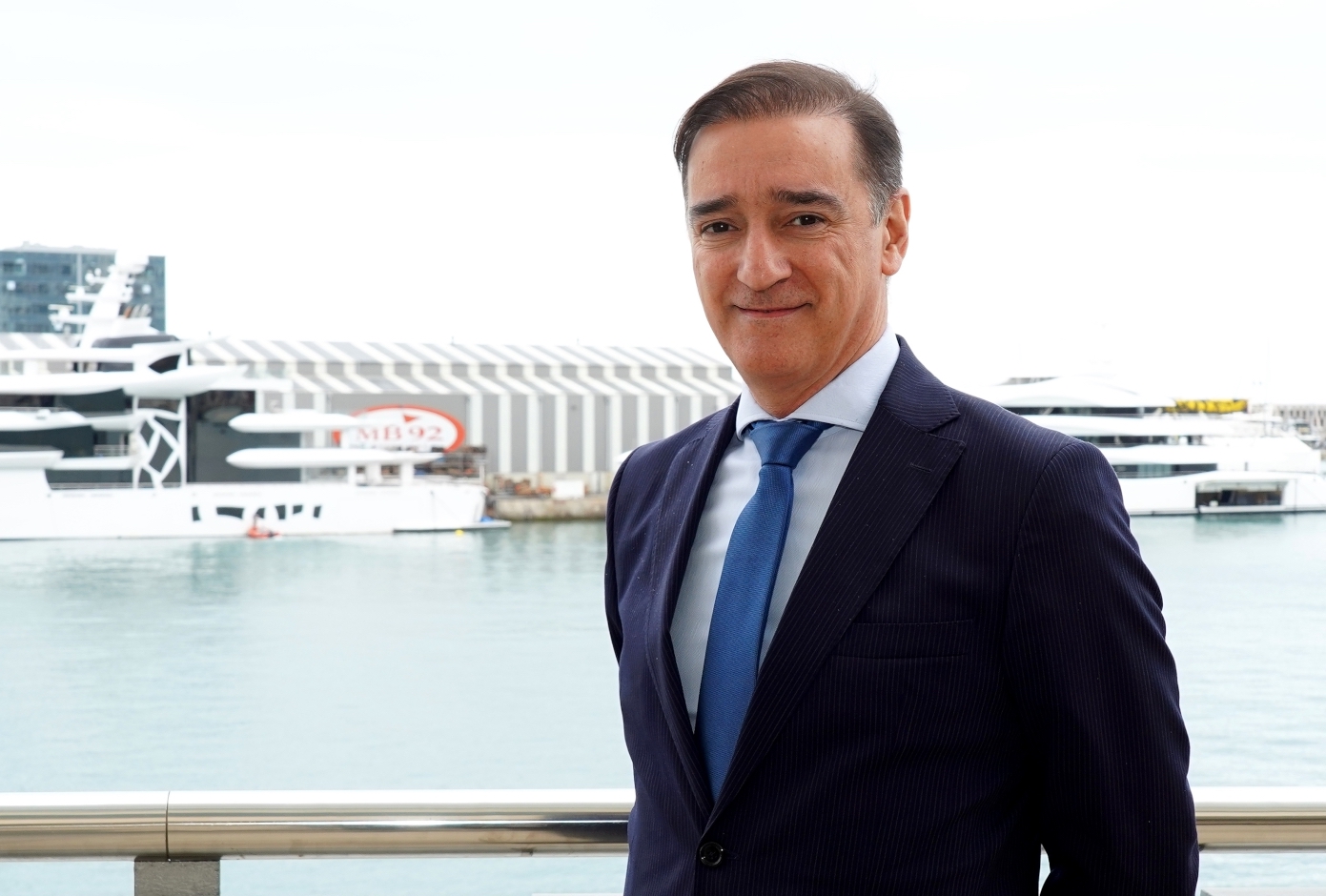
Buyers want green steel, Chinese exports fade: Fernando Espada
Global CO2 reduction policies are here to stay and demand for “greener” steel will significantly increase in the coming years, EUROMETAL president and Layde Steel managing director Fernando Espada said at Monday’s Kallanish Europe Steel Markets 2022 conference in Milan.
The impact of CO2 regulations on steel is causing a permanent change, affecting electricity prices because of emission rights and the cost of electric arc furnace steelmaking. Increasingly more customers are asking for low-carbon steel products and are ready to pay a premium, as well as accept the longer lead times.
“At the end of the day … if you, as a consumer, want the material to be CO2 neutral, you will have to pay more because the entire supply chain needs to accept the change. We are seeing this already with electric cars,” Espada explained.
On the current changing price trends and demand slowdown in Europe, he said the price increases seen since mid-2021 originate from China’s decision to abolish tax rebates on steel exports. Such a move has reduced exports from China to the rest of the world by 20%.
“What we are seeing today is a realignment in the market. We will have to reallocate production because China is not going to flood it [the global market] anymore and that is really the fact that explains, in my opinion, what is happening with prices in Europe,” Espada observed.
China is to embark on Xi Jinping’s prosperity programme, a middle-class growth plan. The country does not intend to emit carbon for the sake of producing low-value products for export. “If China continues with an added-value policy, wealth sharing, oligarchic control, and middle-class growth, if it leaves behind its role of cheap producer for the rest of the world, the balance in many different markets will be broken, not only in steel,” Espada opined.
If China continues to export less, new capacities will have to be built in Europe according to the needs of each country. This however will take time as Europe is now threatened by a high inflation rate that may launch a stagflation cycle, Espada concluded.
Natalia Capra France