

Emissions trading, CBAM proposals could derail green transition: EU steel, aluminum industries
Members of European steel association Eurofer and the European Aluminium Association have warned that the EU’s proposal on emissions trading and carbon border adjustment could decrease competitiveness and derail the green transition.
The European Commission has proposed reforms to the EU Emissions Trading System to align the market with its aim to cut greenhouse gas emissions by at least 55% by 2030 from a 1990 baseline.
The ETS will phase out free carbon allowances from 2026 to end in 2030 and put a ‘bonus-malus’ system into effect from 2025, which will reward companies that reduce emissions and penalize those that do not.
The Carbon Border Adjustment Mechanism, or CBAM, regulation will cover a number of sectors, including iron and steel, and aims to avoid carbon leakage and encourage countries to establish carbon pricing policies.
The proposals were backed by the European Parliament’s environment committee on May 18 and a full parliament vote will take place in June.
In an open letter to the European Parliament, over 50 steel company CEOs said the proposals undermined their capacity to invest in projects to reduce the sector’s CO2 emissions by at least 55% by 2030 and to achieve climate-neutral steel production in the EU by 2050 and would “derail the transition to green steel production in Europe.”
“These commitments represent a truly industrial revolution that requires a massive Eur30 billion ($32.1 billion) capital investment in breakthrough technologies over the coming eight years and a significant increase in operational costs stemming from the use of decarbonized electricity and hydrogen,” they wrote.
Favor international competitors
The proposals would weaken the industry’s carbon leakage protection in the domestic and global markets and favor international competitors that were not subject to equivalent carbon costs, the CEOs said.
EU carbon allowance prices climbed 139% in 2021 due to tighter future supply and increased demand. EU Allowances for December 2022 delivery were pegged at Eur83.59/mtCO2e ($89.51/mt) at the close May 30, according to Platts assessments published by S&P Global Commodity Insights, down from Eur84.15/mtCO2e on May 27.
The CEOs added that the new allocation rules in Europe would reduce the main CO2 benchmark by around 40% by adding one plant that was previously not in the scope and set a value that no company would be able to achieve in three years.
“This is due to a premature transition from the free allocation and indirect cost compensation system to a CBAM which has not yet been tested,” they said.
There were many risks that could undermine the CBAM’s effectiveness, including circumvention and resource shuffling, the CEOs said, adding that the CBAM also did not provide any measure to preserve the EU’s 20 million mt/year of steel exports, worth Eur45 billion.
It also did not capture the much-higher carbon footprint of stainless steel imports derived from the embedded alloying elements, they said.
“The proposals also remove massive allowances from the market, further driving the carbon and electricity price in Europe at a time when businesses and households are struggling with skyrocketing energy costs and inflation,” the CEOs wrote.
They called on the European Parliament to address these concerns to avoid scaling back existing carbon leakage protection until the CBAM’s effectiveness was proven, ensure a solution for exports was in place and prevent a sharp decrease in free allocation for existing steel plants.
They proposed that low carbon technologies should be rewarded without reducing prematurely benchmark values, at least in the first few years when technologies were being introduced at an industrial scale.
“The aforementioned changes to the ETS and CBAM will allow us to make the green steel transformation happen now within the EU. Our investments will greatly benefit climate protection, the EU’s industrial competitiveness, and hundreds of thousands of jobs across the EU,” they said.
Uncompetitive
European Aluminium warned in a separate statement that aluminum smelters would become cost uncompetitive if the CBAM covered indirect emissions and removed existing carbon leakage measures.
Costs for aluminum production in Europe were forecast to rise by 24% to 31% if, as implied under the proposal, indirect emissions were included in the CBAM and carbon leakage measures were fully phased out.
This could lead to a large share of EU production being replaced, because fossil fuel-based aluminum producers in third countries would pay less indirect carbon costs than European companies using decarbonized power.
In addition, the association said that the ETS would result in higher indirect carbon costs, which could result in primary aluminum imports for semi-fabrication possibly increasing up to 43%.
It insisted that, given the challenges the aluminum industry faced as an electricity-intensive industry, the CBAM should first be tested on direct emissions only, as originally intended by the European Commission.
The inclusion of indirect emissions should ideally be considered after 2030, when the European power grid was sufficiently decarbonized, European Aluminium suggested.
“Until we understand the real impact the CBAM has on downstream industries, we need to preserve, where applicable, existing national ETS compensation schemes,” European Aluminium Director General Paul Voss said.
— Jacqueline Holman, Ekaterina Bouckley


ASML to expand semiconductor equipment production in Connecticut
Dutch semiconductor equipment manufacturer ASML will invest $200 million to expand operations at its facility in Wilton, Connecticut, as it looks to support growing chip production capacity in the US, the company said May 31.
“The semiconductor industry’s growth continues apace,” CEO Peter Wennink said in a statement. “To meet projected demand in the years ahead, ASML is investing in infrastructure and people. Our Wilton office is a good example of that investment and one of several sites in the US that are fundamental to ASML’s success.”
At Wilton, ASML designs, engineers, develops, and produces the machinery used by manufacturers to create advanced semiconductor computer chips.
ASML’s investment comes as Congress continues to debate the passage of the Bipartisan Innovation Act, which includes $52 billion of investment for the research, development, and production of semiconductors in the US.
“Since day one, the Biden administration has pledged to revitalize our domestic manufacturing economy and keep our country safe,” Deputy Secretary of Commerce Don Graves said in the statement. “Achieving these goals starts and ends with advanced semiconductors made right here in the United States.”
“ASML is a valued member of the coalition of private sector companies from around the globe who are choosing the United States as their home for semiconductors, and for that, we are immensely grateful,” he added. “We need to build on this momentum by getting the Bipartisan Innovation Act to the president’s desk for a signature because it is critical to our economic and national security.”
The House of Representatives and Senate have each already passed their respective versions of the legislation, which includes proposed funding for US semiconductor manufacturing, but progress on the package has stalled in recent months as the two chambers have worked to draft a final bill that reconciles differences between their respective versions.
In anticipation of the proposed funding, Intel said in January it would invest more than $20 billion to build two semiconductor chip factories near Columbus, Ohio, with production expected to start in 2025.
Multiple industries across the world have been affected by the global semiconductor shortage that began in early 2021 as a result of changes to industrial patterns during the onset of the coronavirus pandemic. Most notably, the chip shortage has caused automotive manufacturers to cut production amid surging demand.
— Nick Lazzaro

Ukraine war disrupts trade patterns, prices receding: Irepas
The Ukraine war is shifting trading patterns and creating new opportunities for steelmaking countries other than Russia and Ukraine, said participants at this week’s International Rebar Exporters and Producers Association (Irepas) meeting in Istanbul.
As one example, the war has created a nail supply shortage in the EU as Russia and Ukraine are the leading nail suppliers with a combined 90% market share.
India’s new export duties on steel and steelmaking raw materials, lockdowns in China and sanctions on Russian steel due to its invasion of Ukraine are having significant consequences on steel trade flow. Patterns have shifted, and if the sixth package of EU sanctions on Russia is implemented, there will be more unprecedented impact on the steel industry.
“Substantial price hikes have been witnessed due to panic buying as the war created a vacuum in semis and finished steel supply. However, prices are returning to the pre-war period, and scrap prices are at the bottom curve,” Seba International president F.D. Baysal said at the event attended by Kallanish.
“Undeniably, gradually softening prices of Russian billets to the nearest market, Turkey, suppressed Turkish mills’ scrap buying price level, as the last round of sales are levelled at around $440/tonne cfr [Turkey] for HMS 80:20 grade scrap,” observed a senior Turkish mill official.
“The Russian invasion has led to raw material shortages, supply chain disruptions, price hikes, and high energy costs,” commented Jens Björkman from Stena Metal International. “Some steel producers have idled their operations, and demand has turned negative due to increased inflation in the EU. The lack of finance for raw materials supply and credit insurance companies’ reluctance to avoid taking risks are lowering demand for steel and steelmaking raw materials.” Indian’s iron ore export duty will have little impact on prices as India is an insignificant global supplier of the raw material, he added.
“The magnitude of money is the primary factor in a country’s wealth and independence,” Özgür Demirtas, Turkish economy professor at Sabancı University in Istanbul, meanwhile explained. “As the US is the largest economy globally, its currency has a game-changing role globally. When US dollar liquidity increases, wealth will be felt. Taking previous years’ experiences as a reference, we will likely see a liquidity increase and a relief in the global economy within six and nine months. Then commodity prices will pick up, including steel.”
“The market fears the most from uncertainty. The more important huge food crisis is coming as Russia and Ukraine are the leading grain suppliers globally,” Demirtas concluded.
Burak Odabasi Turkey

EU steelmaker executives warn of ‘premature’ CBAM transition
An array of top EU steelmaker executives have put their names to an open letter warning the European Commission to avoid a “premature” transition from free carbon emissions allocations to the untested Carbon Border Adjustment Mechanism (CBAM).
The proposed acceleration of this transition would weaken carbon leakage protection, favouring international competitors which are not subject to equivalent carbon costs. “In Europe, new allocation rules will suddenly reduce the main CO2 benchmark by around 40% – because of one plant that was previously not in the scope – and set a value which no company can achieve in just three years,” the letter states. “Circumvention and resource shuffling are only a few of the many risks that could undermine the CBAM’s effectiveness.”
Moreover, CBAM does not yet foresee any measure to preserve the EU’s 20 million tonnes/year of steel exports, worth €45 billion ($48 billion), and the 30,000 jobs that are directly dependent on these, the executives point out in the letter sent to Kallanish.
“The proposals also remove massive allowances from the market, further driving the carbon and electricity price in Europe at a time when businesses and households are struggling with skyrocketing energy costs and inflation. Finally, they fail to capture the much higher carbon footprint of stainless steel imports derived from the embedded alloying elements,” the letter continues.
The executives call on the European Parliament and Council to avoid further scaling back of existing carbon leakage protection until CBAM has proven its effectiveness and a solution for exports is in place. They also want to prevent a sharp decrease in free allocation for existing steel plants which would result from a modification of the benchmark scope. Instead, low carbon technologies must be rewarded without prematurely reducing benchmark values, at least in the first years when such technologies are introduced at an industrial scale, the executives conclude.
Among the names to sign the letter are Geert Van Poelvoorde, CEO, ArcelorMittal Europe; Bernhard Osburg, CEO, thyssenkrupp Steel Europe AG; Henrik Adam, Chairman of the Board, Tata Steel Netherlands Holding; Francesc Rubiralta Rubio, Chairman and CEO, CELSA Group; and Olavi Huhtala, CEO, SSAB Europe.
Adam Smith Germany
Marcegaglia prepares for new acquisitions, investment
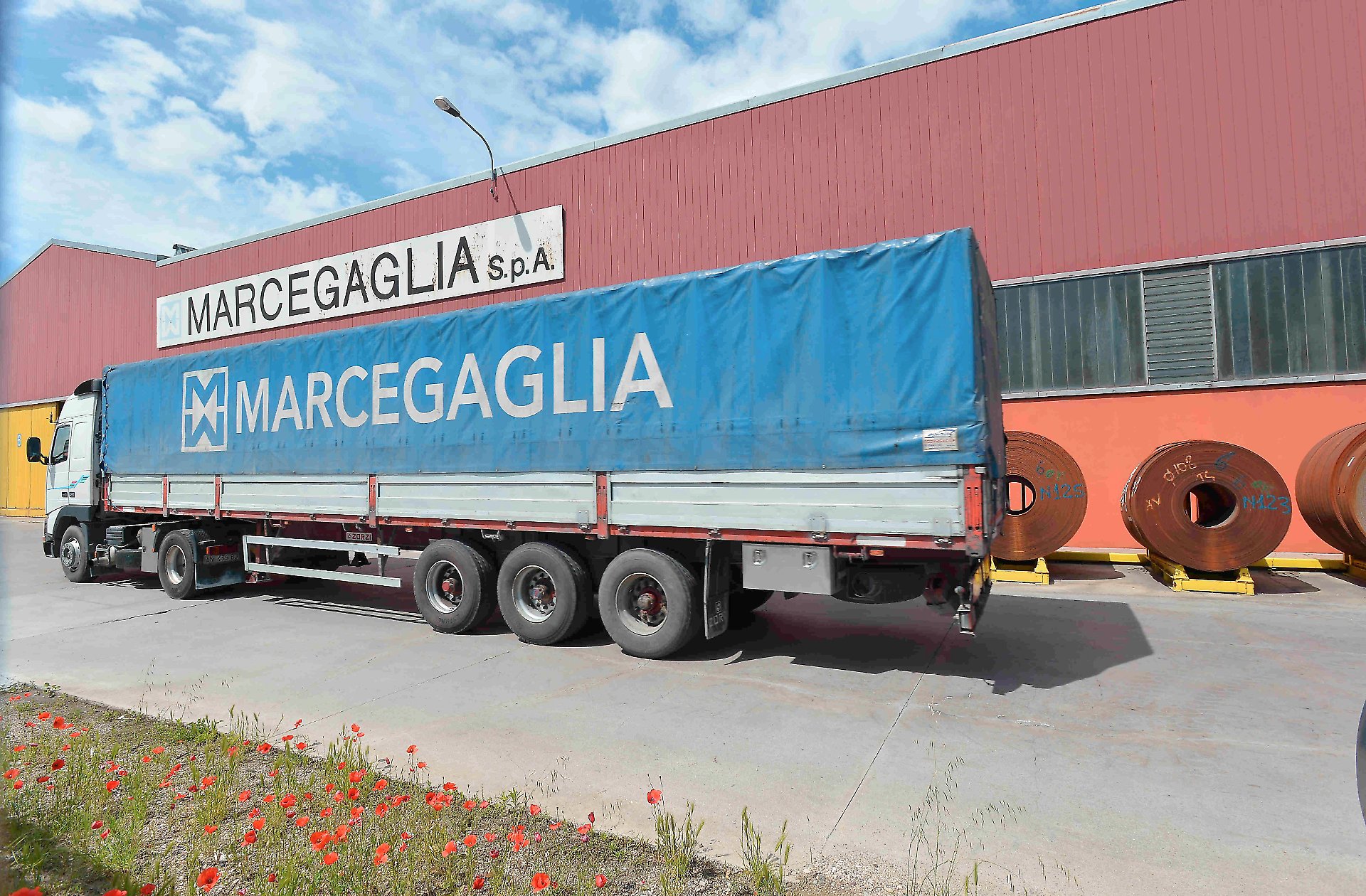
Italian tubemaker Marcegaglia has obtained a six-year credit facility of €1 billion ($1.07 billion) from a pool of Italian and foreign banks. These include Intesa Sanpaolo as a global coordinator and agent, BNP Paribas, Crédit Agricole CIB, Santander CIB and Unicredit, Kallanish learns from the steel firm.
The credit facility includes €700 million that will be used to refinance medium-term lines maturing between 2024 and 2026, €200m to support the company’s future investments and €100m in revolving credit.
“The loan will support the new development plan of the Mantuan industrial group … promoting growth programmes and projects in the steel sector, including possible new acquisitions and alliances,” the company says.
Marcegaglia is one of Europe’s largest re-rollers. Last year it achieved a turnover of €7.7 billion and employs 6,600 workers. It re-rolls about 6.2 million tonnes/year of steel and has 29 re-rolling mills.
Natalia Capra France
Safeguard review creates new HDG import challenges: conference
Importers of hot-dip galvanized coil into Europe are set to face a series of new challenges from the beginning of July, as the new rules related to safeguard measures come into force.
Participants of this week’s Kallanish Europe Steel Markets 2022 conference in Milan voiced their concerns over the inclusion of HDG imports from Vietnam in the safeguard system.
According to Eurofer data, Vietnam supplied last year into Europe over 900,000 tonnes of hot-dip galvanised material, most of which was coil. These were exempted from safeguard measures, but from July 2022 they will be included in the global 4a sub-category for safeguard measures.
Before 2017, imports of Vietnamese hot-dipped galvanised materials into Europe were virtually zero. 2018 saw a record volume of slightly below 250,000t, according to Eurofer.
“We knew Vietnam was going to be included in the safeguard system, but the decision to not change the general tariff rate quota allocation for the 4a sub-group will have a big impact on the market. Vietnam imports will be competing with Turkish volumes to use the available quotas. During the last quarters, the general quotas for this product were already being fully used during the very first days,” commented Paolo Sangoi, head of Assofermet Acciai.
Gamma Trade’s Alessandro Fossati confirmed Sangoi’s view and added that the biggest problem will be noticed by Italian buyers of HDG.
Russian-origin imports are now banned as part of the Ukraine war-related sanctions against the country, while Turkish HDG imports are set to be levied with the newly-announced definitive anti-dumping duties of 8-11%, for all suppliers excluding Tatmetal (2.4%).
Emanuele Norsa Italy

European Commission to introduce global safeguard quotas on some steel products
The European Commission plans to introduce global quotas for some products and prolong steel safeguard measures to 2024, it said in a document sent to the World Trade Organization on May 30.
The Commission also updated the list of developing countries and added Vietnam to the other countries quotas, according to the document seen by S&P Global Commodity Insights.
The proposed measures would come into effect July 1 following the traditional yearly safeguard review cycle.
For product categories 7, which includes quarto plates, and 17 — including angles, shapes and sections, the EC has proposed to substitute country-specific quotas with global quotas. The main reason behind the decision was that Ukraine had historically represented around 33% of total volumes imports in each category. After Russia’s attack on Ukraine, however, export of those products to the EU stopped.
On May 24, the EU adopted a regulation allowing for temporary trade liberalization for some Ukrainian products in the wake of the ongoing war, which has halted the application of the steel safeguard measure for the time being.
As Ukrainian producers are unable to produce or ship the two product categories now, the EU authorities decided that this could result in shortage of the products.
The EC has considered setting the yearly level of liberalization of import quotas at 4%, up from 3% a year before and this would also come into effect from July 1.
The same global quota will apply on product category 8 — stainless hot-rolled flat steel and category 25A — large welded tubes.
Among other changes, hot-dipped galvanized steel imports (categories 4A and 4B) from Vietnam would be added to the global quotas list, in line with the updated list of developing countries.
— Maria Tanatar

EU to make limited changes to safeguard system
The European Commission has notified the WTO of the result of its latest review of the EU safeguard system. Some limited changes to the system will be implemented effective 1 July, Kallanish learns from an official release.
The biggest change relates to the liberalisation rate of tariff-rate quotas (TRQs). As of July, these will increase by 4%, against a previous liberalisation rate set at 3%. “The Commission considered that, at this point in time (after four years of measure), a slightly higher level of liberalisation year-on-year should be envisaged in order to encourage the domestic industry to continue its adjustments, while being mindful not to undermine the effectiveness of the measure,” the note says.
Additionally, the Commission has taken the decision to cancel country-specific quotas for both heavy plate and angles, shapes and sections. As a result, these sub-categories will only have one quota available, for all countries.
“In these two product categories, Ukraine has historically been an important exporter (representing around 33% of total quotas in each of these categories) and it has consistently used its quotas at rather high levels. However, the Commission observed that since the military aggression of Russia against Ukraine, there have been virtually no imports of these two categories from Ukraine into the Union. This suggests that Ukraine is currently unable to produce and/or export these products in any meaningful volumes to the Union market,” the Commission explains.
“Under these circumstances, and having analysed the quota use by other exporting countries subject to the measure, the Commission considered that there would be a risk of potential shortage of supply for Union users in these categories if it did not take any action,” the note adds.
During the review, the Commission also looked into the list of developing countries exempted from the measures. The list of such countries has been updated. The most important change will be the inclusion of countries such as Vietnam in a number of TRQs for products including HDG (see separate story).
Finally, some changes will also be implemented to the utilisation of residual quotas during the last quarter of the year, Kallanish notes.
“In addition, the European Union also assessed whether any of the changes to the US Section 232 measure had any effect to the EU safeguard measure requiring an adjustment. The European Union concluded that the changes to the US Section 232 measure did not justify any adjustment to the EU Safeguard measure. Therefore, because no adjustments are proposed in this respect, the detailed reasoning on this section will be included in the legal act that is currently subject to EU’s internal decision-making and which will be published before 1 July 2022,” the note concludes.
Emanuele Norsa Italy