

Revista InfoAcero Mayo 2022
En este enlace pueden acceder a la edición de Mayo de nuestra revista
A continuación destacamos algunos de sus contenidos:
- Opinión – D. Fernando Moraga – Vicepresidente UAHE.
- Evolución del Índice de Precios de Productos Siderúrgicos – UAHE
- Sector Siderúrgico: Previsión sectores consumidores de acero, consumo real y aparente de acero – Eurofer.
- Próximos Eventos: 31 Bienal Máquina Herramienta, Bilbao 13-17 Junio


EUROMETAL at Kallanish Europe Steel Markets 2022
Fernando Espada represented EUROMETAL as a speaker at the Europe Steel Markets 2022 Conference organized by Kallanish Commodities the 30 & 31 May in Milano.
To kick off Europe Steel Markets 2022, our president, accompanied by Andrii Tarasenko
Chief Analyst at GMK Center and Roberto Re, Head of Metinvest Europe gave their view on the latest market developments and their outlook for the second half of 2022.
The session “European steel – debating the big issues” was moderated by Emanuele Norsa
Editor Southern Europe at Kallanish who remembered the extraordinary year with prices reaching new record levels and profitability for steelmakers, demand recovery and critical factors in the supply chain. Without forgetting the invasion of Ukraine, where global markets have had to reorganise supply on the back of sanctions on Russia and the stoppage of Ukraine production.
This hybrid event had more than 150 participants present in Milan and watching online.



US finds agreement with UK on 232 tariffs
The US and UK have reached an agreement regarding the 232 tariffs, Kallanish learns from a proclamation by US President Joe Biden published on the White House press site.
The agreement states steel products melted and poured in the UK are entitled to an aggregate rate quota of 500,000 tonnes/year.
UK steel products melted and poured there but sent to a conferring European Union country for additional processing are also going to be permitted.
The UK has agreed to conduct yearly audits on steel goods that may have been processed or otherwise made it to the US which aren’t permitted under the proclamation. Specifically, the UK is responsible for attesting to any market-distorting practices it learns may have transpired. Failure to make an attestation could result in a change to the tariff terms of this agreement.
Kristen DiLandro USA


EU should accelerate hydrogen for steel industry: Eggert
The EU must increase its efforts to develop the hydrogen market for the needs of the steel industry, says Eurofer director general Axel Eggert.
“If the EU unilateral cost base of the steel industry increases significantly compared to our global competitors in the absence of effective carbon leakage measures, we risk steel capacity and jobs in the European Union,” he noted during a European Steel Technology Platform (ESTEP) webinar on the Clean Steel Partnership attended by Kallanish.
“We may be able to compensate this when the global steel market is very strong, but in downturns the viability of our industry is at stake,” he continued. “That’s why we are asking policy makers to be very careful with reduction of CO2 emissions and the whole quick process of decarbonisation.”
The Russia-Ukraine war has shown the need to accelerate the development of new hydrogen infrastructure. “Our industry cannot rely so much on natural gas in this transition until 2030, when we hope to have a sufficient amount of produced hydrogen,” Eggert observed. “The steel sector will need hydrogen much more than before the war in Ukraine. We will need over 150TWh of clean electricity, half of which is for the production of hydrogen, by 2030 to run around 60 low carbon projects across the EU. Also, hydrogen should go first where it is used most efficiently, such as steel and chemicals.”
According to Eggert, these commitments represent an industrial revolution that requires a massive €31 billion ($33 billion) of investment in the next eight years.
Earlier this week, EU steelmaker executives warned the EU to avoid a “premature” transition from free carbon emissions allocations to the untested Carbon Border Adjustment Mechanism, or CBAM (see Kallanish passim). According to them, CBAM does not yet foresee any measure to preserve the EU’s 20 million tonnes/year of steel exports, worth €45 billion.
Svetoslav Abrossimov Bulgaria
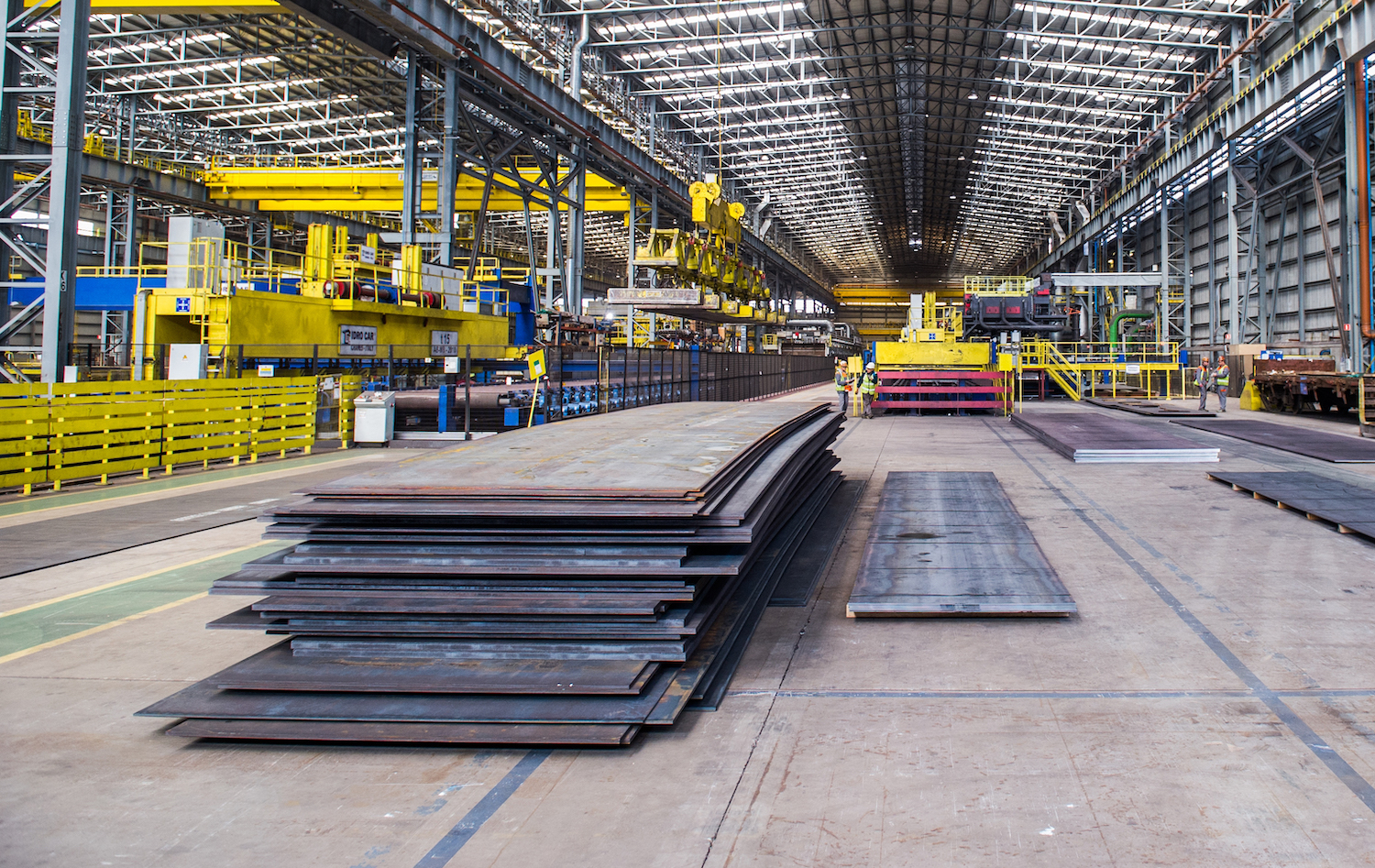
Plate demand to sustain in 2022: EU shipbuilders
Heavy plate and hot rolled coil demand will continue this year from the shipbuilding sector, but the issue of reducing the carbon footprint of steel products procured will come more into focus in the coming years, European shipbuilding sector sources forecast.
Companies are looking to diversify their source of supply between electric arc furnace and blast furnace route steel, according to carbon footprint, and will be ready to pay a premium for greener, high-quality plate and coil.
Large plate buyers in Europe have found alternative sources of supply since war broke out in Ukraine, a major supplier. The international diversification of most European firms’ supply chains has helped secure required volumes. Shipbuilders throughout Europe have a significant order backlog for the coming years, sources observe.
“We are doing that [securing alternative supply] in a relatively short period of time … The point is to establish what is the real balance in terms of their [mills’] capability compared to our need for finished product. In that sense, the full transparency and visibility we get from our suppliers throughout the entire supply chain was key to giving us the assurances we needed,” one source tells Kallanish.
Since the beginning of the conflict, some companies have worked closely with their suppliers, also supporting them in procuring slab. Transparency is a key element in the relationship with platemakers when setting up procurement rules.
Because of disruption in the value chain, some firms had to review their procurement mix, shifting some volumes from plate to HRC. When availability dropped and prices skyrocketed, “we were able to try to change the balance and move some quarto plate procurement volumes to coils”, the source comments.
Natalia Capra France

EU steel industry’s 60 decarbonization projects could cut emissions by a third
The European steel industry’s 60 decarbonization projects in the pipeline this decade will reduce the industry’s direct and indirect CO2 emissions by a third, or by 81.5 million mt, Axel Eggert, director general of steel association Eurofer, told a Clean Steel Partnership webinar June 1.
The projects represent Eur31 billion ($33 billion) in capex, and their operational costs are estimated at 55 billion euros, with uncertainty regarding hydrogen and green electricity prices underpinning the high figure.
As a result, a ton of green steel could initially be 35%-100% more expensive than its blast furnace-route analogue, but in time it is expected to become competitive, according to Eggert.
To make it attractive at all, Eurofer suggests creating lead markets for green steel and using contracts to cover the difference and other risk-sharing instruments. Introducing incentives for green steel use in downstream sectors would help too, with its end-users feeling like they get a bonus when they choose green steel.
Public procurements and contracts can create lead markets for green steel products too given their large — 20% — share in EU total spending.
Time to decide, steelmakers say
For now, steel plants need to make investment decisions on decarbonization projects; they say they need to proceed with decisions this year at the latest in order to achieve their 2030 emission targets, but uncertainty hangs over the projects because of the lack of aid for the transition.
There are many programs to fund industrial projects, innovation and Important Projects of Common European Interest, but while the Clean Steel Partnership is already running well, the other schemes remain underfunded, or approval of projects is slow or delayed, Eggert noted.
Whether they will have access to competitively priced energy, in particular electricity and hydrogen, also holds some back. For the EU steel industry to achieve carbon neutrality by 2050, it will need 400 TWh/year of electricity, just over half (230 TWh/year) of which to be used on the production of 5.5 million mt of hydrogen.
To put it in perspective, Eggert said 400 TWh/year equates to the electricity consumption of France and is seven times more than what the steel industry purchases from the grid today, but in the near future this would be the requirement of only one sector, which will be competing for decarbonized electricity with many others.
“These are massive amounts, and infrastructures are not at all available today, which is a problem for companies to take investment decisions,” Eggert said.
Natural gas option limited
Building the necessary infrastructure is becoming even more crucial given the Russia-Ukraine war, which points to a need to speed up the rollout of this new infrastructure as Europe and its steel industry may not be able to rely on sufficient supply of natural gas.
“We thought we could use natural gas [to help reduce the carbon footprint of blast furnaces] at least until 2030 or beyond until hydrogen starts to be introduced more and more into steel plants, but we will need hydrogen probably much sooner now,” Eggert said.
Blast furnace-based plants produce their own electricity from their off-gases, but this will not be the case in the future given the needs of hydrogen in the same gases, and this means the BF mills will take more electricity from the grid, which calls for big infrastructure measures as well.
Compared with the total human-made CO2 emissions, the figures seem to be small in the EU — the union’s steel industry emits 0.2 gigatons of CO2, but the sector’s share within the EU is significant — 6% of the total, or 25% of the industrial emissions.
Most of these are concentrated on 20 sites, mostly those equipped with blast furnaces, which account for 5% of the union’s CO2 emissions, and the trick is to decarbonize these sites.
30% emissions reduction by 2030
The EU steel industry has collectively committed to reduce emissions by 30% by 2030 versus 2021 but is seeking ways for this to be achieved as cost efficiently as possible.
Eurofer is advocating for greenhouse gas emission benchmark-based free allocation of CO2 allowances, compensation of indirect costs and complementary carbon adjustment as the elements that will help through the transition; the EU parliament is expected to vote on its proposals soon.
The association estimates the EU steel mills’ shortage in free emission allocation at Eur3.5 billion/year, expecting it to increase to Eur13.8 billion/year by 2030.
— Ekaterina Bouckley

EU CRC, HDG demand remains minimal, outlook gloomy
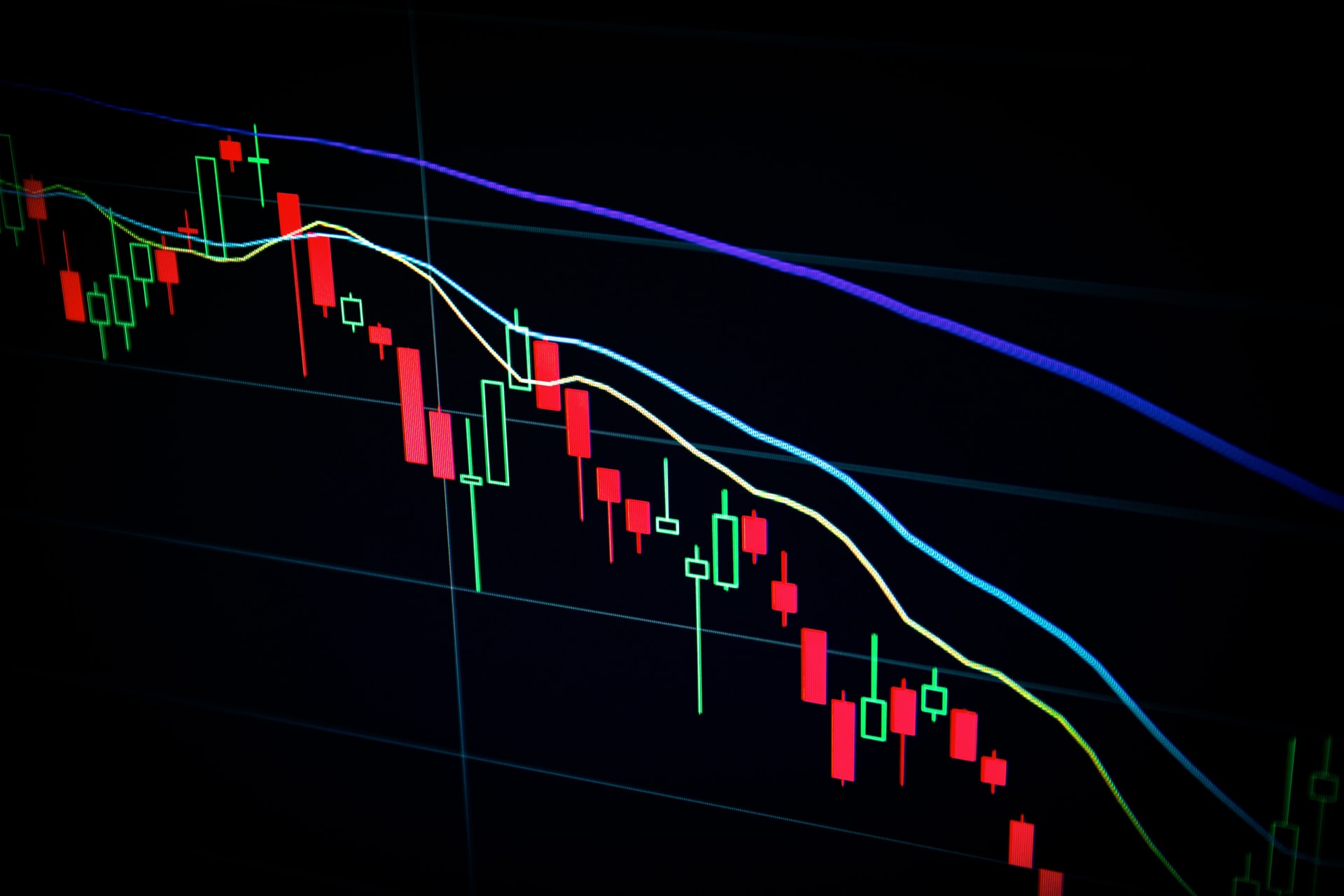
The EU downstream coils market saw prices fall on the week on muted demand, while mill sources reported maintenance to galvanizing lines in the summer period.
Platts assessed cold-rolled coil in Northern Europe stable on the day at Eur1080/mt ex-works Ruhr, according to S&P Global Commodity Insights data. Hot-dipped galvanized material was down Eur30/mt on the week at Eur1,120/mt ex-works Ruhr.
Demand for cold-rolled material remains minimal, though a 400 mt deal was heard May 31 at Eur1,080/mt ex-works Northern Europe. The deal matched offer indications received from buy- and sell-side sources, all citing offers at Eur1,080/mt ex-works Ruhr.
A service center source described downstream demand as “completely dead.”
“There is absolutely no demand whatsoever for downstream coils and automotive shows no prospect for recovery to pick things up again,” said the source. “Customers are repeatedly cancelling contracts as component shortages are causing vehicles to fall outside contractual terms – it’s unsustainable.”
For galvanized material, sources saw offers on a wider spread, with most offers heard at Eur1,100-1,150/mt ex-works Ruhr. A mill source reported a larger competitor offering at Eur1,050/mt ex-works Northern Europe, though other sources could not confirm receipt or sight of the said offer in the market. A mill source reported a bid received for Eur1,050/mt but rejected the bid as too low for current price levels.
Market participants reported Northern mills are performing maintenance on galvanizing lines through the summer period, confirmed by mill sources, with one smaller German producer reportedly communicating reduced availability of some steel products to customers for the short-term. The said mill remains the only producer to have communicated reduced capacities, going against buyer expectations of widespread production cuts for the summer period.
“Mills don’t seem to be cutting production, or at least aren’t talking about it,” said a service center source. “There is no chance to keep prices from falling with current demand and production rates.”
In South Europe, downstream coils saw more pressure, with cold-rolled coil assessed down Eur70/mt on the week at Eur1,030/mt ex-works Italy. Hot-dip galvanized material moved down Eur100/mt June 1 to Eur1,050/mt ex-works Italy.
Demand in the Southern market was similarly muted, with no transactional activity reported on the week.
On cold-rolled coil, buy-side sources saw tradable value on a spread of Eur980-1,050/mt ex-works Italy, with achievable prices for hot-dip galvanized material reported wider at Eur1,020-1,120/mt ex-works.
A service center source reported an offer for HDG at Eur1,080/mt ex-works Italy.
Another service center source reported pessimistic sentiments – “if we call prospects for the galvanized market ‘foggy’ then the picture for cold-rolled can only be described as ‘dark’.”
— Benjamin Steven, Maria Tanatar

UK steel, aluminum exporters start tariff-free exports to US
Steel and aluminum exporters in the UK no longer have to pay tariffs to export material to the US, with some volumes allowed to be exported duty-free from June 1.
The US had said in March that it would replace Section 232 steel and aluminum tariffs on shipments from the UK with a quota system.
Up to 500,000 mt/year of steel, 900 mt/year of unwrought aluminum, 11,400 mt/year of semi-finished aluminum and 9,300 mt/year of aluminum foil will now be allowed to enter the US without duties.
The US’ imports of steel products from the UK must be melted and poured in the UK to be eligible for protection under the quota, according to the arrangement, which also includes a novel smelt and cast requirement for aluminum.
Additionally, any metal produced in the UK by a company linked to China will come under review and require an “attestation.”
The UK government said in a June 1 statement that this was the first time UK steel and aluminum exporters could export tariff free into the US since 2018.
“The lifting of tariffs has been hailed as a huge win by UK steelmakers and will bring new business opportunities for companies across the supply chain,” it said.
It is a significant day for the UK steel companies and their US customers, UK Steel Director General Gareth Stace said, adding that the implementation of the deal was a “major improvement in the trading environment for the UK sector.”
“From today UK steel producers will again be able to sell steel to American consumers tariff free, giving them a critical competitive advantage over global competitors and allowing them to recover market share lost in the years since tariffs were imposed,” Stace said.
Platts assessed weekly UK hot-rolled coal prices at GBP950/mt DDP West Midlands May 27, up 14.5% since the start of 2022, according to S&P Global Commodity Insights.
“From today, our UK steel and aluminum exporters can also get back to exporting across the Atlantic to our largest trading partner,” UK Secretary of State for International Trade Anne-Marie Trevelyan said.
In response, the UK has ended its “rebalancing measures” on a wide variety of US products, including whiskey, making US products cheaper to import and lowering costs for UK consumers and businesses.
The US imported a total 281,606 mt of steel from the UK in 2018 and 231,104 mt in 2019, including carbon, alloy and stainless products, according to Commerce Department data. Imports from the UK fell to 190,240 mt in 2020 but rose to 272,079 mt in 2021.
The US imported 127.5 mt of unwrought aluminum, 4,862 mt of flat semi-finished aluminum and 9,314 mt of aluminum foil from the UK in 2021.
— Jacqueline Holman, Nick Lazzaro

EU HRC prices decline further on oversupply, low demand
Domestic prices for hot-rolled coil in the EU moved down again on June 1 due to supply exceeding the demand in the region, sources said.
Platts assessed HRC in Northern Europe at Eur975/mt ex-works Ruhr, down by Eur5/mt on day, according to S&P Global Commodity Insights.
Offers of HRC have been reported at Eur970-980/mt ex-works Ruhr, and a majority of sources confirmed that the achievable prices were in the same range. Some higher offers of Eur1,000-1,025/mt ex-works Northern Europe have been heard from other mills.
One source also reported unverified transactions at Eur950/mt ex-works Northern Europe, but the information was not widely confirmed. Some sources, however, believe that domestic prices in the Ruhr area and Northern Europe would reach Eur950/mt ex-works in either short- or medium-term.
And hot-rolled coil in South Europe was assessed at Eur930/mt ex-works Italy, down Eur10/mt day on day, according to S&P Global Commodity Insights data.
Italian mills have been offering HRC at Eur900-940/mt ex-works. Lower offers were available from a steelmaker that had recently revied its priced retroactively, cancelled orders and also reportedly facing some technical issues, so buyers have not been looking to make the deals despite lower prices.
One source said that domestic HRC prices in Italy might drop to Eur850/mt ex-works before the floor is reached.
“I think that with demand as low as it is now and with no hope for automotive steel demand recovery any time soon, we will see domestic HRC at Eur850/mt ex-works,” an Italian distributor said. “Demand is close to zero. Buyers need to restock. But even when restocking will start supply will be way higher than the demand.”
Market participants expect that trading activity might rebound slightly soon as buyers would need to restock for September. Although the traded volumes are not expected to be substantial, at least the trade flaws would increase from minimal over the past month, sources said.
“Mills did not fill order books for June production yet, so they are desperate for orders. And they need to manage excess capacities as soon as possible before prices dropped further down,” a Northern European trader said.
Short lead times from all European producers – majority of mills have June-July production coil – have resulted is stronger competition between steelmakers from different regions, sources said.
“Central European mills usually had shorter delivery and lower prices available compared with German mills. But now they all compete for the same timeframe,” a trader said.
Central European mills were reported to sell HRC to Italy at Eur880/mt delivered and to Northern Europe at Eur870/mt delivered.
Offers of import HRC to the south of Europe have also moved down slightly, although the pace of decline has slowed down.
Offers of HRC from Turkey, including anti-dumping duties, and Asia have been heard at Eur835-860/mt CFR Italian ports.
Indian suppliers have been offering boron added HRC to Italy at Eur800/mt CFR. The addition of the alloy is needed to allow the steelmaker to avoid export duty imposed recently on HRC in India.
Despite the competitive price, European buyers have been showing little interest in the material.
“People remember similar attempts of Chinese mills to sell boron added coil in the past, they did not end well,” an Italian producer said. “And you cannot really weld the material with boron, and if you cut it for something you will still need to weld it and you still will not be able to do it.”
— Maria Tanatar, Benjamin Steven