


Infosteel magazine n°69 est publié
Dans ce nouveau magazine, vous découvrirez non seulement des réalisations en acier, mais vous trouverez également plus d’infos sur la première version du nouveau RPC (Le Règlement Produit de Construction), plus d’informations sur notre Concours Construction Acier 2022 et le nouveaux livre ‘Composite Structures’ (Construction mixte acier-béton).
Vous préférez lire notre magazine en ligne ? Alors cliquez ici.

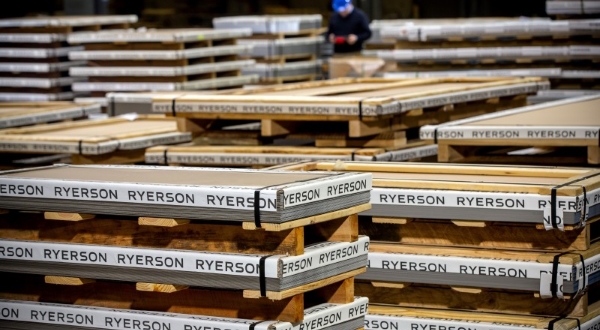
Ryerson acquires metals processor Ford Tool Steel
Chicago, Illinois-based US metals processor and distributor Ryerson has acquired Missouri-based processor Ford Tool Steels, Kallanish learns.
According to Ryerson, this most recent acquisition is a strategic move to help expand the company’s tool steel operations. Ford Tool Steel has provided metals processing services to the Midwestern US for over 75 years.
“Joining the Ryerson family of companies will help us continue to bring value for our customers for years to come,” says Ford Tool Steel owner Susan Gasser.
In the first quarter of this year, Ryerson earned $163.6 million on sales of $1.75 billion. The company’s record-high revenues were primarily driven by a 2.3% increase in average selling prices from Q1 of the prior year.
“We welcome [Ford Tool Steel] to the Ryerson family of companies and look forward to continued growth as we work to better serve tool steel customers across our business,” adds Eric McGill, the South region president for Ryerson.
Zach Johnson USA

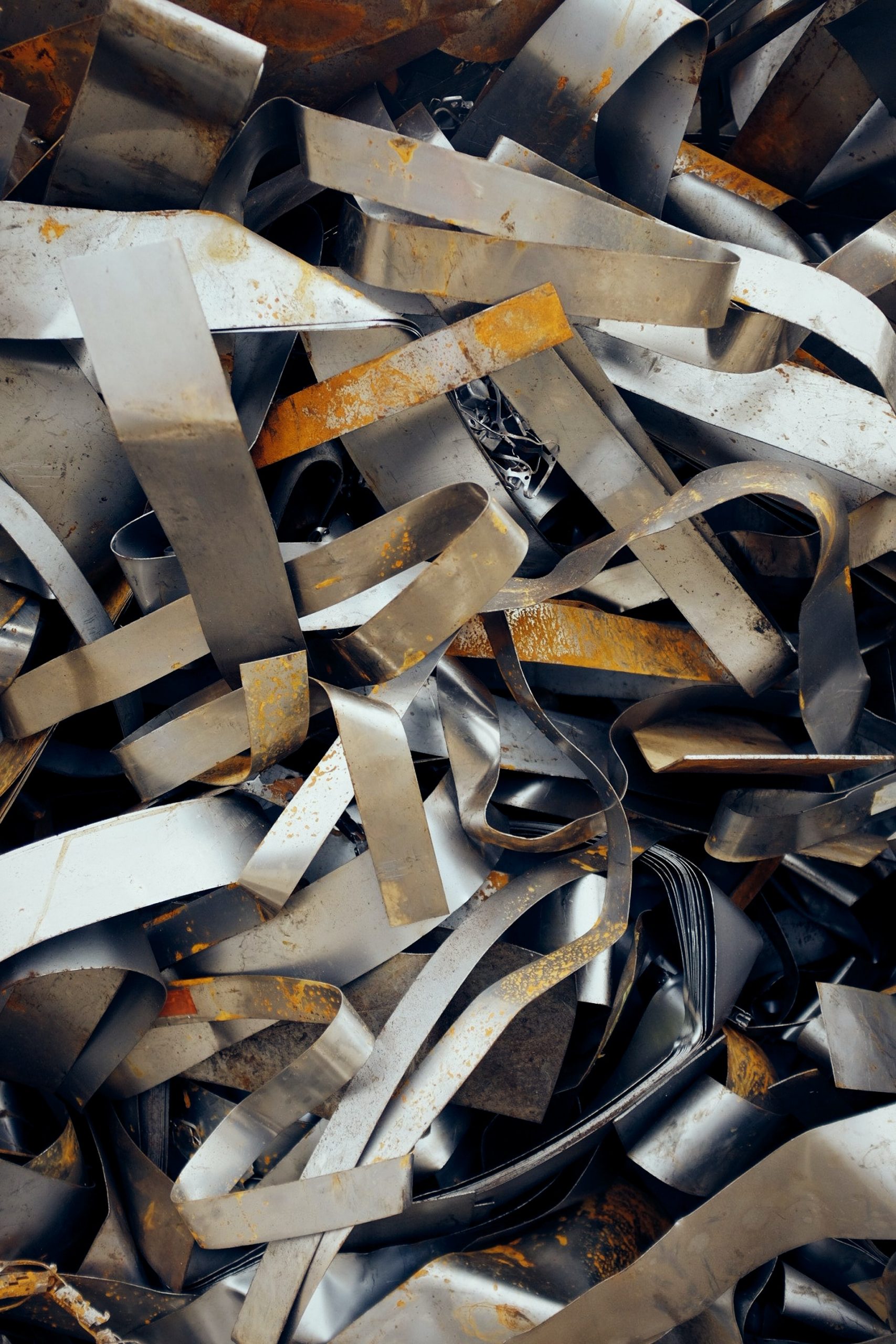
EU scrap export restrictions damaging, say Turkish steelmakers
Turkish steelmakers expect the EU to end efforts to implement new protectionist measures, revise existing measures in line with WTO rulings, and give priority to creating free and fair trade conditions.
“The EU has recently tried to create some new obstacles to the export of scrap,” says Turkish Steel Producers’ Association (TCUD) general secretary Veysel Yayan. “The fact that the EU is trying to prevent scrap exports in order to provide additional support to its own steel industries by putting forward the Green Deal is completely contrary to the Free Trade and Customs Union Agreements between Turkey and the EU and is unacceptable. The implementation of the aforementioned practice will adversely affect the efforts of producers in the addressee countries to comply with the Green Deal targets.”
“Preventing scrap exports will lead to unfair competition by providing EU steel producers an advantage to procure scrap at lower prices, on the one hand, and the other hand, the investments, scrap collection activities and climate change efforts of scrap producers in the EU will be adversely affected due to falling prices, contrary to what is claimed,” Yayan adds.
Turkey’s crude steel production meanwhile increased in April for the first month since November 2021, rising 1.6% on-year to 3.4 million tonnes. Four-month production, however, declined 3.2% on-year to 12.8mt.
April finished steel consumption fell 1.2% to 3mt, Kallanish notes. In January-April, it declined 5.1% to 11.5mt.
April exports of steel products declined 12.1% to 1.4mt while increasing 18.1% in value to $1.4 billion. Four-month exports fell 0.5% to 5.7mt and increased by 39.3% to $5.4 billion.
Imports fell 17.9% in April to 1.3mt, but rose in value by 11.2% to $1.4 billion. Four-month imports fell by 4.7% to 5.3mt while rising by 35.7% in value to $5.7 billion.
The ratio of exports to imports rose to 95:100 from 92.6:100 in January-April 2021.
The decrease in world crude steel production continued in April, meanwhile. Among the world’s 15 largest crude steel-producing countries, all except India, Russia, Italy and Turkey recorded a decrease.
Burcak Alpman Turkey

Longs continue to buck French export downtrend
French steel exports to non-EU countries decreased on-year in February after rising the previous month, Kallanish learns from national steel association Fédération Française de l’Acier (FFA) data.
French exports of flat and long steel to countries outside the EU27 were down by 4.4% year-on-year in February to 129,000 tonnes. Flats exports also decreased by 7.6% to 109,000t, compared to 118,000t in February 2021. Longs exports however reached 20,000t, hiking by 17.6% y-o-y, the association reveals.
In the first two months of the year, French exports of flats and longs fell by 1.5% y-o-y to 130,000 t/month. Flats exports decreased by 6.7% to 111,000 t/m, compared to 119,000 t/m in January-February 2021. Longs exports reached 19,000 t/m, a remarkable 46.2% y-o-y increase.
French shipments to non-EU countries increased in full-year 2021 by 7.3% on-year to 133,000 t/month.
Meanwhile, April crude steel output in France decreased by 15% on-year to 1 million tonnes. Average crude steel output in January-April fell by 7.4% on-year to 1.1m t/m.
Natalia Capra France

Thyssenkrupp Steel spins off logistics into independent unit
Thyssenkrupp Steel says it will position its logistics activities as an independent subsidiary, under the name thyssenkrupp Steel Logistics GmbH.
Thyssenkrupp is not only Germany’s largest steel producer but also the country’s second-largest logistics provider with 142 million tonnes of goods transported per year, Kallanish learns. The company has therefore decided to develop this strength more effectively and to attain a share in the larger logistics market, it says.
The new unit will initially be a wholly-owned subsidiary with all existing 300 employees to become independent as of July 2022. The complete port complex comprising the Schwelgern plant port, to which raw materials are delivered, and the Walsum port, where general cargo is handled, as well as associated units will be transferred to the new company.
Being a smaller unit than the Steel segment as a whole, the new logistics subsidiary can adapt more quickly to changes. “This valuable resource of logistics can certainly utilise its capacities to the full if it can also be used by other parties on the market,” says Heike Denecke-Arnold, tk Steel chief operating officer.
The overall transformation of steel production will also change logistics, she adds. Once steel production in Duisburg has been switched from the conventional blast furnace route to direct reduction using hydrogen, large parts of materials supplies will no longer be needed. One example is coal, which is transported by ship on the Rhine to the Schwelgern port.
Christian Koehl Germany
UK steel suppliers eye regaining US market share
UK steel and aluminium suppliers have resumed exporting tariff free up to a specified volume to largest trading partner the US, effective 1 June, the UK’s Department for International Trade says in a note published on Wednesday. This follows the trade deal agreed between the UK and US earlier this year to remove Section 232 tariffs.
In tandem, the UK will end its rebalancing measures on a wide variety of US products including whisky, Levi’s jeans and Harley Davidson’s motorcycles.
“From today UK steel producers will again be able to sell steel to American consumers tariff free giving them a critical competitive advantage over global competitors and allowing them to recover market share lost in the years since tariffs were imposed,” says UK Steel director general Gareth Stace. “Today marks the start of a comeback for UK steel in the US, and we welcome the reopening of this important market for UK producers once again.”
Thanks to the US-UK deal agreed in March (see Kallanish passim), UK-origin steel is now subject to the in-quota rate under the applicable tariff rate quota (TRQ) for UK steel, allowing for 500,000 tonnes/year of tariff-free imports into the US. The steel must be “melted and poured” in the UK and will still be permitted if first sent to a conferring EU country for additional processing.
The UK also agreed to provide to the US an attestation in the case of any producer owned or controlled by a company registered in China or a Chinese entity that exports steel to the US under the TRQs. The attestation will be based on an annual strategic audit conducted by an independent third party, to ensure there is no market distorting practices by that producer in the UK that would materially contribute to non-market excess capacity of steel.
Adam Smith Poland

Mariupol seaport resumes shipping, but Ukraine steel mills yet to use it
The major Ukrainian seaport of Mariupol has been reopened, with a steel cargo belonging to Ukrainian steelmaker Metinvest shipped to Russia but without the company’s consent, according to information from Donetsk authorities and Metinvest.
However, the port does not service Ukrainian steel companies yet as the city remains under Russian control.
The first shipment from Ukraine’s Azov Sea port of Mariupol was made on May 31. A ship carrying 2,500 mt of hot-rolled steel coil was headed to Rostov-on-Don in southern Russia, the head of the self-proclaimed Donetsk republic, Denis Pushilin, said on its Telegram channel.
He did not say anything about the origin, nor the ownership of the steel cargo, but it belongs to mining and steel group Metinvest, according to the company’s spokesperson. The company sees this act of sending its steel products to Russia as an illegal seizure of its property, the spokesperson from Metinvest said.
Metinvest had to suspend its Azovstal and Ilyich steelworks shortly after the start of the Russian invasion on Feb. 24, and the mills remain idled. The company has no access to them at the moment.
By the time Russia invaded Ukraine, Metinvest had a stockpile of steel products in the Mariupol port delivered from its Azovstal and Ilyich steelworks situated in the same city. These steel products were meant to be exported to buyers, including those in Spain, Italy, Belgium, Greece, Portugal and Turkey, said the spokesperson.
The port of Mariupol is an important transport hub as the largest port on the Sea of Azov and the only one handling all types of cargo, including in winter.
— Ekaterina Bouckley
