

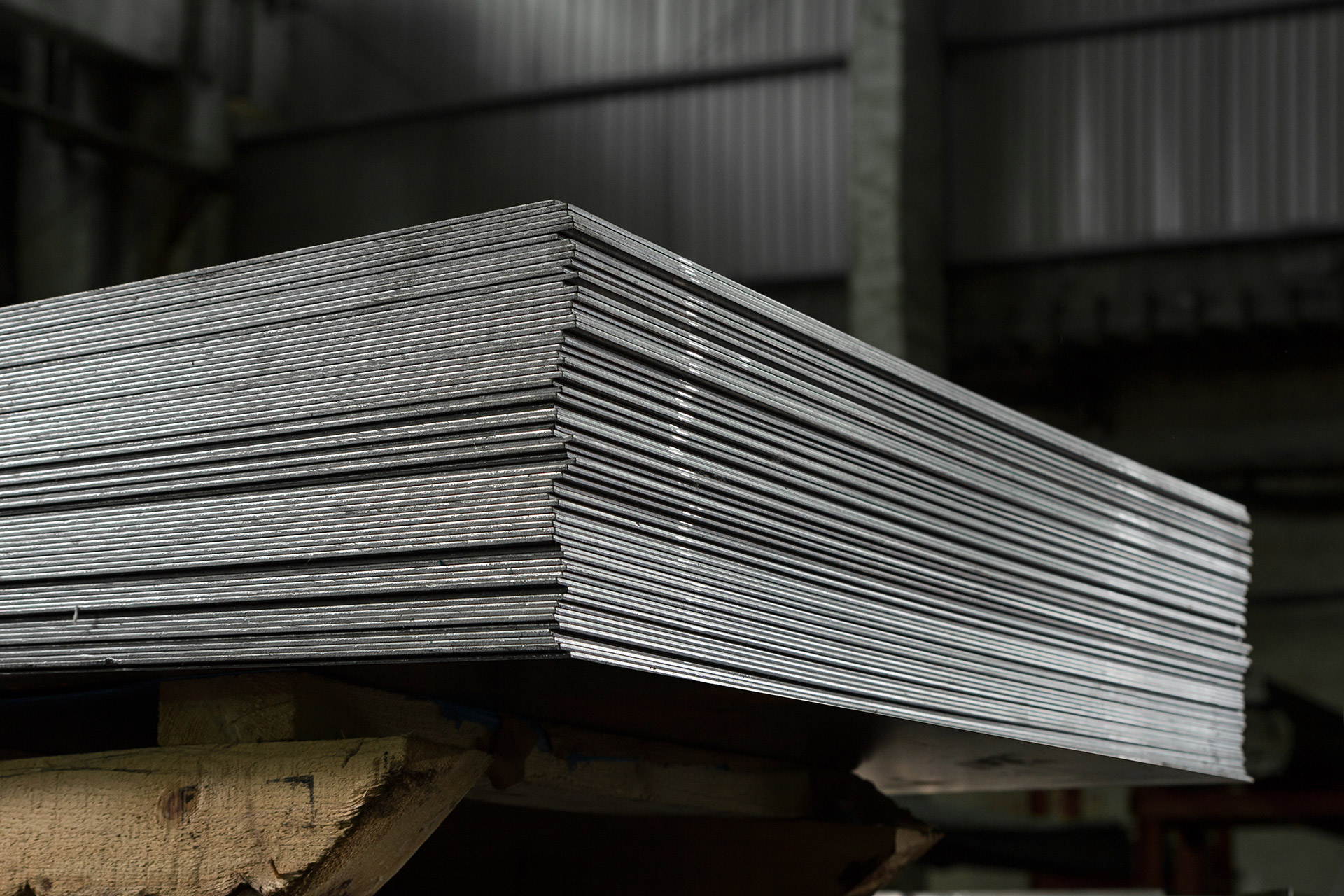
Swedish plate processor increases capacities for German market
Proplate Oxelösund AB, a Swedish manufacturer of complex steel parts and assemblies for industries, has expanded its capacity in the area of high-strength steels especially for the German market, Kallanish learns from the company.
In the last two years, the number of high-strength steel components supplied to Germany has risen from 16,000 to 26,000, while revenue increased from nearly doubled to €13.3 million ($14.2m), the company says.
Proplate’s production facilities are located southwest of Stockholm. They are directly connected to the neighbouring mill of SSAB, which is a supplier of steel and also a customer for its mining equipment.
Capacities were increased with additional machinery and equipment – including a blasting machine, welding robot, CNC machine and paint box. In addition, two additional halls and a further office were built, and the workforce was expanded from 90 to 140 employees.
In addition to tension bars for crawler cranes, there is currently strong demand for purposes like construction equipment, heavy lifting and mining, the company notes. This includes components for concrete pumps, boom arms, foundations for wind turbines and power line pylons, among other things, as well as pylons.
The company’s customers include Liebherr, Kobelco, Manitowoc, Toyota Material Handling, Epiroc, Metso Outotec, Nordex and Corpower Ocean.
Christian Koehl Germany


EU imposes sanctions on UAZ, Kamaz
The European Union has imposed sanctions against Russian carmaker Ulyanovsk Automobile Plant (UAZ) and truck-maker Kamaz.
The move is due to the possible use of their automotive equipment by the Russian armed forces in Ukraine. The document states that UAZ refers to the UAZ Patriot car, while Kamaz refers to the KAMAZ-5350 truck, the 6350 flatbed tractor and the 6560 heavy SUV.
Due to the sanctions, both Kamaz and UAZ will not be able to export their vehicles to the European market as “dual-use products.”
Kamaz was already on the EU sanctions list. On 26 February – two days after the Russian military invasion in Ukraine – the company came under restrictions due to “control by the Russian government.”
After that, the German Daimler suspended the work of the joint venture with Kamaz in Russia. Sanctions from the United Kingdom, Australia and Poland also apply to the truck-maker.
UAZ says they do not see significant risks for business due to being included in the EU sanctions list.
“Since the company has been working for a long time in conditions of refusing to supply components from European manufacturers and is consistently implementing a program to replace the component base,” it said to Russian newspaper Kommersant.
The company did not respond to Kallanish’s request for comments until deadline.
Carmakers in Russia decreased output significantly in January-April to only 264,000 passenger cars, down by 47.4% (see Kallanish passim). In April alone, only 20,000 units were produced, down 85.4% on-year, the steepest fall since Covid-19 lockdowns slashed output to 30,000 cars in April 2020, Rosstat says. Kamaz reduced production by 15% to 3,803 vehicles.
The vast majority of Russian car factories were still idle in April due to a shortage of components amid disrupted supply chains after Russia invaded Ukraine and was levied with sanctions.
Production of cars and trucks in the country is currently being carried out only by Haveil Motor Rus, UAZ and Kamaz.
Svetoslav Abrossimov Bulgaria
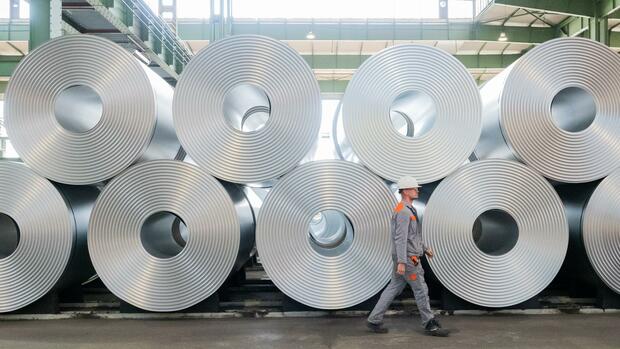
Rio Tinto to develop carbon-free steelmaking with Salzgitter
Rio Tinto and Salzgitter Group will jointly study using the miner’s Canadian and Australian iron ore for Salzgitter’s SALCOS green steel smelting project in Germany.
The two companies signed a Memorandum of Understanding (MOU) on exploring optimisation of iron ore pellets, lump and fines for use in hydrogen direct reduction steelmaking projects, Kallanish learns from Rio Tinto’s announcement. They will also explore the potential for greenhouse gas emission certification across the steel value chain.
The partnership will focus on the potential use of these products in the SALCOS-Salzgitter Low CO2 Steelmaking programme, which is targeting virtually carbon-free steel production, starting step-by-step in 2025 using hydrogen direct reduction. Under the SALCOS program, Salzgitter’s carbon-based blast furnace route will gradually be replaced from the middle of this decade by direct reduction plants, initially operated by natural gas and then with a steadily increasing proportion of hydrogen.
Rio Tinto targets reaching net zero emissions by 2050 and is targeting a 15% reduction in Scope 1 & 2 emissions by 2025 on the basis of 2018 and a 50% reduction by 2030. Its approach to addressing Scope 3 emissions is to engage with its customers on climate change and work with them to develop the technologies to decarbonise.
Only last week, Salzgitter signed up with Swedish miner LKAB for a similar cooperation. LKAB provides both blast furnace and direct reduction-based steel companies with low-carbon iron ore pellets and fines. It has already started to transition its production of iron ore to carbon-free sponge iron (HBI/DRI). Salzgitter notes that very high-quality iron ore pellets are required for its SALCOS process. The planned technical cooperation entails the companies examining which prerequisites need to be created to achieve this and evaluating the potential development of iron-ore-based raw materials for the future steelmaking process route.
Kallanish Asia

Czech steelmaker Trinecke Zelezarny to produce near full capacity in 2022, start green projects
Czech Republic-based steelmaker Trinecke Zelezarny is set to produce about 2.5 million mt of crude steel in 2022, up from 2.4 million recorded in 2021, the company’s spokesperson told S&P Global Commodity Insights on June 7.
Demand was reported to be good, with the company working close to its 2.6 million mt/year capacity and not endangered by the Russia-Ukraine war.
“We have set up production processes to react promptly to the latest developments of the situation in Ukraine and to ensure a sufficient supply of raw materials,” the spokesperson explained. “We are working intensively on strengthening the range of suppliers to ensure smooth operation of our facilities.”
The company will also start implementing some specific projects to reduce carbon emissions, cutting its emissions by more than a half by 2030, the spokesperson confirmed to S&P Global.
The first to be started next year is the construction of a new emission-free briquetting line with a capacity of up to 500,000 mt of briquettes per year, which will replace the steel sinter plant and partially the blast furnace sinter.
The investment costs will reach CZK 950 million ($41 million) for which the company plans to finance part of the costs from a subsidy of the Modernisation Fund in amount of CZK 405 million, for which it has applied and is awaiting notification from the European authorities. The line is expected to be operational in mid-2025.
“There are 820-850 kg of CO2 emissions per tonne of steel plant sinter produced,” Jan Czudek, the CEO of the company stated. “Thanks to the briquetting line [cold joining material necessary for pig iron production]. Emissions will be significantly reduced by up to 70,000 mt per year,” Czudek explained. The consumption of coke and coke dust, which is sintered together with limestone and ore at the sintering plants, will also be reduced.
The company’s green investments will have several projects including a partial switch to a modern electric arc furnace technology, and steel production from scrap.
“We have been preparing the necessary steps to incorporate a higher proportion of scrap into the production flow. However, it must be said openly that this will require a clear European Union policy on scrap trade and sufficient amount of renewable energy,” Czudek underscored.
Many European steelmakers have been vocal about the importance of scrap and the need to somehow try and keep it inside the borders with the scrap labelled as “the new gold.”
Platts Turkish import of premium heavy melting scrap 1/2 (80:20) was assessed at $435/mt CFR June 6, unchanged from June 1.
— Annalisa Villa


EU HRC market mood remains bearish on lack of demand
Downward sentiment prevailed in the European hot-rolled coil market June 7 because of low demand from end-users and distributors.
Platts assessed HRC in Northern Europe at Eur950/mt ex-works Ruhr, stable day on day, according to S&P Global Commodity Insights data.
Deals made by two German mills have been reported at Eur950/mt ex-works Ruhr. Some sources also reported offers and achievable prices at the same level.
One source said those mills might give discounts of about Eur10/mt to some customers.
A distributor reported that some mills made deals at Eur900/mt ex-works Ruhr to fill order books, but the information was not widely confirmed. Two other market participants, however, said that such low prices could be achieved for big volumes or for coil with high extras, but that such prices have been below the average market level.
In addition, three sources estimated tradable value for HRC at Eur950-1,000/mt ex-works Ruhr.
Hot-rolled coil in South Europe was assessed at Eur890/mt ex-works Italy June 7, down Eur10/mt day on day.
Offers were heard at Eur900/mt ex-works, and tradable value was heard at Eur880-Eur900/mt ex-works Italy.
Trading activity has remained muted across the EU as distributors booked small volumes of coil to restock some specifications. Low demand of end-consumers and risks of further spot price decreases made buyers delay restocking.
“There are rumors about some mills giving massive discounts, and there are no updates about production cuts, so buyers can only wait until the situation becomes clear,” a Northern European distributor said.
European steelmakers were expected to reduce steel output to balance lower demand and supply. The mills, however, have not made any announcements on the issue yet.
“I still heard about production cuts during my conversations with the mills. But nothing follows, market remains in oversupply,” a trader said. “I heard that the mills are concerned that a stoppage of a blast furnace would be too expensive, and they hope that steel prices would recover without production cuts. I doubt that is possible.”
European steelmakers aim to finalize negotiations of third-quarter and second half of the year contracts with the automotive industry by the end of June. The mills might make a decision on the steel output reduction afterward when they have clearer ideas on the volumes required by long-term buyers, some sources said.
— Maria Tanatar

HRC importers say EU safeguard changes insufficient to meet trade flow concerns
European importers of hot-rolled coil believe proposed amendments in EU steel safeguard measures for finished steel imports are unlikely to bring changes to the market and to reflect trade flow concerns.
On May 30, the European Commission sent a draft of proposed reviewed safeguard measures to the World Trade Organization. The document indicated that county-specific quotas will remain in place, but global quotas will be introduced for some other products, including heavy plate.
Importers claim, however, that in the coil segment the changed safeguards disregard reduced availability of HRC from Ukraine due to Russia’s invasion and the impact of sanctions against Russia on trade flows. Russia’s quota volumes have been redistributed among other exporters after the EU imposed sanctions.
In addition, the inclusion of Vietnam in the global hot-dipped galvanized quota will limit the number of sources, market participants believe. In the previous safeguard review, imports of HDG from Vietnam were not subject to the restrictions as material originating from a developing country.
“If anything, the measures that the commission proposed is only stated as liberation. In fact, it is further toughening of the measures,” a large Italian distributor said. “We now have Vietnam added into the global HDG quota. Global quotas for HRC would also make more sense, taking into the account the situation in Ukraine – they will not ship their regular volumes any time soon, export duties in India and sanctions against Russia. With weak demand like we have now, we might not see any impact, but if market followed the lockdown scenario of production stoppages and domestic shortage – lack of import will hit the buyers.”
The EC is scheduled to officially release the safeguard details by June 30, effective for one year starting July 1.
“The commission is prepared to gradually adapt the existing safeguard measures in response to the changing environment in trading of steel products,” Yuriy Rudyuk, a partner specializing in international trade with the law firm of Van Bael & Bellis in Brussels, said June 6.
“These amendments may seem minor in terms of the safeguard measures as a whole, however, for some specific product categories, we are about to see a major change in the approach,” he said.
Domestic prices for HRC have been declining in Europe since the second half of March due to weak demand. Platts daily assessments for HRC in Northern Europe declined to Eur975/mt ex-works Ruhr on June 1 and in Italy to Eur930/mt ex-works, down by Eur290/mt and Eur245/mt on month, respectively.
Indian exporters, meanwhile, have been offering only boron-added HRC into Europe in order for the material not to be subject to 15% export duties set in May. The latest offers of HRC from India have been heard at Eur800/mt CFR Italian ports, but the low price has failed to spur buyers’ interest as boron-added coil has limited use due to technical characteristics.
“I think we all hoped and agreed that global quotas for HRC would make sense,” a Northern European trader said. “But the commission decided against it, which leaves us with limited options of Asia with long lead times and global quotas, Turkey with anti-dumping duties, India with its export tax and Russia under sanction. So you can forget about it and Ukraine which can ship only small tonnages for now.”
A Turkish trader said he was not surprised by the decision to keep safeguards on HRC as they have been.
“The European Commission is usually slow in its reaction to changes,” the trader said. “And they disregarded impact of Russia, Ukraine and India situations. But in short-run there should be no changes in trade flaws.”
Rudyuk underscored how at this stage is possible to see only a rather schematic summary of the EC’s findings since the WTO notification May 30 follows a pre-determined format and it does not contain all the necessary details as we will have to wait until the second half of June when the Regulation with full details would be published in the Official Journal.
However, Rudyuk said that it is already clear that the amendments envisaged by the commission will concentrate on the three main areas. The first one is replacing the country-specific quotas by global quotas for the product categories 7 (quarto plates) and 17 (angles and shapes) due to the significant reduction in supply from Ukraine; the second main change is ending the preferences previously granted to the developing countries for the product category 4A (metallic coated sheets) where imports from all developing countries, including Vietnam, will now be made subject to the safeguard measures. The third point is increasing the liberalization rate from 3% to 4 % for all product categories.
— Maria Tanatar, Annalisa Villa