


Vale to invest globally in sustainable startups
Brazil’s Vale says it has created Vale Ventures (VV) to support start-ups globally whose innovative technologies will be implemented in their operations, Kallanish learns from the miner.
The venture capital initiative’s $100 million fund will support the transition to a more sustainable world, the company explains.
“By building a portfolio of disruptive solutions, we are able to generate financial and strategic return and bring new business opportunities, insights and insights to our company, customers and society,” says VV ceo Viktor Moszkowicz.
The new company will acquire minority stakes in startups focused on decarbonisation and zero-waste in the mining value chain. VV will also support companies engaged with the supply of essential metals to power the energy transition, and also invest in disruptive technologies that will change how miners operate.
Todor Kirkov Bulgaria

Assofermet sees further raw material price declines
The scrap declining trend seen in May is continuing in June, following a significant fall in Italy last month between €100-130/tonne ($107-139/t), says Italian trade association Assofermet in its monthly market note monitored by Kallanish.
The drastic reduction of orders for the finished product has pushed Italian mills to delay and in some cases suspend scrap reception last month. The Russian-Ukrainian conflict and the Chinese pandemic revival continue to negatively impact international scrap prices and demand. In Turkey, the weak transaction volumes and lower prices are continuing after the $100/t May price fall that dragged down European prices.
Meanwhile, pig iron prices in Turkey and Europe are following the scrap falls this month.
“The prices of Russian pig iron, which are falling further, are not receiving any noticeable interest from buyers, who prefer to wait having good stocks and little visibility on finished products’ sale,” Assofermet says. It adds that the hot-briquetted iron (HBI) production cuts, as well as the arrival of some volumes purchased in the previous months, confirm a stand-off in HBI sales in Italy, despite the further price reduction.
Italian mills continue to withhold their ferroalloys purchases, limiting their procurement to small volumes, convinced that prices will continue to fall in June.
“The Italian steel mills have a static and wait-and-see attitude, while the European mills have proved and are proving to be more dynamic with more sustained purchases,” the note concludes.
Natalia Capra France

EU starts expiry review on anti-subsidy measures on HR flat steel from China
The European Commission has initiated an expiry review of its anti-subsidy measures on hot-rolled flat steel products imported from China, it said on Wednesday June 8.The definitive anti-subsidy duties were imposed on June 8, 2017, and were scheduled to expire on June 9, 2022.
The Commission settled definitive anti-subsidy duties at 4.60% for Zhangjiagang Hongchang Plate and Zhangjiagang GTA Plate; at 7.80% for Handan Iron & Steel Group Han-Bao, Hesteel Tangshan and Hesteel Chengde; at 28.10% for Bengang Steel Plates; and at 31.50% for Shougang Jingtang United Iron & Steel and Beijing Shougang Qian’an Iron & Steel.
The duties were set at 17.10% for other co-operating companies and at 35.90% for all other companies.
The Commission started the expiry review at the request of regional steel association Eurofer, submitted to the Commission on March 9 this year on behalf of the EU hot-rolled flat steel industry, a notice in the EU Official Journal said.
The investigation will be conducted within the next 12-15 months to determine whether the expiry of the measures would lead to a continuation or recurrence of trade subsidies, or injury to the European steel industry.
The Official Journal said that, if the measures were allowed to lapse, the import volumes of such products from China were likely to increase because there was substantial unused capacity in the East Asian country.
It added that the EU market was attractive in terms of size and prices, because the export prices for hot-rolled flat steel from China undercut the prices available from within the EU.
It was therefore considered likely that a continuation or recurrence of trade subsidies on such products would result in injury to the EU sector should the anti-subsidy measures be removed, Fastmarkets understood.
The Commission invited all interested parties to make their views known within the next 15 days.
The products concerned fall under CN codes 7208 10 00, 7208 25 00, 7208 26 00, 7208 27 00, 7208 36 00, 7208 37 00, 7208 38 00, 7208 39 00, 7208 40 00, 7208 52 10, 7208 52 99, 7208 53 10, 7208 53 90, 7208 54 00, 7211 13 00, 7211 14 00, 7211 19 00, ex 7225 19 10, 7225 30 90, ex 7225 40 60, 7225 40 90, ex 7226 19 10, 7226 91 91 and 7226 91 99.
Published by: Julia Bolotova


European HRC prices seek bottom
European hot-rolled coil prices inched downward on Thursday June 9, but were getting close to the market bottom, Fastmarkets heard.Fastmarkets calculated its daily steel HRC index, domestic, ex-works Northern Europe at €944.29 ($1,011.26) per tonne on Thursday, down by €5.71 per tonne from €950.00 per tonne the previous day.
The index was down by €54.71 per tonne week on week and by €234.04 per tonne month on month.
Offers from mills in the region were heard at €950 per tonne exw, with one transaction for a small tonnage reported at €940-950 per tonne exw. Some estimates from buyers were heard at €900-950 per tonne exw.
Trading in the region continued to be slow, with very few transactions reported.
“Trading remains quiet, and not every mill is even in the market,” a trading source in Germany said.
Producers in the region could still offer coil for July shipment.
Most sources believed that the HRC price in the region would not sink below €900 per tonne exw, because sales would then be loss-making for the mills.
Market participants suggested that distributors in the region may need to restock toward the end of June or early in July and that this restocking activity would help to stabilize HRC prices.
There was market chatter that producers in Northern Europe will reduce output to balance demand and supply, but nothing has been announced officially.
“Everyone keeps talking about a reduction [in output], but it is not clear whether the mills are actually doing it or just talking about it,” another source said. “Maybe [mills] will just take an extra maintenance week during the summer.”
Offers from Central European mills were reported by multiple sources at €900-910 per tonne ex-works, while at least two producers in the region were heard offering HRC at even cheaper prices of around €850-870 per tonne ex-works.
Fastmarkets’ calculation of the daily steel HRC index, domestic, exw Italy was €876.67 per tonne on Thursday, down by €13.33 per tonne from €890.00 per tonne on Wednesday.
The Italian index was down by €61.33 per tonne week on week and by €281.66 per tonne month on month.
Offers from local mills were reported at €900 per tonne ex-works, but buyers said that it was possible to negotiate a lower selling price of around €860-880 per tonne ex-works.
Domestic producers were able to offer material for July delivery.
Imports
Stabilization in import prices could also signal an end to the downtrend in HRC prices, sources said.
August-shipment HRC from Turkish mills was offered to Southern Europe at €820 per tonne cfr, including anti-dumping duty. HRC from Japan and South Korea was available at slightly higher prices of €840-850 per tonne cfr Southern ports.
Indian producers were the most aggressive, with August-shipment HRC offers of €800 per tonne cfr Southern ports. But these were offers of boron-alloyed material, sources said, and buying interest for boron-added HRC was limited because such material was not suitable for welding and “not good for load-bearing structures.”
Indian mills add boron to their HRC so that it does not become subject to the country’s recently-imposed 15% export duty.
Published by: Julia Bolotova
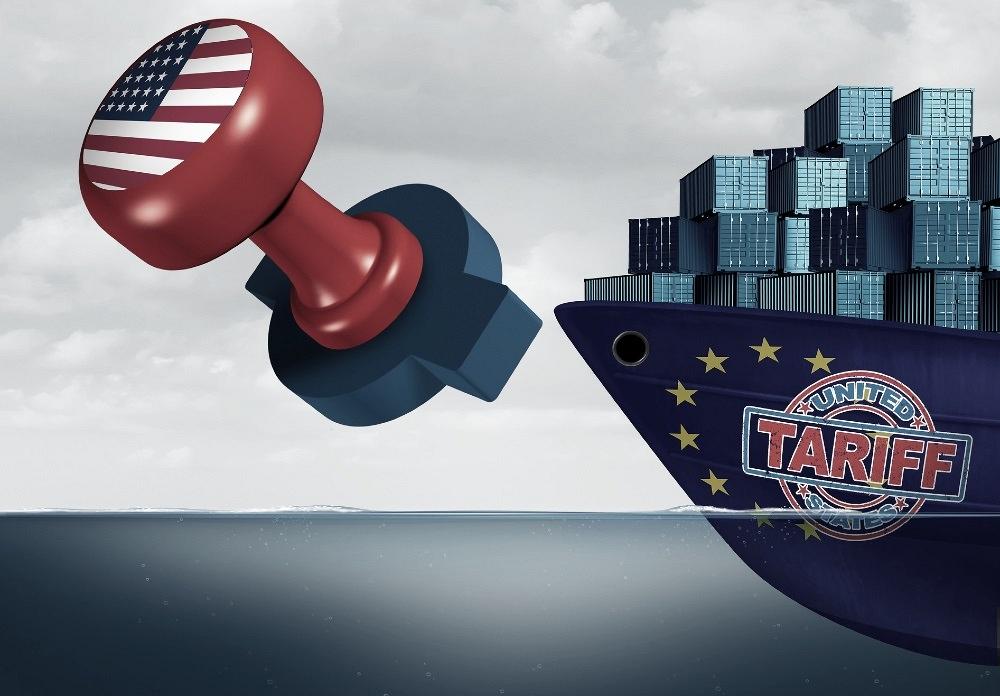
US appeals court upholds Section 232 steel tariffs
The US Court of Appeals for the Federal Circuit issued a ruling June 9 against a challenge to the Section 232 tariffs brought by a group of steel importers.
USP Holdings, as a consolidated plaintiff for Universal Steel Products, PSK Steel, Dayton Parts, Borusan Mannesmann Pipe and Jordan International, appealed an earlier decision from the US Court of International Trade dismissing their challenge to the Trump-era tariffs in February 2021.
The plaintiffs argued that the actions of both the president and Commerce secretary, which found that steel imports were a threat to national security and imposed tariffs for an indefinite period of time, conflicted with the Section 232 statute of the Trade Expansion Act of 1962.
The Federal Circuit said it found no violation of the statute.
Former President Donald Trump used the Cold War-era law to set import tariffs of 25% on steel and 10% on aluminum in March 2018.
— Justine Coyne

Surprise EU Parliament vote delays CBAM, ETS reform
This week, the European Parliament issued a surprise vote against the proposed reform of the ETS system. The vote triggered a domino effect, delaying approvals for other key measures such as the Carbon Border Adjustment Mechanism (CBAM).
Eurofer, the European steelmakers association, issued a statement to voice its disappointment at the delays.
“The rejection of the report is neither good for the climate nor for the industry’s green transition,” Eurofer says.
Following the vote, the ETS reform and CBAM will go back to the relevant commissions to be discussed again, Kallanish understands.
“We hope that the negotiations will soon be resumed among MEPs and that a solution addressing our concerns will be found, helping us to decarbonise in a sustainable manner and secure that the Carbon Border Adjustment Measure prevents effectively carbon leakage, including for exports,” says Axel Eggert, director general of Eurofer.
Emanuele Norsa Italy
Continued EU steel safeguards is pledge of stability, but quotas now exceed demand, Eurofer says
European steel industry association Eurofer welcomed the adoption by the European Commission of a proposal to continue the region’s import safeguard measures, because these would “support the stability of the EU steel market while ensuring smooth supply flows,” it said in press release on Wednesday June 8.“This decision brings stability to the EU steel market while avoiding excessive, market-disrupting steel imports from third countries,” Eurofer director-general Axel Eggert said.
Following the most recent yearly review of the safeguards, the EC proposed to the World Trade Organization (WTO) that it would keep the steel safeguard measures in place for two more years, with certain adjustments to global quotas, attributed to the effects of the war in Ukraine.
Eurofer supported that decision by the Commission.
But consecutive yearly liberalization of the quota volumes, particularly the most recent increase to 4% from 3%, pushed up the quota volumes to above the current demand level, Eurofer said, adding that steel demand has not yet recovered from the Covid-19 crisis.
There was “no economic need or legal obligation for such an increase,” Eurofer said.
The association noted that the Commission believed that there was little or no effect on the EU safeguard measures resulting from the recent move by the United States to switch its Section 232 import tariff of 25% on EU-origin imports to a tariff-rate quota (TRQ) system.
The EU safeguard measures were introduced in July 2018 to protect the steel market from diversion of trading flows, and in reaction to the US decision to impose duties on imports of steel under its Section 232 regulations.
The EU safeguard measures took the form of TRQs, reflecting traditional trade flows from third countries into the EU, with imports exceeding the quotas being subject to 25% duty.
Published by: Elina Virchenko