

Centravis uses German, Polish ports for exports
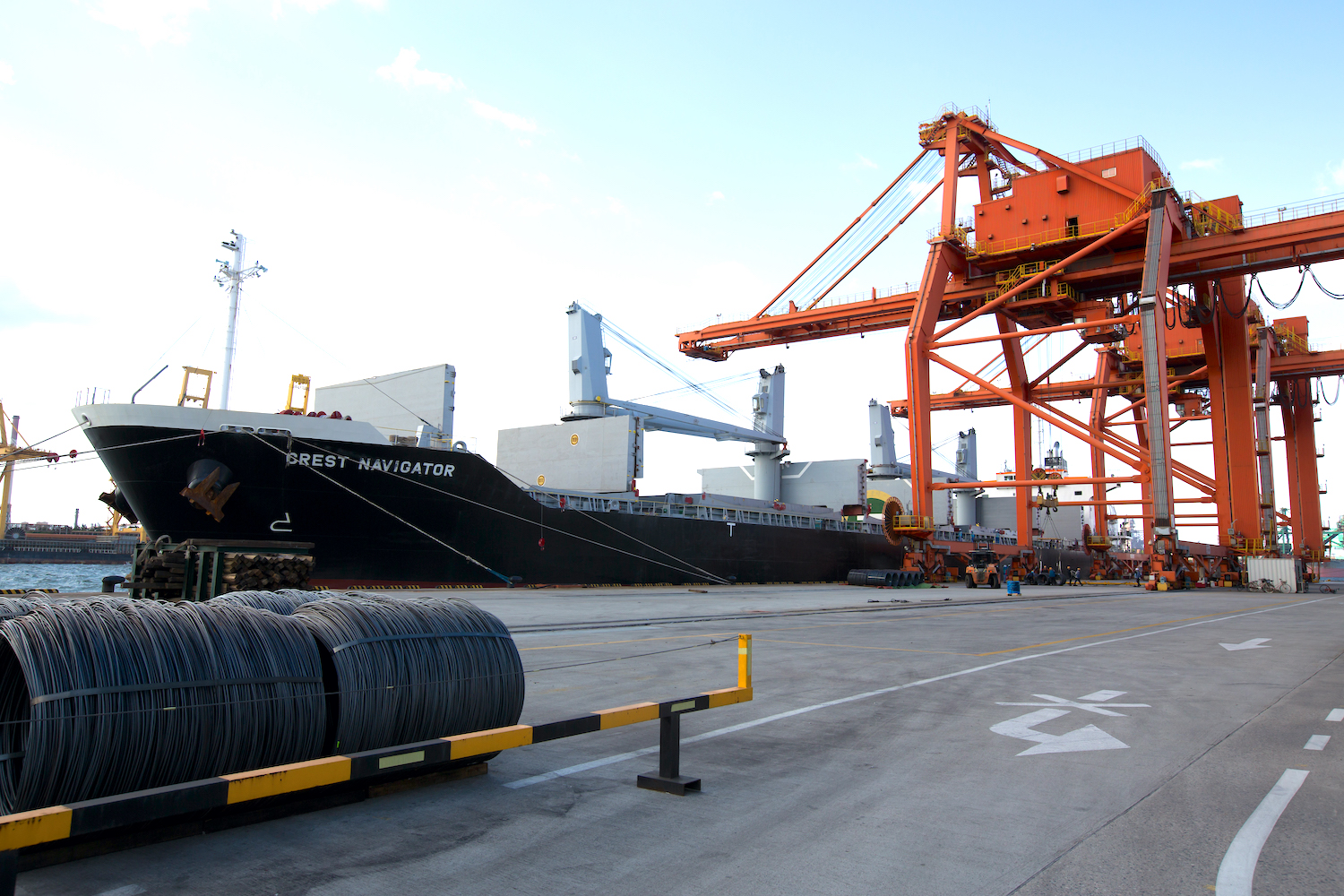
Ukrainian seamless stainless pipe producer Centravis says it is using German and Polish ports to export its products amid the ongoing Russian invasion of Ukraine.
In a letter to customers and partners, the firm says: “We use the ports of Hamburg and Bremerhaven (Germany), Gdansk and Gdynia (Poland) to ship finished products.” Deliveries to parts of Europe are also carried out by trucks.
There are queues at the border due to the large cargo flows, but the company takes these into account and chooses the points with the highest capacity, it adds.
“With production everything is in normal mode, the cold and the hot shop are working to fulfil the plans and produce tubes on time,” the enterprise claims. “Production continues to receive billets in small batches. We are also accepting orders; there is an opportunity to place orders for August-November.”
This week, the pipemaker will participate at the Tube exhibition in Dusseldorf.
Earlier, Centravis said it expects stable production amid improving round billet feedstock supply (see Kallanish passim).
The company intends to increase supplies to the US and EU after the two markets suspended trade barriers on Ukrainian steel for one year.
In April, the pipemaker resumed single-shift production amid the ongoing Russian invasion of Ukraine, but faces logistics problems with its shipments.
Ukraine’s pipemakers decreased production in January-May to 176,300 tonnes, down by 16% on-year (see Kallanish passim). However, in May alone, pipe manufacturers increased production by 2.5 times compared to April to 45,000t.
Svetoslav Abrossimov Bulgaria


Lithuania blocks Russian steel rail transit to Kaliningrad
Lithuania has enforced a ban on Russia-origin steel transiting across its territory by rail to the exclave of Kaliningrad, drawing the ire of Russia which has threatened to retaliate.
Lithuania’s foreign ministry issued a notice on Monday clarifying that it is merely enforcing EU sanctions on Russian steel that were published in March, and that transit of passengers and non-sanctioned cargo continues unhindered. This follows reports that authorities in Kaliningrad claimed Lithuania had blocked all transit from Russia.
The Kaliningrad Oblast’s main steel firm is coil painter/coater BSK Steel, which sources merchant hot-dip galvanized coil feedstock. Severstal is among the Russian steelmakers known to supply Kaliningrad, while Russian carmaker Avtotor is based there. Earlier this year, Kaliningrad region governor Anton Alikhanov said that Avtotor has preliminary agreements on the assembly of cars at its facilities with manufacturers from countries that have not imposed sanctions against Russia (see Kallanish passim).
As an alternative to rail transport, steel could be shipped to Kaliningrad from Russia’s Baltic Sea ports at St Petersburg or Ust-Luga.
Adam Smith Poland
ArcelorMittal prepares to idle Dunkirk blast furnace: sources
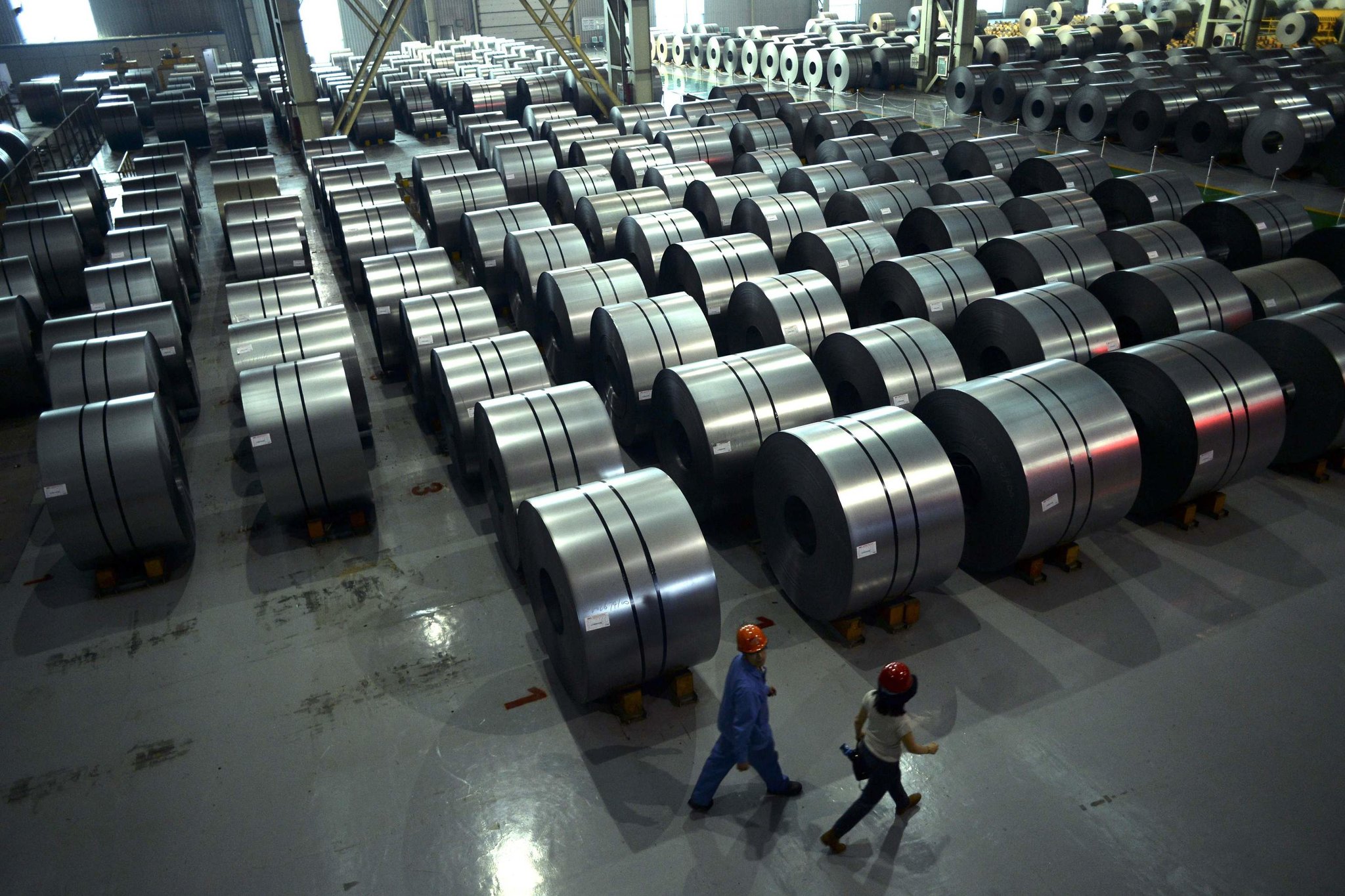
ArcelorMittal is understood to be preparing to idle one blast furnace – HF2 – at its Dunkirk mill, in northern France, effectively reducing output for the coming months.
Earlier this month, a local trade union confirmed in a document the furnace should be temporary idled as of 11 July. A scrap dealer in France confirmed the news.
ArcelorMittal did not reply to requests for comment prior to press deadline.
According to the plans issued by the trade union, HF2 should be restarted at the end of September when another furnace at the site, HF3, will be temporary idled. The site is expected, therefore, to operate mostly with two blast furnaces during the coming months, with occasional moments during which only one blast furnace will be in operation.
As a result, the steelmaking plant at Dunkirk should be working using two of the three converters at the site from the end of June, Kallanish understands.
Demand in the European market for flat products has been under pressure since the beginning of this year, exacerbated by the ongoing uncertainty created by inflation and the war in Ukraine.
Natalia Capra France , Emanuele Norsa Italy

Iron ore collapses as steel markets panic
Seaborne iron ore prices were rocked on Monday by a panic in China that sent steel and raw material prices over a precipice. The decision by a growing number of mills to cut production in response to weak demand is being seen as an admission that steel demand will not be back for some time.
The Kallanish KORE 62% Fe index slumped $7.92/t to $116.23/dry metric tonne cfr Qingdao, the lowest since December. The Kallanish KORE 65% Fe index dropped $8.73/t to $135.83/dmt cfr, and the KORE 58% Fe index fell $5.70/t to $118.26/dmt cfr. 80,000 tonnes of Mac fines sold at $105.1/t with a laycan in 21-30 July.
On the Dalian Commodity Exchange, September iron ore settled down CNY 92/t at CNY 773/t ($115.35/t), while on the Singapore Exchange July 62% Fe futures settled down $9.07/t at $110.94/t. The same contract for 65% Fe and 58% Fe futures settled down $9.86/t at $127.86/t, and down $3.23/t at $124.07/t respectively. The only support came late in the day from speculators closing out short positions.
Chinese scrap and billet prices have also jumped off a cliff. 6mm+ heavy scrap delivered to mills in the Yangtze River Delta lost CNY 350/t to CNY 3,305/t, the lowest since November. Shagang led the way with cuts in recent days of around CNY 150/t but mills nationwide were slashing their buying prices over the weekend. Billet too has slumped, losing CNY 100/t over the weekend and another CNY 250/t on Monday to CNY 3,830/t, the lowest since January 2021.
China has already officially seen output fall sharply and implied end-user demand has slumped year-on-year. Official output figures may be overoptimistic however as provinces are under pressure to report that they have stabilised their local economies. Production cutbacks imply that markets remain heavily oversupplied.
Steel demand meanwhile remains week, with heavy rains and flooding in southern China, and extreme heat in northern China limiting construction activity. Confidence has hampered investment, and new Covid-19 restrictions in southern China mean neither investors nor consumers are making full use of available stimulus funds. China is still attempting to reboot the economy, but it is increasingly looking too late to effectively secure meaningful GDP growth this year.
Tomas Gutierrez UK

Finnish stainless steel group Outokumpu divests Italian plate service
Finland based stainless steel producer Outokumpu has divested its plate service in Castelleone, Italy, selling it to one of its biggest domestic customers, Mariotti stainless steel group.
All plate services and operations at the site, as well as machines and stock, will be transferred to Mariotti, along with existing contracts and sales orders, with a few exceptions.
Outokumpu’s coil service center at the same site will operate as normal, and will continue to sell quarto plate to distributors and tube producers as before.
Mariotti’s purchase will add to its current stainless steel service centers in northern Italy, located in Pontevico (Brescia) and Gravellona Toce (Verbania).
Platts assessed carbon plate in Southern Europe at Eur1,300/mt ($1,367/mt) ex-works Ruhr June 17, down Eur50 on the week, according to S&P Global Commodity Insights data.
— Annalisa Villa


Northern European HRC prices stable, Italian prices fall
Domestic prices for hot-rolled coil remained stable in Northern Europe on June 20 due to limited trading activity, while prices in Italy softened on fresh deals.
Platts assessed HRC in Northern Europe at Eur875/mt ex-works Ruhr, unchanged day on day, according to data from S&P Global Commodity Insights.
Achievable prices for HRC in the region have been reported at Eur850-900/mt ex-works.
Bearish sentiment prevailed in the market due to weak demand from end consumers, high stocks across the supply chain, and a bearish trend that made buyers remain in wait-and-see mode. However, as several sources reported a possible blast furnace stoppage in France, the downfall in prices might come to an end as supply and demand could come closer to a balance.
“In the EU mills will continue to reduce productions, after announced cuts at Salzgitter and ArcelorMittal Dunkirk, market trend might change very fast,” an Italian trader said.
Hot-rolled coil in Southern Europe was assessed at Eur820/mt ex-works Italy June 17, down Eur15 day on day.
Deals have been reported at Eur820/mt ex-works, and tradable value was reported at Eur820-830/mt ex-works.
— Maria Tanatar, Benjamin Steven