


Iron ore rebounds but nerves frayed Seaborne iron ore prices picked up slightly on
Tuesday as futures prices rebounded from their dramatic fall on Monday. Market confidence remains weak, however, with little hope for Chinese steel demand in the immediate future.
The Kallanish KORE 62% Fe index rebounded $1/t to $17.23/dry metric tonne cfr Qingdao. The Kallanish KORE 65% Fe index regained $1.05/t to $136.88/dmt cfr, and the KORE 58% Fe index fell $2.94/t to $115.32/dmt cfr. 170,000 tonnes of PB Fines sold at $114.10/t with a laycan in 26 July-4 August.
On the Dalian Commodity Exchange, September iron ore settled down CNY 24/t at CNY 754.5/t ($112.67/t), while on the Singapore Exchange July 62% Fe futures settled up $3.97/t at $114.91/t. The same contract for 65% Fe and 58% Fe futures settled up $4.09/t at $131.95/t, and down $8.93/t at $115.14/t respectively.
Chinese scrap prices have continued to decline sharply as mills cut purchasing prices. 6mm+ heavy scrap delivered to mills in the Yangtze River Delta slumped another CNY 84/t to CNY 3,221/t. In Tangshan, billet prices however recovered CNY 70/t to CNY 3,900/t.
After their collapse on Monday, futures prices rebounded on Tuesday. It was unclear however how much this was driven by the closure of short positions. There are rumours that officials are now asking steelmakers to avoid further production cuts in order to stabilise markets, although with weak demand this would only lead to rising inventories.
Confidence in the Chinese economy remains in crisis and this will continue to weigh on steel and iron ore prices. Local governments are increasingly drawing on desperate ideas to stabilise the real estate sector, while a local government banking crisis in Henan province could be the first of many.
Evergrande, the developer whose debts symbolised the first waves of the current crisis last year, is due to announce details of its restructuring by the end of July. The state is expected to become the largest shareholder and former chairman Xu Jiayan is expected to at least reduce his holdings drastically. The restructuring was meant to prevent the company from triggering a wider economic crisis, but Beijing has not needed its help to do just that.
Tomas Gutierrez UK


Eramet signs purchase agreement for Aubert & Duval
French miner Eramet has signed a Share Purchase Agreement with the consortium ready to buy its lossmaking subsidiary Aubert & Duval (A&D), taking it a step closer to the completion of the sale. Together with high-speed steel producer Erasteel, A&D is part of Eramet’s high-performance alloys division, Kallanish notes.
Earlier this week, the employee representative bodies agreed to the sale to a consortium that includes Airbus, Safran and Tikehau Ace Capital. The process should be completed by the end of 2022, Eramet says in a note.
In February, Eramet announced this divestment is in line with the company’s strategic roadmap, which aims to refocus on its upstream activities and develop in metals for the energy transition. The miner has been looking for a buyer for its troubled French subsidiary since last year (see Kallanish passim).
A&D’s value is estimated by the seller at €95 million ($100.2m).
Natalia Capra France

CCIA calls on coking companies to suspend production
The slump in Chinese steel prices has prompted mills to lower their coke purchase prices, but the coking industry is opposing this and instead proposing production cuts.
On Monday, China’s steel market collapsed and some mills lowered their coke buying prices by CNY 300/tonne ($45/t). The China Coking Industry Association (CCIA) thus held an industry meeting late on Monday, calling on coke companies to respond to current market conditions by cutting production rather than prices, Kallanish notes.
CCIA hopes companies participating in the meeting will adhere to the principle of “not producing at a loss and not selling if there is no profit”, by suspending coal purchases, it says. It adds that most companies will suffer serious losses of up to CNY 450/t if they accept the price reduction request from steel mills.
The proposal is mainly designed to support current coke demand. CCIA says coke stocks are currently low, high-quality coke is still very popular, and there are customers urging shipments. Coking firms should focus on only the highest paying customers as a result, it argues.
A steel mill source told Kallanish on Tuesday they will increase coking coal and coke purchases, and this could boost prices in the short term. Coke futures on the Dalian Commodity Exchange for September 2022 settled at CNY 2,953.5/t on Tuesday, down CNY 93/t from Monday.
Kallanish Asia
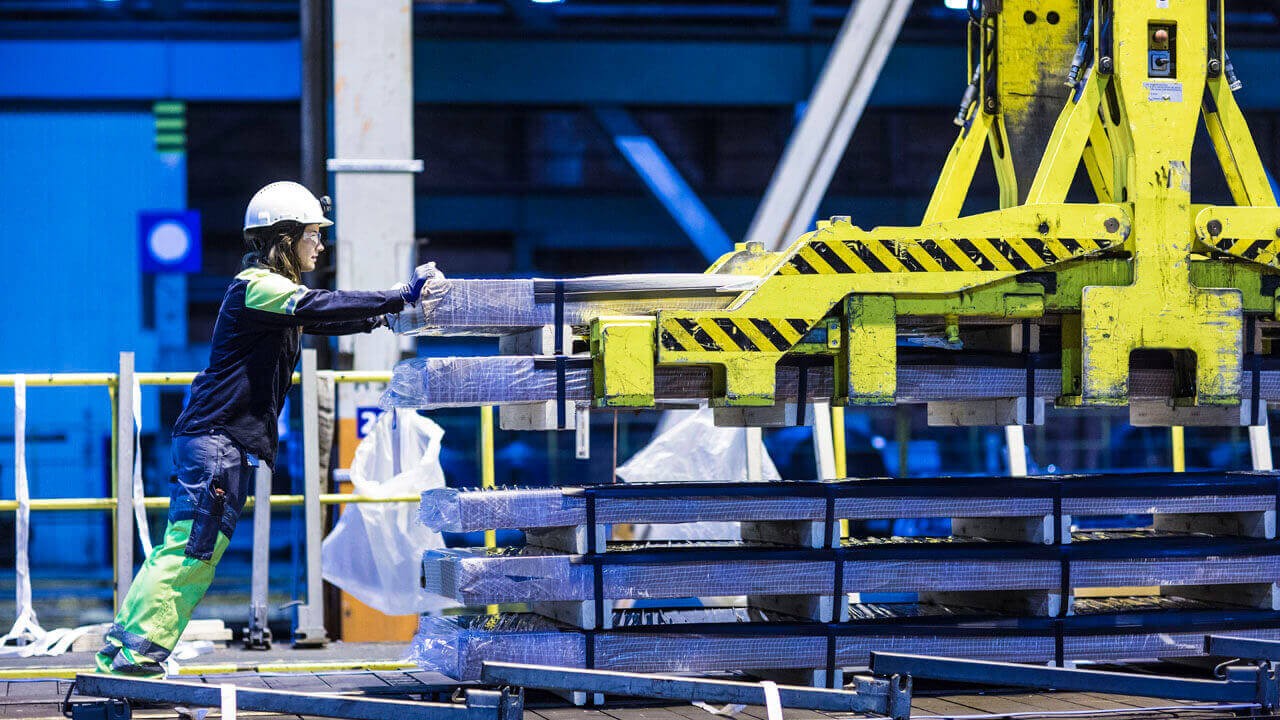
SSAB partners with autopart maker for use of fossil-free steel
SSAB has entered an agreement with US autopart maker Shape Corp. for the use of its fossil-free steel in automotive applications.
Shape will be testing SSAB’s HYBRIT-produced steel in the manufacture of crash management and body structure systems, SSAB said June 21. This marks the steelmaker’s first partnership for fossil-free steel in the US.
HYBRIT, or Hydrogen Breakthrough Ironmaking Technology, was created in 2016 with the goal of developing a technology for fossil-free iron and steelmaking. The project produced its first steel in late 2021 and aims to be supplying the market with zero-carbon emissions steel at a commercial scale by 2026. SSAB plans to largely eliminate carbon dioxide emissions from its own operations by 2030-45.
“Demand for fossil-free steel is increasing, which is one of the reasons for SSAB to bring forward its green transition with the ambition to largely eliminate carbon dioxide emissions around 2030,” SSAB CEO Martin Lindqvist said in a statement.
Shape has committed to reducing its global carbon emissions 30% by 2030 and to be fully carbon free by 2035.
— Justine Coyne

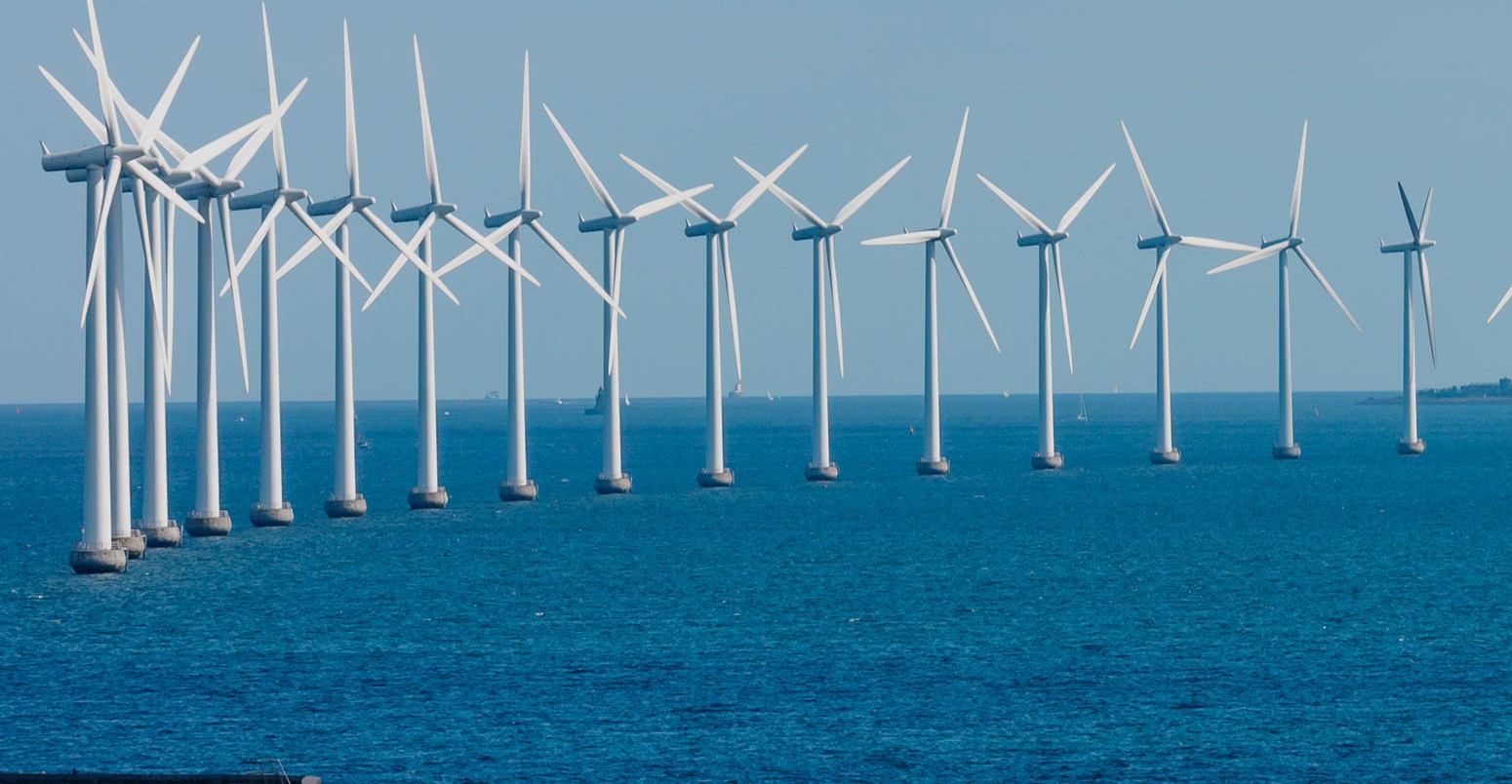
Wind, steel bodies call on EU to speed up on renewables to secure industrial energy supply
The EU must put at the top of its agenda renewables and hydrogen projects to secure industry energy supplies to reach climate neutrality and accelerate Europe’s independence from Russian fossil fuel supplies, WindEurope and the European Steel Association (EUROFER) said in a joint statement June 21.
There are now 60 low carbon steel projects ready across Europe to be scaled up to industrial level, but in order to deliver them a large supply of renewable electricity and renewable hydrogen are needed, the industry associations said.
“Today, capital investment is set at €31billion, operational costs at €54billion (pre-Russian war in Ukraine data), while clean electricity needs amount to 150 TWh, half of which is for hydrogen production, by 2030,” the statement said.
The projects’ CO2 emissions abatement potential is equivalent to a cut of 55% on 1990 levels.
“REPowerEU set a 510 GW target for wind by 2030, that’s 39 GW of new wind per year, more than double what we’re installing now,” said Giles Dickson, CEO of WindEurope. “The wind supply chain can deliver, the finance is there. The bottleneck is permitting. It’s too slow and complex. Council and Parliament need to adopt the REPowerEU plan for permitting as a matter of urgency.”
REPowerEU is a European Commission proposal to end reliance on Russian fossil fuels before 2030 in response to the 2022 Russian invasion of Ukraine.
“Usually, industry adapts to energy supply and not vice-versa. There is no business case for investment in green steel if green energy carriers are not available,” said Axel Eggert, Director General of EUROFER. “The steel industry has developed breakthrough technologies for producing low carbon steel that rely on non-fossil energy sources, but we don’t have enough renewables production nor the related infrastructure to transport it where it has the highest impact. Not to talk about hydrogen: there is no developed infrastructure at all.”
“We call on the EU institutions and the Member States to double down on their actions for guaranteeing security of supplies, strengthening critical supply chains necessary for the energy transition, and investing in the green technologies we need to the benefit of citizens and industry alike,” Eggert and Dickson said concluded.
Platts, part of S&P Global Commodity Insights, assessed Northwest European hot-rolled coil, the main steel product produced in the continent, at Eur875/mt ex-works Ruhr June 20, down from a peak of Eur1,460/mt March 18.
Demand from end-users has been low as steel consumption by automotive industry dropped due to a shortage of various components and elevated stocks at distributors.
— Annalisa Villa

German steel distributors’ sales rise in May, stocks jump 12% on year: BDS
German steel sales by distributors rose 3.53% on the month in May to 867,869 mt and were also slightly higher than the 862,807 mt sold in May 2021, German steel stockholders’ association BDS reported June 20.
The May 2022 sales were nonetheless below the first-quarter average monthly sales recorded at 934,772 mt.
Of the May sales, 282,651 mt were long products and 514,044 mt flat products, the association said.
Steel products stocks held by German distributors also rose in May, BDS reported.
May’s stocks at 2.24 million mt of products were 1.05% higher on the month and notably 12.05% higher than the 1.97 million mt held in May 2021, according to BDS’ data.
“In early 2021 we had particularly low stocks. Stocks now are higher than last year, but still lower compared to other years like 2018 or 2019,“ BDS noted.
The May 2022 stocks also showed an increase on this year’s Q1 average monthly stocks of 2.23 million mt.
Of the May stocks, 799,871 mt were long products and 1.39 million mt were flat products, BDS said.
— Diana Kinch

Oversupply edges EU hot-rolled coil prices lower
Deals in the European hot-rolled coil market were heard at lower levels June 21, although buyers continued to refrain from any substantial restocking.
Platts assessed hot-rolled coil in Northern Europe down Eur5 at Eur870/mt ex-works Ruhr June 21.
Deals were heard at Eur870/mt ex-works Ruhr and Eur880/mt ex-works Ruhr, while Central European material was available at Eur840-860/mt delivered Ruhr ex-Central Europe.
Several producers reported that a Benelux-based re-roller had been offering HRC at Eur820/mt ex-works Northern Europe, and one source indicated that realistic delivery costs could reach Eur80-85/mt, but other indications on delivery costs were heard much lower at Eur30-40/mt.
A source said that such deals were possible in the current market for some customers in special trades, but that they had not seen the offers. The source did not see the level as representative of the market price, with most offers sitting higher at Eur870-880/mt ex-works Northern Europe.
“We could offer at Eur820/mt against costs, but it doesn’t make sense to drag prices down,” the mill source said. “Current buyer sentiment is to wait and offers wouldn’t materialize as deals even if we did go that low.”
A trader in Benelux also denied the offers, agreeing with other buyer sources that current price levels should be in the Eur850-900/mt range, ex-works Ruhr.
Another mill source agreed that transactions would remain scarce.
“There’s no trade when the market is at these top or bottom levels, at peak prices buyers stay away, and mills won’t sell at the pricing floor,” the second mill source said.
Mills were heard able to offer July rolling, with near-empty orderbooks extending into August and September. Demand remained at minimal levels on poor end-user consumption and buyer risk aversion to restocking on pricing downtrends.
Producers were reported running at substantially reduced capacities, in line with ArcelorMittal’s recent announcement to idle their 1.5 million mt/year blast furnace in Dunkirk, France, as well as another furnace in Eisenhuttenstadt, Germany.
Market sources expected further closures were necessary in order to bring supply in line with currently reduced demand, as reduced capacities would not suffice to put an end to the recent pricing freefall.
In the Southern market, HRC was also down on the day, assessed at Eur810/mt ex-works Italy.
— Benjamin Steven, Maria Tanatar

Ukraine’s steel output to fall 64% on year to 7.6 mil mt in 2022: GMK
Ukraine may produce 7.6 million mt of steel and 6.9 million mt of steel products in 2022, with 4.7 million mt to be exported, Kyiv-based industry analysts GMK Center said in a report released June 20.
The country’s steel production is likely to fall 64.5% from 21.4 million mt in 2021 due to the war with Russia.
Ukraine produced 4.24 million mt of steel in January-May, with the vast majority of this output coming before the war over January-February. In January-April, the country’s exports of iron ore and iron ore concentrates totaled 13 million mt, while those of ferroalloys stood at 220,000 mt, pig iron at 451,100 mt, and semi-finished steel products at 1.15 million mt, according to GMK.
Mining and steel company Metinvest said earlier that the military conflict, the forced stoppages of Mariupol-based Azovstal and Ilyich Steel and the loss of control over them reduced the presence of Metinvest on the world steel market to 2.5 million mt/year from over 11 million mt/year.
Ukraine’s largest standalone steelworks, ArcelorMittal Kryvyi Rih, which started to gradually resume production in April after a forced shutdown is now operating two coke batteries out of six, one blast furnace out of four, one out of six basic oxygen converters, one out of three continuous casting machines, three casting into ingots machines, and one rolling mill, the company’s spokesperson told S&P Global Commodity Insights.
Its mining department and coke plant are operating at reduced capacity too, but the steelmaker has preserved all jobs and maintained all salary payments.
ArcelorMittal Kryvyi Rih reported in May that it has had to put on hold several investment projects, including a pellet plant initially slated to open in late 2023, due to the Russian invasion.
The company remains on track though to construct a new tail dump, critically needed to continue mining, and to modernize its blast furnace No. 9, which provides two thirds of ArcelorMittal Kryvyi Rih’s total pig iron production. The investments in the two projects are estimated at $420 million.
Pipe production
In May, Ukraine made 45,100 mt of steel pipes, up 150% from April but down 23.5% on the year. Almost 95% of the total was made by pipe group Interpipe, according to Ukraine’s pipe industry association Ukrtruboprom.
Ukrainian pipe and tube production stood at 176,300 mt over January-May, down 27% on the year amid the war.
Interpipe’s spokesperson confirmed the company had recently succeeded in delivering its OCTG premium UPJ-M pipes to Turkey for the first time since the beginning of the war. Their shipping had stopped because traditional supply chains were disrupted by the war. Interpipe is rebuilding some of the chains and forming new ones, but it is difficult to restore pre-war production volumes.
The company is particularly focusing on the European pipe market as it is logistically the closest to Ukraine. It also sells pipe billet but the sales volume is smaller than that of pipe.
— Ekaterina Bouckley

ArcelorMittal to idle 1.5 million mt/year blast furnace at Dunkirk
Steelmaker ArcelorMittal will idle a 1.5 million mt/year blast furnace at its site in Dunkirk, France, from July 11, a spokesperson said June 21, leaving capacity of 5.7 million mt/year operational at the site.
The idling was due to “marginally weaker real demand, specifically in the automotive sector due to ongoing supply chain issues”, the spokesperson said.
Hot-rolled coil in Northern Europe was assessed by Platts at Eur875/mt ($921/mt) ex-works Ruhr on June 20, down from a peak at Eur1,460/mt on March 18, according to S&P Global Commodity Insights data.
Demand from end-users has been low, with the automotive industry’s steel consumption hit by a shortage of various components. Distributors have high stocks of coil due to panic buying earlier this year and subsequent limited demand from end-consumers that has weighed on prices for the past three months, sources said.
The stoppage of one furnace at Dunkirk would not be enough to solve the problem, one trading source in Italy said, adding that the mills needed to be more active about production cuts.
“Mills did the same during lockdown in 2020. They responded swiftly by announcing production cuts and stopping the furnaces,” a Northern European source said. “Now they seem to be reluctant to make a decision. Some expect a recovery in a couple of months, but I think that, in reality, they will have to stop furnaces.”
One mill source was, however, skeptical about furnaces stoppages due to high costs linked to capacity reductions and emission policies becoming stricter in the EU.
— Annalisa Villa, Maria Tanatar, Benjamin Steven
German stockholders surpass 1mt sales in March
Germany’s stockholding distributors started 2022 somewhat slower than early 2021, but saw a boost in March, induced by the Russian attack on Ukraine, says distributors association BDS.
“After a year that was characterised by price explosions for materials and shortages brought about by the Covid-19 pandemic, most players expected a more predictable market, but they were proven wrong,” writes economist Jörg Feger.
In the first two months of this year, stockholders replenished their yards from a typically low year-end level, Kallanish learns from his analysis. Sales in January and February were somewhat lower than in the corresponding months of 2021, when the market was swinging up during the post-lockdown recovery.
Sales reached 858,000 tonnes in January and 899,000t in February, down 6% and 1% on the respective months in 2021. A surge came in March, with 1.05 million tonnes sold. The outbreak of war caused big insecurity regarding supplies from the east, and caused many buyers to order far beyond their actual needs, Feger notes.
Inventories at stockholders in the first two months were at around 75 days of sale. This was a normalisation from the low levels of 2021 – with an average of 69 days – after the typical replenishment at the beginning of the year, but also reflecting low sales in January/February. Then in March, with activity surging suddenly, inventories dropped to 63 days.
Christian Koehl Germany