


EU CRC and HDG market quiet as automotive negotiations continue
Activity in the downstream coil market was muted June 22 as steelmakers engaged in negotiations for long-term automotive contracts.
In Northern Europe, cold-rolled coil was down Eur20/mt on the week while galvanized material fell Eur15/mt to be assessed at Eur1,000/mt ex-works Ruhr and Eur1,060/mt ex-works Ruhr, respectively.
With negotiations for H2 automotive contracts ongoing, some contracts were heard to have been settled and reportedly agreed as either stable or at a marginal rise of Eur20/mt.
Sources have mixed expectations for automotive recovery, with some OEMs heard to have resolved supply chain problems, particularly in relation to semiconductor shortages.
A producer located in the south of Italy has been actively offering galvanized material into the Northern market, and was heard at Eur940-950/mt ex-works Italy.
In the South, CRC was down Eur10/mt while HDG also down Eur25/mt to be assessed at Eur950/mt and Eur975/mt, respectively, both ex-works Italy.
Apparent demand remains poor and real consumption in the Italian market was reportedly sufficient, although not at levels to offset inflated stocks across supply chains.
South Korean import offers for CRC were reported at Eur830/mt CFR Italy by a trader source. A different trader source considered bids of Eur800/mt CFR as workable.
— Benjamin Steven, Maria Tanatar


European stainless alloy surcharges to fall again in July
Monthly alloy surcharges on nickel-bearing stainless steel flat-rolled products in Europe are set to move lower for the second successive month in July, the first mill announcement indicated this week.
Finland’s Outokumpu, the continent’s largest stainless steel producer, set its alloy adjustment factor for type 304 (4301) flat products at Eur3,143/mt ($3,300/mt) for July, down Eur76/mt from June.
Three-month nickel prices on the London Metal Exchange have moved steadily lower this month, beginning June at above $28,000/mt and heading down to test the $25,000/mt level as of June 22.
Outokumpu’s surcharge for molybdenum-bearing type 316 (4401) flat products was set at Eur4,613/mt for July, down Eur128 from the previous month.
Molybdenum oxide prices have come under pressure in recent weeks, with the Platts daily oxide assessment falling from around $19/lb in mid-May to just above $17/lb a month later — the market’s lowest level in 12 months.
Outokumpu’s surcharge for nickel-free type 430 flat products is down Eur104 for July to Eur1,254/mt.
Following a sharp run-up in high-carbon ferrochrome prices from below $2/lb at the start of the year to $3.00-$3.20/lb by late March, basis Platts weekly European assessments, prices have stabilized and currently hover just below $3.00/lb.
— Andy Blamey

EU steel section prices continue to drop on low demand
European domestic steel sections prices continued to soften during the week ending June 22, as buyers held back from booking orders, expecting prices to drop further.
Platts assessed the European medium sections price (category 1, S235 JR) at Eur1,300/mt delivered June 22, down Eur50 on week, according to S&P Global Commodity Insights.
Activity was also low with many market players gathered this week at the Wire and Tube industry exhibition in Dusseldorf, Germany.
One Benelux-based distributor source put a tradable value for beams around Eur1,250/mt delivered, adding that purchasing activity was still on hold as the market was expecting prices to fall further.
Another distributor in the Benelux region noted that tradable value for category 1 medium sections was around Eur1,250/mt, delivered Benelux, but prices were higher in Germany at around Eur1,350-Eur1,360/mt, delivered. “Scrap is moving down, so customers are waiting [until] the last moment to place orders [for what they need],” he said.
In Northern Europe, Platts assessed domestic shredded scrap at Eur397.50/mt delivered June 10, down sharply from Eur500/mt in May, according to S&P Global. The assessment for Southern European shredded scrap was at Eur400/mt delivered to the mill for June June 10, down sharply from Eur510/mt delivered in May.
“Everyone is talking about very low prices, but there are no transactions in the market,” one European mill source said, adding that the market was hearing levels around Eur1,250-Eur1,260/mt delivered, but those were mostly from buyers. He also noted that the limited activity happening in the market was around Eur1,350-Eur1,360/mt delivered.
Another mill source indicated workable levels for category 1 medium sections around Eur1,250/mt, delivered, adding that tradable levels in Germany were higher, at around Eur1,300-Eur1,350/mt delivered.
Elsewhere, Northwest European domestic rebar prices also softened on the week ending June 22. Platts TSI assessed Northwest Europe Rebar down Eur80 to Eur1,085/mt ex-works June 22, according to S&P Global.
One seller and one distributor source put a workable level for domestic rebars at Eur1,100/mt, delivered. One mill source indicated workable levels around Eur1,050-Eur1,100/mt delivered, highlighting a lack of significant activity in the market.
— Rabia Arif, Staff

EU HRC market mulls mill closures, import prices slide
Hot-rolled coil in Northern Europe was stable June 22, while prices in South Europe moved down on import pressures.
Against source expectations, import prices were also heard lower on the day, triggered by sharp drops in the Chinese market.
Platts assessed hot-rolled coil in Northern Europe at Eur870/mt ex-works Ruhr, according to S&P Global Commodity Insights.
Distribution sources agreed a tradable value range of Eur860-880/mt ex-works Ruhr, seen as achievable against offers reported at Eur870-880/mt ex-works Ruhr.
A large service-center source considered lower prices as achievable, reportedly targeting Eur850/mt ex-works Ruhr in ongoing negotiations.
In South Europe, prices fell Eur20/mt to Eur790/mt ex-works Italy, informed by indications of Eur780-800/mt ex-works Italy as a workable range. Offers were heard on the day at Eur800-820/mt ex-works Italy.
These estimations were reinforced by a deal heard from a Serbian mill, settled at Eur790/mt delivered to Italy.
Buy-side sources saw the pricing downtrend as continuing in the near term, with prices expected to fall to Eur750/mt ex-works Italy.
A deal for 30,000 of Indian boron-added HRC was reported at $765/mt CFR Italy, multiple sources reported that boron content has a limiting effect on the usability of the material, particularly for welding purposes.
“As far as I know, boron-added material is no problem for re-rolling,” said an influential trading source.
A producer from Japan was heard as offering hot-rolled coil at Eur750-760/mt CFR Italy, sourced through a European trader.
South Korean HRC has been offered at Eur780/mt CFR Italian ports, though import material is still regarded as unattractive to medium and smaller buyers due to long lead-times and uncertainties in the wider market.
Sources continue to report poor demand, with full inventories across supply-chains considered the primary factor.
Following ArcelorMittal’s announcement of two blast furnace closures in France and Germany, sources report that Central European mills are planning output cuts to minimize production levels – one steelmaker was heard as considering idling one of its three blast furnaces in the near-term.
— Benjamin Steven, Maria Tanatar
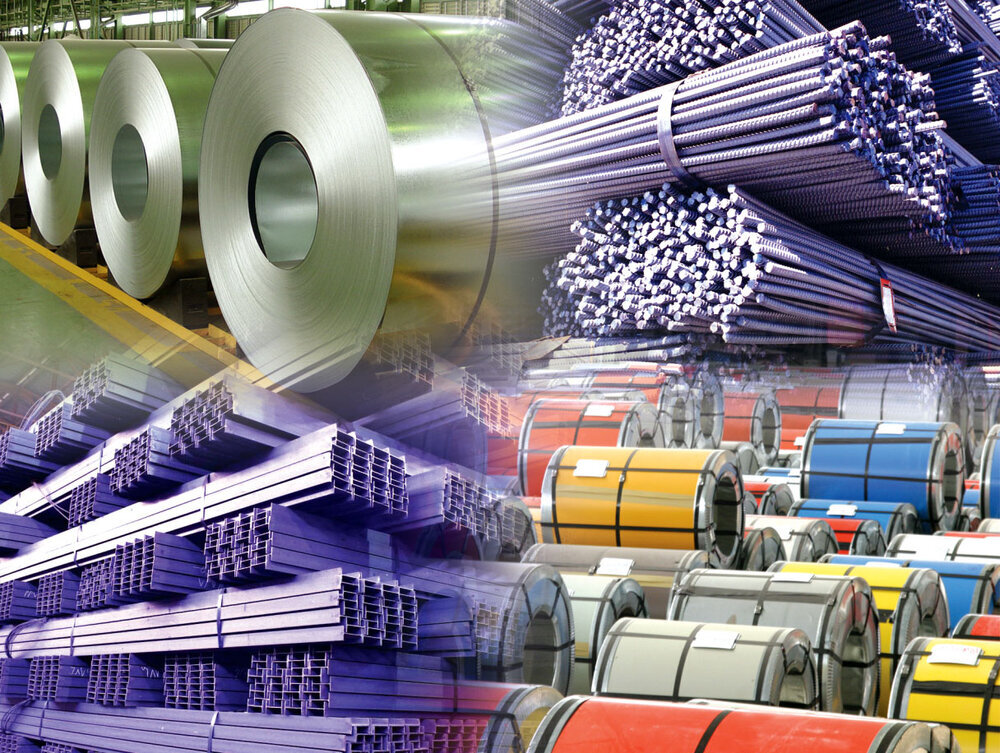
Global steel production down 3.5% on year in May: worldsteel
Global crude steel production totaled 169.5 million mt in May, down 3.5% from May 2021, according to World Steel Association data published June 22.
However, May global production was 3.7% higher than the previous month.
Output from January through May totaled 791.8 million mt, down 6.3% from a year ago, the data showed.
Largest steelmaker China produced 96.6 million mt in May, down by 3.5% from a year ago, but up 4.1% month on month to the highest since last May, making up 57% of total global crude steel output.
Total steel produced in China from January through May was 435 million mt, down 8.7% year on year.
China’s manufacturing production index for steel consumption produced by S&P Global Commodity Insights stood at 110 points in May, 9 points higher than in April but still down 5 points from the same period of 2021.
Despite further improvement seen in China’s manufacturing activity in June, the strength of the recovery has remained sluggish, leading to the recent sharp drop in steel prices, industry sources said.
The world’s second-largest steel producer India was the only top 10 producer that saw its production grow year on year in May, rising 17.3% to 10.6 million mt in May, which was also up 4.7% month on month.
For the January-May period, India’s output rose 6.5% to 53.2 million.
All other top 10 steel producing countries saw output decrease.
Japan’s May production totaled 8.1 million mt, down 4.2% on the year, but up 8% from April to a seven-month high, with the January-May output down 3.5% on the year to 38.5 million mt, the data showed.
May output from the US fell 2.6% year on year to 7.2 million mt, but climbed 4.7% on the month to a seven-month high. The US’ January-May output was down 3.4% to 16.4 million mt.
Russia was estimated to have recorded a year-on-year decline of 1.4% to 6.4 million mt in May, although this was 0.5% higher than April’s volume to also a seven-month high.
The country’s production was also down 2.3% during the first five months of the year to 31 million mt.
South Korea produced 5.8 million mt of crude steel in May, down 1.4% year on year, but up 5.1% month on month to a four-month high, with the Jan-May volume down 3.4% on the year to 28.2 million mt.
High energy costs dent demand in Europe
Germany, the largest steel producer in Europe, saw its crude steel production fall 11.5% in May to 3.2 million mt and 2.5% month on month as high energy costs dented demand, while there was also a lack of demand from the auto sector due to the ongoing semiconductor chip shortage.
From January to May German steel production dropped 4.8% to 16.4 million mt year on year, the data showed.
In the whole of Europe, including the UK, crude steel production fell 5.5% in May to 17.1 million mt, although this was up 1.3% from April and at a six-month high. The Jan-May volume was 82.5 million mt, dropping 4.1% on the year.
Turkey also produced 3.2 million mt in May, down 1.4% on the year and 4.6% lower than April’s volume. Production for the first five months of the year was down 2.8% on the year to 16 million mt.
Brazil produced 3 million mt in May, down 4.9% year on year, but up 1.7% from April, while Iran saw the biggest year on year fall of 17.6% to 2.3 million mt, although this was also up 3.4% from the previous month.
Production of pig iron from 38 countries was 116.6 million mt in May, down 1.3% year on year, but up from 111.9 million mt in April at a 12-month high, the data showed.
Direct reduced iron produced worldwide in May amounted to 9.7 million mt, rising 5.2% year on year and up 1.9% from April to the highest level since March 2021, according to worldsteel.
Asian hot-rolled coil prices were mixed June 21 as offers improved slightly in tandem with Chinese futures and domestic prices, while fundamental demand improvement remained absent.
The SS400 HRC 3 mm thick grade of coil was assessed down $2/mt day on day at $675/mt FOB China, and down $7/mt over the same period at $648/mt CFR Southeast Asia.
Crude steel data covers the 64 countries that report to worldsteel, accounting for about 98% of the world’s crude steel production.
— Annalisa Villa, Jacqueline Holman

Fimi reports full order books despite crisis
Italian equipment maker Fimi Machinery tells Kallanish it has full order books until 2025 and the current economic and geopolitical crisis is not affecting mills’ investments for the moment. This year started with significant technology supply requests from large international steel producers.
The company says it is investing to gain market share in the US where it is partnering with US-based Janus Automation. It is also eyeing India, where it opened new offices in Mumbai, with the aim to strengthen its presence in Asian countries where the company has several clients (see Kallanish passim).
In Europe, the company is pursuing its strategy to reach markets such as Germany and Switzerland, as well as the CIS region. After an extended ramp-up phase, Fimi says voestalpine’s new slitting line for hot strip steel has been commissioned, following delays on account of the Covid-19 pandemic. The line is designed for hot-rolled steel, pickled and not pickled, dry and oiled coil. Thanks to this investment, voestalpine has improved efficiency and widened product range.
Natalia Capra France


RWE, ArcelorMittal to cooperate for wind farms, hydrogen
ArcelorMittal and German energy company RWE have signed a memorandum of understanding to advance the production of CO2-neutral steel by means of wind farms and hydrogen plants.
They will collaborate in the construction and operation of offshore wind farms and hydrogen plants for the renewable energy and green hydrogen needed to produce low-emission steel in Germany, Kallanish hears from the steelmaker.
In order to decarbonise its production sites in Bremen, Hamburg, Eisenhüttenstadt and Duisburg as planned, ArcelorMittal Germany needs renewable energies on a large scale, the company states. Therefore, RWE and ArcelorMittal are examining options for joint participation in tenders for offshore wind farm sites in the North Sea.
The companies also want to work together on the development of green hydrogen, and will look for places where electrolysis plants can be built to supply the steel production sites in Bremen and Eisenhüttenstadt. Initially, a 70MW pilot plant is to be built by 2026. In the long term, the companies intend to expand their cooperation to projects up to the gigawatt range, subject to the approval of public funding.
With ArcelorMittal as a guaranteed buyer of the green electricity and hydrogen, the two companies see excellent opportunities for a viable partnership. RWE and ArcelorMittal intend to conclude long-term purchase agreements for wind power as well as for green hydrogen.
Christian Koehl Germany