


Benteler opens new tube drawing line in Paderborn
Benteler has opened a new drawing line for welded tube applications at its pipe mill in Paderborn, Germany, the company announced at the Tube+Wire fair in Düsseldorf last week.
It has invested a double-digit million euro sum in the plan, Kallanish learns. With the commissioning, up to 50 jobs will be created at the new production facility for precision steel tubes. The group’s Steel/Tube division is thus strengthening the Schloss Neuhaus and Paderborn manufacturing cluster. Also, it claims it is expanding its market position in individual tube solutions for highly specialised applications in the automotive industry.
The new production line has an annual capacity of 12,000 tonnes. A completely new infrastructure was created in the production hall for the drawing bench, which includes an integrated testing facility. More than 1,150t of concrete, around 31t of reinforcing steel and more than 1.7km of cable for supply lines have been installed in the past two years.
The tubes from the new line have a homogeneous microstructure and tight tolerances also ensure high stability in subsequent processing in the automotive sector, Benteler says.
Christian Koehl Germany


Zaporizhstal may cut production amid logistical problems
Ukrainian flat steel producer Zaporizhstal, partially owned by Metinvest, is considering cutting production due to significant logistical problems, the company confirms to Kallanish.
“Problems with logistics have not been resolved and we have significant problems with the shipment of our products to customers in the EU,” the plant’s general director, Alexander Mironenko, said in an interview with Ukraine’s Segodnya newspaper. “All our routes before the war passed through ports, but they are inaccessible so far, and now we have a significant overstocking at the border crossings in western Ukraine. All this forces us to consider the option of reducing production, because our products simply cannot be shipped across the border.”
According to him, the company’s managers are doing everything in their power to maintain the volume of exports and the flow of foreign currency into the country. In particular, they are providing additional equipment for reloading products at the border with the EU. Together with the Cabinet of Ministers, they are also looking for ways to solve problems with logistics.
Earlier, Zaporizhstal said it plans to increase capacity utilisation to 75% in August with the launch of the third blast furnace (see Kallanish passim). The mill is currently operating at about 50% capacity with two blast furnaces in operation.
Zaporizhstal decreased crude steel production in January-May to 852,700 tonnes, down by 48.6% on-year. Pig iron output also decreased by 46.4% to 987,600t, while rolled steel production fell 46.4% to 753,800t.
In May alone, the plant reduced steel production by 59.7% on-year to 131,700t and pig iron output fell 52.6% to 157,500t. Rolled steel production was less by 56.8% to 121,200t.
At the end of March, the mill partially resumed output after previously putting all units into hot conservation mode due to the intensification of fighting following the Russian invasion of Ukraine.
Svetoslav Abrossimov Bulgaria

UK probes HR flats anti-dumping transition, Ukraine exemption
The UK Trade Remedies Authority (TRA) has initiated a transition review of anti-dumping duties on certain hot rolled flat products from Russia, Ukraine, Brazil and Iran. The original definitive duties were imposed under the EU in October 2017.
The body has however simultaneously started a probe into whether these measures should be suspended on Ukrainian product. “Following a request from the government of Ukraine we will investigate whether a suspension of measures on certain Ukrainian steel products is justified because of changed market conditions after the Russian invasion,” TRA chief executive Oliver Griffiths says in a note seen by Kallanish.
The HS codes affected are 72 08 10 00 00, 72 08 40 00 00, 72 11 19 00 00, 72 08 25 00 00, 72 08 52 10 00, 72 25 19 10 90, 72 08 26 00 00, 72 08 52 99 00, 72 25 30 90 00, 72 08 27 00 00, 72 08 53 10 00, 72 25 40 60 90, 72 08 36 00 00, 72 08 53 90 00, 72 25 40 90 00, 72 08 37 00 00, 72 08 54 00 00, 72 26 19 10 90, 72 08 38 00 00, 72 11 13 00 00, 72 26 91 91 00, 72 08 39 00 00, 72 11 14 00 00 and 72 26 91 99 00.
This excludes products of stainless steel, of tool steel and high-speed steel, as well as products not in coils, without patterns in relief, of a thickness exceeding 10mm and of a width of 600mm or more, and products not in coils, without patterns in relief, of a thickness of 4.75mm or more but not exceeding 10mm and of a width of 2.5m or more.
The period of investigation is 1 April 2021 – 31 March 2022. In order to assess injury, TRA will examine the period from 1 April 2018 – 31 March 2022.
TRA has also launched a transition review into countervailing duties on certain stainless steel bar and rod from India, the definitive duties for which were imposed under the EU in June 2017.
The HS codes affected are 72 22 20 21, 72 22 20 29, 72 22 20 31, 72 22 20 39, 72 22 20 81 and 72 22 20 89. The period of investigation is 1 April 2021 to 31 March 2022. In order to assess injury, TRA will examine the period from 1 April 2018 to 31 March 2022.
Adam Smith Poland
Prospects increase for coil production cuts in EU
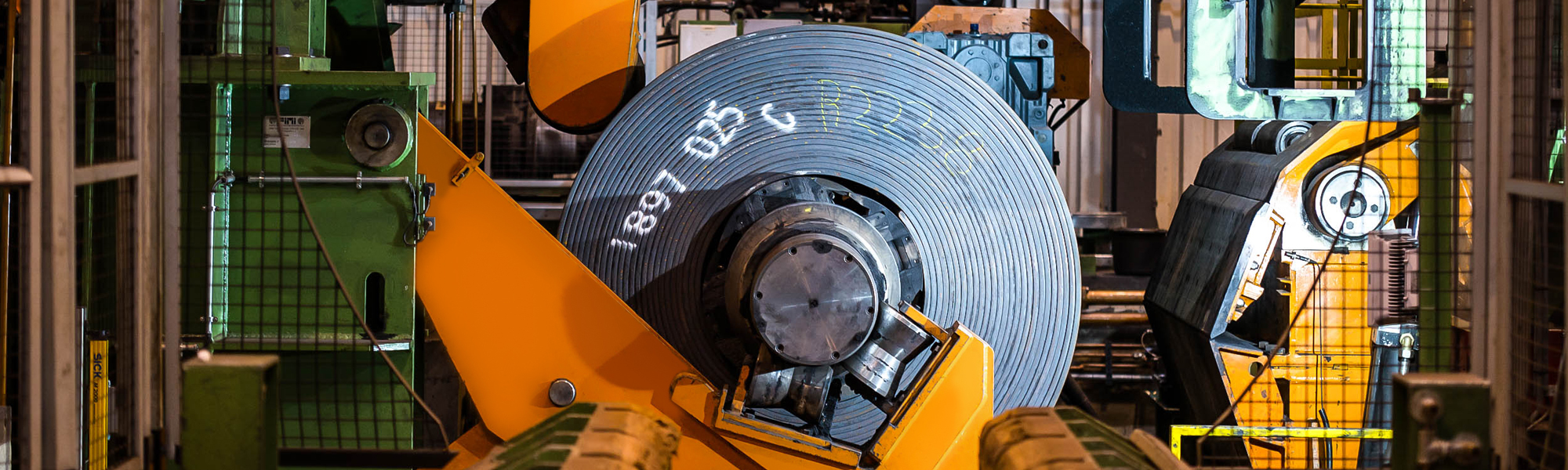
As coil prices keep sinking and energy supply bottlenecks get more severe, mills will be inclined to cut back on output, northwest European market observers believe.
A shortage of orders “has already caused three European mills to reduce their production volumes or postpone the planned [re]start-up of production lines,” a Dutch manager cautions. Kallanish contacted some of those mills for verification but received no response.
In Central and Eastern Europe, US Steel Kosice did however respond, rejecting market reports that it was idling one blast furnace amid weak demand. “We proceed with the standard production,” its spokesman observes.
There is little prospect of increased demand within the EU in the short term, but rather the expectation of a still further decline in demand. In combination with ever-increasing production costs, it is not unlikely that more steelmakers will cut back on production, the manager believes.
Adding to this, Russian gas exports to Germany have been severely curtailed and may even be stopped altogether. The question is if German mills and manufacturers will still have enough energy at their disposal to be able to run their production normally. Federal economy minister Robert Habeck has already rung the alarm for emergency plans for such a scenario.
Thirdly, the manager underlines the risk of rising inflation which will mean a break on investment, which in turn means less need for steel. “This could cause a return of production overcapacity in the EU,” he says.
The seasonal effect of summer production breaks is imminent, another Dutch source points out. Given the circumstances, they are coming at the right time, and they could well be extended this year.
Christian Koehl Germany
EUROMETAL met with Belgian steel distributors
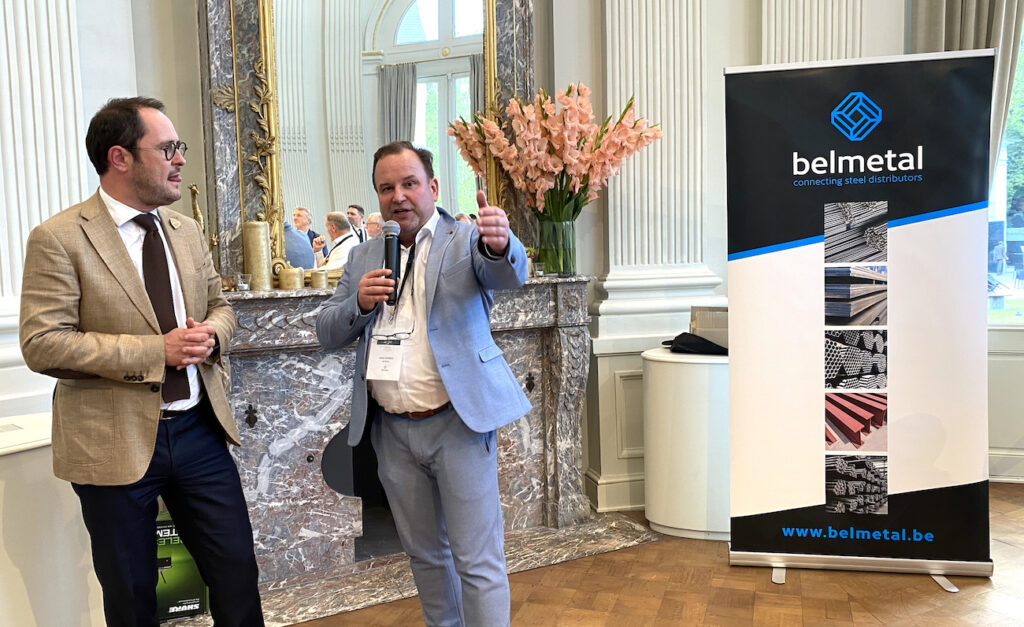
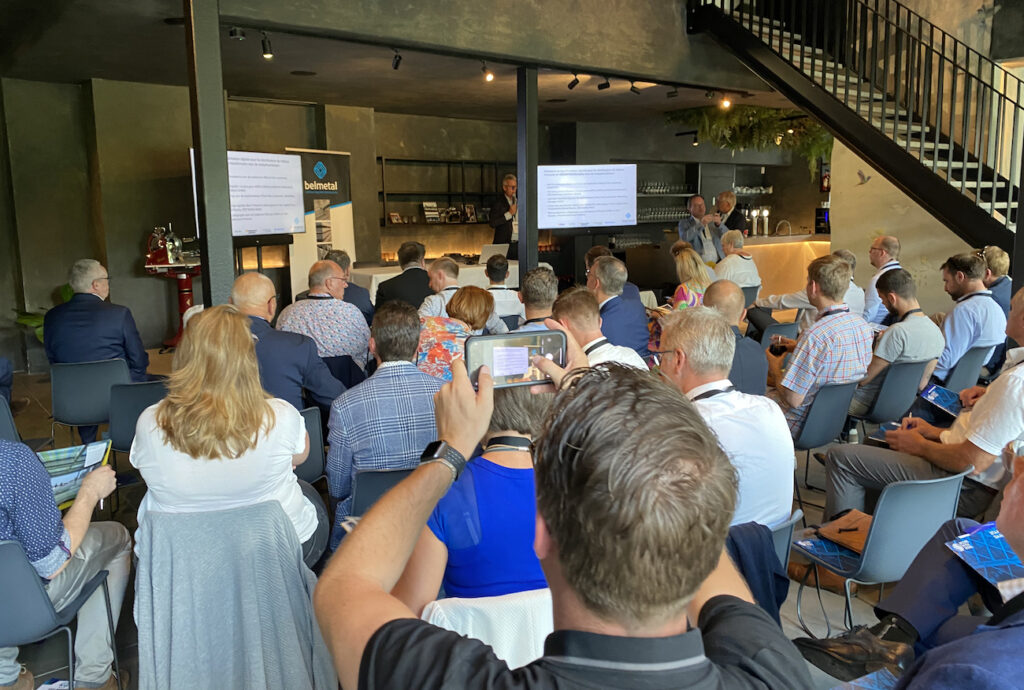
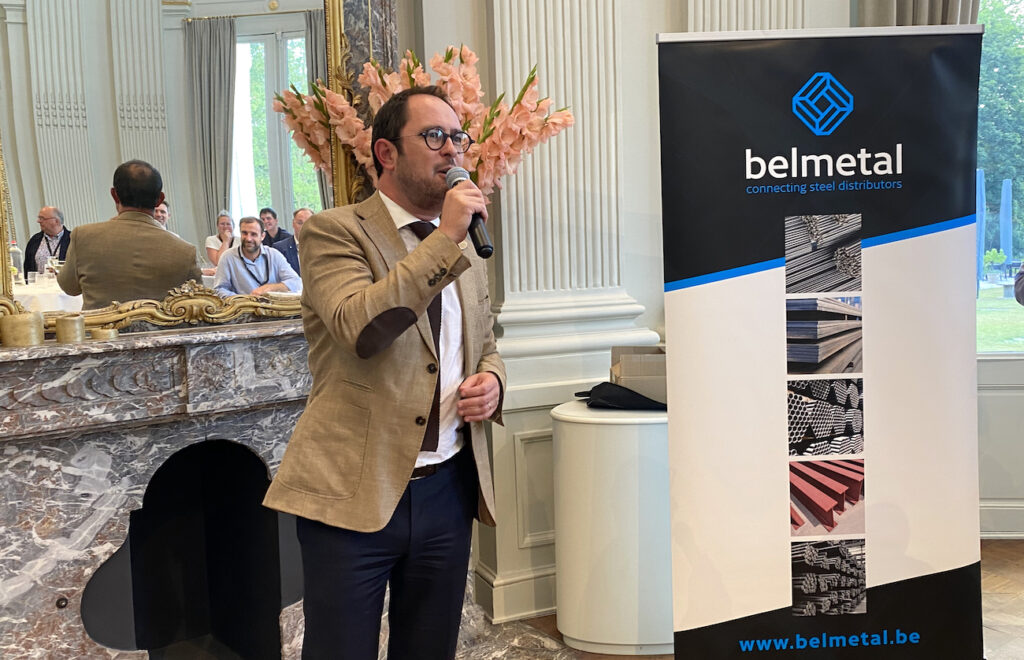
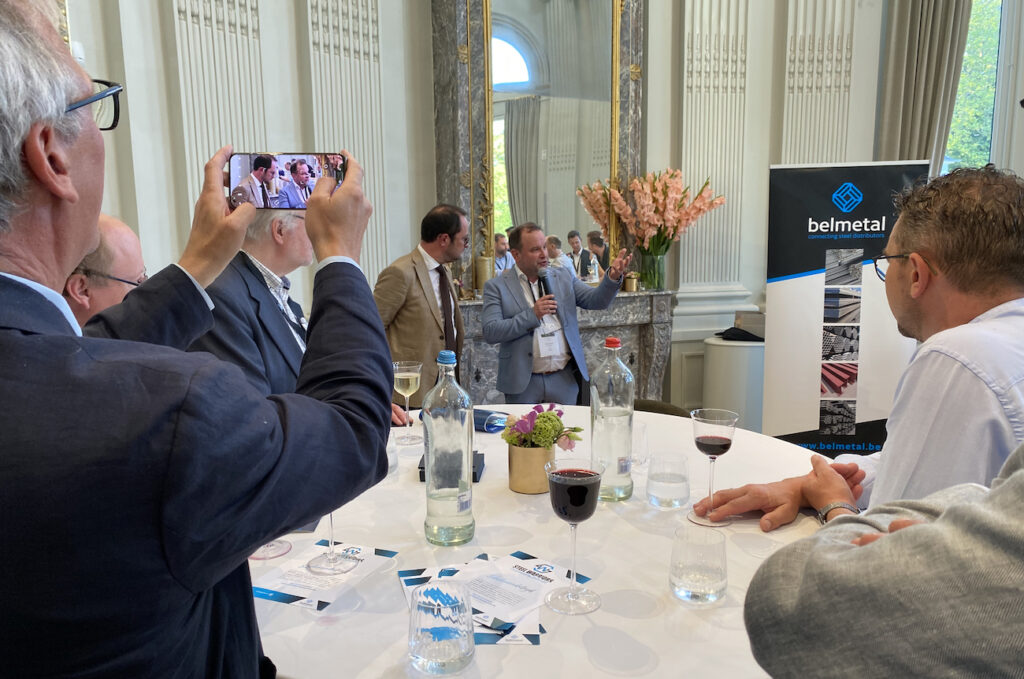
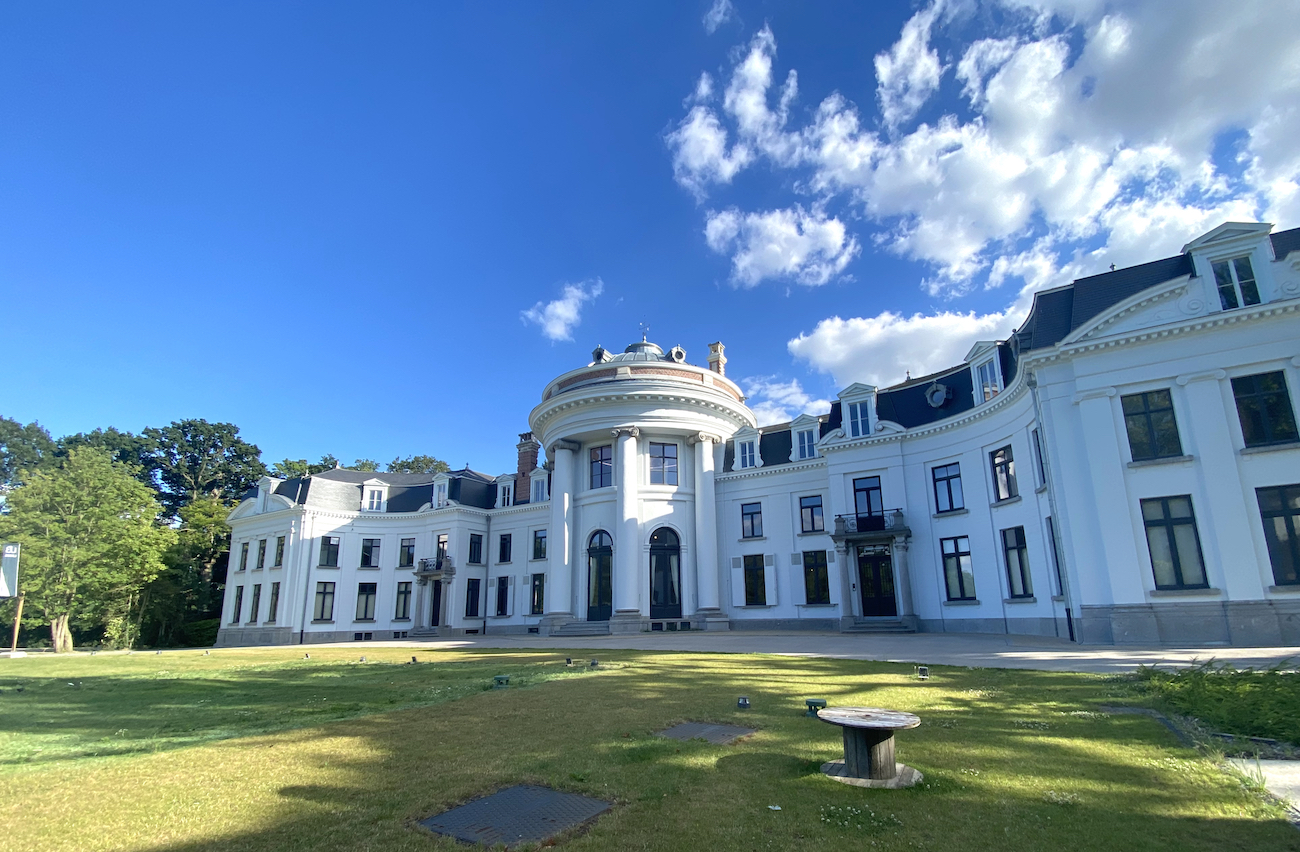
At the invitation of the Belgian federation of steel distributors Belmetal, EUROMETAL participated this Tuesday in the event “Journée Belmetal” which took place in a unique decor such as the Blauwhuis’ castle in Izegem.
With the theme “innovation and digital transformation for metal distributors”, we were welcomed with presentations by Edi4Steel, Kaltenbach.Solutions, INAD, Vanilla Steel and Vivium.
The event also had the special participation of the multi-medaled Belgian judoka Gella Vandecaveye and the Belgium’s Deputy Prime Minister and Minister of Justice and the North Sea, Vincent Van Quickenborne.