

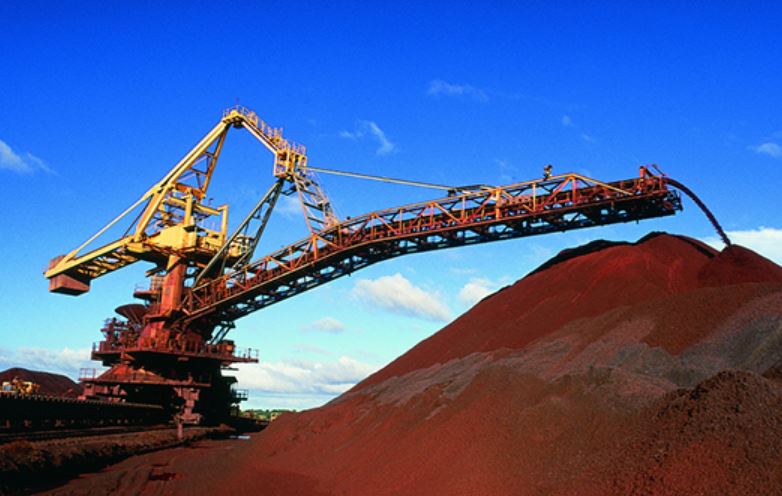
Iron ore slumps, China’s PMI rebounds Seaborne iron ore prices extended their losses on
Thursday, as the rebound momentum faltered with gradually retreating import transactions.
The Kallanish KORE 62% Fe index lost $1.07/t to $125.17/dry metric tonne cfr Qingdao. The Kallanish KORE 65% Fe index was down $1.1/t to $142.84/dmt cfr, and the KORE 58% Fe index declined $1.42/t to $116.03/dmt cfr.
On the Dalian Commodity Exchange, September iron ore settled down CNY 6.5/t at CNY 802.5/t ($119.81/t), while on the Singapore Exchange July 62% Fe futures settled down $3.31/t at $119.44/t. The same contract for 65% Fe and 58% Fe futures settled down $2.94/t at $135.0/t, and lost $3.78/t at $109.45/t respectively.
Scrap and billet prices remained stable. 6mm+ heavy scrap delivered to mills in the Yangtze River Delta gained CNY 4/t to CNY 3,291/t. Tangshan billet was unchanged at CNY 4,040/t.
China’s Purchasing Managers’ Index (PMI) recovered in June by 5.7 percentage points to 54.1%, and the PMI for manufacturing returned to expansion after three straight months of decline. China is trying to soften the economic impact of the Covid-19 outbreak, and with the recent relaxation of quarantine policies, logistics have returned to normal.
Steel demand from major projects is expected to improve. The Ministry of Finance and the Ministry of Housing and Urban-Rural Development jointly issued a document requesting to increase the proportion of progress payment for construction projects from 1 August. The progress payment for construction projects by state-owned enterprises should not be less than 80% of the price of completed projects, the document states. This is expected to reduce the burden on construction companies and boost real estate activity.
Kallanish Asia


Swiss, German companies form green steel alliance
Five Swiss and German companies have formed a partnership that aims to significantly reduce carbon footprint for an electromagnetic actuator used in the automotive/truck sector.
The partners are Swiss Steel with its Steeltec subsidiary, bright steel manufacturer Andernach & Bleck, steel distributor Heine + Beisswenger, electromagnet manufacturer Magnet-Schultz and technology group ZF Friedrichshafen. It is the first time that five partners have agreed to reduce their CO2 emissions as part of a pilot project along the entire value chain, the alliance claims in a statement.
The chain involves CO2-optimised steel production at Swiss Steel, improved material and energy use in the drawing process at Andernach & Bleck, low-CO2 pre-processing by Heine + Beisswenger, and adapted turning and assembly processes at Magnet-Schultz and ZF.
On the basis of this holistic approach across all parts, including the assembly of the actuator, the end customer can obtain reliable information on the CO2 content of the components used, Kallanish understands.
According to the partners, a saving of 35% or 710kg of CO2/tonne of steel used could be achieved in the total value added in 2022 compared with 2019. In terms of the annual volume of 300,000 dial actuators and the associated core, which is made of steel, it accounts for around 35 tonnes of CO2 savings per year.
Christian Koehl Germany

Italian wire rod prices, demand continue to weaken
Italian wire rod prices continue to decline amid a market lull that is not expected to end in July. Distributors’ and drawing mills’ order books are considered thin, and stocks remain high throughout the country. The deadlock is particularly being felt in southern Italy where economic growth seems to have frozen.
After the high level of purchases of March, demand from both distributors and end-users has declined substantially since April. This, coupled with competitive import offers from Turkey and North Africa, is causing buyers to adopt a wait-and-see mood, as they forecast domestic values to continue to fall, market participants tell Kallanish.
Sales from local steelmakers have now gone below the level of €900/tonne ($939/t) ex-works for drawing-quality material and are hovering at €870-920/t. This is down from €1,200/t ex-works at the beginning of May. Purchases continue to happen only back-to-back and competitive import offers at €710-740/t cfr Italy are contributing to slow domestic sales, sources suggest.
Meanwhile, northern European wire rod prices are also decreasing due to low demand and further scrap price reductions. Most sources expect further rod price falls in July.
On Thursday, however, hints of hope emerged in the market following the latest large sales by Turkish longs producers in the US and Asia.
Natalia Capra France

Northwest European plate prices not bottoming out yet
It could still be a bit of a way before plate prices from northwest European mills reach the floor, observers believe.
In Italy, many see a return of demand in the third quarter, and consequently a stabilisation of prices from the much lower level there. North of the Alps, however, demand has been somewhat more reliable, the shock of ceased CIS-origin slab imports in March was less harsh, and the influence of overseas plate imports rather minimal.
Therefore, northern prices are still on the downward correction curve, with probably some more concessions ahead. According to one buyer, “there will be a standstill at some point, but at the moment they are still falling, and it remains to be seen where the bottom line is.
In Italy, mills could be inclined to look for buyers beyond borders. Local prices for S275 grade now stand at around €1,200/tonne ($1,255), but one German source says he has heard of prices lower than that, notably delivered to Germany. This is not commonly understood; another buyer sees Italian material still at above €1,400/t delivered Germany.
Once the floor level becomes tangible in Italy, this could be a signal northwards, too, a German manager believes. “If prices there reach bottom, they would soon stabilise here, too,” he says, but refrains from making a judgement on when that will occur. “At present, the arrow is pointing clearly down,” he tells Kallanish. But for the mid-term, “I do not think anybody can make a sensible prediction. For both directions, there are good arguments – or no arguments at all,” he quips.
Christian Koehl Germany

Salzgitter Group invests in new hydrogen-steel lab in Duisburg, Germany
Salzigitter Group has started construction of a new laboratory in Duisburg, Germany, to test steel samples to transport hydrogen-natural gas mixtures in pressures of up to 400 bars, with the commissioning scheduled for summer 2023, the steelmaker said June 29.
Salzgitter Mannesmann Forschung, or SZMF, a subsidiary of the Group, runs the research sites on the premises of Hüttenwerke Krupp Mannesmann steel plant in Duisburg-Huckingen.
Products and processes focused on the material of steel are developed and tested at this site. Work is concentrated on producing tubes and pipes and heavy plate within the Salzgitter Group.
“Technologically speaking, testing under compressed hydrogen is particularly challenging,” said Juliane Mentz who is responsible for SZMF’s materials technology in Duisburg. “This applies not only to the testing facilities, but also to the explosion-proof laboratory as a whole. Only a handful of laboratories across Europe and worldwide offer such testing possibilities.”
Benedikt Ritterback, SZMF’s general manager, said that substituting coking coal to make steel production more sustainable requires hydrogen.
“Conversely, hydrogen needs suitable steel pipes and plate in order to transport and store hydrogen. We can do both and will make our contribution to this process,” Ritterback said.
Mannesmann H2ready steel pipes are already being used in the hydrogen economy in a wide range of applications, the company said.
Platts assessed HRC in Northern Europe at Eur840/mt ex-works Ruhr, unchanged day on day on June 29, according to data from S&P Global Commodity Insights.
— Annalisa Villa


Industrial consortium launches DRI project in France to produce ‘green steel’
A cross-sector grouping of companies has set up a new consortium, GravitHy, to build a 2 million mt/year direct reduced iron plant in the south of France, with the output to be used either on-site as a feedstock to produce “green steel” or else traded globally as hot-briquetted iron, the partners said in a statement June 30.
The project, which plans to mobilize Eur2.2 billion ($2.3 billion) worth of investment at commissioning, will build its first plant in the area of Fos-sur-Mer, in southern France, with construction set to start in 2024. The consortium aims for the plant to be fully operational by 2027, subject to the required regulatory approvals, the partners added.
The company said that the new project, which will use low-carbon hydrogen to produce DRI, will support the growing demand for zero-carbon steel, while also contributing to Europe’s “Fit for 55” climate ambitions to decarbonize hard-to-abate industries.
“There is considerable appetite to transform energy-intensive industries in France, with the steel sector high on the agenda,” according to Karine Vernier, GravitHy’s consortium leader. “GravitHy will be a vital component in the French government’s proposed steel roadmap and its ambitions to cut CO2 emissions by 40% by 2030. It’s time to make a step-change in technology, to replace old blast furnaces with DRIs produced from green and low-carbon hydrogen and combined with electric arc furnaces.”
The steel sector is responsible for 8% of global energy demand and 7% of CO2 emissions — including process emissions — annually, making it one of the biggest carbon-emitting industries.
GravitHy’s founders include EIT InnoEnergy, Engie, FORVIA, GROUPE IDEC, Plug and Primetals Technologies.
Asian seaborne iron ore prices weakened June 29 as a recent price rebound lacked support from end-users. The 62% Fe Iron Ore Index was at $123.20/dry mt CFR North China June 29, down $1.80/dmt from June 28, according to the Platts assessment from S&P Global Commodity Insights.
— Annalisa Villa

EU HRC pricing floor seen as nigh, with restocking expected for near term
Market sources expected that hot-rolled coil prices were close to the bottom June 30, with some buyers reportedly ready to return to limited purchasing once certain material would not suffer near-term devaluation.
In the Northern market, Platts assessed hot-rolled coil stable on the day, at Eur840/mt ex-works Ruhr.
Tradable value ranges were reported at Eur830-860/mt ex-works Ruhr from distribution sources. A trader source reported deals at Eur830-840/mt, achieved against offers heard around Eur850/mt, both ex-works Ruhr.
Buyers were heard as trying to achieve lower, citing offers heard at sub-Eur800/mt delivered Ruhr ex-Central Europe. However, Northern European mills were reluctant to negotiate prices at lower than Eur850/mt ex-works Ruhr, attempting to establish Eur850/mt ex-works Ruhr as a firm offer floor. Buy-side sources agreed that prices were in close proximity to a floor, with demand recovery expected in the near term for autumn orders due to restocking.
“I think prices are touching ground finally,” a service center source said. “There will be some demand recovery for September — obviously we won’t see crazy volumes or crazy prices like just after war in Ukraine started — but the second half of 2022 should be better, with market activity picking up again.”
Higher offers were also heard in the import market on the day, with offers reported at Eur780-800/mt CFR Antwerp ex-Asia by a trader source. Imported hot-rolled coil was assessed up Eur20/mt at Eur760/mt CIF Antwerp June 30.
The trader said some buyers were ready to return to the market but were reluctant to resume purchasing without certainty that material would not be devalued in the near term.
“Customers have registered interest in ordering material, but there’s still uncertainty over whether prices are truly at the bottom,” the source said. “They’re already unhappy that prices have decreased so quickly — they don’t want to repeat losses on future restocking.”
In the Southern market, achievable prices were heard at Eur730-780/mt ex-works Italy.
A trader source rejected the Eur730/mt level as unrealistic for domestic transactions, ex-works Italy, seeing tradable value higher at Eur750-780/mt ex-works Italy.
Competitive import offers were reported by traders at Eur685-695/mt CFR Italy ex-Turkey, excluding duties, with Japanese and South Korean material available at the higher end of import offers at Eur740-750/mt CFR Italy.
As in North Europe, the sentiment was that prices were close to the bottom, with distributors heard as likely to return in late July to restock for September. Mills were said to share that outlook, evidenced by a general lack of production cut announcements, against source expectations.
“This market is like slow hara-kiri,” a trader source said. “Either production needs to go down or demand up to put an end to it. Clearly, demand is an issue, and declining prices are a side effect.”
South European HRC was assessed down Eur10/mt June 30 at Eur770/mt ex-works Italy, according to S&P Global Commodity Insights data.
— Benjamin Steven, Maria Tanatar
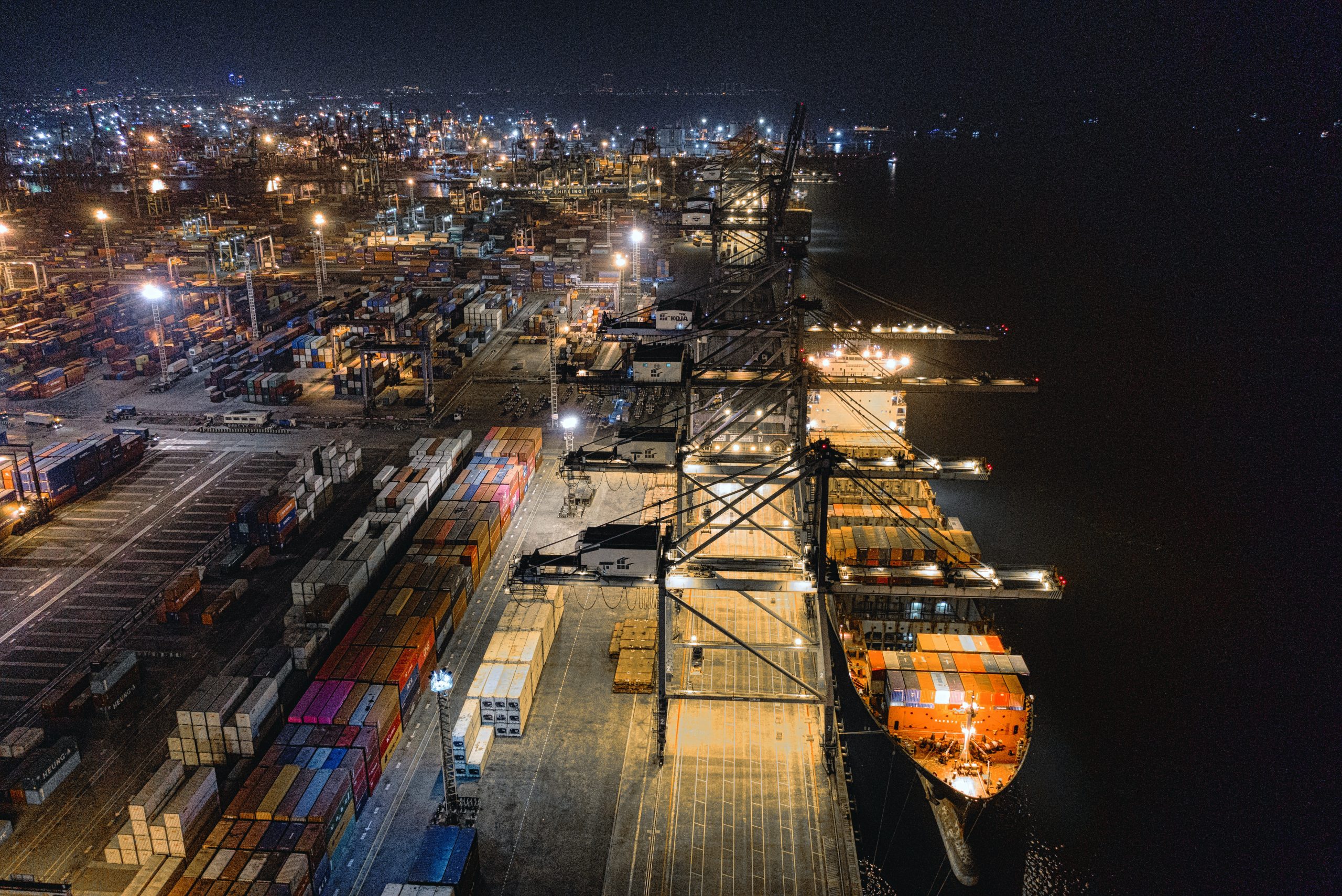
US lists Russian aluminum, steel products now subject to 35% duty
The US released on June 30 the final list of 570 import products, including several steel and aluminum items, from Russia and Belarus that will be subject to a higher 35% tariff starting July 27, according to a Federal Register notice.
For steel products, a 35% tariff will be applied to certain powders under US International Trade Commission HS code 72052900, certain ferrous scrap and waste under code 72044900, various pipe products under 7300 subcodes and some semi-finished products under the 72071200 and 72249000 codes.
For aluminum products, several types of bar, rod, wire, plate, sheet and strip will be subject to the 35% tariff.
The duty hike also applies to some ferroalloys such as ferromanganese and ferrosilicon.
USITC HS Codes Impacted Item description
72021150 Ferromanganese containing by weight more than 4% of carbon
72022110 Ferrosilicon containing by weight more than 55% but not more than 80% of silicon and more than 3% of calcium
72022900 Ferrosilicon containing by weight 55% or less of silicon
72023000 Ferrosilicon manganese
72024100 Ferrochromium containing by weight more than 4% of carbon
72024910 Ferrochromium containing by weight more than 3% but not more than 4% of carbon
72027000 Ferromolybdenum
72044900 Certain ferrous waste and scrap nesoi
72052900 Pig iron, spiegeleisen, and iron or steel (other than alloy steel) powders
72071200 Iron or nonalloy steel semi-finished products, with less than 0.25% carbon, w/rect. cross sect. (exclud. sq.), nesoi
72249000 Alloy (other than stainless) steel, semi-finished products
various codes under 7300 Certain steel pipe products
76042930 Aluminum alloy, bars and rods, having a round cross section
76042950 Aluminum alloy, bars and rods, other than with a round cross section
76051100 Aluminum (other than alloy), wire, with a maximum cross-sectional dimension over 7 mm
76061230 Aluminum alloy, plates/sheets/strip, with thickness over 0.2mm, rectangular (incl. sq), not clad
76061260 Aluminum alloy, plates/sheets/strip, with thickness over 0.2mm, rectangular (incl. sq), clad
Source: Federal Register, US International Trade Commission
The White House first announced its intent to raise tariffs to 35% on certain products imported from Russia and Belarus in a June 27 proclamation.
“I have determined that increasing the column 2 rates of duty to 35% ad valorem on certain other products of the Russian Federation, the importation of which has not already been prohibited, is warranted and consistent with the foreign policy interests of the United States,” President Joe Biden said in the proclamation.
In a separate statement, US Trade Representative Katherine Tai said the affected products would include “steel and aluminum; minerals, ores, and metals; chemicals; arms and ammunition; wood and paper products; aircraft & parts; and automotive parts.”
The raising of “column 2” rates is tied to the US’ previous action of suspending normal trade relations with Russia and Belarus in April to escalate pressure on Russian President Vladimir Putin for the country’s invasion of Ukraine.
The US Harmonized Tariff Schedule, compiled by the USITC, outlines separate duty rates for favored trade partners (column 1 duties) and non-favored trade partners (column 2 duties).
The April removal of normal trade relations allowed the US to apply column 2 duty rates on imports from Russia and Belarus until January 2024.
For metals, column 2 duty rates reach up to 20% for finished steel, 18.5% for most unwrought aluminum, 11% for high purity aluminum, and 10.5% for some categories of value-add aluminum products.
The US may restore normal trade status with either country pending permission from Congress.
— Nick Lazzaro

Europe stainless steel prices fall further, no relief until September – sources
The price of stainless steel in Europe fell further in the week ended Friday July 1 amid continued poor demand from distributors, sources told Fastmarkets.
Fastmarkets’ weekly assessment for stainless steel cold-rolled sheet 2mm grade 304 base price domestic, delivered Northern Europe was €1,250-1,300 (1,306-1,358) per tonne on Friday July 1, down by €50 per tonne week on week.
Meanwhile, Fastmarkets’ weekly assessment for stainless steel cold-rolled sheet 2mm grade 304 transaction domestic, delivered North Europe was €4,000-4,200 per tonne on Friday, down from €4,200-4,300 per tonne the week before.
While demand from end-users was generally described as reasonable, demand from distributors and service centers was widely said to have all but disappeared amid very high stock levels.
When nickel prices exploded in March following Russia’s invasion of Ukraine, panic set in and purchases were increased or brought forward to avoid paying even higher prices the next week, resulting in a market flush with highly-priced material.
Germany was said to be particularly oversupplied. One German distributor said it had only ordered 50% of its usual volumes for June, July and August, and that it was not facing any shortfall.
EU safeguarding measures reset on July 1, meaning material stored in warehouses can be released and adding to the oversupply. With this coinciding with the start of the traditional slow season, prospects for improved demand are slim before September at the earliest.
Asian material from counties not affected by anti-dumping duties was available at €3,400-3,500 per tonne ddp, for September delivery, sources said.
Base prices currently on offer are for September rolling and one distributor forecast September alloy surcharges to be approximately €2,600 per tonne.
“This means base prices are still too high, they aren’t competing with Asian material. And they need to, they are really struggling with the distribution business,” one distributor said. “They have room to go lower too, they’ve all had record results recently.”
Faced with such weak fundamentals, several mills are embarking on longer-than-usual maintenance turnarounds this summer.
“A lot of people expect the market to pick up again in September. Until then, it’s going to be very weak,” another distributor said.
Published by Ross Yeo
