

Swiss Steel banks on hydropower
For its unit Steeltec, located in Emmenbrücke, Switzerland, Swiss Steel is now relying exclusively on regional hydropower to produce its special steels, Kallanish learns from the group.
A strategic partnership to this purpose was signed with Axpo Holding, the largest producer of electricity from hydropower in Switzerland. Under the terms of the contract, Axpo will supply the steel mill in Emmenbrücke until 2024, with electricity certifiably generated at hydropower stations from Axpo’s fleet of power plants and at a contractually agreed price. With this contract, Swiss Steel claims it is betting not only on sustainability and green electricity, but is also securing long-term planning for electricity costs.
The ecological footprint of the Emmenbrücke plant in 2020 was 63kg of CO2 per tonne of crude steel produced in Scopes 1 and 2 at its EAF furnaces. In switching to electricity provided by Swiss hydropower, Steeltec is using not just local energy, but also lowering its values further, the group says.
Apart from the Switzerland locations, Swiss Steel’s mill in Canada and bright steel production in Düsseldorf, Germany, are also producing steel entirely using electricity from renewable sources. Production in France is also being switched to renewable energy to meet customer demands, Swiss Steel notes.
Christian Koehl Germany


Trinecke Zelezarny sales surge despite reduced production
Blast furnace-based Czech steelmaker Trinecke Zelezarny (TZ) reported a 24% on-year surge in 2021 sales to CZK 43.7 billion ($1.82 billion), despite the 7% drop in crude steel production to 2.4 million tonnes. Profit was registered at CZK 1.31 billion.
Performance last year was impacted by the Covid-19 pandemic, surge in input material costs and continuing problems in the automotive industry, mainly due to components shortages. “All of this culminated in a sharp rise in energy prices at the end of the year due to the steep rise in the price of emission allowances, which was one of the impetuses for kick-starting inflation,” TZ supervisory board chairman Tomáš Chrenek says in a note seen by Kallanish.
The drop in steel production was caused by a 60-day shutdown of one of the two blast furnaces, which the company reconstructed after more than 20 years of continuous operation. The loss of pig iron production associated with the blast furnace shutdown was reflected in the sales of semi-finished products and other products, TZ points out.
Wire rod was again the main product sold, registering deliveries of 962,000t in 2021. Nearly 72% of these deliveries went to foreign markets, mainly in the EU. Bar and sections sales hit 536,000t, of which 63% was exported. Rail and railway accessories sales were 235,000t, of which 194,000t was exported to the EU, US, Canada, Egypt and Israel, among others.
Adam Smith Poland
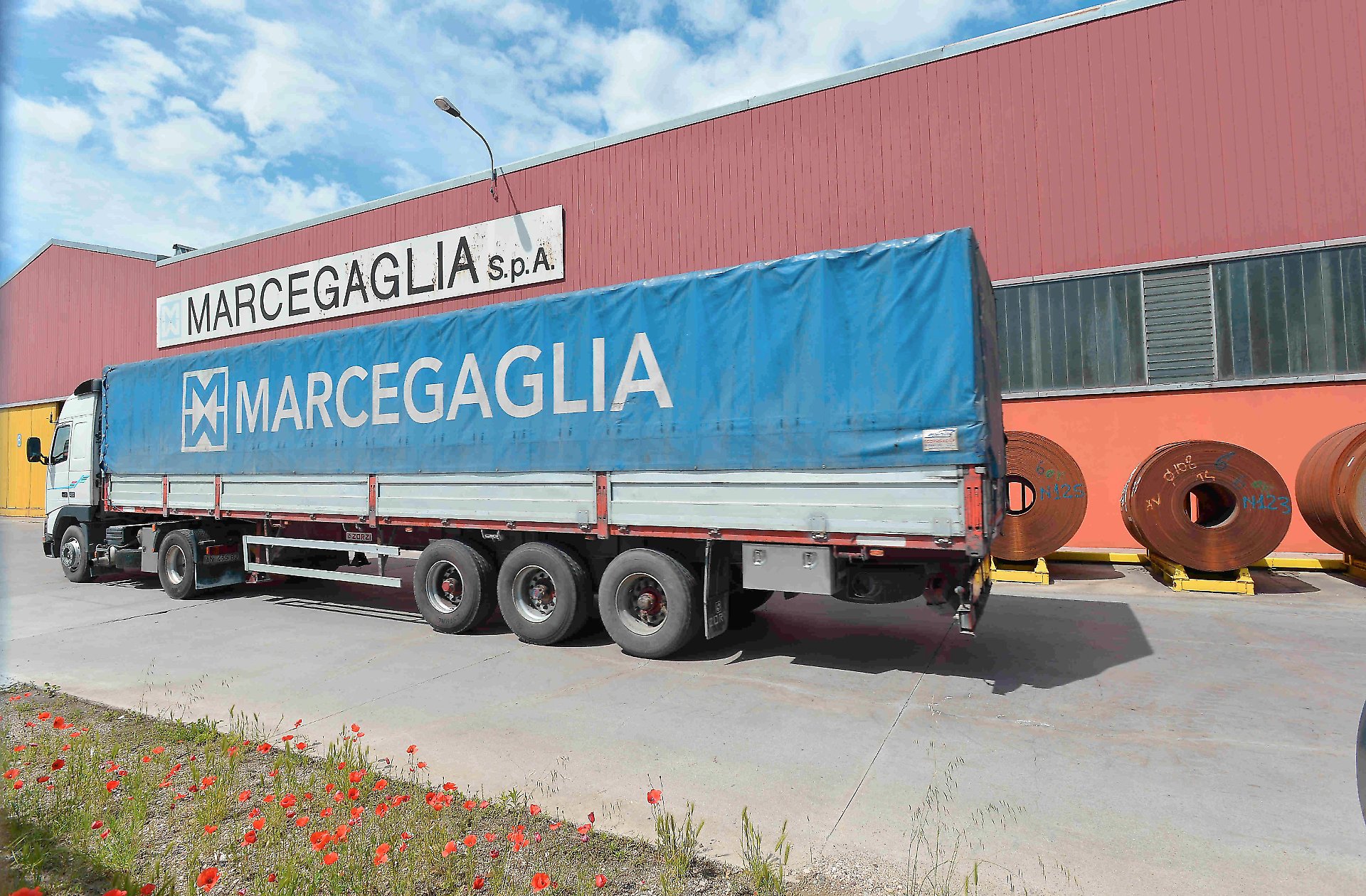
Marcegaglia acquires Italian mill
Italian re-roller Marcegaglia has completed the acquisition of local drawing mill Trafital S.p.A., Kallanish learns from the company.
Trafital, located near Varese, northern Italy, has an annual re-rolling capacity of about 22,000 tonnes of steel, a €35 million ($36m) turnover and a capillary presence throughout Italy.
“With this acquisition, the Marcegaglia Group expands its already vast production offer, adding a range of drawn products complementary to those currently processed in the Contino di Volta Mantovana plant,” Marcegaglia says. “The acquisition of Trafital is part of a more complex investment policy that the Group is implementing through diversified strategies that also includes niche operations such as this one and aims to create both commercial and technical-production synergies.”
Marcegaglia obtained this year a six-year credit facility of €1 billion from a pool of Italian and foreign banks. The credit facility includes €700m that will be used to refinance medium-term lines maturing between 2024 and 2026, €200m to support the company’s future investments and €100m in revolving credit. “The loan will support the new development plan of the Mantuan industrial group … promoting growth programmes and projects in the steel sector, including possible new acquisitions and alliances,” the company said in May (see Kallanish passim).
Marcegaglia is one of Europe’s largest re-rollers. Last year, it achieved a turnover of €7.7 billion and employs 6,600 workers. It re-rolls about 6.2 million tonnes/year of steel and has 29 re-rolling mills.
Natalia Capra France

EU rebar market returns to pre-war levels: Feralpi
The Italian and European rebar markets seem to be normalising after a very challenging second quarter, Marco Sbaraini, chief commercial officer at Italian group Feralpi, said during a webinar on Tuesday.
“We are coming out of a surreal three months. After the start of the conflict in Ukraine, prices surged a lot due to speculation and fear. Then, during the April-June quarter, we saw almost no demand from the market, as buyers decided to wait and use their available stocks,” Sbaraini said. “Since the beginning of July, we have noticed a normalisation of the market, with demand coming back.”
Sbaraini said that, since May, Italian and European steelmakers have significantly reduced their output to face the slump in demand. He noted this trend will continue into August.
“The big price corrections should be over and we should be preparing for a more stable market,” Sbaraini added. “It is important also to add that fundamentals for construction in Europe remain good due to the expectation of further investments as part of the Next Generation EU plan.”
According to Kallanish price series, rebar prices in Italy have now returned to just below €800/tonne ($819) ex-works base, exactly where they were before Russia started its invasion of Ukraine in late February. “It seems like a circle has been closed now. We need to admit that when prices reached their peak at above €1,100/t, the construction sector really struggled to continue operating,” Sbaraina explained.
Emanuele Norsa Italy
ArcelorMittal restarts BF in Germany after 6-week maintenance period
ArcelorMittal has this week restarted blast furnace 5A at its at its Eisenhüttenstadt steelworks in eastern Germany, after a six-week period of planned maintenance.
The furnace, which was idled on May 20 for planned repairs, has an annual capacity to produce about 1.7 million tonnes of pig iron.
“It was necessary to replace internal cooling plates, among other things,” the company said.
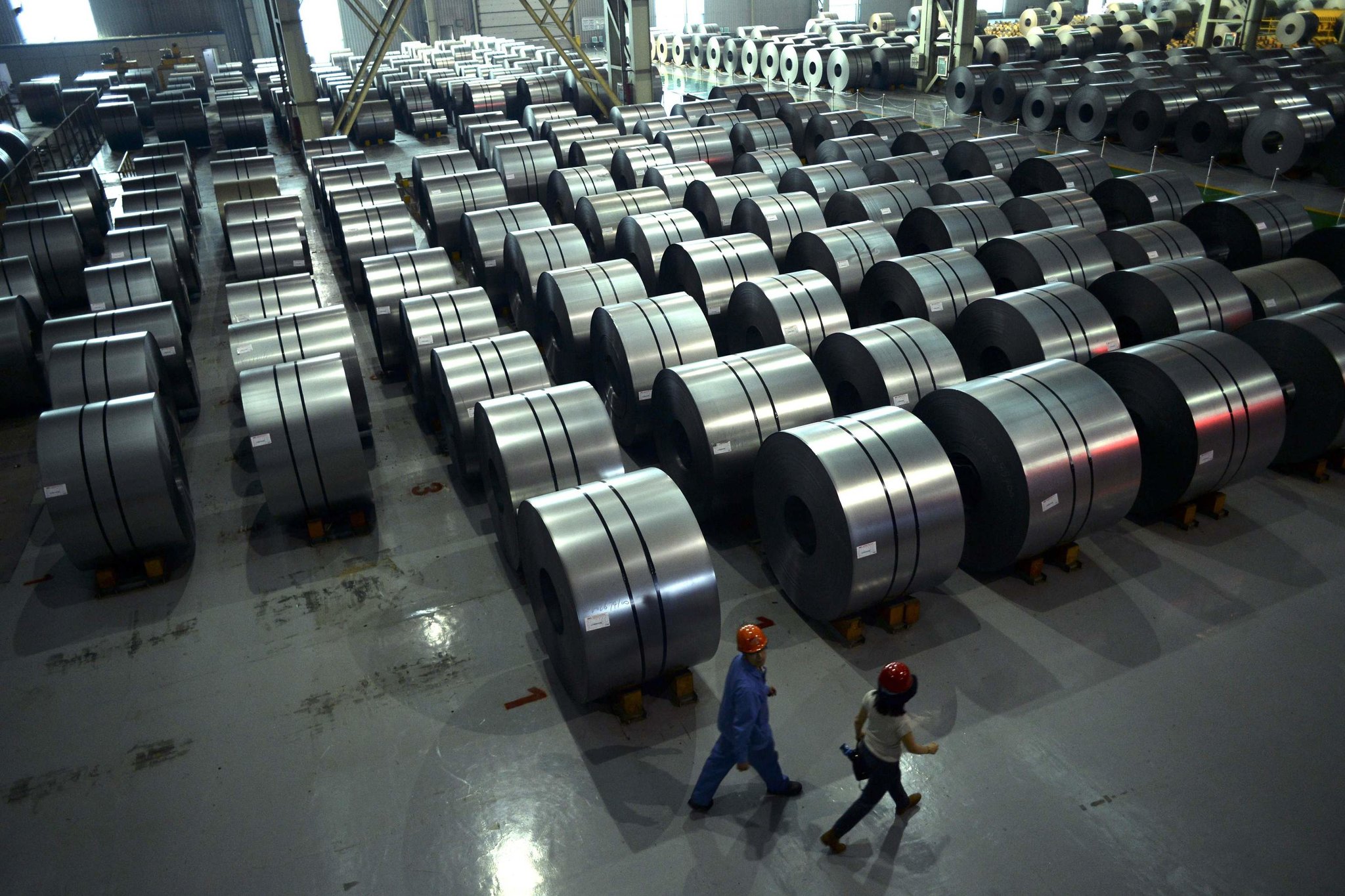
The Eisenhüttenstadt steelworks produces hot-rolled coil (2.1 million tpy), cold-rolled coil (1.9 million tpy), hot-dipped galvanized coil (950,000 tpy) and color-coated coil (145,000 tpy).
Market participants have suggested the company carried out the maintenance in the usually high-selling May-June period to reduce upstream steel production and to bring supply and demand into balance.
Flat steel prices have been falling across Europe since early April, mainly due to high inventories at distributors and steel service centers amid reduced demand from end-users, notably from the automotive industry.
The pace of decline in hot-rolled coil prices has slowed over the past week with prices said to be near the bottom.
Fastmarkets calculated its daily steel HRC index, domestic, ex-works Northern Europe at €847.50 ($884.12) per tonne on Tuesday, down by just €0.83 per tonne from €848.33 per tonne on Monday.
The index was down by €3.50 per tonne week on week and by €151.50 per tonne month on month.
Published by: Julia Bolotova


Turkey’s May HRC exports slump, Italy remains top market
Turkish mills exported 185,000 mt of hot-rolled coil in May, down 34% year on year, while Italy remained top market at 31,200 mt despite a 66% decline, as safeguard measures continued to limit Turkish mill exports to the European Union.
According to the latest Turkish Statistical Institute (TUIK) data, following Italy, the Balkan region was Turkey’s main HRC export destination in May, with Bulgaria, North Macedonia and Albania buying 22,800 mt, 20,600 mt and 13,000 mt, respectively.
Algeria received 12,900 mt in May, while Turkey’s other HRC export markets in that month were Egypt at 11,700 mt and Iraq at 11,500 mt, the data showed.
Revenue generated from these exports was at $197 million in May, amid fluctuations in HRC pricing.
Turkish HRC prices, which exceeded $1,200/mt in March, started to decline gradually from mid-April due to slow demand and low-priced import offers.
Turkish domestic HRC was assessed by Platts at $700/mt FOB on July 1, down around $500/mt since mid-March, according to S&P Global Commodity Insights data.
— Cenk Can


WTO delays US metal tariff dispute ruling to the fourth quarter
The World Trade Organization has delayed to fourth-quarter 2022 the expected timeline for its rulings in cases involving complaints six countries filed disputing the US’ steel and aluminum tariffs.
A special WTO panel is handling the complaints and the rulings were originally scheduled to be issued in the first half of 2022, according to a WTO notice released July 4.
China, India, Norway, Russia, Switzerland, and Turkey filed complaints against the US.
“On [Dec. 9, 2021], the panel informed the [Dispute Settlement Body] that it expected to issue its final report to the parties no earlier than the first half of 2022,” the WTO said. “Due to the complexity of the dispute, the panel now expects to issue its final report to the parties no earlier than the last quarter of 2022.”
The WTO’s rules for dispute settlement dictate that “the period in which a panel shall conduct its examination, from the date that the composition and terms of reference of the panel have been agreed upon until the date the final report is issued to the parties to the dispute, shall, as a general rule, not exceed six months,” according to the notice.
However, the time frame can be extended if a panel “considers that it cannot issue its report within six months” and can provide adequate reasoning for the delay with a revised estimated time frame for its ruling, the notice adds.
The panels handling the individual complaints filed by the six countries were all established by the WTO’s Dispute Settlement Body on various dates in late 2018. All panels were then composed Jan. 25, 2019.
Former US President Donald Trump enacted a 25% tariff on steel imports and a 10% tariff on aluminum imports from most countries in 2018 under Section 232 of the Trade Expansion Act. Since then, some countries have been exempted from the tariffs or granted an annual quota allowance for a certain volume of duty-free imports.
Countries that have been exempted from the US metal tariffs or have had the tariffs replaced with a tariff-rate quota for either steel or aluminum or both metals, include Argentina, Australia, Brazil, Canada, Mexico, South Korea, the EU, the UK, and Japan.
— Nick Lazzaro