


Metin Tayfun Işeri is the new president of Yisad
Members of YISAD elected Metin Tayfun Işeri as their Chairman/President in July 2022.
YISAD is a Turkish Flat Steel User, Trader and Producer Association.
Tayfun Işeri has represented the Colakoglu Group at YISAD for about 7 years and has been part of the EUROMETAL presidency since 2019.
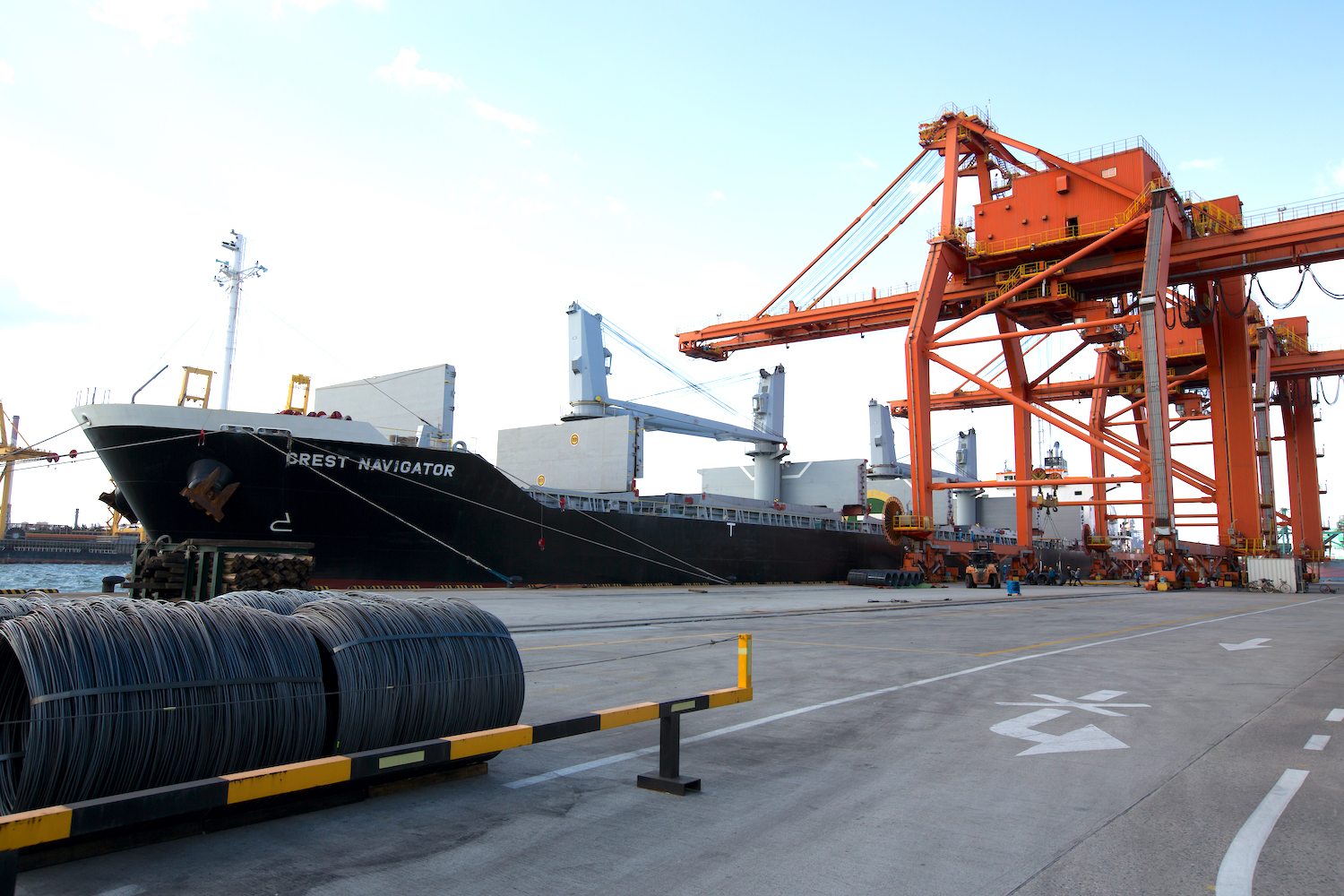
Italian steel slab import market quiet amid concerns over European economy
Activity in Italy’s steel slab import market remained subdued in the week to Friday July 8, with the downtrend in prices continuing and weak demand for finished steel leaving re-rollers with sufficient slab inventories, sources told Fastmarkets.
Fastmarkets’ price assessment for steel slab, import, cif Italy was $720-750 per tonne cfr on Friday, widening down by $30 week on week.
No fresh deals have been heard in the market since in the end of June when a deal for material from India was concluded at $750 per tonne cfr.
“We have large variety of the suppliers, but we have sufficient inventories [allowing us] not to think about new booking until the end of summer,” one buyer-side source said.
The euro has weakened against the dollar due to concerns over the European economy in light of soaring energy prices there – mainly caused by Russia’s unprovoked invasion of Ukraine and the trade fallout that has resulted in the severe disruption of oil and gas supplies in the region, sources told Fastmarkets.
“Economic uncertainty over rising energy costs in Italy [is not exactly] encouraging [anyone to make] slab purchases right now,” the buyer-side source added.
Italian steel plate producers, meanwhile, the main consumers of imported slab in Italy, continued to face low demand and falling prices.
Fastmarkets’ price assessment for steel domestic plate, 8-40mm, exw Southern Europe was €1,100-1,150 ($1,120-1,171) per tonne on Wednesday, down by €100-150 per tonne from €1,200-1,300 per tonne a week earlier.
With the change in the euro/dollar exchange rate the decline was equivalent to a $16 fall from $1,136-1,187 on Wednesday, according to Oanda.com.
Published by: Elina Virchenko


Europe stainless flat prices down further on continued weakness
The price of stainless steel flat products in the European domestic market decreased further in the week ended July 8 amid continued oversupply and poor demand, sources told Fastmarkets.
Fastmarkets’ weekly assessment for stainless steel cold-rolled sheet 2mm grade 304 base price domestic, delivered Northern Europe was €1,200-1,250 (1,226-1,277) per tonne on Friday July 7, down by €50 per tonne week on week.
Meanwhile, Fastmarkets’ weekly assessment for stainless steel cold-rolled sheet 2mm grade 304 transaction domestic, delivered North Europe was €3,800-3,900 per tonne on Friday, down from €4,000-4,200 per tonne the week before.
“The market is very tired, limping. It’s a disaster. Demand is very poor, it’s minus 70% to distributors. And they tell us to end-users it’s down by 40%. They just postpone and postpone [purchases],” said an Italian producer.
In northern Europe, end-user demand was said to be healthier, but demand from distributors was described as almost non-existent.
Germany was understood to be suffering from a particularly acute oversupply among distributors, with the hope of clearing the excess any time soon diminishing with the onset of the slow summer season.
Distributors panic-bought when prices sky-rocketed in March following the 250% explosion in the nickel market, and are now sitting on stock they cannot clear.
Competitively priced imports from Asia have added further pressure to domestic prices, with the quarterly EU safeguard quota having reset on July 1.
For material not yet dispatched from Asia, prices were heard last week at €3,400-3,500 per tonne ddp for September delivery.
Published by: Ross Yeo
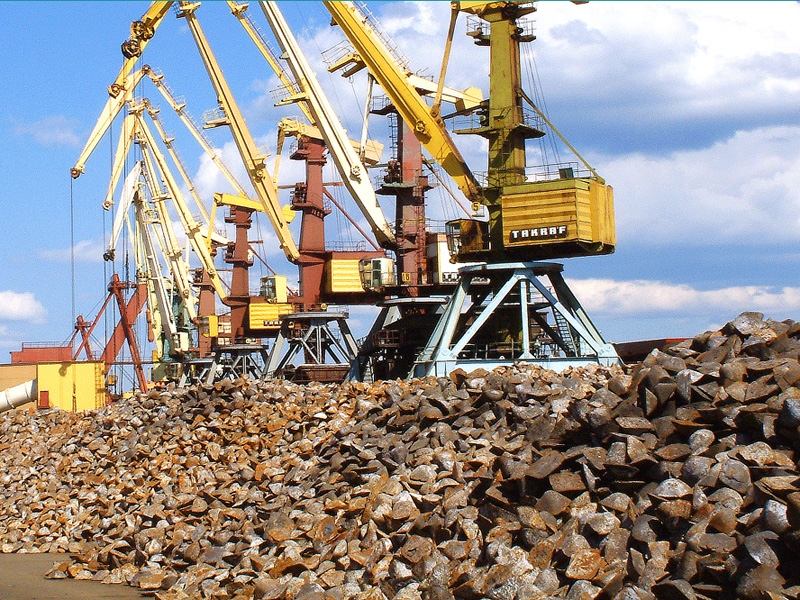
Europe to redraw iron ore supply lines after Russia’s invasion forces Ukrainian miner to halt operations
Europe will have to rethink its iron ore supply lines after major producer Metinvest was forced to shut three mining and processing operations, because of logistics issues caused by Russia’s invasion of Ukraine, the GMK Center think-tank told Fastmarkets this week.
Ukraine became the largest supplier of iron ore to the European Union in March, plugging the gap left by Russian materials. Sales volumes reached 2.1-2.3 million tonnes per month, up from the usual 1.4-1.5 million tonnes. At that time, Ukrainian iron ore accounted for 30% of Europe’s needs, according to GMK Center data.
But exports from Ukraine fell by 23% in June after a number of iron ore facilities in the country suspended operations, due to the continuing problems with transportation caused by the war.
Metinvest recently announced that it will stop operating several mining and processing centers – Southern GOK, Ingulets GOK and Northern GOK – due to rising transportation costs and congestion on the railways, rising energy rices and falling steel prices globally. The miner has been forced to abandon seaborne deliveries because of Russia’s continuing bombardment and blockading of Ukrainian ports.
Fastmarkets’ index for iron ore 62% Fe fines, cfr Qingdao, was $114.31 per tonne on July 7, compared with $161.65 per tonne on March 7.
And Fastmarkets’ index for iron ore 65% Fe Brazil-origin fines, cfr Qingdao, was at $127.30 per tonne on July 7, compared with $191.70 per tonne on March 7.
Falling steel prices are typified by Fastmarkets’ price assessment for steel hot-rolled coil, import cfr Vietnam, which fell to $650-672 per tonne on June 24 from $930-940 per tonne on April 8, and Fastmarkets’ price assessment for steel billet export, fob main port Turkey, which dropped to $580 per tonne on June 23 from $920-950 per tonne on March 10.
The sharp increase in volumes of iron ore being transported by rail was causing hold-ups at the Ukraine-Europe border, with an estimated 42,000 wagons lined up at the border compared with the usual throughput of 1,900 railcars a day. Europe railfreight infrastructure and sea ports are also struggling to deal with the sudden increase in iron ore volumes, GMK Center data shows. Tariffs for railway transportation in Ukraine increased by 70% from July 1.
But the rail network cannot compete with seaborne deliveries in terms of volumes shipped, so there has been a marked decline in overall shipments from Ukraine.
“Iron ore export volumes to the EU have dropped to 0.9-1.0 million tons in recent months. These volumes are two times lower than earlier this year and 50% lower than traditional volumes. European steel producers now face the issue of replacing the lost Ukrainian iron ore,” GMK Center chief analyst Andrii Tarasenko said.
The poor demand for downstream steel and expensive logistics would mainly affect supplies of sintering ores, Tarasenko added.
Before Russia’s invasion, Ukraine exported about 19 million tonnes of iron ore annually to Europe, including 5-6 million tonnes of sinter ore, 5-8 million tonnes of concentrates and 5-9 million tonnes of pellets – from a range of producers including Metinvest, ArcelorMittal, Sukha Balka, Zaporizhzhia Iron Ore, Kryvyi Rih Iron Ore and Rudomain.
“Ukrainian iron ore are delivered to the Czech Republic, Poland, Slovakia, Austria, Germany, and other EU countries. Leading European steel plants, in particular, ArcelorMittal, US Steel, Voestalpine, Thyssenkrupp, [make] steel from Ukrainian iron ore,” GMK Center analyst Andrii Glushchenko said.
While banks and analysts have pointed to the possibility of European steel producers looking to Brazil for iron ore supply, this may not be feasible due to the two-month voyage times from Brazil to Europe, instead of the typical 8-14 days from Ukraine,
“It’s likely that iron ore will become more expensive for European steelmakers, due to the more expensive logistics and replacing cheaper sintering ores with concentrates or pellets. It is unlikely that the increase in costs will be passed on to the buyer in the current conditions of falling demand, [however, which] will reduce the margins of European steelmakers, which are already under pressure from high energy prices,” Tarasenko said.
Published by: Paul Lim

LME scrap weekly trading volumes reach two-year high
Weekly scrap futures trading volumes on the London Metal Exchange rose sharply on week in the week to July 8, as the physical price volatility attracted activity in the futures market.
Scrap futures volumes over the week to July 7 totaled 189,370 mt, up from 107,450 mt for the week ending June 30, and reaching the highest volumes traded since the week ending May 28, 2020.
Near-term scrap futures contracts on the LME continued to see strong gains over the week to July 7.
Platts assessed the July contract up $24.50/mt to $405/mt, according to S&P Global Commodity Insights. The August contract gained $37/mt on week to $412/mt, while the September contract rose $34.50/mt to $404/mt.
The backwardated structure over the July-August portion of the forward curve shifted into a contango on week, suggesting that futures traders expect prices to strengthen in the near term.
The backwardation over the August-September portion of the curve strengthened on week.
Spot prices for physical imports of premium heavy melting scrap 1/2 (80:20) jumped $68.50/mt week on week to $411/mt CFR Turkey on July 7, as Turkish mills sought relatively prompt shipment cargoes to cover recent rebar and billet sales.
“We think mills might step out soon — demand is still not fully back, although they sold some [finished steel] volumes, they are only buying what [scrap] they need,” a Baltic supplier said. “There is a risk of a new drop, perhaps back down to $350-$380/mt CFR range but it all depends on the finished steel demand.”
Near-term rebar futures contracts also saw strong gains on the week to July 7.
Platts assessed the July contract up $51/mt on week to $690.50/mt, while the August contract jumped $56/mt to $690.50/mt on week to July 7. The September contract rose $60/mt to $689.50/mt.
The backwardation over the July-August portion of the forward curve flattened, suggesting that futures traders were expecting prices to be relatively firm in the immediate near term, but with a lack of clarity on near-term price direction.
The backwardation over the August-September portion of the curve softened on week.
Turkish physical rebar export prices gained $55/mt on week to $695/mt FOB on July 7, as demand from buyers largely remained soft amid further increases in mill offers for rebars in the export market.
“If scrap price[s] stay around $400-$420/mt, then rebar cannot go down below $700/mt FOB,” one Marmara mill source said. “Prices went up very fast, and Turkey will have a big holiday [Eid Al-Adha over July 8-14), so everybody is waiting — after the holidays, we will see the reality.”
Rebar futures weekly trading volumes in the week on the London Metal Exchange totaled 20,110 mt, up from 11,110 mt for week ending June 30, reaching highest trading volume since week ending June 2.
The daily outright spread between Turkish export rebar and import scrap was assessed at $284/mt July 7, down $13.50/mt on week.
Elsewhere, Indian scrap futures, which settles basis the Platts CFR Nhava Sheva shredded scrap assessment, traded 90 mt on week to July 7. The contract has seen a total volume of 6,240 mt traded since its launch in late July 2021.
— Rabia Arif, Viral Shah


EU HRC market sentiment turns upbeat on production cuts, higher import offers
Upwards sentiment strengthened in the European hot-rolled coil market on July 8, supported by production cuts in the EU and rise of import offers.
In addition, demand has started to gradually recover and a majority of buyers are expected to restock by the end of July.
“Restcoking has to start in July,” a Northern European distributor said. “Sooner or later it will be possible to see a floor of a warehouse, and you do not want that so there will be restocking, distribitors need material for September.”
Platts assessed HRC in Northern Europe at Eur850/mt ex-works Ruhr July 8, unchanged day on day, according to S&P Global Commodity Insights data.
A majority of sources reported tradable value of Eur850/mt ex-works Ruhr. Some market participants said that prices of Eur825-870/mt ex-works Ruhr could be achieved.
“Majority of distributors believe that prices have reached bottom,” a German source said. “Mills either accept firm bids or engage in discussions with reliable clients. Exporters also increased offers. This, combined with production cuts in Europe changed the trend, and we will see price recovery soon.”
HRC in Southern Europe was assessed at Eur770/mt ex-works Italy July 8, also unchanged day on day.
Italian mills have been offering HRC at Eur800/mt ex-works. Some deals with pipemakers have been settled at Eur730-750/mt ex-works earlier this week. As a result, market participants estimated achievable prices at Eur750-800/mt ex-works for spot buyers.
A majority of European steelmakers have been cutting output to balance supply with lower demand. Producers plan longer summer maintenances – some plan to stop blast furnaces.
One Central European producer has also started to offer slab in the EU spot market to cut supply of coil, sources said.
Import offers of HRC from Asia into Northern Europe have been reported at Eur780/mt CFR Antwerp, up by about Eur20-30/mt from the previous offers, sources said.
— Maria Tanatar, Benjamin Steven

Tenaris acquires Benteler, OCTG buyers fret
Benteler North America Corporation and Tenaris SA have entered into a contract for the acquisition of Benteler’s Shreveport, Louisiana, OCTG manufacturing facility, at a price of $460 million.
The closing is expected in the fourth quarter. The deal includes $52m in working capital and is debt and cash-free, Kallanish reports.
The Benteler Steel & Tube facility in Shreveport was revamped in 2020 and has the capacity to roll roughly 400,000 tonnes per year.
“It is part of our corporate culture to constantly evolve. The sale of the steel tube plant in Shreveport makes the Benteler Group even stronger, more flexible, and financially more resilient. Today, the Shreveport plant is one of North America’s most modern and efficient steel tube plants. The plant is thereby able to realize its full potential in the context of the strong oil and gas market in the US,” Ralf Göttel, ceo of Benteler Group, says in a press release.
The acquisition is still subject to regulatory approval, including US antitrust authorities and Louisiana Economic Development.
“Tenaris has great relationships with the large-cap indies. They’re going to tie up this mill providing for those guys with their products, and the rest of OCTG will feel the shortage,” a buy-side source says. “This is a strategic buy to increase capacity for Tenaris.”
Currently, the price of representative OCTG product P110 5.5” diameter ranges from $3,250-$3,550/short ton, ex-works, domestic mill.
Kristen DiLandro USA


Arvedi achieves net-zero emission target
Italian steelmaker Acciaieria Arvedi has reached net-zero emissions of carbon dioxide at its Italian facilities, 28 years before the deadline set by the European Commission, the company says.
On 1 July, the steelmaker obtained from inspection and certification body RINA a certification based on the calculation model for the greenhouse gas emission (GHG) Protocol “Scope 2 Guidance”, Regulation CE 2066/2018. Starting from 1 September, Arvedi will be able to supply carbon steel from the Cremona and Trieste steelworks that is issued with a certificate of net-zero Scope 1 and Scope 2 CO2 direct and indirect emissions, Kallanish notes.
The company launched in 2018 an extensive decarbonisation programme, converting the hot-end area of the Trieste site into a cold rolling processing facility in a €260 million ($263m) investment. In parallel, investments at the Cremona plant have focused on quality, pre-treated and selected scrap and the injection into the electric furnace of polymers and vegetal carbon obtained from recycling. The company invested heavily in digitisation, renewable sources, primary and secondary metallurgy upgrades, calculation and simulation systems, and the use of electricity.
Acciaieria Arvedi also obtained EMAS (Eco-Management and Audit Scheme) approval for its environmental actions. It now has the status of a “circular” company, according to the European taxonomy, as it is based on a production cycle using an electric furnace and scrap, and the “ZERO WASTE” label as the company recycles 98% of its waste and processing by-products.
Natalia Capra France

Liberty Ostrava contracts Danieli for hybrid EAFs
Liberty Ostrava has signed a deal to procure from Danieli the two hybrid electric arc furnaces it plans to roll out in its bid to become carbon neutral by 2030.
Liberty initially outlined in 2020 its plan to replace blast furnace steelmaking with the EAFs, to use increased domestic scrap as feedstock and reduce CO2 emissions (see Kallanish passim).
The new EAFs entail an investment of CZK 8.6 billion ($352.7 million). Their combined capacity will be 3.5 million tonnes/year and they will reduce the overall CO2 emissions of the Ostrava steelworks by more than 80% by 2027.
The two 200-tonne furnaces use the innovative and patented Danieli QONE power electronics technology to control arc current and voltage for a more efficient and stable power delivery to the furnaces. This will allow the furnaces to be more flexible in the charge mix from large quantities of hot metal and direct reduced iron (DRI/HBI) and up to 100% scrap in the second phase of the project, Liberty says. The plant will thus reduce its reliance on imported coal and iron ore.
The new furnaces are expected to be operational in 2025 and will be able to melt 100% scrap in 2027 following the planned installation of a 400kV electricity line into the Ostrava steelworks.
Liberty has also launched the tender process for similar hybrid EAFs for its Galati plant in Romania. The group is targeting 10 million tonnes/year of “GREENSTEEL” capacity in Europe over the next five years.
Liberty Ostrava has also signed a Declaration of Cooperation with ČEZ ESCO, part of the ČEZ energy group. This partnership will identify and develop the renewable energy and hydrogen technologies required for Ostrava’s GREENSTEEL transformation.
Adam Smith Poland
Metinvest accelerates new Italian plant investment
Metinvest is said to be accelerating the development of its planned new steel mill in San Giorgio di Nogaro, northern Italy, to be built by Italian equipment maker Danieli.
The management, including Metinvest’s chief executive Yury Ryzhenkov, were in the area last week for a series of meetings with regional authorities and Danieli ceo Gianpietro Benedetti. The parties carefully considered the feasibility of the new production site, sources close to the steelmaker tell Kallanish.
Metinvest refused to comment at this stage as the final investment decision is yet to be reached. However, the region of Friuli Venezia Giulia is ready to invest €80 million ($80.9m), of which €60m will be by the end of July. An agreement should be signed by the end of August.
Benedetti, who accompanied Yury Ryzhenkov on a visit to Danieli’s ABS steelmaking facility, told local press that Metinvest will need to produce about 1.5 million tonnes/year of slab after losing its flagship Azovstal plant in Ukraine. The steelmaker will also have to establish a second mill, at a cost of about €350m, to produce hot strip. The two facilities may cost €800m in total, Kallanish notes.
In May, Metinvest owner Rinat Akhmetov renewed his firm’s commitment to its Italian facilities Metinvest Trametal, in San Giorgio di Nogaro, and Ferriera Valsider in Verona, northern Italy. In an interview with Italy’s RAI television network, Akhmetov said Metinvest is going ahead with its plan to build in Italy a new 2m t/y flat products steel mill supplied by equipment maker Danieli (see Kallanish passim).
Natalia Capra France