


Demand boosts rebar prices in Italy; prices down in Spain
Rebar prices rose in Italy but dropped in Spain in the seven days ended Wednesday July 13, while mills will may prices higher this week across all long steel products amid surging energy costs, sources told Fastmarkets.
Italy
While prices for domestic rebar in Italy have been tumbling over the past month, significant boosts in demand indicate the price floor may have been reached and prices could recover, sources told Fastmarkets.
Fastmarkets’ price assessment for steel reinforcing bar (rebar) domestic, exw Italy was €830-880 ($833-883) per tonne on Wednesday, up by €5-20 per tonne from €810-875 per tonne week on week.
Producers are likely to re-set prices higher this week before shutting for the low season to reopen at higher prices in August, market participants said.
“Demand is a little better in July, maybe because customers have finished stocks and now the need to buy before mills shut down for summer” adding that “constructions are going on, and as usual in July all sites are trying to accelerate before the August summer holidays,” a source told Fastmarkets.
With energy shortages and subsequent energy cost rises remaining uncertain, producers are wary about taking large-volume orders, Fastmarkets heard.
While international scrap prices have increased, European scrap is still under pressure. In Italy, domestic scrap prices have fallen by €100 per tonne month on month, in part due to increased supply as steel mills reduce production over the low season.
Declines in scrap prices, however, are not enough to compensate for surging energy costs. In July 2022, average electricity prices in Italy were around €400 per megawatt-hour, up from about €271 per MWh in June 2022 and sharply up from €103 per MWh in July 2021.
Despite scrap prices declining in Italy, mills are therefore still pushing for higher prices, Fastmarkets heard.
Spain
While demand and prices remained depressed for domestic rebar in Spain, a price trend reversal could be possible due to increasing input costs, market sources told Fastmarkets.
Fastmarkets’ price assessment for steel reinforcing bar (rebar), domestic, delivered, Spain was €760-780 ($763-783) per tonne on Wednesday, down by €20 per tonne from €780-800 per tonne the previous week.
Weak demand, low trading activity and a wait-and-see attitude in the market continued to prevail, causing prices for Spanish rebar to drop further in the week.
However, with mills like ArcelorMittal due to raise prices by as much as €60 in the coming week, an uptrend appears to be likely, Fastmarkets heard. Sources expected buyers to return to the market for restocking in the upcoming weeks, sources told Fastmarkets.
Decreasing international scrap costs since mid-April have been a major factor in the falling rebar market, but prices began to increase last week. International scrap prices have since begun to flatten amid religious holidays in Middle Eastern countries.
Fastmarkets’ daily calculation of the index for steel scrap, HMS 1&2 (80:20 mix), North Europe origin, cfr Turkey was $398.48 per tonne on Tuesday July 12, up from $371.50 the previous week.
Published by: India-Inés Levy

Germany’s Klockner acquires two local stainless steel service centers
German metals producer and distributor Klockner & Co said July 13 that it has acquired two local stainless steel service centers, Hernandez Stainless GmbH and RSC Rostfrei Coilcenter GmbH, for an undisclosed figure as part of its bid to expand to expand its operations in Germany.
The company carried out the purchases through its Becker Stahl-Service subsidiary, one of the largest service centers in Europe in the flat steel sector, with sales of around Eur700 million ($703 million) in fiscal year 2021.
“Both of these acquisitions are of major strategic importance for us,” Klockner CEO Guido Kerkhoff said. “Hernandez Stainless and RSC Rostfrei Coilcenter will strengthen our position as a leading digital one-stop shop platform for steel, stainless steel and aluminum, and as a pioneer in sustainability. Going forward, we will be able to provide our customers with an even more comprehensive and custom-fit product and service portfolio.”
Hernandez provides surface machining and stocks stainless flat products. RSC is specialized in stainless steel coil cutting. Hernandez and RSC operate extensive machine facilities and supply around 400 distributors throughout Europe as well as stainless steel processors in various industries. RSC is also a major supplier to Hernandez.
Klockner has said it is driving forward an expansion of its in-house product and service portfolio. The additions to the portfolio as a result of this latest transaction will enable customers to purchase processed stainless steel through Becker. Becker has also already significantly expanded its service center activities in carbon steel and aluminum.
The newly acquired units, which generated sales of around Eur160 million in fiscal year 2021, are expected to be included in the company’s consolidated financial statements from the beginning of the third quarter of 2022. The transactions remain subject to approval by the competition authorities.
Domestic prices for hot-rolled coil in Northern Europe were stable on July 13 as market activity remained low, with restocking expected by end-July. Platts assessed HRC in Northern Europe at Eur855/mt ex-works Ruhr July 13, stable day on day, according to S&P Global Commodity Insights data.
— Annalisa Villa


EU HRC market sees spot levels at odds with buyers’ expectations
Distribution sources saw a “difficult” EU HRC market July 14 as end-users compared current spot prices with more expensive material purchased during the rally seen in the wake of Russia’s invasion of Ukraine.
S&P Global Commodity Insights assessed hot-rolled coil in Northwest Europe stable on the day at Eur855/mt ex-works Ruhr. In South Europe, HRC was also assessed stable at Eur780/mt EXW Italy.
The market was largely aligned on workable levels for the Northern European market, with tradable value indications heard in a range of Eur850-870/mt EXW Ruhr.
Offers were heard higher at Eur900/mt EXW Ruhr from one mill, though this price level was not yet considered realistic for the market, with the price seen relatively stable for the near term at Eur850/mt EXW.
While the European market has seen a degree of demand revival, substantial restocking remains limited due to material bought during the rally experienced at the onset of the war in Ukraine.
HRC prices in NWE hit Eur1,460/mt EXW Ruhr at the peak, as assessed by Platts March 21.
“Prices have stopped falling but today’s levels at Eur300-500/mt away from what was bought by service centers and stockholders at market peaks,” said a distributor source.
“This isn’t unanimous for the market, as some traded back-to-back, but it’s definitely weighing on the general sentiment.”
However, demand was expected to recover further in July for September orders.
“Indeed, the main problem is that buyers are sitting on big volumes booked at tragically higher prices,” said an Italian trader source.
“But they will have to come back and restock in July otherwise they won’t be able to get material in time for September — especially considering all the stoppages in August.”
Buyers were heard avoiding the import market for similar reasons, with uncertainty as to the price direction in Q4. Material was heard as custom-cleared in ports at substantial volumes, with ample space remaining in safeguard quotas, averting fears that purchased import material would be subject to a safeguard duty of up to 25%.
Instead, the lack of interest was said to be motivated by fears that material to arrive in Q4 could be odds with future spot prices, with price volatility in either direction — reinforced by a preference to protect high profits achieved in H1.
“Prices at the moment are at a decent level but there are fears material arriving in September-October could be too expensive or too cheap,” said a distributor source.
“Nobody needs the business to breakeven — no one needs the activity after good business from the first six months. Pressures aren’t as they were decades ago, no one has to sell or produce — most are sitting on a bag of gold.”
— Benjamin Steven, Maria Tanatar
Klöckner acquires stainless operations
Klöckner & Co has acquired the companies Hernandez Stainless GmbH and RSC Rostfrei Coilcenter GmbH, Kallanish learns from the German distribution group.
Both acquisitions were made through Klöckner subsidiary Becker Stahl-Service. The acquisitions mark Becker’s entry into stainless steel processing in a significant extension to its product and service portfolio. Hernandez provides surface machining and stocks stainless flat products. RSC is specialised in stainless steel coil cutting.
Hernandez and RSC operate extensive machine facilities and supply around 400 distributors throughout Europe, as well as stainless steel processors in various industries. RSC is also a major supplier to Hernandez. Together, the two companies have about 70 employees and generated sales of around €160 million ($160m) in 2021. Hernandez is headquartered in Hockenheim and RSC in Süssen, both in the German state of Baden-Württemberg.
The two companies are expected to be included in the consolidated financial statements from the beginning of the third quarter. The transactions remain subject to approval by competition authorities.
Christian Koehl Germany


Materials prices put brake on German construction
After a reasonably good first quarter, German construction activity in the wake of the Russian attack on Ukraine was dealt a blow, and could keep ailing in the months to come.
In April, industry orders were 11.7% below April 2021, and 16.4% lower than in March, industry association Hauptverband der Deutschen Bauindustrie reports. “Investors are suspending their projects, scared by the overall insecurity and the strong increase of materials prices,” comments Hauptverband manager Tim Oliver Müller. This is especially true for residential construction.
Materials prices in May reached another all-time high, rising 17.6% above values in May 2021. “These are increases last seen in 1970,” the association states. For steel alone, the increase was far larger, at as much as 94%. Construction companies cannot make offers because the original cost calculation might simply become invalid during the project. “We fear that many residential projects will be postponed, due to construction costs, and rising interests for loans,” Müller says.
A manager at a rebar distributor words it even sharper. “Private residential construction is nearly dead, because people cannot afford it,” he tells Kallanish. In reference to rebar mills and the exorbitant prices they achieved in recent months, he says “they finally see that they are biting the hands that feed them.”
Christian Koehl Germany
Northwest EU rebar coils and bar prices re-align
The spread between prices of straight rebar and rebar in coil from northwest European mills has more or less zeroed after widening significantly last year, Kallanish hears from market players.
Until two years ago, the two sorts differentiated only on size extras, which equate to €265/tonne ($267) added for straight bar and €280 for coil. The gap formed during the Covid-19 pandemic and has since been cultivated by mills, as coil has become relatively scarcer. The premium for coil was easily €20-30/t, and in some transactions was reported reaching €100.
Some sources are still seeing premiums today of €20 or more, but others find the difference has vanished altogether. This would correspond with the suspension seen in demand. Previously, coil supply, especially, was tight – some sources even say it was limited deliberately by the mills. Now that supply exceeds demand, mills are pressured to sell with buyer-friendly conditions.
Base prices on the market have dropped further in July, and either sort is now seen at between €750/t and €800/t. Wire mesh is seen at around €900/t, the mark quoted for rebar only two weeks ago.
Christian Koehl Germany
Chinese auto industry ends June with full recovery
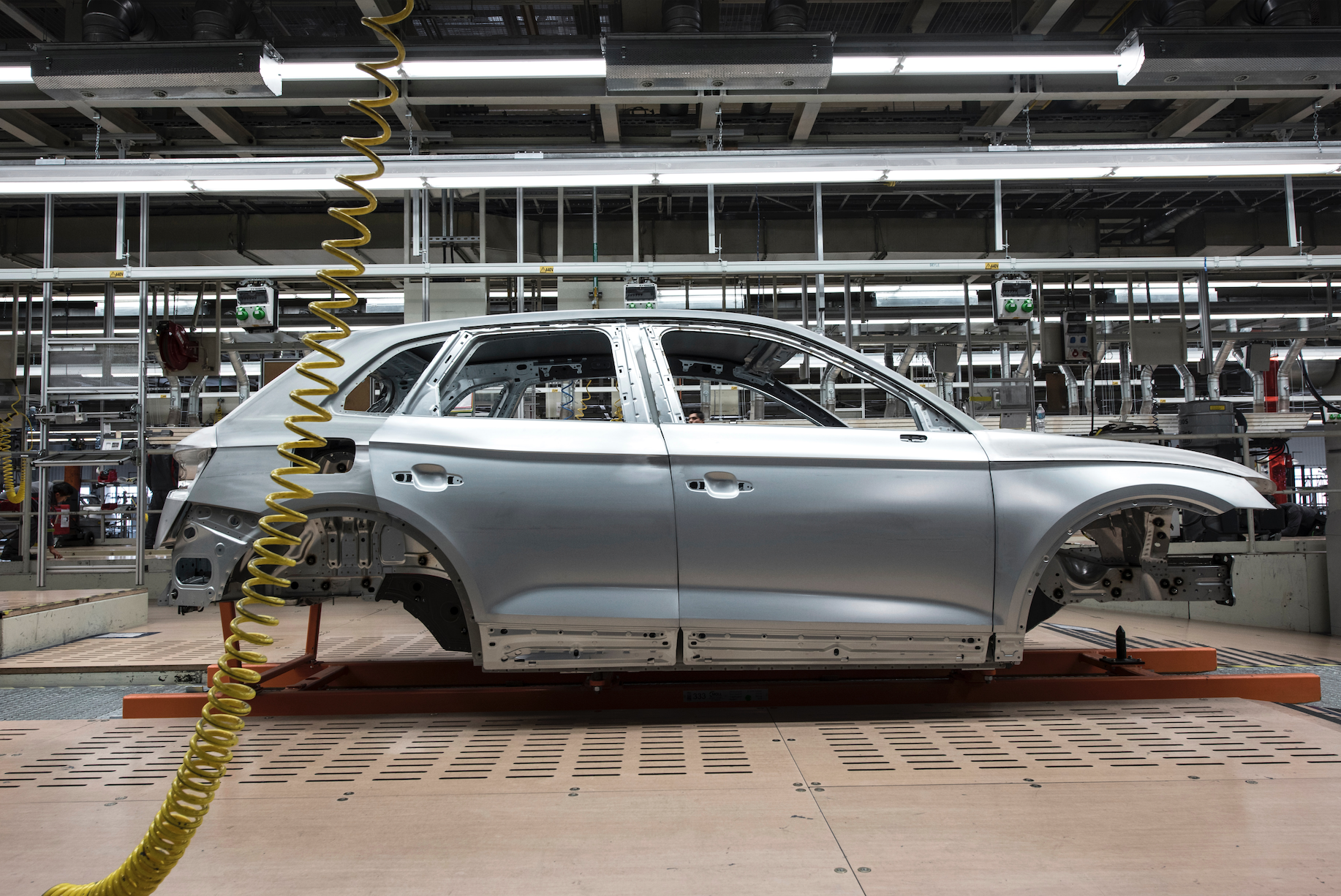
In the first half of 2022, China’s automotive industry was hit by supply disruptions, demand contraction and weakening expectations. In particular, blockades in areas such as Jilin and Shanghai caused a cliff-like drop in production and sales from late March to April. Subsequent stimulus policies have enabled the industry to recover since May, and to register a best-ever June performance, Kallanish observes.
Output in June rose further, by 29.7% from the prior month to 2.5 million units, also up 28.2% year-on-year, according to data from the China Association of Automotive Manufacturers (CAAM). Total production in the first six months this year was 12.12m units, a y-o-y decrease of just 3.7%, representing a considerable recovery after being hit by severe lockdowns in April.
In contrast to passenger cars, the performance of commercial vehicles was still sluggish despite a m-o-m rebound. This was due to the high base resulting from the elimination of backward trucks as part of environmental protection policies last year. Also, in H1 this year, infrastructure construction was affected by the epidemic, which also slowed demand for trucks.
Monthly production of new energy vehicles (NEVs), meanwhile, hit a record high at 590,000 units, soaring 130% y-o-y. In H1, output was boosted to 2.66m units, a surge of 120%, and the penetration rate reached 21.6%.
In H2, CAAM expects challenges from chip shortages, high costs of NEVs, fewer policies to promote consumption, and weak commercial vehicles demand.
The association has adjusted its annual auto sales forecast down to 27m units, a rise of 3% y-o-y. Of that, sales of NEVs, passenger cars, and commercial cars are expected to rise 56% and 7%, and decline 16% y-o-y, respectively.
Kallanish Asia