


Marcegaglia to invest Eur1 bil on ESG, new production and acquisitions
Italian re-roller Marcegaglia is planning to invest Eur1 billion ($1.01 billion) over the next five years as part of its 2022-2026 industrial plan, with a focus on strengthening its performance, the company’s chairman Antonio Marcegaglia told S&P Global Commodity Insights in an interview.
The investment will go towards increasing production in specific areas, launching new sizes and steel products, logistics developments, cutting CO2 emissions and energy saving initiatives
The funds will largely come from the company’s own cash flow, in addition to a credit line from a pool of 10 banks, Marcegaglia said.
“The green transition brings consequences to the production of new steel products, so we are also focusing on that,” he said.
The steelmaker is also eyeing new acquisitions to grow, mainly in Europe. It recently agreed to buy the stainless-steel long products division of Finnish steelmaker Outokumpu, which includes an electric arc furnace mill for specialty steels in Sheffield, north England.
Increased EAF capacity
Once it has received the green light from antitrust authorities for that deal, Marcegaglia is planning to increase production at the Sheffield EAF.
The EAF is currently operates at around half of its nameplate capacity, producing 250,000 mt/year of billets and slabs, which will be also used for Marcegaglia’s flat stainless division.
“The good thing about this EAF is that it can produce billets as well as slabs, so we are working with some steelmakers to convert our slabs into good quality black stainless coils,” Marcegaglia said. “Producing our own slabs and billets will give us the possibility to be less dependent on external supply.”
The Marcegaglia specialties division, where the new Outokumpu assets are likely to be placed, processes around 700,000 mt/year of specialty bars and stainless steels for the production of tubes, flat products and drawn bars.
Outokumpu’s monthly alloy surcharge for 304-grade stainless flat products stands at Eur3,143/mt for July, up from Eur2,421/mt in January. The company’s surcharge for 304-grade cold-drawn bars is at Eur4,723/mt, up from Eur3,483/mt in January.
Increase production and sizes
The company is also looking to increase its production at the Tunis Acier re-rolling coils mill in Tunisia in partnership with Sideralba.
Production is set to be increased from the current 200,000 mt/year to 400,000 mt/year of steel flat products by 2023.
The company also plans to introduce new sizes and products at its plate mill at San Giorgio di Nogaro, with a focus on different industrial segments, including ship building and wind power end-users, he said.
Marcegaglia has already increased its plate production at the site to 800,000 mt/year from 650,000 mt/year.
Low carbon steel
In 2021, Marcegaglia became a minority shareholder of H2 Green Steel, which plans to use green hydrogen at its first low carbon steel plant under development in Boden, northern Sweden.
It has the right to a 200,000 mt/year offtake of low carbon steel once the mill is operational.
“We will continue to look into this kind of venture and increase our commitment in H2GS, also considering it will not be easy to see new greenfield ‘green’ steel plants like this,” Marcegaglia said.
In the meantime, the company will work with other companies based near its re-rolling center in Ravenna, north Italy, on a carbon capture and storage project, which will be the first of this kind in Italy and is expected to be operational by 2024.
— Annalisa Villa

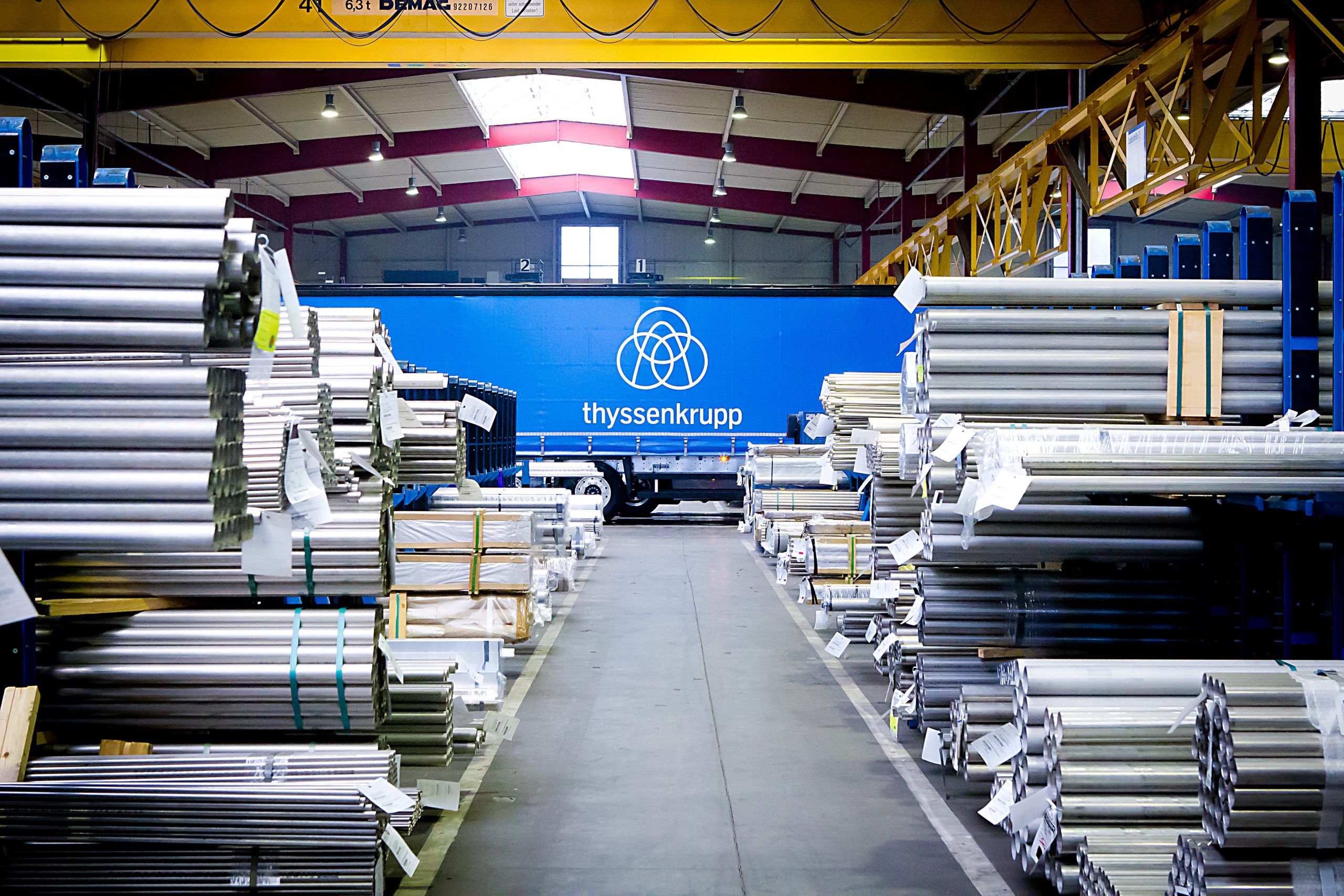
Thyssenkrupp’s El Puig site in Spain to be climate-neutral by 2023
Thyssenkrupp’s Materials Processing Europe steel service center in El Puig near Valencia, Spain is to be climate-neutral by 2023, with 525 solar panels already installed, the company said July 21.
The company said the electricity generated by seven inverters, a device that converts electricity that is generated by solar panels from DC to AC, already cover 35% of the site’s energy requirements.
The installation of a further 1,300 solar panels will be completed in 2023, it said.
Thyssenkrupp said it will then produce solar power equivalent to the full amount of its own needs at the site, as well as additional energy from solar power that will benefit other consumers in the regional supply system.
Around 260 of its warehouse sites will be climate-neutral by 2030, the company said.
S&P Global Commodity Insights assessed hot-rolled coil in Northern Europe as stable July 20 at Eur855/mt ex-works Ruhr.
Market participants expect prices to increase in the near term, with mills looking to establish higher pricing before full demand revival in September.
In February, Thyssenkrupp Steel Europe, Germany’s biggest steelmaker with plans for a major energy transition project at its Duisburg works, and Thyssenkrupp Materials Processing Europe both joined ResponsibleSteel as new members.
Aside the El Puig site, Thyssenkrupp Materials Processing has 11 service center locations throughout Europe.
The network of sites supplies processed steel and non-ferrous metals to customers in diverse sectors including renewable energy, automotive auxiliary, construction and metal furniture.
— Filip Warwick

Steel prices close to bottom, rebound expected: Italy’s Marcegaglia
Italian reroller Marcegaglia believes steel prices are close to the bottom and expects a technical rebound triggered by slowly returning demand.
“I think that in few weeks, or after the summer break, prices will go up again by around 8%-10% from today’s level as little-by-little demand comes back … but also because steelmakers need to offset the higher raw materials costs,” Chairman Antonio Marcegaglia told S&P Global Commodity Insights in an interview.
He added that the exchange rate factor was also relevant, with the dollar/euro exchange rate losing 10-12 points, making raw materials more expensive foe European players.
The spread between European hot-rolled coil steel and raw material prices narrowed 23% in June from May, as spreads unraveled from a record high in April on continued weakness in steel prices, according to S&P Global Commodity Insights data.
HRC prices in North Europe rose from Eur665/mt ex-works Ruhr at the beginning of January to a record high of Eur1,460/mt EXW Ruhr March 21, but they have fallen since to be assessed at Eur855/mt EXW Ruhr on July 20.
“The demand for steel products is back after a period of de-stocking, we see this from our end-users,” Marcegaglia said, adding that he expected overall steel consumption in Europe for 2022 to be 3%-5% lower year on year.
However, he added that 2021 was a “very good year,” as well as the first half of 2022, while it remained to be seen how 2022 would end.
2022 steel volumes
The company’s 2022 steel production volume is likely be in line with the overall decrease in demand, with volumes down by 3%-5% compared to 2021, when the company produced 5.8 million mt.
The steel market at the beginning of 2022 had a bullish start with strong restocking amid rising prices. Since mid-April, market sentiment has changed, driving a strong correction, which will presumably finish by Q3, Marcegaglia said.
2022 was marked by a growing climate of uncertainty and reduced confidence on the part of households and businesses, mainly due to the Russian invasion of Ukraine, but also due to high energy costs, Marcegaglia said, adding that Chinese lockdowns and restrictions also had an impact.
These factors, in addition to 2021’s pandemic shutdowns, high logistic costs and safeguards, have made steel markets increasingly regional and more vulnerable to volatility. Companies, in order to cope, have to be flexible and diversify, he added.
— Annalisa Villa

Mertex UK saves troubled German pipemaker Rohrwerk Maxhütte
Rohrwerk Maxhütte, which late last year filed for insolvency, has found a white knight in Mertex UK, a distributor of pipe and other steel and metals related products, Kallanish notes.
Rohrwerk Maxhütte, located in the Franconia region of northern Bavaria, has been threatened with closure several times over the last 20 years, after the shutdown of its blast furnace in the 1990s. In December last year, it filed for insolvency again. The mill makes seamless pipe mainly for the automotive, shipbuilding, and offshore industries. Its annual revenue is reportedly around €100 million ($102m), achieved with a staff of 460.
Mertex UK Limited is a privately-owned company, registered in England and Wales. It describes itself as a leading, diversified, natural resources group with renowned specialised activity in trading, manufacturing and processing of line pipe, and OCTG such as casing, tubing and drill pipe.
On its website, it briefly announces the asset purchase agreement with Rohrwerk Maxhütte. It says the lines it is acquiring produce hot-finished tube with 21.3-139.7mm outside diameter and 2.3-13mm wall thickness, as well as cold-finished tube with 4-120mm outside diameter and 1-11mm wall thickness.
According to local radio reports, the new owners will bring fresh order volumes, and are planning further investment in the mill.
Christian Koehl Germany

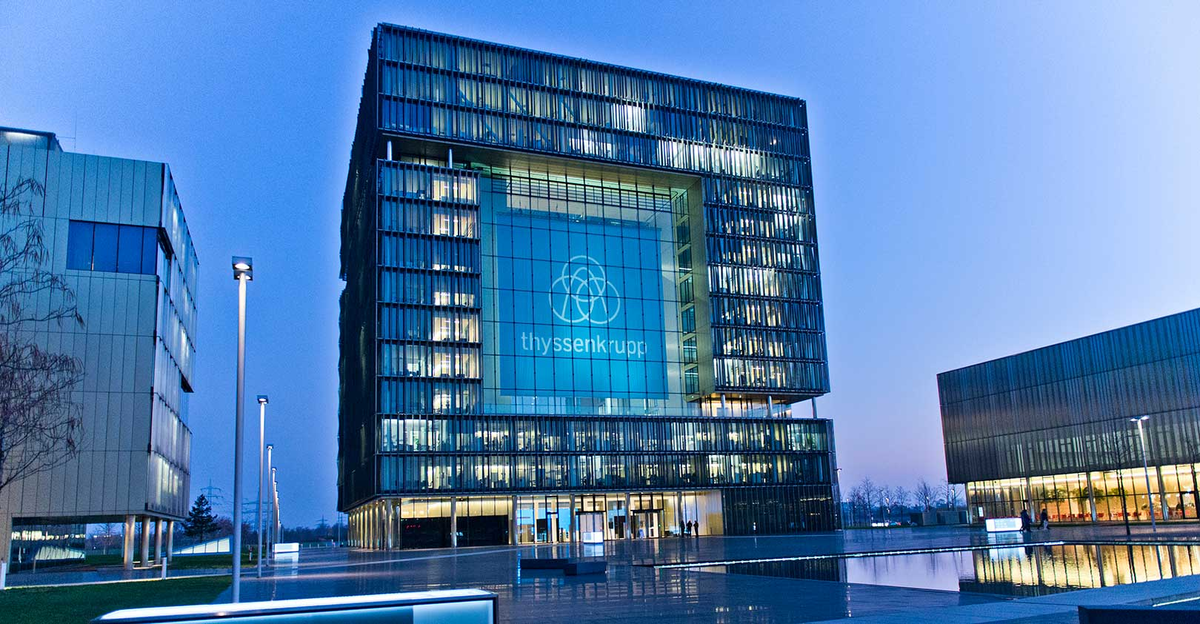
Thyssenkrupp eyes renewable energy self-sufficiency for Spanish site
Thyssenkrupp Materials Services has made progress in ensuring its Spanish service centre in El Puig is fit for climate-neutral energy operation on the basis of an extensive photovoltaic system.
The first 525 solar panels have been installed to make the most of the around 300 powerful days per year of sunshine in the region, Kallanish learns. The electricity generated by seven inverters already covers 35% of the site’s energy requirements. The installation of a further 1,300 solar panels will be completed next year. The company will then be producing solar power equivalent to the full amount of its own needs, and also will supply other consumers in the region.
El Puig will be the first operating site of tk Materials Services to operate on a climate-neutral basis. The firm intends to make all 260 warehouse sites in various countries climate-neutral by 2030.
Tk Materials Services has also agreed to extend the existing strategic cooperation with Spanish company Industria de Turbo Propulsores (ITP) until the end of 2024. ITP is an operator and manufacturer of aircraft engine turbines, components and associated services for the aerospace sector. Tk Materials units tk Aerospace and tk Materials UK will extend the supply of stainless steel and nickel products to ITP locations in the UK, Poland, Spain, India and Mexico. The extended agreement was signed at this week’s Farnborough Airshow.
The German-based group announced another deal in the aerospace sector with Deutsche Aircraft. Tk Aerospace has signed up for a strategic partnership to develop a material supply chain solution for the D328eco aircraft. Tk Aerospace will be responsible for the design of the material planning and procurement processes between multiple material and sub-tier suppliers.
Christian Koehl Germany
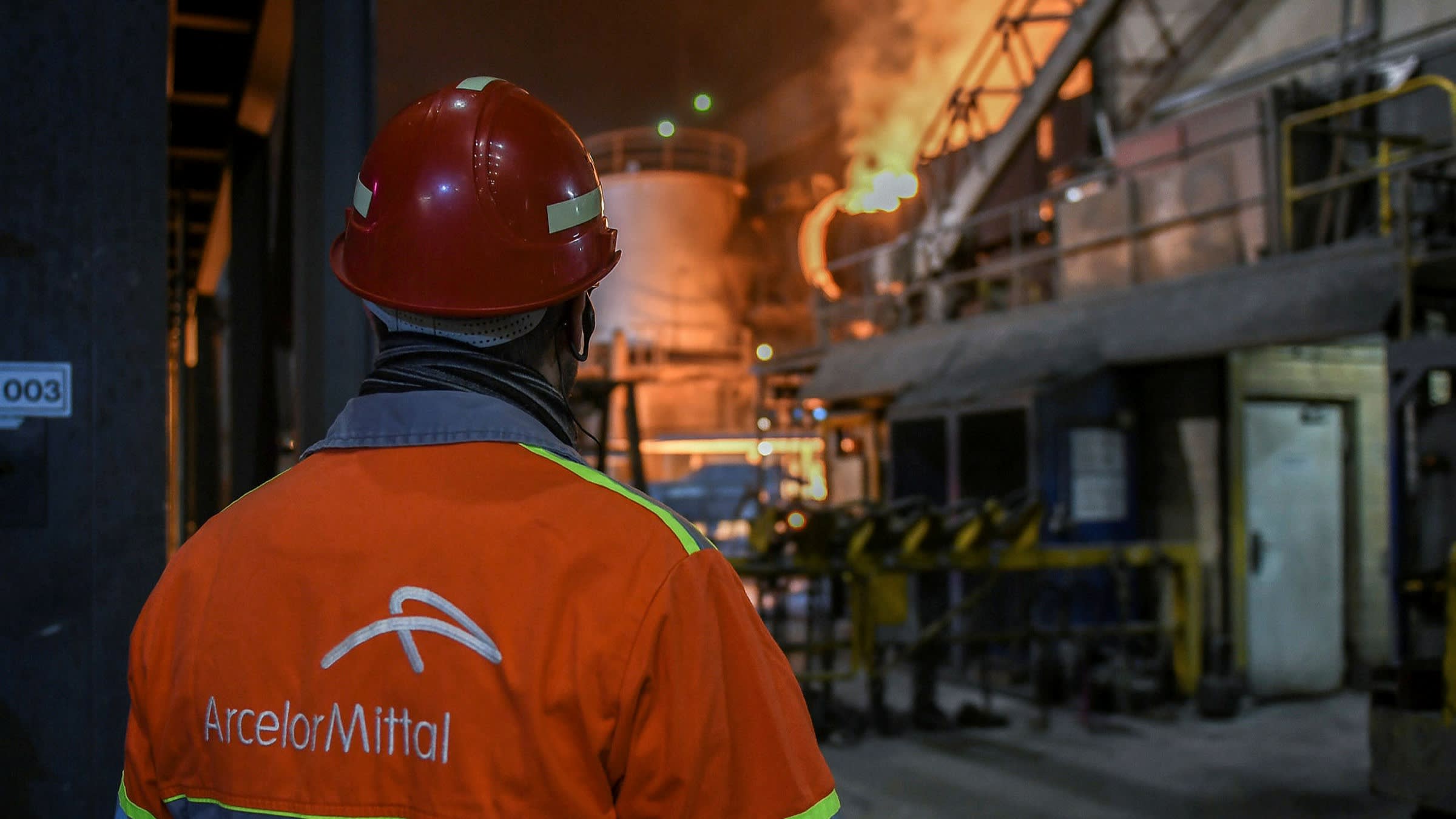
ArcelorMittal, Gestamp develop low-carbon steel parts
ArcelorMittal says it has agreed to partner with Spanish automotive component producer Gestamp to develop production of low-carbon-emission steel parts for the automotive sector in Spain and throughout Europe.
Both companies will cooperate on sustainability and work closely to ensure the steelmaker’s products meet all of Gestamp’s technical requirements, ArcelorMittal tells Kallanish.
“In this process, Gestamp has a very important role in validating the low-carbon emissions steel produced by ArcelorMittal in order to meet the standards of excellence its automotive clients need,” the steelmaker observes. Using Usibor 1500 made with “XCarb” recycled and renewably produced substrate, Gestamp has successfully trialled the first parts in press-hardening steel. This material is ultra-high-strength and therefore enables car manufacturers to achieve excellent weight reductions across the vehicle.
“Our work with our valued customer Gestamp to use our XCarb recycled and renewably produced to manufacture ultra-high strength steel to help carmakers decarbonise their supply chain is a beacon for our industry,” ArcelorMittal Europe chief executive Geert Van Poelvoorde explains. “A few years ago, we did not think it would be technically possible to do this, but today we are on the brink of supplying low-carbon emissions steel for large-scale automotive production.”
Todor Kirkov Bulgaria

ArcelorMittal Warszawa suspends output on lower orders
ArcelorMittal Warszawa has temporarily suspended production on account of a decline in orders, especially in the rebar segment. This does not however indicate the start of a longer downtrend, says the firm’s general director Artur Gierwatowski, adding that he expects demand to return to normal soon.
The firm had anticipated the increase in electricity and raw material prices, which was exacerbated in the second quarter by the outbreak of war in Ukraine, he adds.
ArcelorMittal Warszawa received CARES certification in April for its 50mm diameter B500B grade rebar, thanks to which it will be able to sell this product in the UK market. The firm initially announced its plan to offer this product in the UK last year (see Kallanish passim). The electric arc furnace-based mill also shipped its first rebar with ArcelorMittal’s “X-Carb” certificate in June, Gierwatowski observes in the latest edition of the company’s newsletter.
After being appointed general director earlier this year, Gierwatowski reaffirmed the mini-mill’s strategy to ramp up SBQ production and increase market share, supported by the installation of a new saw for cutting bars, as well as a fourth finishing line.
SBQ production in 2021 was 166,400 tonnes, the highest-ever annual output.
According to ArcelorMittal Group results, ArcelorMittal Warszawa produced 600,000t of crude steel in 2021, up from 500,000t in 2020.
Adam Smith Poland