


EU decreased steel production by 6.8% y/y in May 2022

Nine European plants fully or partially suspended steel production
In May 2022, EU produced 12.9 mln tons of crude steel. This is 6.8% lower than in the same month last year. TOP 10 EU countries by drop in steel production include France (-12.3%), Croatia (-11.6%), Germany (-11.5%), Finland (-10.3%), Netherlands (-10.2%), Spain (-10.2%), Bulgaria (-9.8%), Poland (-9.0%), Czechia (-8.0%), Austria (-5.0%).
As of 27.07.2022, nine steel plants in EU fully or partially paused steel production. In particular, two steel plants (Arvedi and ArcelorMittal Warszawa) completely stopped production. Their annual crude steel capacity is estimated at 4.8 mln tons. Salzgitter postponed the restart of the blast furnace until September, while previously this re-launch was planned for May-June.
EU steel plants suffer from weak demand, falling steel prices and rising energy costs. Next winter the EU may face a gas shortage, which will negatively affect the local industry. Energy price growth is expected to continue this year. So, more and more steel plants will be forced to reduce production.
Andrii Glushchenko

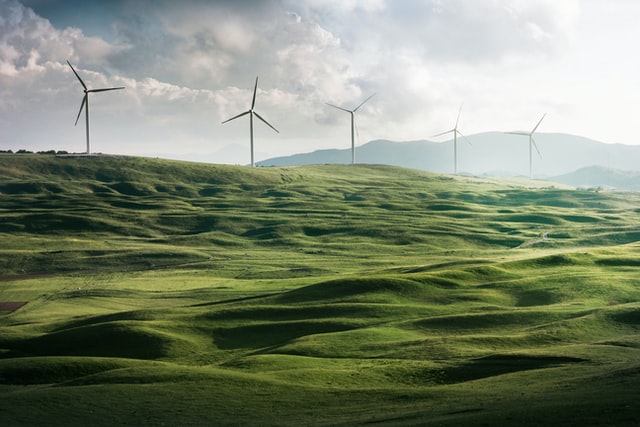
Salzgitter partners for low-CO2 steel in wind turbines
Salzgitter has announced a partnering agreement with wind turbines manufacturer GRI Renewable Industries to include the possible processing of low-CO2 steel products in wind towers.
GRI has a long-standing relationship with Salzgitter subsidiary Ilsenburger Grobblech, which supplies plate to the wind turbine maker. GRI is one of the first renewable energy equipment companies in the new Salzgitter partnering programme, Kallanish hears from the steelmaker.
The programme offers companies the opportunity to secure a defined tonnage of green steel today, to be supplied as of 2025 as part of the SALCOS – Salzgitter Low CO₂-Steelmaking – scheme. In addition, both companies intend to cooperate in the further development of steel grades.
“The wind power industry is a strategic target sector for Ilsenburger Grobblech,” says the company’s managing director, Sebastian Bross. “This customer segment is a perfect fit for our portfolio green and renewable steel.”
Christian Koehl Germany


Uzmetkombinat opens Lithuania office, eyes Europe exports
Uzmetkombinat, Uzbekistan’s state-owned steelmaker under the management of SFI Management Group, has opened a trading office in Vilnius, Lithuania, the company tells Kallanish.
The enterprise intends to supply rebar and wire rod to the Baltic countries by rail and road, as well as to northern and Eastern Europe through the port of Klaipeda.
However, its main goal is to export long products form Uzbekistan to Europe, where opportunities have emerged after the cessation of supplies from Russia, Belarus and Ukraine dur to the Russian invasion of Ukraine.
Uzmetkombinat has already certified its rebar in Lithuania, Latvia and Sweden, and in the near future expects to receive similar documents in Finland, Denmark and Norway, the company says. There are plans to organise deliveries to other European countries.
In 2021, Uzmetkombinat produced 1.075 million tonnes of finished long products. Of these, 123,000t were exported, mainly to the neighbouring countries of Central Asia.
Earlier, Uzbekistani coil coater Toshkent Metallurgiya Zavodi (TMZ) said it is stepping up its supply of product to Europe after signing agreements with buyers in Poland, Germany and Estonia (see Kallanish passim). TMZ has started shipping products to European countries in containers by rail. The first 250t were shipped to Tallinn in Estonia.
Uzbekistan produced in June about 60,000t of crude steel, down by 16% on-year, according to worldsteel data. In January-June the country produced 385,000t, less by 23% on-year.
Svetoslav Abrossimov Bulgaria
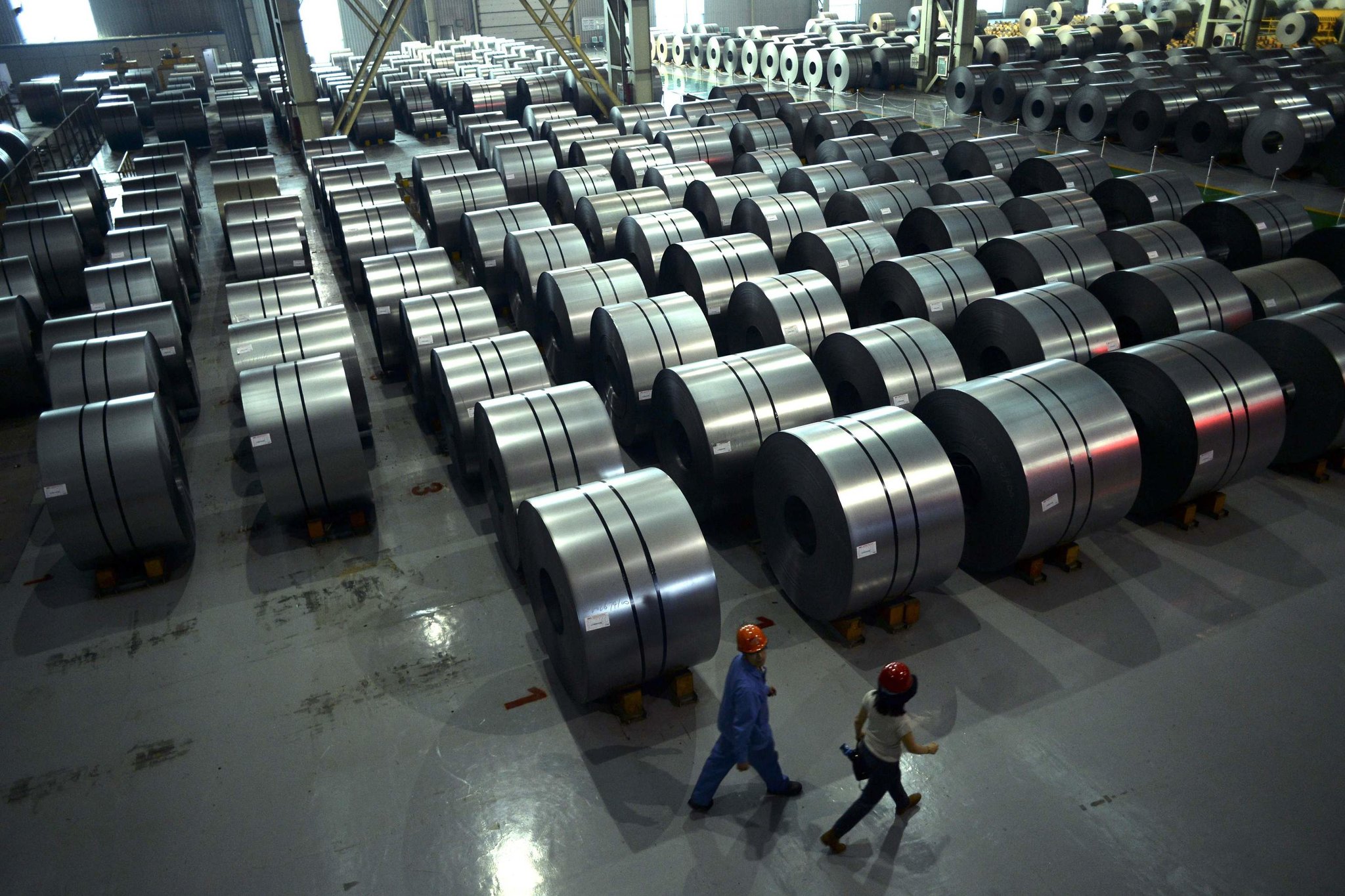
ArcelorMittal expects Europe’s real steel demand to be ‘at least stable’ this year: CFO
ArcelorMittal expects real steel demand this year in Europe to be “at least stable if not slightly positive,” despite current headwinds, the major steelmaker’s CFO said on a conference call.
In the auto sector, “we can be cautiously optimistic about seeing higher volumes moving into the second half, even though there was no significant improvement in the first half,” Genuino Christino said in a conference with analysts following release of the company’s Q2 results July 28.
“Forecasts are still showing growth on year in terms of [auto] production,” he said.
Christino said it was positive that steelmakers are applying discipline in production, with World Steel Association data showing the magnitude of recent production cuts.
Worldsteel’s latest report showed a 5.9% year on year drop in June in crude steel production worldwide, to 158.1 million mt, with production in the EU-27 down 12.2% at 11.8 million mt, and the rest of Europe producing 3.8 million mt, down 10.9%.
“We are adapting our supply to meet demand,” the CFO said, noting that schemes in place such as the possibility of reducing working hours in Germany help make the company “confident that we can navigate this crisis.”
CEO Aditya Mittal said on the call that it “makes sense” to cut production in the weaker demand environment such as being seen in H2.
ArcelorMittal on July 12 took one 1.5 million mt/year capacity blast furnace out of production at Dunkirk in France and a 2 million mt/year furnace was also taken out of production the same week at Acciaierie d’Italia, where ArcelorMittal is a shareholder, for around six weeks. Trader and market reports of further capacity to be taken out at Italy’s biggest steelmaker were not immediately confirmed by the company July 29.
Other steelmakers have also reduced output in Europe and elsewhere. Christino noted that in China, where markets have continued to be impacted by COVID-19 lockdowns and steelmaking margins are very thin, the government “has made it clear it doesn’t want production increasing… it’s not our expectation that we’ll see structurally higher levels of exports from China.”
Significant economic incentives recently announced in China should impact domestic demand levels positively in Q4 and in 2023, the CFO said.
In Ukraine, ArcelorMittal’s iron mines are operating at around 50-60% capacity, and the company is working with one blast furnace, representing about 20% of its local capacity, and has some billets inventory, Christino said.
“Most coal for this operation is sourced domestically with some from Poland and for the time being we don’t expect much change… logistics continue to be a significant challenge,” he said.
Prices stabilizing
In Europe, ArcelorMittal expects steel market activity ” to pick up after the summer break,” Christino said. While the company is currently experiencing destocking in Europe, this is “not excessive” and expectations are now for more stability in shipments. The incentive for importing steel into Europe has come down significantly, especially with the weaker euro, “which makes everything more expensive,” he said.
European steel prices have been “relatively stable” over the past two weeks, while international prices are also showing signs of normalization, the CFO continued. “After the initial shock coming from the war [in Ukraine], we have seen prices stabilize in some regions, after a quite significant correction, but raw materials have also corrected. This will clearly impact our results in Q3… but we are working through the inventories we have on our books.”
Domestic prices for hot-rolled coil across the EU remained largely stable July 28 as market activity slowed down in line with the typical seasonal pattern.
Some European mills have started summer maintenance, with others expected to follow soon. Buyers are reportedly holding back from new bookings, awaiting a revival of market activity in September. In addition, distributors are reported to have sufficient stocks of material.
Platts assessed HRC in North Europe at Eur850/mt ($867/mt) ex-works Ruhr July 28, down by Eur5/mt day on day, according to data from S&P Global Commodity Insights. The price peaked at Eur1,460/mt March 18.
Elsewhere, ArcelorMittal is seeing “relatively stable volumes” in its NAFTA division and Brazil, with perhaps lower exports from Brazil, Christino said.
“Some increase in shipments from the CIS in H2 should provide some support as we face the impact of the strike [at ArcelorMittal’s works] in South Africa,” he said.
— Diana Kinch

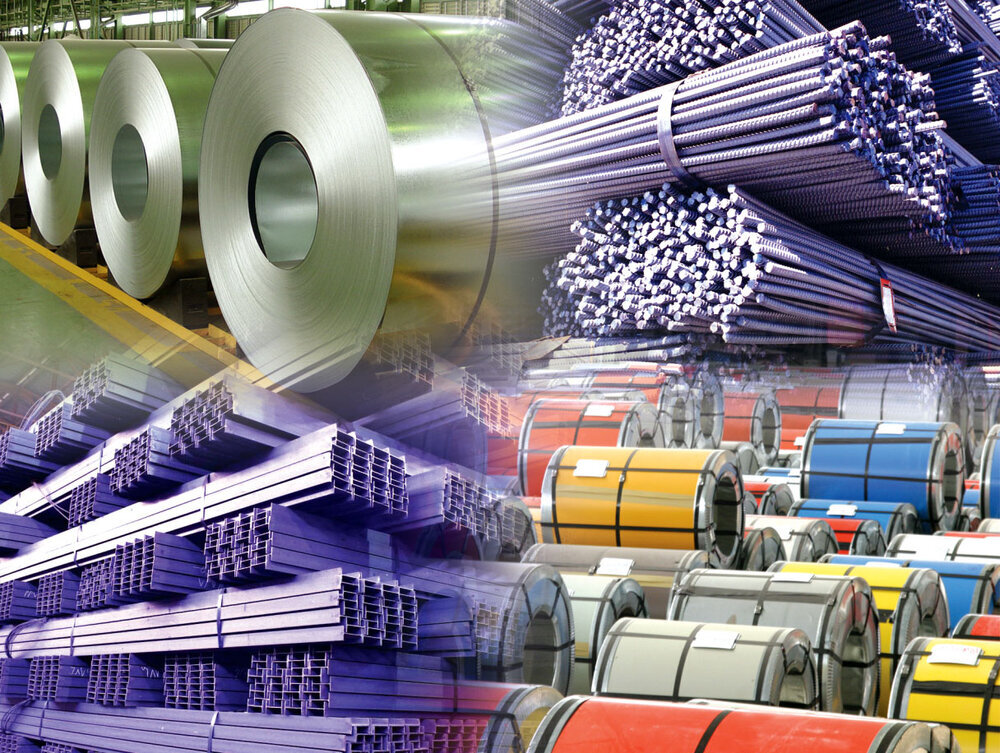
Acciaierie d’Italia reduces output further
Italian steelmaker Acciaierie d’Italia, the joint venture between ArcelorMittal and state-owned Invitalia, is considering idling a second blast furnace at its Taranto plant starting this week, according to sources close to the company. Contacted by Kallanish, the company refused to comment.
This comes after the steelmaker, formerly known as Ilva, already mothballed BF no.2 until the end of August amid the downturn in prices and demand in the global coil market. At present, Acciaierie d’Italia’s Taranto facility is working using BFs 1 and 4, one of which sources say will be mothballed. In June, two galvanizing lines were also idled due to deteriorating demand for coil.
At the end of 2021, the steelmaker mothballed blast furnace no.4 because of a technical issue. In October 2021, BFs no. 1 and 4 were restarted. The latter was idled for about seven months and the company spent €70 million ($71m) on upgrade works.
In France, ArcelorMittal has idled one blast furnace – HF2 – at its Dunkirk mill, effectively reducing output for the coming months (see Kallanish 20 June).
Natalia Capra France

Italian stockists aim for lower plate prices amid competitive imports
Big distributors of heavy plate in Italy have been making attempts to get lower prices from local re-rollers, citing competitive import deals, sources told S&P Global on July 29.
Big stockists have booked substantial volumes of heavy plate from South Korea and Indonesia at Eur850/mt CIF Italy and have been using competitive overseas prices to get discounts from Italian producers.
“The big buyers still have to restock, but they try to use import prices to squeeze lower prices from Italian mills,” a producer said.
As a result, only a few deals for limited tonnages have been settled with bigger buyers at Eur950-970/mt ex-works Italy. Bids from buyers have been heard at about Eur900/mt ex-works.
The volumes booked from Asia are unlikely to be big enough to substitute Italian material, and buyers are expected to restock during August or early September.
Deals with smaller buyers in Italy have been reported at Eur980-1050/mt ex-works, and deals with buyers in Germany and deliveries for projects have been settled at Eur1,000-1,100/mt ex-works Italy.
Platts assessed plate in Southern Europe at Eur1,000/mt ex-works Italy on July 29, unchanged week on week, according to S&P Global Commodity Insights data.
Slab offers from India and Brazil have been heard at $700/mt CIF Italy to the country’s re-rollers, and one source reported a slab offer from China at $660/mt CFR European ports.
Plate producers in Germany and Northern Europe have been holding back from sales in the spot market. They continue to enjoy solid order books because of long-term contracts with projects.
In Northern Europe, Platts on July 29 assessed plate down by Eur50/mt week on week at Eur1,350/mt ex-works Ruhr.
A majority of market sources reported offers and achievable prices for heavy plate from German mills at Eur1,350-1,380/mt ex-works Ruhr. One source indicated prices could reach Eur1,650/mt ex-works Ruhr, but the information was not widely confirmed.
Offers of plate from Central European mills have been heard in Germany at Eur1,050-1,150/mt ex-works.
— Maria Tanatar, Benjamin Steven

UK HRC market mirrors European summer slowdown
Sentiments were cautiously optimistic in the UK HRC market July 29 with lower demand attributed to a slower summer period.
Platts assessed hot-rolled coil in the UK down GBP10/mt July 29, at GBP710/mt DDP West Midlands, UK.
Distribution sources reported the market as largely stable on the week, though tradable value indications did inch down on declining offer levels.
Market participants considered prices of GBP700-720/mt DDP as achievable on the day, with a large spread of available offers between domestic mills, and European and non-European imports.
Buyers continue to look predominantly toward European mills for supply efforts, based on competitive pricing and short lead times in uncertain market and geopolitical conditions.
European mill offers were heard on a range of GBP710-740/mt DDP UK, relatively stable on the week.
One mill was heard as having dropped its offer level from GBP740/mt to GBP710/mt DDP on the week, — albeit offered to different buyers — in line with cheaper offers from the same mill in the European market at Eur800-820/mt ex-works Northern Europe. Other prime mills remain at the Eur850/mt level, ex-works Ruhr.
Multiple sources reported discussions with a domestic mill on the day, though no price levels were yet settled. Expectations of offer levels surrounded the GBP700/mt mark, with distribution sources predicting a respective GBP10/mt above and below.
For non-European imports, Taiwanese material was offered at around GBP680/mt DDP UK.
Demand is yet to recover in the UK market, with end-user demand reportedly down 20%-40% across active distributors. This has not translated to overly negative sentiment however, with one source suggesting the UK is seeing a quiet period similar to the traditionally quieter summer months on the continent.
“In previous years the UK has kept going somewhat while the European market went on holiday, but it seems we’re back to quiet summers,” said the trader source. “July and August used to be normal-ish months, but we’re in something of a two-week shutdown while customers take extended holidays.”
A stockholder source characterized the market similarly, saying they were “cautiously optimistic” for recovery.
Regardless of sentiments on demand revival, sources were almost unanimous that prices were at least close to the bottom, with pricing floors visible in the near-term.
— Benjamin Steven

German water levels low, transport prices rising
Transportation capacities on Germany’s rivers are seriously reduced, as water levels keep dropping after weeks of little rainfall, with prices for available capacities surging massively.
On the Rhine and Danube, especially, levels have fallen to a degree that has most vessels reduce their load to 40-50% of normal capacity, to prevent hitting the riverbed bottom. However, “customers may still have to pay the full price per ship, no matter if the load is 100% or less,” a manager at a steel distribution company explains to Kallanish.
Meanwhile, ship operators can negotiate prices freely, “which means prices could be exploding,” the manager says.
With his own company, the normal contracted rates apply to a minimum water level of 2.80 metres. From that mark downward, the company has to pay a low-water supplement of 10% extra every 10cm the level drops. But even for that, the limit has been reached. “We are now more than100cm lower, at below 1.80m, which means outside of the definitions of our contract, so the skipper can dictate a totally new and different price,” the manager explains. “The coming weeks will be hairy,” he warns.
He adds that those extra positions were not considered in his company’s sales contracts, and therefore cannot, and will not, be handed down to customers.
On Thursday, German national TV reported that prices for bulk goods from Rotterdam have now gone up by 100-150%.
Christian Koehl Germany

Northern EU HRC demand below expectations as discounts achievable
Northern European sources considered lower hot-rolled coil prices as negotiable July 29, with Northern mills seeing less success than anticipated at the Eur850/mt price level, ex-works Ruhr.
Platts assessed HRC in Northwest Europe down Eur5/mt on the day, at Eur845/mt ex-works Ruhr, according to S&P Global Commodity Insights data.
In Northern Europe, producers reported tradable value around the Eur850/mt level, at Eur840-860/mt ex-works Northern Europe. One producer heard deals settled higher at Eur870/mt ex-works Ruhr, though these transactions could not be confirmed in the wider market. Similarly unconfirmed deals were heard much lower in the region at at Eur800/mt, delivered Ruhr ex-Central Europe.
On the buy side, sources agreed the range was at a Eur850/mt minimum, with one service center regarding the market as stable in a Eur850-870/mt tradable range. However, one trader source saw things differently, suggesting stabilization would be disrupted in the near term on a lack of mill success at realizing transactions at Eur850/mt ex-works.
The source said offers were indeed stable at Eur850/mt ex-works Ruhr, but that some mills were becoming increasingly aggressive in negotiations, with prices even below Eur800/mt considered achievable, ex-works Northern Europe.
Mills were reportedly trying to deplete stock levels, offering substantial discounts to shift volumes.
In South Europe, there were no active offers due to planned output reductions, but latest offers for September rolling were heard as stable.
Mill sources reported workable prices on a spread of Eur780-800/mt ex-works Italy, with no transactional activity reported.
Import offers were reported on the day at Eur680-700/mt CFR Italy ex-Asia.
— Benjamin Steven, Maria Tanatar