


European steel hollow sections market ‘absolutely dead,’ trader says
Prices for steel hollow sections in Europe remained unchanged in the week to Wednesday August 3, with market activity likely to be muted until the end of the summer holidays, traders said.
Fastmarkets’ weekly price assessment for steel sections (medium), domestic, delivered Southern Europe, was €1,140-1,180 ($1,165-1,206) per tonne on Wednesday, stable week on week.
A producer in Southern Europe said that the sections market has entered a calm period for the summer season, with more mills set to stop production for annual maintenance and traders in the region on holiday this week.
“As usual due to the holidays now, no one is purchasing either raw material or [sections],” he added. “Everybody is waiting for production to start again, not only for [sections] but also for hot-rolled coil.”
His company was not purchasing feedstock because the mill already had the material necessary for production in September and October, the source said.
Fastmarkets’ daily calculation of its steel hot-rolled coil index, domestic, exw Northern Europe, was €848.75 per tonne on Wednesday, down by €11.25 per tonne from €860.00 per tonne a week earlier.
In Northern Europe, sources said that much of the sector was already on holiday, though some traders may return to work next week, which could lead to some price movement.
Fastmarkets’ weekly price assessment for steel sections (medium), domestic, delivered Northern Europe, was €1,140-1,200 per tonne on Wednesday, unchanged from a week earlier.
While it is normal for mills to stop production during the summer for about two or three weeks, sources said that this year was strange because some steel plants will close for four weeks due to high production costs and low demand.
Another source said that mills were still making offers in Germany and were desperate for orders, but traders were not willing to buy until after the summer.
“Trading business is absolutely dead wherever you look. We are not doing anything, everybody is quiet and everybody is waiting,” they said. “Stock is available, but nobody is buying.”
Sources also shared concerns about rising energy costs in the coming winter after EU member states agreed to reduce demand for natural gas by 15% from August 1 this year until March 31, 2023, in response to reductions in energy supplies from Russia to Europe via the Nord Stream 1 pipeline.
Published by: Holly Chant


Steel plate prices flatten in Italy despite pressure from buyers
Steel prices in Southern Europe were unchanged in the week ending Wednesday August 3 because Italian plate producers have refused to cut prices further due to thin profit margins, sources told Fastmarkets.
Italy
Steel plate prices remained largely unchanged in Italy in the week ended August 3, despite pressure from buyers.
Official offers from local plate producers were heard at €1,000-1,100 ($1,023-1,124) per tonne exw, depending on the customer. But sources said that the high end was not considered workable for the spot market, while plate at €1,100 per tonne exw was mainly being sold for projects.
In the spot market some deals for limited tonnages were heard at €950-1,000 per tonne exw during the assessment week, sources said.
“There is still some trading activity this week [week ending August 3], with some last orders before summer closures. Staring next week [week starting August 8] the market will be dead,” a trading source told Fastmarkets.
“There is some re-stocking activity, but everyone is buying only what is strictly necessary,” a second trading source in Italy told Fastmarkets.
Bids from large buyers were reported at €900-930 per tonne exw, but producers said that a price below €950 per tonne exw was not acceptable due to high slab costs and potential energy price spikes in September-October.
“[The plate price of] €900 per tonne exw is below costs, taking into account the slab price and further increase of gas and electricity tariffs starting from September and beyond,” a mill source told Fastmarkets.
As a result, Fastmarkets’ price assessment for steel domestic plate, 8-40mm, exw Southern Europe was €950-1,000 per tonne on Wednesday, unchanged from the previous week.
This assessment reflects offers, deals and market participants’ estimates of achievable prices heard during the week.
Offers of plate from Asia with October delivery were heard at €850-870 per tonne cfr during the assessment week, with bookings of large tonnages heard done within the range in late July.
Northern Europe
Trading activity in the Northern European plate market remained subdued in the week ended August 3 due to persistent overstocking and high prices offered by local producers.
Offers from the integrated mills in Germany varied greatly, depending on customer.
One mill in Saarland offered plate to the German market at €1,400-1,750 per tonne exw.
“Dillinger is still very well booked and is giving a wide range of prices depending on [the] customer,” a trading source in Germany said.
In general, mills in Germany had good orderbooks for projects such as offshore and wind towers and shipbuilding, so resisted lower prices.
Another mill in Saxony-Anhal dropped offers to €1,250-1,350 per tonne exw, down from €1,300-1,350 per tonne exw in July, to encourage buying, sources said.
The company had some unsold plate tonnages and was ready to provide discounts, several sources told Fastmarkets.
German producers were in general reluctant to undercut their prices more, despite poor activity in the spot market.
Potential gas supply disruptions and energy costs in September were the main concerns for platemakers.
As a result, Fastmarkets’ weekly price assessment for steel domestic plate, 8-40mm, exw Northern Europe was at €1,250-1,300 per tonne on Wednesday, down by €50 per tonne from €1,300-1,350 per tonne a week earlier.
Asia-origin plate offers to the region were heard at €850-900 per tonne cfr Antwerp for October delivery. However, despite a significant gap with domestic prices, European buyers had little enthusiasm for overseas bookings due to longer lead times, “exploding freight rates” and overstocked ports, sources said.
Italy-origin plate was offered to the south of Germany at €1,000-1,050 per tonne cpt, depending on volume and chemistry.
An electric-arc-furnace-based mill in Central Europe offered plate to Germany at €1,050-1,100 per tonne exw, sources said.
Published by: Julia Bolotova

Global recession impacting steel demand, raw material prices: Kocaer
Recession concerns are pulling down steel demand and raw material prices globally, while the Ukraine war is also pressuring prices lower by changing trade routes, Turkish merchant bar and steel sections producer Kocaer Celik said at its H1 results report released late Aug. 2.
“Due to the sanctions, supplies from these countries head towards Turkey,” Kocaer said, adding that energy and freight costs were rising due to the war and pandemic.
Turkish mills’ rebar export price peaked at $970/mt FOB March 24, up $280/mt from the end of 2021, but have since fallen to $615/mt FOB Aug. 3, according to S&P Global Commodity Insights data.
Kocaer increased its H1 sales volume by 10.4% on the year to 278,758 mt and its net sales revenue by 153% to Lira 4.32 billion ($242 million), it said.
“Despite the rise in energy and freight costs and fluctuations in scrap and iron ore prices during the first half of 2022, our net profit also significantly increased by 200% to Lira 323 million,” Kocaer said.
The company is aiming to focus more on value-added steel production with new investments and acquisitions abroad, CEO Hakan Kocaer said.
Kocaer recently raised its output capacity by building a new 100,000 mt/year hot-dip galvanizing line and has a combined steel production capacity of 800,000 mt/year at its three Turkish mills producing merchant bars, beams, channels and sections.
— Cenk Can


BMW’s H1 BEV sales more than double on year
BMW Group delivered 75,890 pure battery electric vehicles in the first half of 2022, more than double on the year, the German automaker said Aug. 3.
Overall EV sales also rose 20.4% on the year to 184,468 units, making up a 15.9% share of total deliveries, compared with an 11.4% share a year ago.
Generally higher demand for EVs has boosted the prices of battery raw materials, with the Platts seaborne lithium carbonate and lithium hydroxide assessments up 110.1% and 136%, respectively, since the start of 2022 at $71,000/mt CIF North Asia and at $74,800/mt CIF North Asia as of Aug. 2, according to S&P Global Commodity Insights data.
However, BMW’s total H1 vehicle sales fell 13.4%, from the comparative period’s all-time high to 1.16 million vehicles, due to the ongoing issues pertaining to semiconductor supply, the war in Ukraine and interruptions in supply chains stemming from COVID-19 lockdowns in China.
Of the overall H1 total, 1.02 million were BMW models, down 13.7% on the year, 140,675 were MINI models, down 10.9% on the year, and 3,191 were Roll-Royce models, up 6.9% on the year.
“The BMW Group expects business conditions to remain difficult in the second half of the year,” the automaker said.
“Although the company expects sales volumes in the second half of the year to be solidly higher than in the same period of the previous year, this will not fully compensate for lost volume in H1 2022,” it said, adding that it expected full-year deliveries to be slightly lower year on year.
BMW expected the share of EVs sold in 2022 to increase significantly and sales of BEVs to more than double on the year.
“By 2025, we aim to have delivered a total of 2 million all-electric vehicles to customers,” BMW Chairman Oliver Zipse said.
“And we are doing everything we can to make sure at least half our global deliveries come from BEVs before 2030. We firmly believe that a mix of BEVs, fuel cells, and highly efficient combustion engines is the best approach for the system as a whole at this time,” he added.
— Jacqueline Holman
German EV sales fall 6% on year in July: VDA
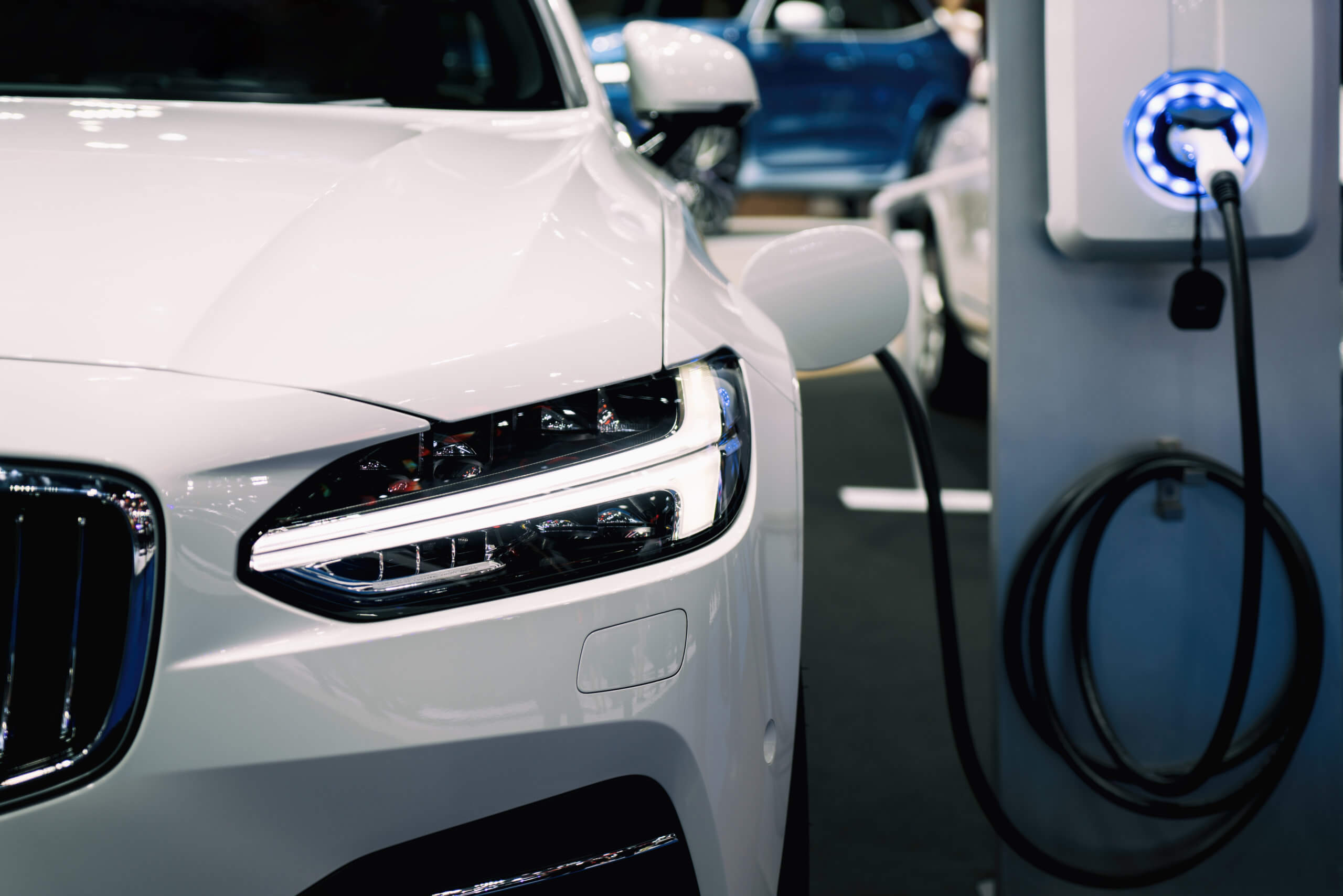
Sales of passenger electric vehicles in Germany dropped 6% year on year in July to 52,570 units and an overall market share of 25.5%, according to the most recent data from auto-industry association VDA.
The market share was up from 24.2% a year ago and 26% in June. The EV sales also fell 10.1% month on month.
New registrations of battery EVs rose 13% on the year, while sales of plug-in hybrid EVs fell by 21%, according to the VDA.
With demand for EVs generally moving higher, battery raw material prices have been strong, with the Platts seaborne lithium carbonate and lithium hydroxide assessments up 110.1% and 136%, respectively, since the start of 2022 at $71,000/mt CIF North Asia and at $74,800/mt CIF North Asia as of Aug. 3, according to S&P Global Commodity Insights data.
Meanwhile, overall new vehicle registrations fell 11% year on year in July to 205,900 units, which was also 8% lower than June’s volume.
Of the monthly total, 141,500 units, or 68.7%, were German brands and the remaining 64,400 were foreign brands.
“The lack of primary and intermediate products, high raw-material prices and general uncertainty due to the ongoing war in Ukraine are still dampening the market and production,” the VDA said.
Overall new passenger car sales for the first seven months of the year totaled 1.4 million units, down 11% year on year, although compared to the pre-coronavirus year 2019, the decline was 34%, the VDA said.
Of these, 25.3% were EVs, totaling 359,000 units over the seven-month period, up from a share of 14% in the January-July 2021 period.
The data showed 209,600 vehicles were exported during July, up 18% from a year ago, but down 12% month on month.
According to the VDA, 263,400 passenger cars were produced in July, up 7% on the year and 13% higher month on month.
In the first seven months of 2022, 1.9 million passenger vehicles were produced in Germany, down 2% on the year, the VDA said.
According to S&P Global Commodity Insights, plug-in light duty EV sales in Germany are expected to be 771,990 units in 2022, then reach 1.1 million units in 2025 and 1.9 million units in 2030.
— Jacqueline Holman
Steelmaker Voestalpine implements first of new process control systems from Primetals
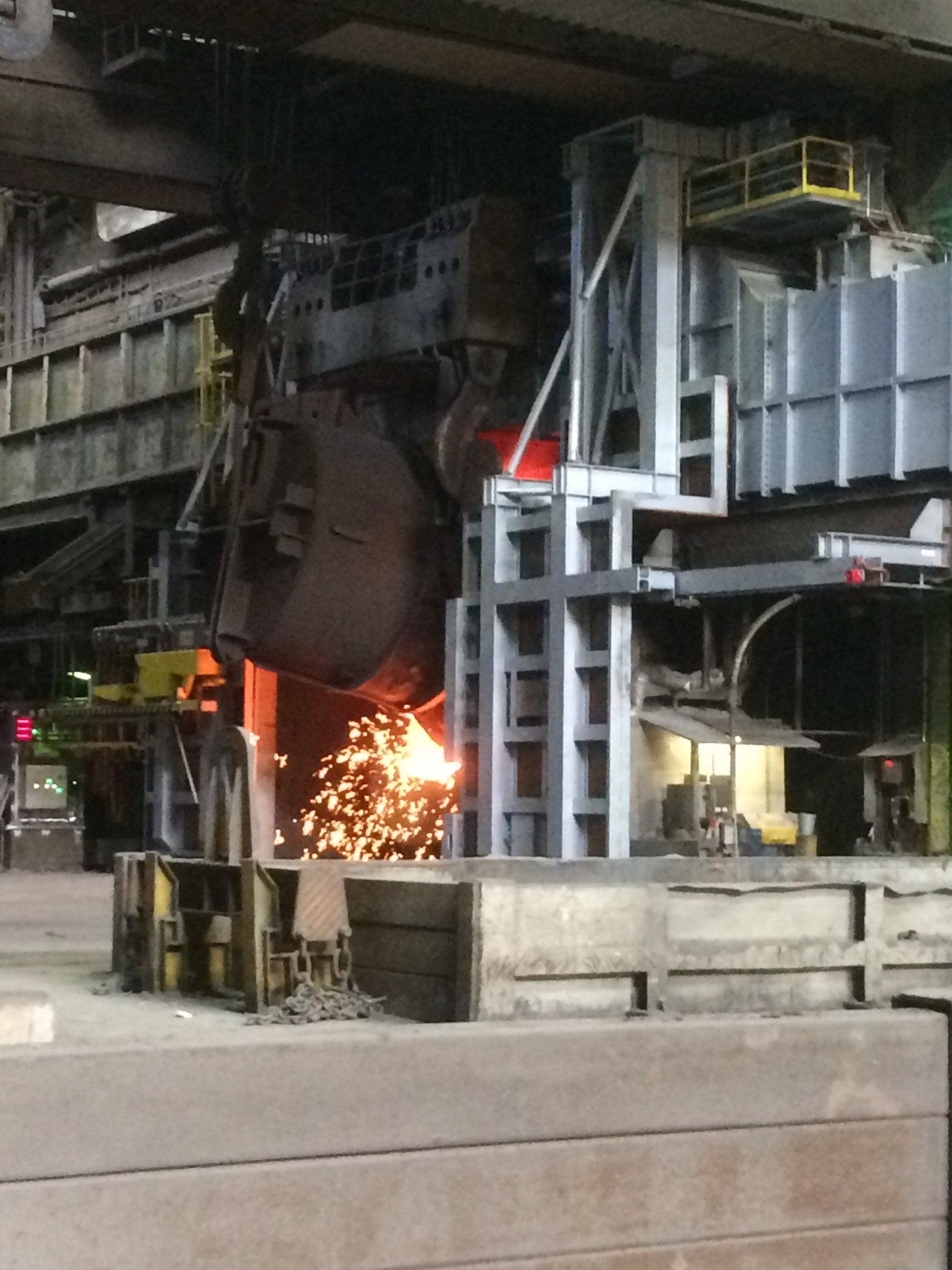
Austrian steelmaker Voestalpine has implemented the first phase of a modernization project covering control systems for its three converter lines and for the higher-level converter area from UK-based engineering and plant manufacturing company Primetals Technologies.
Voestalpine said Aug. 3 Primetals is currently modernizing the entire process control system at its LD3 steel plant in Linz, Austria, with the first modernization phase completed in June.
Platts assessed hot-rolled coil in Northwest Europe unchanged day on day at Eur850/mt ($867/mt) ex-works Ruhr on Aug. 2, while in the Southern market, HRC was also unchanged at Eur780/mt EXW Italy, according to data from S&P Global Commodity Insights.
Voestalpine said updating the entire process control system will lead to improvements in both investment security for the steelworks and process automation availability. The project is expected to be complete in 16 phases and would run until the end of the year.
Systems upgrades for secondary metallurgy, slab treatment and dedusting units will follow in coming phases, it said.
Voestalpine said its process control system is one of the largest PCS 7 installations worldwide. While updating the entire control system, Primetals will take over the existing libraries, the company said, adding that this will save time spent on extensive testing of important functions in all units and would avoid long plant downtimes.
In July, Primetals started up a new basic oxygen steelmaking, or Linz-Donawitz, converter at steelmaker ArcelorMittal’s plant in Gent, Belgium. At a heat size of 330 mt, the Gent plant’s LD converter is one of the largest globally, with average LD converter heat sizes at 180 mt.
Turkey-based Tosyali Holding in May ordered a new slab caster for its Tosyali Algeria mill in Bethioua, 40 km east of Oran, Algeria, from Primetals Technologies, while in March, ArcelorMittal ordered two new LD converters from Primetals for a flat products mill in Dunkirk, France.
— Filip Warwick

US Mainline Metals Acquires Great South Metals In The Southeast
Mainline Metals, Inc. announced today that it acquired Great South Metals, located in Acworth, Georgia. Under the leadership of John Kingery, Great South Metals has become one of the leading flat-rolled service centers in the South with a phenomenal reputation for over 40 years. It has immediately bolstered Mainline Metals’ position as a leading nationwide provider of prime, excess, and secondary steel.
With over 36 years as a business, Mainline Metals’ core strengths are its personal service, industry knowledge, integrity, resourcefulness, and ability to react quickly to customer needs. Its foundation of passionate leadership, high-performing team members, and the unique ability to pivot with market change are the driving engines behind the company’s growth. It has continued to diversify and expand based on the rapidly changing market needs.
Mainline Metals President, Andrew Geisler, commented, “This partnership presents the perfect opportunity for Great South Metals to leverage Mainline Metals’ robust industry knowledge. At the same time, Great South Metals’ expertise in the prime steel market and supply chain programs enhances Mainline Metals’ capabilities to serve its customers and engage more deeply in the prime market. This is a mutually beneficial agreement for both companies and, in particular, our customers.”
Dan Goldstein, Vice President of Sales for Mainline Metals, stated, “We are excited to welcome everyone at Great South Metals, led by Gary Roberts, an industry veteran, to the Mainline family. Their ideal location, extensive set of flat rolled value-added processing equipment, and, most importantly, their passionate and seasoned team add tremendous value and reach to our market offerings. The synergy of Mainline’s and Great South’s mutual strengths in Hot Rolled, Cold Rolled, Galvanized, and Pre-Painted products are ideal for our strategic growth.”
About Mainline Metals Mainline Metals is a steel distributor with vast experience in the prime, excess, and secondary steel markets. Headquartered in Conshohocken, PA, Mainline Metals also owns Mainline Processing, a flat-rolled slitting and storage facility (in Blytheville, Arkansas), and sales offices in Indiana and South Carolina. Using a network of strategic partners, Mainline services clients throughout the US. With solid relationships with domestic and international steel producers, the company continually expands its diverse customer base throughout the country’s manufacturing and construction sectors.


Steel distributor Klockner expects ‘significant’ growth for year after strong H1
German-based independent steel and metals distributor Klockner & Co Aug. 3 reported its strongest first-half result since its IPO in 2006, mainly on a spate of high product prices, and said it expected significant sales growth in the full even despite recent price falls.
H1 shipments fell to 2.48 million mt, from 2.58 million mt in the 2021 period, but their value jumped 49 to Eur5.02 billion ($5.1 billion) from Eur3.37 billion a year earlier after a price surge following Russia’s invasion of Ukraine.
Operating income (EBITDA) before material special effects rose to Eur423 million from Eur401 million. Gross profit margin nonetheless fell to 19.7% from 27.1% a year earlier.
In Q2, shipments and gross profit margins also fell while sales revenue rose. EBITDA also fell as prices moved lower.
Q2 sales volumes fell to 1.23 million mt, from 1.29 million a year earlier, while sales rose to Eur2.58 billion (Eur1.85 billion), gross profit margins fell to 19.7% (28.4%) and EBITDA before special material effects fell to Eur222 million (Eur271 million).
Platts North European hot rolled coil steel domestic ex-works Ruhr assessment stood at Eur850/mt on Aug. 2, according to S&P Global Commodity Insights data. The product started the year at Eur922/mt and hit an all-time peak of Eur1,460/mt on March 18.
Partnership, M&A
Klockner & Co CEO Guido Kerkhoff said that during H1 the company had strengthened its partnership with steelmaker Nucor in the US, added to its stainless steel product and service portfolio via acquisitions through its subsidiary Becker Stahl-Service and expanded its advisory capabilities for green products and services, furthering group strategy.
The distributor and service center company is investing in a facility for plate processing on the site of the new Nucor steel mill in Brandenburg, Kentucky.
Nucor Steel Brandenburg will be an electric arc furnace mill that will recycle scrap metal into heavy plate steel for offshore wind towers and other infrastructure projects.
With the partnership, Klockner & Co says it aims to profit more strongly from the US government’s planned investment in renewable energy and infrastructure. The new heavy plate processing facility, scheduled to start up in Q3 2023, is subject to environmental approvals.
Klockner & Co’s German subsidiary Becker Stahl-Service has, meanwhile, acquired Hernandez Stainless GmbH and RSC Rostfrei Coilcenter GmbH, marking Becker’s entry into stainless steel processing, extending its product and service portfolio, it said.
Sales outlook ‘positive’
Due to the anticipated higher average steel price level, Klockner & Co said it expects significant sales growth and a “significantly positive” cash flow figure in full year 2022.
“After a significant intervening rise in the first half-year, prices have recently corrected. In light of this and of the challenging macroeconomic environment, the company forecasts operating income (EBITDA) of Eur50 million to Eur100 million before material special effects in the third quarter,” it said in a statement. “A figure of more than Eur500 million is expected for the full year, which would be the second-best result since the IPO in 2006.”
Klockner & Co describes itself as one of the largest producer-independent distributors of steel and metal products and one of the leading steel service companies worldwide..
— Diana Kinch
UK’s CPL Industries delivers ‘ecoke’ to Spanish steelmaker Sidenor for trials
UK solid fuel producer CPL Industries has delivered a first truckload of around 25 mt of “ecoke,” a manufactured fuel containing a minimum of 30% renewable biomass, to Spanish special long products steelmaker Sidenor for an industrial-scale trial, CPL Industries said Aug 3.
With a crude steel capacity of around 1 million mt/year, Sidenor will use the biofuel directly in its electric arc furnace at its Basauri works in northern Spain over the next few weeks, replacing anthracite or coke either partially or fully, according to Robert Baker, CPL Industries’ business development manager.
The steelmaker is understood to currently consume around 15,000 mt/year of coke and/or anthracite.
CPL Industries is also in discussions with various other steelmakers and ferroalloys producers in the UK and across Europe on trials of the biofuel which may potentially reduce their current emissions levels by 30%, Baker said in an interview with S&P Global Platts’ Commodity Insights.
The biofuel – produced using materials including charcoal from certified sources – can provide steelmakers with significant reductions in their carbon costs, he said.
“It’s abundantly clear there’s an appetite for this kind of fuel, which can be used with existing steelmaking and handling equipment,” Baker said. “It’s absolutely plug and play”.
Biofuels may be seen as an interim, or partial, solution for steel industry decarbonization for the next 15-20 years until green hydrogen becomes more readily available to the sector, Baker said.
Liberty Steel UK is expected to formalize an arrangement for regular ecoke supplies with CPL Industries next month following trials at Liberty Speciality Steels’ Rotherham special steelworks in May.
— Diana Kinch

German profile maker uses thyssenkrupp carbon footprint calculator
Gebhardt-Stahl, a German maker of steel profiles, has signed a contract with thyssenkrupp Materials Processing Europe for customised, CO2-reduced slit strip, mainly for housebuilding. The supply chain will be monitored by tk’s Product Carbon Footprint (PCF) calculator.
Tk Materials Processing is a subsidiary of distribution division tk Materials Services. It will supply “Bluemint”, a recycled starting material that is proprietary to sister steelmaker thyssenkrupp Steel Europe. Thanks to modified input materials, it is 60% lower in CO2 emissions than conventional material, the company explains.
It is incorporated in the model for calculating PCF at tk Materials Processing, which is unique on the market to date, the company claims. The PCF calculator measures the CO2 emissions for each product from production to delivery, Kallanish understands. Tk Materials Processing calls this a “cradle to gate” approach.
The calculation logic of the PCF calculator has been certified by international classification society DNV and is being used for the first time in the delivery to Gebhardt-Stahl.
Gebhardt-Stahl supplies accessories for air conditioning and ventilation technology, reinforcing profiles for window and door systems, fence posts and vineyard posts, and a wide range of special profiles for construction.
Christian Koehl Germany
