


North European HRC prices drop, September consumption uncertain
Market participants confirmed deals at lower prices in the North European hot-rolled coil market Aug. 9 alongside growing uncertainty about September consumption.
Platts assessed HRC in Northwest Europe down Eur10/mt on the day at Eur780/mt ex-works Ruhr, according to S&P Global Commodity Insights data.
Distribution sources cited deals between Eur750-Eur800/mt ex-works Ruhr, with the price level equivalent to deals done at Eur800/mt delivered North Europe. Lower prices were available to buyers further afield, with the lowest deals equivalent to Eur750/mt ex-works.
Uncertainty was prevalent in the market following a period of relative stability due to concerns over September price levels and wider market activity.
Mills and buyers were awaiting clarity about September consumption before making moves in the market. Buyers were ready to restock some products and even willing to accept a price increase if there was some assurance that purchased material would not devalue like coil bought in the wake of Russia’s invasion of Ukraine.
“Buyers have no clear outlook on the market for September, which isn’t helping sales,” said a service center source. “Mills chasing volumes and cutting the prices also contributes.”
HRC prices have plummeted from a peak of Eur1460/mt ex-works Ruhr March 21. That coupled with low demand from end-users in recent months has resulted in strong devaluation of stock bought in panic following Russia’s invasion of Ukraine in February.
Meanwhile, mills were also waiting for September before setting new offers, with sources contemplating whether pricing mechanisms, such as surcharges, could be introduced to deal with rising transportation and production costs.
Energy concerns remain paramount, though dependence on Rhine River water levels was also a costs factor, with transports only able to accommodate 30% of usual volumes. A service center source previously cited shipping costs at Eur100/mt, up from the usual Eur20/mt level.
Price direction in the Northern market is tied to real consumption levels and the subsequent need for traditional restocking efforts, sources said. If consumption improves, prices may move alongside, but if it remains poor further downtrend could be seen through September-October.
The market in Italy was quiet due to summer holidays and ongoing producer shutdowns.
Market sources said the tradable value was in a Eur770-Eur790/mt ex-works range.
HRC in South Europe was assessed stable on the day at Eur770/mt ex-works Italy.
— Benjamin Steven, Maria Tanatar

Turkish H1, 2022 HRC exports fall on lower EU demand
Turkish exports of hot-rolled coils fell 7% year on year to 1.02 million mt in the first half of 2022 due to lower demand from the EU region, according to the latest Turkish Statistical Institute data.
Egypt was the main export destination in H1 2022 at 190,900 mt, up from just 13,500 mt, a year ago.
Italy received 133,500 mt of the exports during the period, down from 287,500 mt, a year ago, while outflows to Spain dropped to 26,000 mt, from 150,000 mt in H1 2021.
Exports to other EU countries remained low due to an anti-dumping duty on HRC flows from Turkey and lower demand. That also led the Turkish domestic market to become sluggish, with HRC price falling in recent weeks.
Turkish exported HRC was assessed at $620/mt FOB Aug. 5, according to S&P Global Commodity Insights data, representing a $600/mt decline compared with mid-March prices.
Turkey’s other HRC export markets in H1, 2022 were Bulgaria at 77,500 mt, Greece at 68,000 mt, Iraq at 61,000 mt, Tunisia at 47,000 mt and Albania at 44,000 mt.
— Cenk Can
Northern European HRC prices fall in buyer’s market
Northern European hot-rolled coil prices edged lower in a buyer’s market on Tuesday August 9, with sentiment pessimistic for the period after the summer break, sources told Fastmarkets.
Trading activity in the spot market has been subdued by the holiday season, with most buyers preferring to postpone purchases until September, expecting to have a clearer picture of the market by that time, sources said.
Sufficient stocks have allowed buyers to be more flexible in their purchasing strategy, Fastmarkets understands.
Producers, meanwhile, were ready to sell high volumes of HRC at lower prices.
As a result, Fastmarkets calculated its daily steel HRC index, domestic, ex-works Northern Europe, at €810.00 ($825.37) per tonne on Tuesday, down by €13.75 per tonne from €823.75 per tonne on August 8.
The latest calculation of the index was down by €39 per tonne week on week and by €30 per tonne month on month.
Even though official offers from mills in the region were still being heard at €840-850 per tonne exw, those prices were not considered workable by buyers.
Transactions for small tonnages were reported at €780-800 per tonne exw on Tuesday, with achievable prices estimated in the same range.
“Nobody is buying big tonnages – [because there is] no need for it. But mills are desperate for orders so are ready to cut [HRC] prices,” a trading source in Germany said.
Sources suggested that HRC prices in the region were unlikely to rebound after the summer holidays because of persistently weak end-user demand and high buyer inventories.
Italy’s market, meanwhile, has also been largely quiet due to the holiday lull in Europe, with prices broadly unchanged.
“The Italian market is in holiday mode,” a trading source in Italy said. “Arvedi has stopped until September, Ilva [Acciaierie d’Italia] has stopped one blast furnace and will most likely stop another one due to costs, while Metinvest is missing slab [supplies] from Ukraine and is working at reduced rates, so supplies [of HRC] are quite limited in Italy.”
Fastmarkets’ calculation of its daily steel HRC index, domestic, exw Italy, was €772.50 per tonne on Tuesday, stable day on day.
The latest calculation of the Italian index was down by €4.50 per tonne week on week but up by €17.50 per tonne month on month and was based on offers reported at €780-800 per tonne exw and buyer estimates of tradeable prices at €750-760 per tonne exw.
Imports
The market for overseas HRC was also quiet on Tuesday, with some Asian suppliers having withdrawn their offers due to the holiday season in Europe.
Turkey-origin HRC was offered to Italy at €685-690 per tonne cfr, excluding anti-dumping duties, sources told Fastmarkets.
And one source reported HRC offers from South Korea at €650 per tonne cfr Italy, although these could not be confirmed by other market participants.
Published by: Julia Bolotova


Ukraine’s crude steel output down by 38% in January-July 2022
Crude steel output in Ukraine collapsed by 37.9% in January-July 2022 to only 4.52 million tonnes as a result of Russia’s unprovoked invasion of the country that began in late February, according to a report published by national steelmakers’ union Ukrmetallurgprom on Tuesday August 9.
Pig iron production dropped by 38.1% to 4.82 million tonnes over the same period while rolled steel output totaled 4.23 million tonnes, down by 37.3% compared with the first seven months of 2021.
Earlier this year, the World Steel Association downgraded Ukraine to 21st place in the list of major steelmaking countries; it had ranked 14th in 2021.
The loss of control over assets in the once-besieged and now-flattened city of Mariupol, operated by Azovstal and Illych Steel and which belonged to major Ukrainian steelmaker Metinvest, was the main reason for the lower crude steel output.
The city has been occupied by Russian forces since late May, while the mills were seriously damaged by Russian artillery shelling and bombing.
In the first half of 2021, the two mills produced a total of 4.36 million tonnes of crude steel, according to Metinvest’s data.
Meanwhile, those few mills which continued to operate in Ukraine faced significant supply chain disruptions and logistical problems.
In particular, Metinvest wound down the iron ore mining operations at its Ingulets GOK, Southern GOK and Northern GOK units in July. The company continued production at Central GOK, but at a reduced level.
The company now has two assets left to supply – the flat steel-focused Zaporizhstal Iron & Steel Works in Zaporizhzhya, and the long steel-focused Kamet Steel mill in Kamianske, both in central Ukraine. Both were working at reduced capacity.
Meanwhile, ArcelorMittal Kryvyi Rih, the country’s second major steel producer, which specializes in long steel, planned to stop its mining and processing operations for three months starting in August, Ukrmetallurgprom said.
Port blockades and seizures by Russian forces were other big problems for Ukrainian steelmakers.
According to a map published by the UK ministry of defense on August 3, all the major ports on the Sea of Azov, as well as the port of Kherson, which has a river connection with the Black Sea, were currently controlled by Russia. Meanwhile, the major Black Sea ports were blocked for all vessels except those shipping grains and associated products and fertilizers, including ammonia.
This was hampering steel mills’ export opportunities because most Ukrainian steel was traditionally shipped to foreign consumers by sea.
Ukrainian steelmakers have had to look for alternative options for exporting their products. Among these was delivery of goods to Europe by truck and rail, as well as shipments from Black Sea ports in Romania and Bulgaria and from Baltic Sea ports in Poland.
According to Roman Perepelytsia, head of strategy and business development at Metinvest, there were two possible scenarios for the country’s steel industry in the coming years, depending on the outcome of the war against Russia.
Should Ukraine be victorious, its crude steel output could reach 7.6 million tonnes in 2022 and 8.3 million tonnes in 2023, while rolled steel output could reach 6.9 million tonnes in 2022 and 7.6 million tonnes in 2023, Perepelytsia told a meeting of the International Rebar Producers & Exporters Association (Irepas) in Istanbul at the end of May.
In the case of a prolonged war, which now looks more probable, the country’s steel output was expected to be only 6.5 million tonnes in 2022 and 6.1 million tonnes in 2023, while rolled steel output may amount to only 5.9 million tonnes in 2022 and 5.5 million tonnes in 2023.
Published by: Vlada Novokreshchenova
ArcelorMittal orders two new converters for Dunkirk
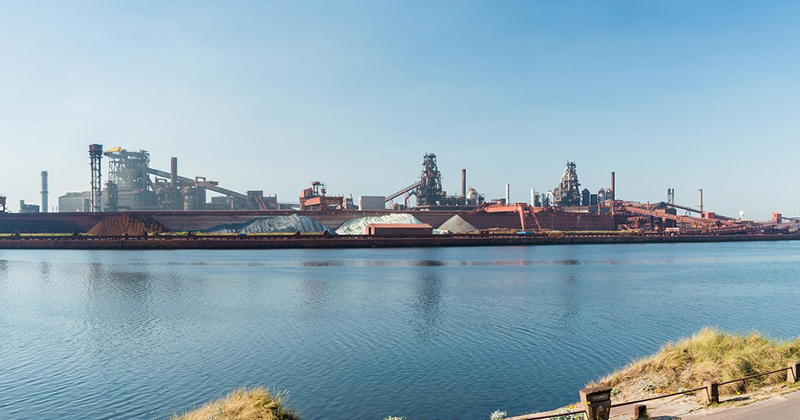
DF Calderería Pesada (DFCP) has bagged an order from Primetals Technologies to build two new converters for ArcelorMittal’s steelmaking plant in Dunkirk, in northern France.
The two converters are planned to be the world’s largest and will be installed next year. DFCP will construct and test the equipment at its plants in Gijón, Spain, Kallanish learns from the company.
Primetals has also recently started a new LD converter at ArcelorMittal’s plant in Ghent, Belgium, part of the steelmaker’s Europe Flat Products division.
This summer, ArcelorMittal has idled one blast furnace – HF2 – at its Dunkirk mill, effectively reducing output for the coming months. According to the plans issued by trade unions, HF2 should be restarted at the end of September when another furnace at the site, HF3, will be temporary idled.
The site is expected, therefore, to operate mostly with two blast furnaces during the coming months, with occasional moments during which only one blast furnace will be in operation. As a result, the steelmaking plant at Dunkirk should be working using two of the three converters at the site from the end of June (see Kallanish 20 June).
Natalia Capra France


Stainless demand weak, nickel prices to decline: Eramet
Nickel and ferronickel prices are seen declining in the second half of the year despite the expected favourable seasonality. The market will be impacted by strong negative external economic factors, French mining group Eramet says in its H1 earnings report seen by Kallanish.
London Metal Exchange nickel prices are seen fluctuating around the level of $24,500/tonne in H2.
Third-quarter global demand for nickel from the stainless steel sector should remain weak and continue to slow because of high raw material prices and economic uncertainties. The latter include energy and sea freight prices that remain at historically high levels.
In H2, global nickel production will continue to grow, supported by Indonesia. At the nickel mining site of Weda Bay in Indonesia, the production target is confirmed at approximately 15 million wet metric tonnes for 2022.
H1 global stainless steel production was down by more than 3.5% year-on-year to 28.2mt, driven by the decline in Chinese output. Nickel inventories at the LME and Shanghai Futures Exchange (SHFE) decreased compared to end-2021, due to sustained demand for batteries. At the end of June, inventories totalled 69,000 tonnes, representing only three weeks’ consumption.
Eramet posted record-high half-year results, with turnover at €2.6 billion ($2.65 billion), up 79% year-on-year, driven by high price levels for both nickel and manganese.
Natalia Capra France
German mechanical engineering remains strong despite gloomy mood
Germany’s mechanical engineering industry did not fare too badly in the first half of the year, although the war in Ukraine has spurred a negative sentiment in more recent months.
H1 order books showed a small overall increase of 2%, which was mainly driven by foreign orders. “Many customers still wanted to invest in new machines and plants, although there is increasing reservation,” says Ralph Wiechers, the chief economist of industry federation VDMA. Nominal turnover grew by 7%. “This needs to be assessed against rising inflation, so, roughly, it is in line with the growth in order intake,” Kallanish hears from Wiechers.
Clouds over the industry descended further in the second quarter, when companies recorded a decline in orders of 2% in real terms compared to the previous year. Domestic orders fell by 8% from April to June, while orders from abroad increased by 1%, especially in eurozone countries. In June, new orders were down 9% compared with the same month of the previous year, with the decline seen inland as well as abroad.
“After the mood indicators deteriorated considerably in the past months, the minus in June is hardly surprising,” says Wiechers. Disruptions in global supply chains continue to weigh on business, as do order cancellations as a result of the war in Ukraine. He expresses overall satisfaction with the performance of the first half, but notes that “the second half could become critical”.
Christian Koehl Germany