Posco orders HyREX plant from Primetals
South Korean steelmaker Posco has begun working with Primetals to design a 100% hydrogen-reduced ironmaking plant (HyRex), taking the first step towards its roadmap to carbon neutrality by 2050.
Kallanish learns from local media that Posco will begin plant design in August and demonstrate the commercial viability of hydrogen-reduced steel by 2030. If HyREX proves successful, it will gradually replace Posco’s blast furnace after optimisation, and help the steel mill become carbon neutral by 2050. The steelmaker aims to launch its 1 million tonnes/year HyRex plant in 2028 at the earliest.
HyREX (Hydrogen Reduction) is a steelmaking method that manufactures molten metal using iron ore fines and hydrogen, based on Posco’s FINEX fluidized reduction technology.
Hydrogen reduction steelmaking is an innovative technology that produces iron using hydrogen instead of fossil fuels, Posco says. When fossil fuels such as coal and natural gas react chemically with iron ore, they generate carbon dioxide, while hydrogen only generates water. Therefore, hydrogen reduction steelmaking can dramatically reduce carbon emissions in the steelmaking process.
Kallanish Asia


Tk Materials keeps focus on Americas and AI
On the back of high market prices, Europe’s largest steel distributor, thyssenkrupp Materials Services, lifted revenue in the third fiscal quarter (April-June) by 46% year-on-year to €4.8 billion ($4.9 billion).
At €386 million, adjusted Ebit was also significantly above the prior-year level of €232m. The order intake rose by 13% to €4.1 billion, lower than the revenue figure, which points to saturation in the customer groups, Kallanish believes.
The increase in income was achieved against the trend of lower volumes, which were down to 2.3 million tonnes, from 2.4mt in the previous-year quarter. The company reports a declining trend in the European and North American service centre business, and in warehousing. The direct-to-customer business at the Materials Trading unit saw slightly positive growth due to new business in Singapore, the company notes.
In the current fiscal year, the main emphasis of activities continues to be on sharpening the focus of locations and on profitable growth in North America, tk Materials says. In the first nine months, the company closed a total of 12 warehouse sites and drove forward its major investment projects at sites in the USA.
In addition, it is focusing on the AI-based expansion of digital supply chain solutions and the further enhancement of sustainable products and services, such as the carbon footprint calculator product, it says.
Christian Koehl Germany
Voestalpine to spend €100m on galv lines
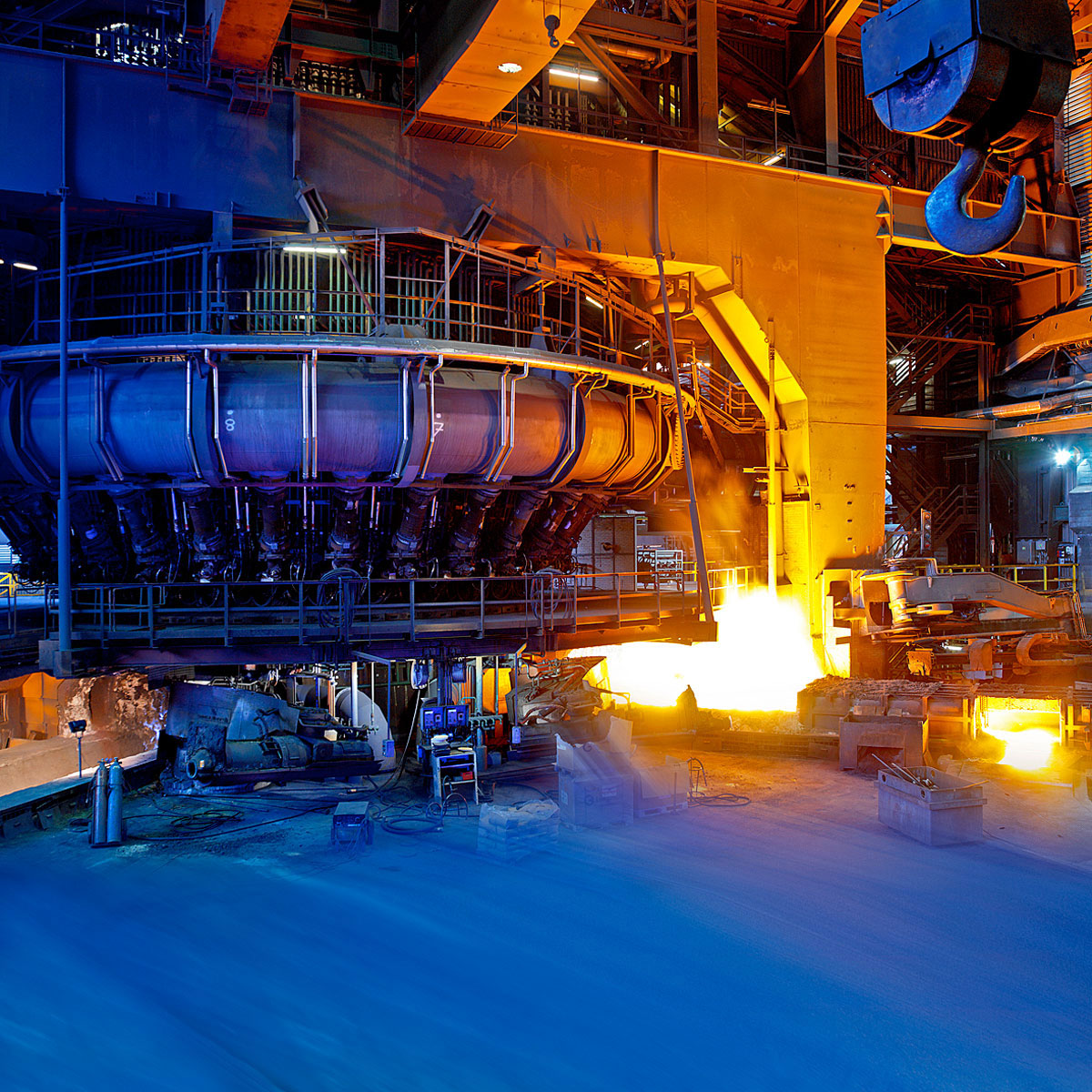
Voestalpine says it will invest almost €100 million ($103m) in the expansion of the hot-dip galvanizing lines at its Linz site.
The investment will make it possible to further increase the production quality of zinc-coated and uncoated cold-rolled strip products. It will also allow the site to significantly increase the volume of ultra-high-strength steels. Kallanish hears from the Austrian company.
It says the expansion of the line is a key factor in its future high-strength strategy. The investment will enable voestalpine to produce all major steel grades used in the premium automotive industry, which have to meet the most stringent quality requirements, it explains.
Another important component is the planned zinc bath bypass; the integrated “bypass solution” is being developed within the group and will allow cold-rolled strip to be produced on a line without a lowerable zinc bath.
Construction work will start in August at HDG line 4; the technological ramp-up is scheduled for 2025/26. The modernisation of all HDG lines is expected to be completed in 2027.
Christian Koehl Germany

CBAM requires IT solutions, steel costlier: BCG/SAP study
New IT solutions will be essential to effectively implementing the Carbon Border Adjustment Mechanism (CBAM) and achieving European Green Deal goals. The cost of importing steel into the EU will rise significantly in the next decade, with the automotive and construction sectors seeing heavy downstream impacts, says a Boston Consulting Group (BCG) and SAP joint study.
The European Commission calculates that importers will face additional costs of around €2 billion ($2.06 billion) annually by 2030, when the price of carbon in the EU is projected to reach more than €100/tonne, compared with around €84 today.
By 2032, the cost of iron and steel imported into the EU from the US and UK could rise by 6%, from Turkey by 10%, from South Korea by 12%, from China by 17%, and from India by 32%, the study notes. The downstream impact could fall most heavily on the automotive, construction, packaging, and consumer appliances sectors – the biggest users of CBAM products. For example, an EU construction company importing 100 tonnes of Indian steel would pay CBAM costs of €24,600, or 32% of the current price.
“Most of the basic data necessary for compliance is likely already contained in companies’ ERP and procurement systems, as well as in the border management software that calculates customs duties,” the report seen by Kallanish indicates. “But IT solutions are needed that integrate and share this data in an efficient and secure way that provides transparency for everyone in the supply chain.”
“One idea is to establish something like a secure carbon data exchange. Take a hypothetical European truck manufacturer. Foreign suppliers upstream, such as iron mines, plastics producers, steel mills, and makers of components, would load their data into the exchange. Downstream importers of those products, such as the truck maker itself or third parties, would download the data to ensure compliance with the new regulation,” it continues.
The EU truck manufacturer would then have full visibility into emissions in its supply chain, the carbon border taxes that have been paid, and the taxes it owes. The data exchange would also ensure that importers properly claim rebates and exemptions.
Starting from 2023, EU importers will need to document and report the CO2 footprints of imported electricity and of materials such as steel, iron, aluminium, cement, and fertilizers. Chemicals, hydrogen and plastics may be included as well. Starting in 2026, this task will get more challenging: importers will need to calculate and pay a levy on each tonne of CO2 tied to those imports.
Adam Smith Poland

Well-stocked buyers resist competitive offers in European HRC market.
Mixed sentiments on demand and price direction were heard in the European market Aug. 12, as mills chased discounted volumes against patient buyers, desiring certainty before purchasing.
In Northern Europe, tradable value indications were unanimous at Eur750/mt ex-works Ruhr, confirmed by deals reported at said level by multiple producer and distribution sources.
The Southern market moved down sharply, with deals reported at Eur700-720/mt ex-works by a mill source. A distributor source confirmed the Eur720/mt ex-works level.
Mills were heard as hungry for volumes, attempting to sell material “regardless the price,” according to one distributor. Despite attractive pricing, stockholders face a common problem in high inventory levels.
“Prices may be good, but we just don’t have space in our stocks for new material and don’t want to pay extra stocking costs,” the source said.
A trader source was critical of mill aggressiveness in the market, viewing discounted sales as “illogical.”
“Mills are going to have a lot of trouble increasing the prices now that they’ve dragged the market down,” the source said. “Margins are acceptable even as low as Eur700-720/mt, so it seems they’re destocking and generating cash flow rather than trying to get this price trend under control.”
Indeed, a primary factor motivating patient distributor sentiments is the recent volatility in the market, with buyers preferring to wait to see where prices would move before looking to domestic or import restocking, so to avoid devaluation of new steel.
“We prefer to wait and see how the prices will move,” said the trader.
“Buyers show little interest in imports – they want to see where domestic prices are going,” agreed a mill source.
Given the pricing downtrend has continued beyond the Eur850/mt stabilization point seen through July, expectations that market conditions would improve in September – with a consequent rebound in prices – are increasingly pessimistic.
However, a mill source warned against premature negativity.
“Now really isn’t the time to judge the September market,” said the source. “Everyone is on holiday, so there is a lack of clarity – mills are indeed trying to destock and perhaps secure cash flow in some cases, but people tend to make assumptions that the market will be in the same depressed state in September.
“We should be smart about this and wait to see what’ll happen. Real demand remains a question and concern, but it’s too early to pronounce the market dead for the year until we see the state of things in September.”
With deals in the Northern and Southern domestic market at Eur750/mt and Eur720/mt, ex-works Ruhr and Italy, respectively, Platts assessed ex-works HRC in Northern Europe and South Europe at Eur750/mt and Eur720/mt.
Import deals were heard slightly lower in the Northern market at Eur715/mt CIF Antwerp ex-Asia, and in the South European market at Eur670-700/mt CIF Italy ex-Asia and ex-Turkey (duties included).
Multiple buyers reported a lower offer for South Korean material into the Italian market on the day, at Eur650/mt CIF Italy.
— Benjamin Steven, Maria Tanatar


Turkish coated coil prices continue to fall, European Commission starts to apply anti-dumping duties
Turkish coated coil prices continue to fall, European Commission starts to apply anti-dumping duties Coated coil prices in Turkey’s local and export markets continued to fall in the week ending Friday 12 August as demand remained weak, sources told Fastmarkets. In addition, the European Commission announced that it had begun imposing definitive anti-dumping duties on coated coils from Turkey and Russia, according to a statement dated 11 August.
The Commission had announced the duty rates in May 2022 and the same rates have been implemented.
The imposition of duties is unlikely to have a significant impact as Russian material is already sanctioned by the EU, according to an EU source.
The anti-dumping duty will apply to exports from Turkey to Europe, while Vietnam was added to the HDG quota for safeguard duties earlier. As a result, the EU’s supply of HDG will be reduced, the source said.
However, demand is already low in the region, the source added.
Domestic prices
Fastmarkets’ weekly price assessment for domestic hot-dip galvanised steel coil, exw Turkey was $730-750 per tonne on 12 August, rising from $780-820 per tonne on 5 August.
Turkish producers were offering 0.5mm thick HDG with Z100 coating at around $730-770 per tonne ex-works, up from $780-820 per tonne ex-works last week.
Fastmarkets’ weekly price assessment for pre-painted galvanised steel, domestic, exw Turkey was $830-850 per tonne on Friday, rising from $880-900 per tonne on 5 August.
Bid prices for pre-painted galvanised iron, also known as colour – 0.50mm thick coated coils with colour code 9002 cost $830-$870 per tonne ex-works during the week, but buying was very low.
HDG exports
Fastmarkets’ weekly price assessment for HDG steel, export, fob Turkey was $730-750 per tonne on 12 August, rising to $800-830 per tonne on 5 August.
Bids from Turkish producers were $730-$770/tonne fob for 0.50mm thick HDG with Z100 coating, but no major bids were heard.
Published by: Serife Durmus
Julia Bolotova in Brussels contributed to this article.


EU imposes anti-dumping duties of up to 37.4% on galvanized steel from Russia, Turkey
The European Commission is imposing definitive anti-dumping duties on imports of hot-dip galvanized steel coils and sheets from Russia and Turkey, it said Aug. 12.
It had found that there had been an exponential increase in low-priced imports, by roughly 1 million mt, over a short period of time, grabbing a market share of 12.9% in 2020.
The products concerned are flat-rolled steel coated by hot dip galvanization with zinc, aluminum and/or magnesium with or without any additional surface treatment presented in coils, cut-to-length sheets and narrow strips with the exclusions of stainless steel, silicon-electrical steel, and of high-speed steels.
These are mainly used in the construction sector for cladding building materials and for manufacturing domestic appliances, deep-drawing and stamping processes and small welded pipes.
The investigation of injury covered January-December 2020 and found evidence that Turkish and Russian material had been sold at 2.4%-39.8% dumping margins, the EC said.
The definitive anti-dumping duty rates, expressed on the CIF Union border price, customs duty unpaid, would therefore be imposed at 36.6% for MMK’s Magnitogorsk Iron and Steel Works, 10.3% for NLMK’s Novolipetsk Iron and Steel Works, 31.3% for Severstal and 37.4% for all other Russian companies.
Turkish HDG exports are now subject to anti-dumping duties of 10.5% for MMK Metalurji, 2.4% for Tatmetal, and 11% for all other companies, including Tezcan.
The anti-dumping measures will remain in effect for five years.
Output by 20 mills in the EU of the same product during the investigation period totaled 9.8 million mt, the equivalent of the 73% of the 13.34 million mt/year capacity, the EC said.
European production was stable in 2017-2019, but dropped 10% toward the end of 2020, partly due to the pressure exerted by Turkish and Russian imports, which increased by 330,000 mt year on year in 2020.
European HDG sales in the free market were 6.59 million mt, capturing 77.3% of the market, with domestic consumption for 2020 estimated at 10.69 million mt.
Imports from Turkey (796,524 mt) and Russia (300,730 mt) represented 9.3% and 3.5%, respectively, while their combined volume and market share increased more than five-fold from 2017 despite a safeguard measure in place during most of the four-year period.
Lower prices
The average import prices from Turkey and Russia, although stable in 2017-2018, were constantly lower than EU prices and then fell 14% between 2018 and late 2020, doubling the gap with European sales prices as a result, the EC said.
The investigation established a weighted average undercutting margin of 4.2%-7.1% by Turkish imports and 5%-20.4% by Russian imports.
The EC, therefore, established a causal link between the injury suffered by the EU industry and underpriced imports from the two countries.
The EU industry’s HDG profit of 0.4% in 2020 declined from 6.2% in 2017 to a level just above break-even, which could not be considered healthy, the EC said.
Over 2017-2018, the European industry was able to take advantage of relatively good market circumstances and the anti-dumping measures in place against Chinese imports, but it started making a loss in 2019, due to high year-on-year increases of imports from Russia and Turkey.
The poor financial situation continued into 2020, after a further increase of imports from Turkey and Russia, proving a clear correlation between the dumped imports and the injury suffered by the EU industry.
In 2019, the European industry managed to increase its domestic HDG sales by just over 200,000 mt, but this was less than half of the increase of respective imports from the countries concerned.
In 2020, South Korea, Taiwan and India were other significant exporters of the product to the EU at 249,000 mt, 184,160 mt and 169,040 mt, respectively, but the bulk of imports from third countries arrived in the EU at prices higher than import prices from Turkey and Russia.
Turkey contested negative impacts
The Turkish Steel Exporters Association contested any negative impact of imports on the grounds that such imports did not set prices on the European market and followed global market trends driven by fluctuating hot-rolled coils prices. However, the EC rejected the claim.
Several parties stated that Turkish and Russian imports never reached volumes that could be injurious since they were below the level of the residual quota of the EU’s steel safeguard quotas.
The EC dismissed this point too, saying that anti-dumping measures addressed a different situation, and safeguards did not prevent the imposition of anti-dumping measures within the free-of-safeguard duty quotas, which are large enough to allow significant import volumes before the safeguard duty applies.
The EC also rejected some parties’ statement that a drop in demand was to blame for the decrease in European production, noting that whereas consumption declined by 467,000 mt between 2017 and 2020, imports from the two countries concerned almost doubled.
It also did not find evidence supporting the claim that ill-timed investments leading to a higher capacity than consumption in the EU was reason for the injury suffered by European producers, and that COVID-mandated shutdowns affected fixed costs and profits of European steelmakers.
— Ekaterina Bouckley

Waldmann relies on Smart Factory Solution from
Kaltenbach.Solutions
Breisach, August 15, 2022
At the beginning of August, Kaltenbach.Solutions GmbH was able to conclude a major order for
its Smart Factory Solution with H. Waldmann GmbH & Co. KG in Villingen-Schwenningen. The
Waldmann Group manufactures luminaires for industrial applications as well as for architecture,
care and health and also produces in the USA, Switzerland and China. Now they will use the
digitally supported solution from Kaltenbach.Solutions in production to make work processes
transparent, sustainably increase efficiency and reduce costs.
Founded in 1928 in the Black Forest, Waldmann creates customer-specific lighting concepts and
employs around 900 people. In production, machines as diverse as SMD placement machines,
automatic gluing robots or plastic extruders are used. Within the realignment of production, owner
and managing director Christoph Waldmann and managing director Daniel Hug have set
themselves the goal of continuing to drive forward the lean process that was already started last
year and to provide new impetus. By concentrating on the core competencies, they want to adapt
the company to the changes in the market in the best possible way. In Villingen-Schwenningen,
work is being done on the “Production Next Level”.
After drawing up a specification with all the requirements, three suitable providers were initially
identified. In the subsequent scoring process, Kaltenbach.Solutions came out on top. The
decisive factors were the proven expertise and the rapid implementation on all machines as well
as the customizing. In addition, a strategic development partnership was agreed in order to
continually adapt the solution to Waldmann’s changing requirements. More than 100 measuring
devices are supplied to record data at machine and manual workstations as the basis for the best
possible transparency in production. Various software modules can be used to measure
performance, display malfunctions, calculate improvement approaches, clearly manage operating
resources and control industrial engineering orders.


Transformation der Stahlindustrie hin zu „Green Steel“
11.08.2022 von Hubert Hunscheidt
Die Swiss Steel Group hat bereits entscheidende Schritte im Bereich der Dekarbonisierung in der Stahlproduktion gemacht. Nicht umsonst ist der ökologische Fußabdruck der Swiss Steel Group um rd. 78 % niedriger als der des weltweiten Branchendurchschnitts. Hierzu gibt es ein „White Paper“ der Swiss Steel Group mit vielen detaillierten Erklärungen.
Das „White Paper“ enthält Informationen zu folgenden Themen:
Hochofenroute versus Lichtbogenofenroute
Wasserstoff statt Erdgas
Ökostrom statt Graustrom
Hochlegierter Schrott statt Legierungsmetalle
Erkennen, handeln, anspornen
«Green Steel» als Forschungs- und Technologieplattform
Wertlose Abwärme als Ressource und teure Traktionsenergie
«Green Steel» als Signal für andere Branchen
Nicht nur Bio-Label für Stahl, sondern Einladung zum Mitdenken und Mitarbeiten
Diverse Charts
Außerdem erläutert das “White Paper”, wie die Swiss Steel Group ihre CO2-Bilanz verbessert hat und in Zukunft noch umweltfreundlicher gestalten wird. Unternehmen stoßen in insgesamt 3 Geltungsbereichen (Scope 1,2,3) CO2 aus:
Scope 1: umfasst den direkten CO2-Ausstoß eines Unternehmens
Scope 2: umfasst den indirekten CO2-Ausstoß durch Energielieferanten.
Scope 3: umfasst den indirekten CO2-Ausstoß der vor- und nachgelagerten Lieferkette
Die errechneten Verbräuche werden anschließend mit Emissionsfaktoren (Umrechnungsgrößen) umgerechnet und als CO2-Äquivalente ausgegeben.
Das White Paper informiert nicht nur über den Einsatz von Green Steel und dessen Produktion, sondern auch vollumfänglich über den Status Quo und die zukünftigen Schritte bei der Stahlherstellung in den Werken der Swiss Steel Group.
Quelle und Fotos: Steeltec AG