


July Brazilian steel distribution purchases rise 12% on year: Inda
Purchases from Brazilian steel distributors rose 5.2% on the month and 12.3% on the year in July to 332,300 mt, according to recent data from Inda, the national institute of steel distributors.
The group also showed that flat steel sales rose 20.6% on the year in July from 261,400 mt in the same period last year. At the same time, July inventories increased 2.1% on the month, reaching 806,200 mt, with inventory turns remaining at 2.6 months.
On the import side, there was a drop of 47.8% on the year in July from 211,300 mt in the same month of 2021. On a monthly basis, July imports fell 4.2%, to 110,200 mt against 115,100 mt in June.
For August this year, Inda’s associated network expects steel purchases and sales to rise by 5% and 2.5% on the month, respectively.
— Mayara Baggio


Northern European HRC mills continue to give discounts to generate sales
Domestic prices for hot-rolled coil in Northern Europe moved further down on Aug. 23 as mills cut prices in an attempt to spur buyers’ interest.
Platts assessed hot-rolled coil in Northern Europe down Eur15 day on day at Eur710/mt ex-works Ruhr on Aug. 23.
A trader and a producer reported deals around Eur700-720/mt ex-works Ruhr.
A German service center reported unconfirmed deals settled at Eur700/mt ex-works Ruhr, but said the price is below production costs taking into account rising energy prices, adding that reported offers were at about Eur780/mt delivered Germany.
An Italian trader said that German mills have traded hot-rolled coil at Eur750/mt delivered Northern Europe, the equivalent of about Eur700/mt ex-works Ruhr. A Southern European distributor estimated tradable value at Eur720/mt ex-works Ruhr.
Lower prices, however, have not triggered demand recovery. Distributors have sufficient inventories of coil products and they have been holding back from restocking due to a negative price trend combined with limited end-consumers’ demand.
“Most mills try to hunt orders. But lower prices fail to stimulate the demand,” a steelmaker said. “Service centers work with high stocks load, so they feel comfortable holding back from new deals. Some mills cut prices regardless of the fact that lower prices will not support the demand, as they want to fill book minimum volumes for the fourth quarter to allow them to run the furnaces.”
In addition, steelmakers were reported to deliver more material to affiliated service centers to maintain production rates. As a result, those service centers have been showing less interest in imported coil, as those volumes have been substituted by local material.
Demand from end-consumers, particularly from white goods and automotive industries, was also muted. Carmakers continue to deal with a reduced supply of components and semiconductors, sources said.
“Buyers have high stocks and there is little hope for demand and price recovery in the current economic situation,” a German service center said. “I think the ability of average people to buy a new car is a bigger issue than semiconductors shortage.”
European steelmakers had already cut output earlier this summer, but the reductions were not enough to balance low demand and supply. Some market participants believe that mills would have to cut production further soon, but they need to evaluate the market situation in September when buyers would return to the market after the summer lull.
Some sources, however, had a more positive outlook for the market, expecting demand and prices to see some revival in September, following the traditional yearly cycle.
“Distributors have stocks, but they will return to the market to book whatever volumes they need. Then we will see actual prices,” an Italian trader said.
Platts is part of S&P Global Commodity Insights.
— Maria Tanatar

Global steel production down 6.5% on-year to six-month low in July: worldsteel
Global crude steel production totaled 149.3 million mt in July, down 6.5% year on year and down 5.9% on the month to the lowest month level since February, according to World Steel Association data published Aug. 23.
This brought total production for the first seven months of 2022 to 1.1 billion mt, down 5.4% on the year.
Largest steelmaker China produced 81.4 million mt in July, down 6.4% from a year ago and falling 10.3% on the month to a six-month low, making up 54.5% of total global crude steel output.
This brought January-July steel production in China to 609.3 million mt, down 6.4% year on year.
However. the world’s second-largest steel producer India saw production grow 3.2% year on year in July to 10.1 million mt, which was also up 1.4% month on month, the data showed.
India’s January-July output also rose 8% to 73.3 million, according to worldsteel.
Japan’s July production was at a six-month low of 7.3 million mt, down 8.5% on the year and 1.6% lower from June, with January-July output down 4.9% on the year to 53.3 million mt, the data showed.
July output from the US fell 6.4% year on year, but rose 3.6% on the month to 7 million mt, taking January-July production to 48 million mt, down 3% year on year.
Russia was estimated to have produced 5.5 million mt in July, falling 13.2% from July 2021, but up 10% from June, which had been the lowest monthly volume since S&P Global Commodity Insight’s records began at the start of 2018.
Russia’s estimated January-July output was also 7% lower on the year at 41.4 million mt.
South Korea produced 6.1 million mt of crude steel in July, down 0.6% year on year, but up 9% from June, with the seven-month volume down 3.4% on the year to 39.9 million mt.
Europe January-July output down 5.9%
In the whole of Europe, including the UK and Turkey, crude steel production fell 9.2% on the year in July to 15.2 million mt, which was also down 2.3% from June to the lowest monthly volume since September 2020, the data showed.
Europe’s January-July volume 113.5 million mt, dropping 5.9% on the year.
Germany, the largest steel producer in Europe, saw its crude steel production fall 2% on the year in July to 3 million mt, which was also down 6.9% on the month to a 11-month low, as high energy costs dented demand and the auto sector still impacted by the ongoing semiconductor chip shortage.
In January-July, Germany produced 22.5 million of crude steel, down 5.1% year on year, the data showed.
Domestic prices for hot-rolled coil in Europe have been weakening since the second half of March on low demand, with Platts assessing domestic HRC prices in Northern Europe at Eur725/mt ex-works Ruhr Aug. 22, down 13% since the start of 2022, according to S&P Global Commodity Insights.
Turkey’s July output also fell 20.7% year on year to 2.7 million mt, according to the data, which was also 8.6% lower than June’s volume. January-July production was down 6.9% on the year to 21.6 million mt.
Brazil produced 2.8 million mt in July, down 8.7% year on year and falling 3.5% from June, while Iran’s monthly output was at 2 million mt, up 34.1% on the year and 25% lower than the previous month.
Brazil’s January-July production fell 3.5% on the year to 20.3 million mt, while Iran’s output for the seven-month period rose 3.7% to 17.4 million mt.
July production of pig iron from 38 countries was 104.9 million mt, down 6.2% year on year, the data showed, while direct reduced iron produced worldwide amounted to 9.2. million mt, up 20.7% year on year, the data showed.
Pig iron output over the January-July period totaled 756.25 million mt, down 5.1% year on year, while DRI production for the period rose 5.4% on the year to 64.68 million mt.
Crude steel data covers the 64 countries that report to worldsteel, accounting for about 98% of the world’s crude steel production.
— Jacqueline Holman
European HRC deal prices drop as mills struggle to fill order books
Hot-rolled coil (HRC) prices in Northern Europe sank again, with producers struggling to fill order books, sources told Fastmarkets on Tuesday August 23.
Fastmarkets calculated its daily steel HRC index, domestic, ex-works Northern Europe at €722.40 ($721.45) per tonne on Tuesday, down by €20.10 per tonne from €742.50 per tonne on Monday.
The latest calculation of the index was down by €37.60 per tonne week on week and by €132.60 per tonne month on month.
A sale of September rolling HRC from an integrated mill in Germany was reported at €700-720 per tonne exw.
Producers in the region were offering September-October rolling HRC to the market, sources said.
Market sources estimated the achievable prices for tonnages up to 1,000 tonnes to be between €730 and €750 per tonne exw on Tuesday.
But for bigger volumes, producers in Northern Europe were prepared to provide additional discounts. Notably, market participants estimated the tradeable price level for HRC lots over 1,000 tonnes to be about €700-720 per tonne exw, Fastmarkets heard.
Despite HRC prices in the region having fallen by more than €100 per tonne over the past month, this has not resulted in increased buying activity, sources said.
“Traded [HRC] volumes are still very low,” a mill source in Germany told Fastmarkets. “Inventories are still high, and most distributors are largely focused on selling HRC from stock rather than buying new tonnages.”
Buying activity in the spot market is not expected to recover in the first half of September, considering the persistent overstocking and weak consumption, market sources said.
Indeed, some market participants suggested that European mills will need to further cut production to balance the market and stop the downtrend.
Fastmarkets’ calculation of its daily steel HRC index, domestic, exw Italy was €717.50 per tonne on Tuesday, down by €12.50 per tonne from €730 per tonne on Monday.
The latest calculation of the Italian index was down by €37.50 per tonne week on week and by €57.50 per tonne month on month.
The standstill in Italy’s market continued this week, with both mills and buyers staying largely out of the market.
The latest index calculation was based on buyers’ estimates of achievable prices reported at €700-740 per tonne exw.
Published by: Julia Bolotova

Montenegro government eyes acquisition of Toscelik Special Steel
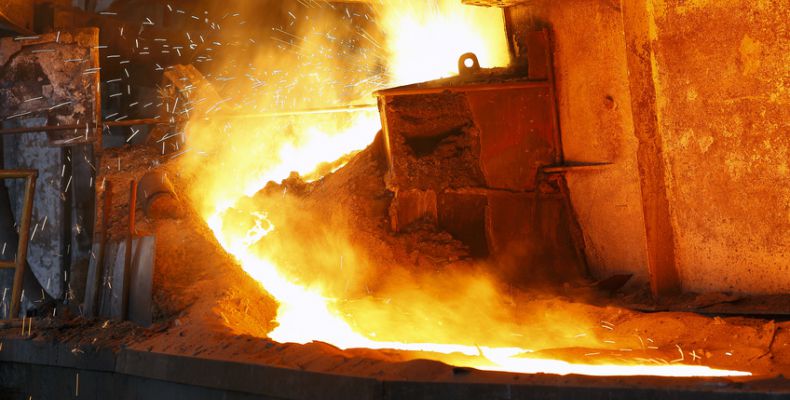
Toscelik Special Steel in Montenegro, which stopped production in some units last year due to the stagnation in the markets and the market’s inability to meet production, is now in the sale process, Kallanish learns.
Zaljezara Niksic, which was established more than 70 years ago and is known as the oldest and largest iron and steel factory in Yugoslavia, has been owned by the Turkish company Tosyalı Holding since 2012. Toscelik acquired Zeljezara Niksic in 2012 for €15 million ($14.96m) and invested €35m. The target was primarily to increase the production from 120,000 tonnes to 400,000t.
The plant, which continues to operate as Toscelik Special Steel, stopped production in some units last year due to the market recession as a result of the pandemic and the market’s inability to meet production. With the beginning of the sales process, two important suitors came to the fore. The first of these was Neksan, one of the largest companies in Montenegro, earlier this year. According to the news in the Montenegrin press, these negotiations did not result in positive results and no sales were made.
Now the state-owned power company Elektroprivreda Crne Gore AD Nikšić (EPCG) has stepped in. The Montenegrin government has given permission to EPCG to start negotiations with Tosyalı Holding for the purchase of the Zeljezara Niksic plant.
Burcak Alpman Turkey


Germany decides on further LNG terminals
The German government has leased a total of four floating liquefied natural gas terminals (so-called FSRUs), Kallanish learns from the Ministry of Economics and Climate Protection.
Two ships are already available this year and will be deployed in Wilhelmshaven and Brunsbüttel at the end of this year. The other two ships will be in Stade and in Lubmin, and will be available from the end of 2023 at the earliest. In addition, a fifth FSRU terminal is being built in Lubmin by the end of 2022 by a private consortium.
“We need to build a new infrastructure within a very short time in order to be able to replace Russian gas as quickly as possible,” economy minister Robert Habeck admonishes. “It is therefore very good news that in addition to the four federal vessels, a fifth private regasification vessel is now being added”
Each of the four LNG ships leased by the German government has a capacity of at least about 5 bcm/year. However, it is important that the necessary pipeline capacities are created.
In Wilhelmshaven, the floating terminal can feed 5 billion m3/year can into the grid. The FSRU in Brunsbüttel is scheduled to be ready to start feeding gas into the grid at the end of the year. After the construction and commissioning of a new, 55-kilometre-long gas pipeline, the capacity can then be increased from the end of 2023, so that the full volume of 5 bcm/y can be achieved.
The exact capacities of the pipelines for Stade and Lubmin are currently being determined together with the local stakeholders.
Christian Koehl Germany

India to become largest steel producer: steel ministry
India will become the world’s largest steel producer in the future, Indian steel minister Jyotiraditya Scindia said during a conference organised by NMDC and FICCI. Currently, the nation is the second-largest steel producer after China, Kallanish notes.
The minister also emphasised promoting domestically produced steel as a part of Atmanirbhar Bharat (self-reliant India). To promote domestic steel, the government has also introduced a Production Linked Incentive (PLI) scheme for speciality steel, which has an outlay of more than INR 6,000 crore ($751.70 million), Scindia added.
“In the last eight years, several reforms have taken place in the steel sector, due to which India’s production capacity has gone up from 102m tonnes in the fiscal year ended 31 March, 2014, to 154mt in the current fiscal,” Scindia said. “India’s per capita consumption of steel has increased from 57.8 kg in 2013-14 to 78 kg now. Our target policy and focus also have been to turn India from just another player in the steel sector to becoming a force to reckon with.”
Sayed Aameer India