


Eurofer confirms gloomy outlook, slightly raises demand forecast
Eurofer issued last week its latest quarterly economic outlook, confirming that the European steel industry is going through a year of decline versus 2021.
For 2022, Eurofer now expects apparent steel demand to fall 1.7% year-on-year to 147 million tonnes. The previous forecast in May was for a 1.9% drop. In 2023 apparent steel demand should bounce back by over 5% y-o-y, Eurofer explains.
For real consumption of steel in Europe, the latest outlook indicates it should recover by 1.5% this year and 3.1% next year, Kallanish notes.
“A gloomier outlook for the steel market for the rest of 2022 is consolidating and will most likely have spill over effects also on 2023,” says Axel Eggert, director general of Eurofer. “We have been facing skyrocketing energy prices and bottlenecks in supply chains for almost a year now, and the dire consequences of Russia’s invasion of Ukraine for half a year. Yet, there is no sign that uncertainty will ease anytime soon, while steel imports in the EU are still significant: this is detrimental for a healthy EU steel industry.”
Imports of steel products remained strong during the first half of 2022. Finished products imports have so far increased by some 9% y-o-y. If the trend continues for the remainder of the year, overall 2022 imports of finished products could approach a record level of 35mt.
EU exports of finished products, on the other hand, are continuing the negative trend started in 2021. During the first six months of 2022, these decreased 14% y-o-y.
Overall, the EU’s trade deficit for all steel products amounted to 2.1m t/month during the first six months of this year. In full-year 2021, the trade deficit was 1.5m t/m.
Emanuele Norsa Italy

Aperam’s alloy surcharges decrease
French stainless steel producer Aperam has decreased its alloy surcharges for September for its austenitic range of flat stainless steels for Europe, Kallanish notes.
Aperam’s surcharges next month for grade 304 (1.4301) will decrease moderately from €2,553/tonne ($2,551) this month to €2,521/t, effective 1 September. Grade 316, however, will fall significantly, from €3,917/t to €3,788/t. Grade 309S, a heat-resistant stainless steel used in high-temperature applications, will also see its value decrease from €3,567/t in August to €3,521/t in September. The surcharge for the most popular ferritic grade, 409, will go down from €973/t to €946/t next month, the company reveals.
Offers for nickel cash buyers reached $21,510/t on 26 August, Kallanish notes.
Natalia Capra France
Tata contracts Danieli for Ijmuiden conversion
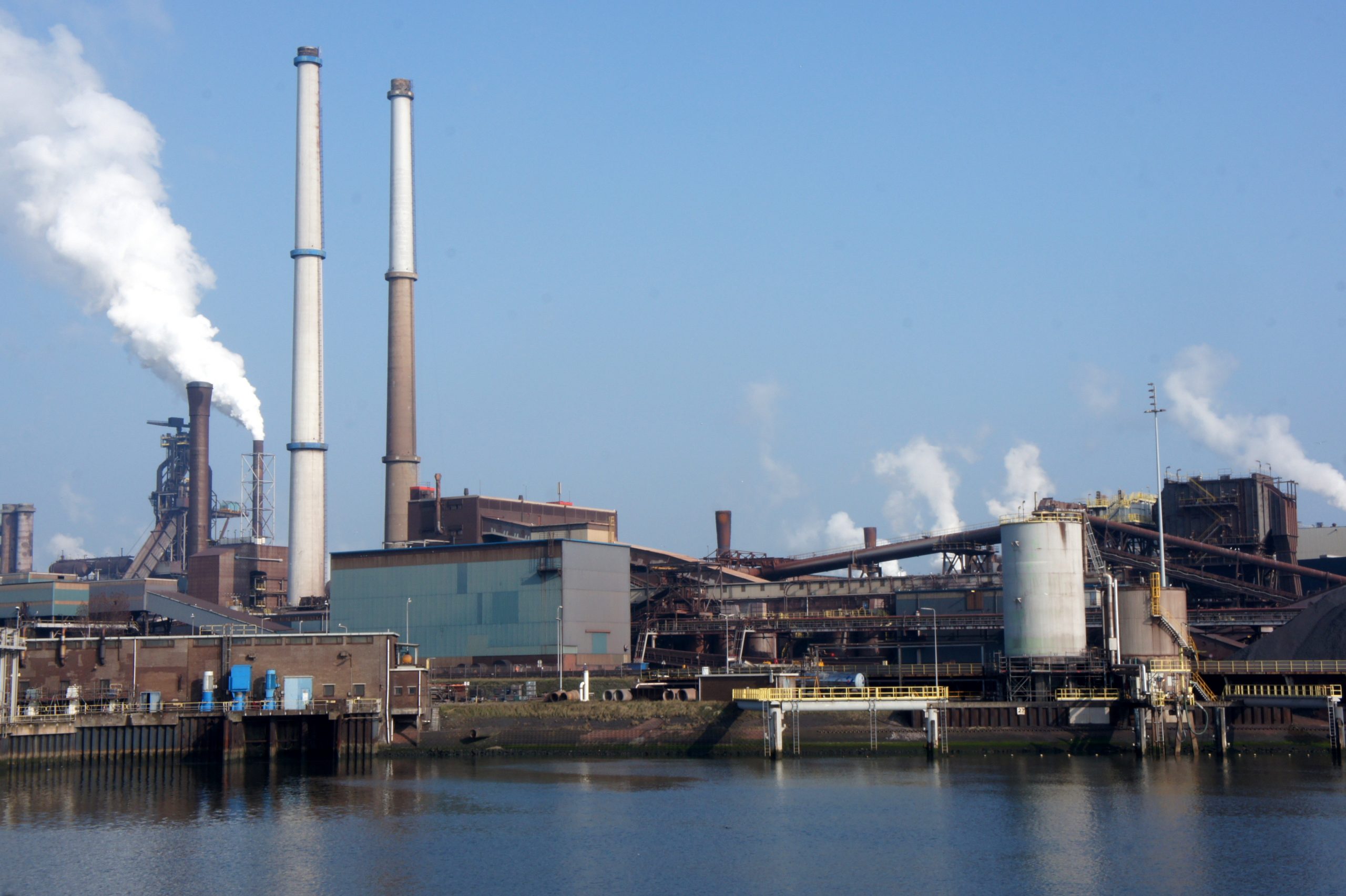
Tata Steel Nederland has signed contracts with three companies for the further technical preparations of the hydrogen route in Ijmuiden in the Netherlands. The first development will cost more than €65 million ($65m) and will result in an engineering package that forms the basis for a final permitting and project planning, Kallanish understands.
The three companies – McDermott, Danieli and Hatch – have their own specific expertise that collectively is needed to help shape hydrogen-based steel manufacturing, Tata notes. McDermott will be responsible for the construction input and support of the technical project management. Danieli is in charge of the engineering design for the technology to deliver direct reduced iron (DRI), the first step in the iron-making process. Hatch is the technology licensor of the electric furnaces that melt the DRI and help to reduce the oxygen content further.
“We recently signed agreements about our future with two ministries and the province of North Holland,” says Hans van den Berg, ceo of Tata Steel Nederland. He adds that the company has committed to being CO2 neutral before 2045 and emit between 35-40% less CO2 before 2030.
The new plants will be built on-site while all the current plants remain in operation until the new installations are up and running, explains sustainability director Annemarie Manger.
“The coalition that is now formed with McDermott, Danieli and Hatch marks the start of the basic engineering to define our plans more specifically,” she says.
Christian Koehl Germany

Ferriere Nord idles production on high energy costs
Ferriere Nord, a subsidiary of long steel producer Pittini, has requested access to a temporary layoff scheme for over 750 workers at its plant in Osoppo near Udine, northern Italy, Kallanish learns from union sources.
The layoffs are starting this week and should last until 2 October. For the next two weeks, both the hot and cold areas at Osoppo will be idled. Informed sources say this will help address the issue of overcapacity for long products. The layoff request, however, is mainly driven by skyrocketing costs of energy in Italy and raw material procurement difficulties. Other producers of wire rod in Italy still remain idle due to longer maintenance stoppages this summer.
The electric arc furnace-based plant in Osoppo has a rebar and rebar in coil mill, a wire rod mill, and several mills for the production of mesh and lattice girders.
Ferriere Nord has another plant in Potenza, southern Italy, which make bars, mesh, rebar in coil and wire rod mainly for construction and mechanical applications.
Pittini employs around 1,800 workers and has a yearly production capacity of approximately 3 million tonnes across 18 production and logistic facilities.
In Italy, the group includes Ferriere Nord, Acciaierie di Verona, Siderpotenza, Pittarc, La Veneta Reti and Siat.
Pittini did not comment before deadline.
Natalia Capra France

EU steelmakers start lifting coil offers
European steelmakers are returning to the market after the summer break with higher coil offers for October and November deliveries.
Market sources confirm that ArcelorMittal has given notice since last week that its HRC offers are at €800-850/tonne ex-works base for European clients. The Kallanish price assessment for northern Europe HRC currently stands at €750-820/t ex-works base.
For hot-dip galvanized coil, ArcelorMittal’s new offers are pegged at €930-980/t ex-works base.
It is still unclear whether these new prices will be accepted by the market, but most sources confirm coil products have been at or near bottoming since July. In recent months, European suppliers of flat products have reduced their output in order to align supply with demand. These cuts should have an effect on prices from September onwards.
European steelmakers last increased offers in March, on various occasions, as a consequence of the uncertainty following the Russian invasion of Ukraine.
Emanuele Norsa Italy

German machine tool orders rise in first half-year
Despite the current difficult conditions, machine tool orders in Germany continued to develop well in the second quarter, according to the German Machine Tool Builders’ Association (VDW). Order intake rose by 24% compared to the same period last year, Kallanish hears from the federation.
“Volumes are almost at record levels since 2018,” says Wilfried Schäfer, executive director of VDW. In the first half of 2022, orders increased by 34% overall. Domestic orders contributed to this with a 35% increase and foreign orders with a 33% jump.
Foreign business is primarily driven by demand outside the EU. In particular, the industry’s two lead markets, China and the USA, remained strong, Schäfer highlights. Surprisingly, “the severe lockdown in Shanghai and other Chinese cities did not leave any deeper traces in the second quarter.”
In terms of categories, cutting machining is currently pulling up the overall result. Demand in H1 was twice as strong as that for forming technology, for example. “This is an indication that major projects in the automotive industry are currently on hold, especially in Germany,” Schäfer explains. Forming technology accounts for around 30% of total machine tool sales. Press technology, in particular, is used in major projects.
Sales continue to be a cause for concern, the federation notes. In H1 they were up 7% year-on-year but, in real terms, this means stagnation. “Supply chain problems are far from over,” says Schäfer. Still, capacity utilisation rose slightly, from 85.9% in April to 87.4% in July.
Christian Koehl Germany

Tata inks agreements to transition to hydrogen-based steelmaking at Netherlands mill
Tata Steel Nederlands has signed contracts with three companies to advance technical preparations for the use of hydrogen in steelmaking at its IJmuiden facility in the Netherlands, the company said Aug. 29.
As a first step to its transition to “green steelmaking” at the site, Tata will work with global energy engineering firm McDermott, steel plant supplier Danieli and engineering company Hatch to develop an engineering package that forms the basis for final permitting and project planning, it said. This first development step is expected to cost more than Eur65 million, Tata said.
McDermott will be responsible for the construction input and support of the technical project management; Danieli will be responsible for engineering design for the plant and technology that delivers direct reduced iron, and Hatch will be the technology licensor of the electric furnaces that will melt the DRI and help to reduce oxygen content.
The electric furnaces and DRI plant will be closely coupled to form an integrated production system, Tata said.
“By using green electricity and a predominant hydrogen stream, the CO2 emissions from the [DRI-REF] process are much lower than when using blast furnaces,” Tata said in a statement. “The new process can also accommodate higher percentages of circular steel, where scrap can be added to the REFs or the induction furnaces.”
The new plants will be built on the company’s existing site and all of its current plants will remain in operation unto the new installations are up and running, Annemarie Manger, sustainability director of Tata Steel Nederland, said in a statement.
Hans van den Berg, CEO of Tata Steel Nederland, noted the company recently signed agreements with two ministries and the province of North Holland committing to being CO2 neutral before 2045 and emitting between 35% to 40% less CO2 before 2030.
“This will primarily be achieved via the hydrogen route where the blast furnaces are replaced with modern clean steel-making technology that uses hydrogen or gas instead of coal,” he said.
Tata Steel previously signed an agreement with the national grid operator TenneT for a direct connection to the national electricity grid to be able to use green energy for future operations.
— Justine Coyne
