


European mills push for higher HDG, CRC offers; buyers hold back
European steelmakers are pushing for higher prices for cold-rolled and hot-dipped galvanized (HDG) coil to offset rising energy costs, but buyers are maintaining a wait-and-see attitude due to weak end-user demand, sources told Fastmarkets on Wednesday, August 31.
More flat steelmakers in Europe started to push for higher prices this week on account of surging costs of production, notably for electricity and gas, market sources said.
Europe’s largest producer, ArcelorMittal, started the trend on Friday August 26 by pushing its prices up by €50-100 ($50.10-100.30) per tonne and offering CRC at €900-950 per tonne exw and HDG at €930-980 per tonne exw.
But those offer prices were way above the level buyers would agree to pay in the current market conditions, sources told Fastmarkets and trading activity in both markets across Europe remained slow, with buyers preferring to hold back and assess the market trend.
“There is not enough demand to support the [price rises],” a trading source in Northern Europe told Fastmarkets. “It is always a hard situation when a [price] increase is only cost driven.”
Fastmarkets’ weekly price assessment for steel hot-dipped galvanized coil, domestic, exw Northern Europe, was €850-880 per tonne on August 31, widening up by €10 per tonne from €850-870 per tonne on August 24.
A regional distributor reported transactions at €850 per tonne exw in the week to Wednesday and several trading sources estimated the tradeable level at €850-880 per tonne exw.
Fastmarkets’ corresponding weekly price assessment for steel cold-rolled coil, domestic, exw Northern Europe was €840-850 per tonne on
Wednesday, narrowing up from €800-850 per tonne exw seven days earlier.
Producers in the region were pushing offer prices to €900-950 per tonne exw, while buyers were reluctant to pay above €850 per tonne exw, Fastmarkets understands.
Southern Europe
Fastmarkets’ weekly price assessment for steel hot-dipped galvanized coil, domestic, exw Southern Europe was €850-880 per tonne on August 31, widening up by €30 per tonne from €850 per tonne exw a week earlier.
Several sources reported that a transaction took place at €850-860 per tonne exw in the week to Wednesday.
At the same time, offers from local mills were reported at €880-900 per tonne exw.
Trading activity in Southern Europe was still slow because the market has not fully restarted after summer holidays, sources said.
Fastmarkets’ weekly price assessment for steel cold-rolled coil, domestic, exw Southern Europe was €830-850 per tonne on Wednesday, up by €20-30 per tonne from €800-830 per tonne.
The assessment reflected market participant estimates of achievable prices, with actual transactions rare in Italy, sources said.
Some CRC offers from South Korea were reported to Italy at €870 per tonne cfr during the week, but this level was considered too high by local buyers.
Published by: Julia Bolotova

Europe’s steel hollow sections market widens despite mills’ push for higher prices
The price range for steel hollow sections in Europe widened downward in the week to Wednesday August 31, despite producers in the region pushing for higher prices due to alarming increases in energy costs, market sources said.
Fastmarkets’ weekly price assessment for steel sections (medium), domestic, delivered Northern Europe, was €1,050-1,200 ($1,053-1,203) per tonne on Wednesday, widening downward by €90 per tonne from €1,140-1,200 per tonne a week earlier.
One trader in northwest Europe said that market prices for the products had moved downward because there was a lag between changes in the price of sections and the cost of hot-rolled coil feedstock.
Current sections prices were based on imported HRC from eastern and southeast Asia, or from Turkey, they said, which can take around three months to arrive in Europe after the order is placed.
Three months ago, in late May, the price of imported HRC, cfr main port Northern Europe, was €850-920 per tonne.
HRC prices in May and June fell significantly after an upward surge in March, when prices peaked at €1,200-1,250 per tonne, following Russia’s unprovoked invasion of Ukraine.
Imported prices for the feedstock have fallen further since then, with Fastmarkets’ weekly price assessment for steel hot-rolled coil, import, cfr main port Northern Europe, at €650-680 per tonne on Wednesday, unchanged week on week.
Fastmarkets’ daily calculation of its steel hot-rolled coil index, domestic, exw Northern Europe, was €763.33 per tonne on Wednesday, up by €43.33 per tonne from €720 per tonne a week earlier.
Market sources also told Fastmarkets that several European producers have announced that they will be increasing offer prices on steel products on the basis of drastically rising energy costs, by around €100-150 per tonne.
Fastmarkets’ weekly price assessment for steel sections (medium), domestic, delivered Southern Europe, was €1,050-1,200 per tonne on Wednesday, widening week on week from €1,140-1,180 per tonne.
Some traders believed that price increases based on energy costs could be workable, depending on demand, because energy is a real cost, but other traders were not sure if the push for price rises would be successful, Fastmarkets heard.
“I’m not really sure whether this will work out,” one trader from Germany said. “People are still quiet and are waiting.”
Market participants expected more trading activity next week, when more mills and traders re-enter the market with the end of the slow summer holiday period, but some sources were uncertain about market movements.
“There is nothing happening in the market for the moment,” a distributor in Northern Europe said, “because the mills are not delivering anything – they are out of the market. It is difficult to quote a price because no one is giving any prices just now.”
Some mills were also considering production cuts to help manage the effects of increasing input costs, sources said, with Italian long steel producer Ferriere Nord Pittini heard to have suspended work at its Osoppo plant until October.
Published by: Holly Chant

ArcelorMittal postpones EAF restart at Spanish steel mill
Europe’s leading steelmaker, ArcelorMittal, has postponed the restart of steelmaking operations at its plant in Sestao, Spain, in the face of poor market fundamentals, the company told Fastmarkets on Thursday September 1.
The producer stopped operations at the electric-arc-furnace (EAF) based steelmaking plant in the middle of August for scheduled maintenance. Production was expected to resume this week, but ArcelorMittal has decided to postpone the restart, a spokesperson told Fastmarkets.
The company could not say when operations at the mill would restart.
“Our Sestao plant did not resume production after its summer maintenance stoppage. We cannot foresee how long the stoppage will last. It will depend on market recovery, mainly,” the spokesperson said. “The market backdrop in Europe, with consumer confidence at very low levels and rising import levels, are the reasons behind this decision.”
ArcelorMittal Sestao has installed capacityfor about 2 million tpy of crude steel from its one EAF. The plant manufactures hot-rolled strip steel.
The European hot-rolled coil market has been in decline since April, with the price dropping non-stop amid overstocking and poor demand from end-users.
This week, however, European steelmakers have gradually started to increase the HRC price on account of a substantial increase in production costs, notably for electricity and gas.
Published by: Julia Bolotova

Semiconductor shortages ease but remain till 2023: SC-IQ
Global semiconductor shortages are showing signs of easing, spelling good news for the automotive industry, says consulting company Semiconductor Intelligence (SC-IQ).
“However, the chip problem will likely remain through at least the year 2023,” the consultancy claims. “Although a few automakers indicate they are back at full production, most report continuing shortages. This will prevent automakers from producing enough vehicles to meet demand in 2022 and 2023, resulting in continued high prices for most vehicles.”
Automakers and semiconductor suppliers are working to try to prevent such severe shortages from reoccurring in the future, Kallanish notes.
“Car producers are adjusting their just-in-time inventory models and are also working more closely with semiconductor suppliers to communicate their short-term and long-term needs,” SC-IQ observes. “Semiconductors will become even more crucial to automakers as trends toward electric vehicles and driver-assist technologies continue.”
Toyota announced that shortages will last at least through the third quarter of 2022, but Volkswagen and Hyundai say shortages are easing. However, General Motors expects the problem to impact into 2023 and Stellantis says the deficit will last through the second half of 2022. Honda’s outlook is uncertain due to chip problems. Nissan expects supply recovery in the next few months.
For Ford, the shortages are still an issue, while Mercedes-Benz and BMW say they have no significant supply issues and no production delays. Volvo is back at full supply, but Bosch also expects shortages to continue into 2023.
LMC Automotive’s July forecast for light vehicle production is for 81.7 million units in 2022, up 2% from 2021. The forecast sees production growth of 5% in 2023 and 7% in 2024.
Earlier, the EU announced a €43 billion ($43 billion) plan to become a major chip producer, to ease dependency on Asian manufacturers of the components.
Svetoslav Abrossimov Bulgaria


Sharp increases could stall market recovery: Italian distributors
The Italian distribution sector is registering weak demand for long products, welded tube and sheet after a surge in sales of sheet and tube before the August summer break started. Considering the quiet market, local service centres and distributors fear the current wave of European mill price increases may cause the market to stall again, Kallanish hears.
Some re-rollers are particularly aggressive on tube and sheet prices, with the aim of recovering volumes. Thanks to some interesting prices heard in the market in recent days, sellers are managing to bring in orders.
There is a similar situation for sheet where, despite producers being expected to implement significant increases, some sellers are decreasing values by €20-30/tonne ($19-29) to fill order books. This will however imminently come to an end as all sellers are or will increase their prices, a move that is not being well received downstream.
The slow sales of the past two months are causing stocks to remain high. End-user demand has been particularly subdued this week and low-priced imported material is discouraging buyers from purchasing locally. Following the latest increases, many firms are looking to import cheaper sheet, rebar, merchant bar and sections.
Italian merchant bar prices are hiking to the level of around €750/t base ex-works. Section producers are beginning to communicate an increase of €100/t for the first category of beams. ArcelorMittal is communicating to its clients the decision to raise immediately spot prices for commodity grade longs by €150/t across Europe (see Kallanish passim). The hikes are meant to align prices to skyrocketing gas and electricity rates, Kallanish notes.
Natalia Capra France

Wire rod prices to increase in Italy
The Italian wire rod market remains quiet this week with demand subdued and buyers in wait-and-see mode. Buyers who spoke to Kallanish say they will decidedly refuse to buy at increased prices. Their stocks remain medium-high.
After halting sales, some producers are increasing prices by €100/tonne ($99.8) compared to August levels, reaching €1,000/t for drawing-quality material.
Wire rod derivatives should also increase by €100-150/t. There were strong sales of this product in August when some sellers decided to decrease their prices before withdrawing offers. The increases, in line with all other long products, are mostly due to increasing energy prices that are forcing some mills to extend their August maintenance stoppages into September.
Ferriere Nord, a subsidiary of long steel producer Pittini, has requested access to a temporary layoff scheme for over 750 workers at its plant in Osoppo near Udine, northern Italy (see Kallanish 30 August newsletter). The plant is producing at reduced capacity while Pittini’s facilities in Verona and Potenza are said to be idled. This has however not been confirmed by Pittini.
End-user wire rod demand is reported to be extremely subdued this week. Sales activity has not yet resumed after the August break. Clients are not buying domestic material for October. Some say they only have limited orders for September and are refusing to commit for a longer period.
Because energy prices continue to climb in Italy, quoting is becoming a challenge for mills. Current contract prices in Italy are hovering at €920-950/t ex-works for drawing-quality material, with only low-tonnage sales occurring, sources suggest.
Natalia Capra France

Northern European rod prices continue to increase rapidly
Northern European wire rod prices continue to increase this week due to new purchases and amid higher energy costs in Europe. Most sources say there are new orders from customers, who are restocking.
“The market is very good, people are buying and prices are rising,” a buyer from the Netherlands tells Kallanish. “Prices for mesh have increased by €50-60/tonne [$50-60/t] and steel mills continue to purchase new volumes. Prices will probably soon reach €1,000/t.”
Domestic transaction prices for drawing-quality wire rod are at €940/t ($937/t) ex-works and mesh is at €950/t, sources say.
Producers are asking for €960/t ex-works, on average, for mesh-quality rod.
“Customers have waited and waited to see how the market will react after the summer holidays, and now the moment to buy is there because most steel mills have to purchase new volumes,” another merchant notes. “However, the issue with the high energy costs persists and some plants will have to probably temporarily stop production. And some smaller plants in Europe already did.”
According to him, the extremely low river water levels in Germany and other parts of Europe continue to impact raw materials deliveries and will influence prices.
Scrap prices are also slowly climbing again and not expected to drop soon – this will also put pressure on the market, he adds.
Scrap values in Germany increased slightly, taking old thick scrap sort 3 to €350/t, while the price for new scrap sort 2/8 was at €360/t. In Austria, scrap prices are also up: old thick scrap sort 3 is at €350/t and new scrap sort 2/8 at €365/t.
In Italy, wire rod producers are also expected to increase prices by €100/t compared to August levels, reaching €1,000/t for drawing-quality material (see separate story).
Most northern European wire rod market participants expect prices will continue to increase in the next few weeks due to restocking.
Svetoslav Abrossimov Bulgaria
Steelmaker Thyssenkrupp sells mining technologies business to FLSmidth
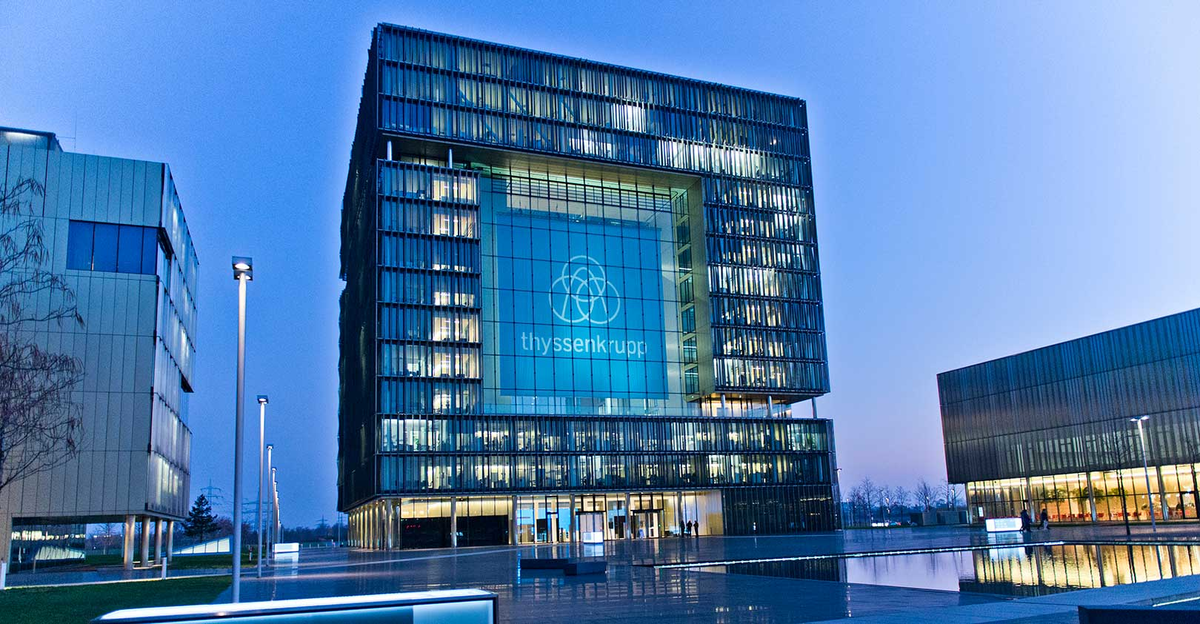
German steelmaker Thyssenkrupp said Sept. 1 that it has completed the sale of its mining business to Danish engineering, equipment and solutions provider to the mining and cement industries FLSmidth.
Thyssenkrupp has completed the sale, initiated in July 2021, of the mining technologies business unit to the Danish company FLSmidth, which it sees as a step towards becoming a high-performance group, the company said.
Completion of this transaction has also improved the company’s financial position and strengthened its balance sheet, it added.
“With the sale of the mining business, we are further tightening our portfolio and taking a major step towards our goal of becoming a highly efficient group with strong, independent and specialized businesses,” said Thyssenkrupp CEO Volkmar Dinstuhl.
In the past 10 months, Thyssenkrupp had completed the sale of the infrastructure business and the AST stainless steel mill. The sale of mining technologies is now the third of its kind in the current business year.
Thyssenkrupp Mining Technologies offers tailored mining solutions and employs 2,200 people at 40 locations worldwide.
— Ekaterina Bouckley


Finland’s Outokumpu maintains normal steel operations despite rising power prices: CFO
Outokumpu’s stainless steel operations are currently running normally despite rising electricity prices, Chief Financial Officer Pia Aaltonen-Forsell said in a blog published on the Finnish company’s website Aug. 31, adding that it is adjusting its ferrochrome production to avoid smelting at peak hourly rates.
The stainless steel producer is well hedged from rising electricity prices in the short term, but the hedging percentage may decline in the long term, she said.
The company has hedged a significant amount of energy for this year through long-term contracts and fixed-price contracts, as well as partial ownerships in some energy utilities.
Its focus on energy efficiency and on growing the share of low-carbon energy, instrumental in lowering carbon emissions in the first place, is now also useful to address energy price inflation, the CFO said.
Outokumpu has already signed three new long-term wind-power contracts, which cover a significant part of the electricity needs of its sites in Kemi, Finland, and Germany.
The electric arc furnaces at its mills, although equipped with the best available technology, use large amounts of electricity, and electricity accounts for more than half of the company’s energy consumption, Aaltonen-Forsell said.
To keep this to the minimum, the company is optimizing the most energy intensive part of its operations, production of ferrochrome, she said. This accounts for 55% — versus stainless steel’s 45% — of the company’s total electricity consumption.
Outokumpu is now avoiding the worst peaks in electricity rates by suspending ferrochrome production in hours when electricity prices are the highest, she said.
The impact of this optimization on other operations has been limited, and stainless-steel production continues at a normal level, she added.
“We have several mills in Europe, and can switch stainless steel production from one mill to another [to work around] local energy restrictions, if needed,” said Aaltonen-Forsell.
However, she added that the situation in the European energy market is worrisome for private consumers and companies alike, saying that Outokumpu has prepared for various scenarios, and the winter ahead, which is expected to be difficult.
Outokumpu has previously informed the market that it expects energy costs to increase in the July-September quarter, but if there are disruptions in energy availability or if the electricity price keeps on rising, there could be an impact on its production volumes, Aaltonen-Forsell said, adding that any decision on the possible shutdown of production would be the sum of many factors, including the level of demand and production.
Some other European mills are already temporarily idling furnaces due to high energy prices, according to various market sources.
— Ekaterina Bouckley

EU HRC market activity low as buyers evaluate high offers
Trading activity in the European hot-rolled coil market was muted Sept. 1, with only a few deals settled in Northern Europe as buyers held back from trading as they evaluate high offers.
Platts assessed HRC in Northwest Europe at Eur760/mt ex-works Ruhr, down Eur20 from Aug. 31.
A Northern European producer reported deals at Eur750-Eur770/mt EXW. Two distributors reported unconfirmed transactions at Eur750-Eur760/mt and Eur750/mt, both EXW Ruhr. A third distributor said that a German mill sold HRC at Eur750/mt EXW, which a second producer confirmed as an achievable price.
Both buyers and sellers estimated tradable value at Eur750-Eur760/mt EXW Ruhr. One producer also said that workable prices will increase next week to the common offer level of Eur800/mt EXW Ruhr.
HRC offers in Northern Europe have been heard at Eur800-Eur850/mt EXW.
Most European coil producers increased offers at the end of last week-early this week by at least Eur100, with market participants resolute that further discounts should not yet be offered against the new price level to solidify the uptrend.
One producer, reporting deals at Eur750-Eur760/mt EXW, confirmed their intention to raise target prices week beginning Sept. 5, ceasing sales below Eur800/mt.
Overall transactional activity remained low, both on pre-existing factors driving down demand—namely high inventories and poor end-consumption—as well as a wait-and-see sentiment as buyers digest the effect of increased offers.
“Everyone has just returned to the market and is waiting to see where the realistic price level will be,” said a producer. “At the very least it seems clear that prices won’t decrease any further.”
“Demand is still low, and stocks are still high, but to be honest this increase was necessary,” said a distributor. “If not, demand would fall even lower as sentiment would be for further decrease. Some mills may settle a little lower but in general, the price increase is holding with mills across Europe in solidarity—hopefully, they stay strong.”
In Italy, trade was similarly muted, with offers heard at Eur800-Eur820/mt EXW. A deal was reported delivered into Central Europe at Eur800/mt, the equivalent of Eur740-Eur750/mt EXW Italy.
Platts assessed South European domestic HRC at Eur750/mt EXW Italy, down Eur20 on the day.
The Platts South European import HRC assessment also moved to daily frequency Sept. 1, to better reflect South European trade flows and relevant HRC supply chains.
Deals were reported for substantial tonnages to Italian buyers at Eur670-Eur675/mt CFR ex-India. Indian offers were then withdrawn from the market in anticipation of a price increase, according to trader sources. A Japanese supplier also sold significant volumes of HRC to Italy at Eur670/mt CFR Italy.
Offers of Asian HRC in Italy have been reported at Eur660-Eur680/mt CFR and in Spain at Eur710-Eur720/mt CFR.
“Given the rise in domestic offers, buyers could switch to import coil,” said a trader source. “Asian mills could review prices higher, but now European prices are up Eur100/mt—they can comfortably do so and still offer competitively.”
Platts assessed South European import HRC at Eur670/mt CIF Sept. 1.
Platts is part of S&P Global Commodity Insights.
— Benjamin Steven, Maria Tanatar