

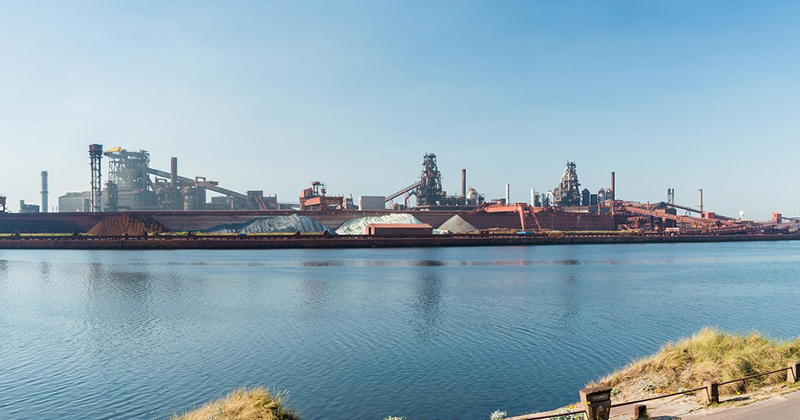
ArcelorMittal to shut BF, sinter line at Dunkirk plant
ArcelorMittal announced plans to shut down blast furnace No. 3, a sinter line and two galvanizing lines at its plant in Dunkirk, France, the steelmaker said Sept. 2.
Shutdown of BF No. 3 will be an addition to the temporarily closure of BF No. 2, effective since July this year.
The decision was made due to the continuing week demand in European market and it “is taking measures to adapt to the economic situation on its flat steel sites in the northern half of France,” the company said in a statement.
The production cuts aim to balance reduced demand and supply.
Surging energy and emission costs have also hampered competitiveness of the producer in the bearish market.
On Sept. 2, ArcelorMittal already announced plans to temporarily shut two blast furnaces at the end of the month — one of its Bremen plant in Germany and the Gijon plant in Spain.
Platts assessed HRC in Northwest Europe at Eur755/mt ex-works Ruhr Sept. 2, down Eur5/mt day on day. In Northern Europe, deals were reported at Eur740-760/mt ex-works Ruhr. Although prices were substantially below official offers of Eur800/mt ex-works Ruhr, they also showed a rise of Eur40-60/mt from the lowest transactions settled in the second half of August.
Demand for coil products in Europe remained low due to sufficient stocks with distributors and weak steel consumption by automotive industry and other end users. Market participants anticipated the mills to further cut production to achieve price rise.
— Maria Tanatar


ArcelorMittal to idle Gijon blast furnace due to ‘challenging’ European steel market
ArcelorMittal in Spain said Sept. 1 it will idle blast furnace A at its 4.5 million mt/year Gijon plant at the end of September, citing strong competition from imports and weak demand.
The move follows the steelmaker delaying the restart of its 2 million mt/year electric arc furnace at Sestao after concluding maintenance in August.
“The extremely challenging situation of the European steel market, with high levels of imports from non-EU countries and weak demand, have led to the decision to implement this measure in order to protect the profitability and sustainability of the company’s operations in Asturias,” the company said.
“This decision has been taken at a time of economic uncertainty and with weakening levels of confidence among steel consumers; the situation is compounded by high levels of imports from non-EU producers that are not affected by the increasing costs linked to the EU Emissions Trading System which adversely impacts the competitiveness position of European producers.”
The company said it supported a “carbon border adjustment mechanism that sets a framework in which each region, each country, must contribute in an equitable manner.”
The Gijon complex has two blast furnaces and forms an integrated complex with the nearby 4.2 million mt/year Aviles site, making it Spain’s largest steel production center.
Platts assessed HRC in South Europe at Eur750/mt ex-works Italy Sept. 1, down 10.3% since the start of 2022, according to S&P Global Commodity Insights data.
Ferroglobe shuts furnaces
Output cuts have been accumulating in Spain, with record power prices a major contributing factor.
Power demand from the iron, steel and alloy sector fell 27% year on year in July and was down 9% for January-July, according to a demand index from grid operator Red Electrica.
Spanish silicon and manganese ferroalloys producer Ferroglobe told S&P Global Sept. 1 that it would also shut down the two furnaces still in operation at its plant in Boo, Cantabria, until energy costs decreased.
Spain’s adjusted power price closed at Eur375.84/MWh for Sept. 2 delivery, 167% higher year on year.
Ferroglobe said it had temporarily shut furnaces at all its plants — Sabon, Boo and Monzon — producing silicon metal, silicon and manganese ferroalloys, with its only output coming from an offtake agreement with Sixth Street Partners and Ithaka Partners to use production capacity at Cee and Dumbria.
Meanwhile, stainless steelmaker Acerinox furloughed workers for 15 days from Sept. 1 at its 1 million mt/year Los Barrios facility. The temporary layoffs would impact the plant’s melting shop, hot rolling mill and hot annealing line, according to state news agency EFE.
Acerinox had not yet responded to requests for comment by the time of publication.
— Gianluca Baratti

Coking coal ends week marginally higher
Seaborne coking coal prices ended marginally higher last week as the outlook remains uncertain.
Kallanish assessed premium hard coking coal at $276.94/tonne fob Australia, up only $3.56/t from $273.48/t the previous week.
On the Singapore Exchange, Premium Coking Coal Futures for October settled at $273.67/t fob on Friday. This compares to September futures of $300/t fob a week earlier.
According to a trader, 80,000 tonnes of HCCA Branded ND (fob Australia) for 1-10 October laycan was paid at $280/t on 1 September. The counterparties were unknown.
It is also heard that 80,000 tonnes of Goonyella for 1-10 October laycan were sold by BHP at $272/t on the same date. According to the trader, this could be a sleeve trade for the same cargo.
“It is hard to make a call now, but I’m of the view that the coking coal price will come off eventually,” says the trader.
An analyst who attributes the recent rise in coking coal prices to higher seasonal demand and tight supply in Australia also has the same view.
“The upward momentum may be difficult to sustain, given there’s spot cargoes available for September and October and steel demand is weak,” he says.
With electricity prices continuing to rise in Europe and a poor economic climate everywhere, he thinks coking coal demand will weaken.
On Indian coking coal demand, he says it looks uncertain as he still sees high port stocks and is unsure if post-monsoon restocking has already finished, especially with the steel export tariffs in place.
Siew Mung Tan Malaysia


Moody’s lowers steel price assumptions, remain above average
Moody’s has lowered its price assumptions for the next 12 months for steel and coking coal to reflect weakening demand resulting from the global economic slowdown.
The credit rating agency says that following their peaking in March/April and subsequent decline, steel prices could soften further yet remain above historical levels longer term for two reasons. These are increased demand for scrap and metallics as steel producers focus on reducing carbon emissions; and less competitive steel sector dynamics from consolidation in some regions.
Prices have come down as post-Russia invasion panic buying recedes, supply-chain disruptions reduce global demand, Covid-related lockdowns and weaker residential construction reduce consumption in China, and inflationary cost pressures and higher interest rates weigh on sentiment and economic growth, Moody’s observes.
The 12-month price assumption for Chinese domestic hot rolled coil have come down to $600/tonne from $750/t previously, while Brazilian HRC is at $800/t versus $1,000/t, European HRC at $750/t versus $1,100/t and US HRC at $800/t versus $1,150/t.
US prices could remain above historical levels because of sector consolidation and increased metallics demand. “Long product prices have held up better with more favourable supply and demand dynamics but are likely to weaken further on lower raw material prices and softening demand,” Moody’s says in a report sent to Kallanish.
In China, the property market slowdown has weakened demand for steel. This slowdown stems from regulatory tightening and property developers’ financial struggles, which have weakened homebuyers’ confidence.
In Europe, steel prices will likely continue to slide. Economic weakness, falling euro area manufacturing PMI readings and continued sluggish buying activity of distributors weigh on demand. In addition, energy cost inflation, fears over future energy supply and rising interest rates will dampen consumer sentiment and investment activity across many steel-consuming sectors such as construction or general engineering.
“While some steel producers might curtail production to adjust output to the lower demand, the recent resurgence in steel imports into the European Union (+19.5% year on year in the first five months of 2022) will likely continue to weigh on prices in the region,” Moody’s observes.
Economic growth in G-20 economies will decelerate to 2.5% in 2022 and 2.1% in 2023, from 5.9% in 2021. In China, growth will be 3.5% in 2022 and 4.8% in 2023, down sharply from 8.1% in 2021.
Adam Smith Poland

Thyssenkrupp tests hydrogen in tinplate production
The German Federal Ministry for Economic Affairs and Climate Action is funding two joint projects in which thyssenkrupp Rasselstein is participating.
The research projects are looking at how hydrogen fuel can reduce CO2 emissions in the steel industry, Kallanish learns from thyssenkrupp. Both projects deal with the use of hydrogen in the energy-intensive annealing processes of tinplate production. These processes are necessary to restore the crystalline structure of the material which is destroyed during cold rolling.
In the “FlexHeat2Anneal” research project, the focus is on the use of hydrogen in the continuous annealing line, in which the ultra-fine strip is unwound and recrystallised by running over rolls at a high temperature and in short cycle times.
Up to now, mostly natural gas has been used for annealing the strip. In the future, this fossil fuel is to be gradually replaced by adding green hydrogen. “The planned flexible use of hydrogen in the annealing process poses several issues. Hydrogen, for example, burns hotter than natural gas. That’s why the burners and radiant heating tubes have to be adjusted,” says Torsten Schmitt, electrical engineer responsible for strip line maintenance at thyssenkrupp Rasselstein.
The aim of the other project, named “H2-DisTherPro”, is to substitute fuel gases containing carbon with hydrogen in discontinuously operated thermos-processing plants.
Christian Koehl Germany

ArcelorMittal to halt Gijón blast furnace
ArcelorMittal says it will temporarily halt blast furnace A at its Gijón mill in northern Spain at the end September under pressure from rising energy costs, Kallanish learns from the company.
The decision has been taken at a time of economic uncertainty and with weakening levels of confidence among steel consumers in Europe, ArcelorMittal explains.
“The extremely challenging situation of the European steel market, with high levels of imports from non-EU countries and weak demand, have led to the decision to implement this measure in order to protect the profitability and sustainability of our operations in Asturias,” the company says. ArcelorMittal did not disclose any expected production loss or personnel cutbacks.
Meanwhile, major workers’ union CCOO says the BF shutdown is set to last for the full fourth quarter. In a statement, the organisation qualifies the stoppage as “disproportionate and lacking in the slightest justification”. CCOO points out that the last stoppage was agreed at group level in Europe as a reaction to the high price of electricity in Spain, which today is much lower than in the rest of Europe.
Todor Kirkov Bulgaria

Italian steelmakers mull energy surcharge
Some Italian mills are considering implementing an energy surcharge on top of their finished product prices. This is in line with other European steelmakers who are mulling similar surcharges due to the rising costs of gas and electricity, Kallanish learns from market sources.
Although details have yet to be decided, the surcharges should be between €200/tonne ($199) and €300/t, depending on mill and product, applicable from September and October. The application methods however are still unclear.
If the Italian government does not intervene to cap energy prices, many mills in Italy will be forced to stop production. This is the case for some long steel producers in other European countries such as France and Spain. Customers say they may not be able to pay the latest price increases on all products, plus an energy surcharge, unless size extras or base prices decrease.
Some long steelmakers in Italy are currently idling their plants while others are working at reduced capacity in order to save on their energy bills.
In Germany, meanwhile, ArcelorMittal will shut down one of two blast furnaces at its Bremen plant, as well the direct reduced iron unit at its Hamburg steelworks in the fourth quarter due to skyrocketing energy prices (see separate story).
Natalia Capra France
Soaring energy idles ArcelorMittal Germany units, imports DRI
ArcelorMittal Germany is feeling the consequences of the exorbitant rise in energy prices, weak market demand and a negative economic outlook. The firm says the operation of all assets is no longer economically viable.
From the end of September, the group will shut down one of two blast furnaces at the Bremen flat steel site until further notice, Kallanish learns from a statement.
At the Hamburg long steel plant, which produces quality wire rod, the direct reduction plant will also be taken out of operation from the fourth quarter. The group already introduced short-time work at both plants, which will have to be extended as a result of the upcoming measures. Short-time work is also already being applied at the production sites in Duisburg and Eisenhüttenstadt due to the tense situation.
“The high costs for gas and electricity are putting a heavy strain on our competitiveness,” explains Reiner Blaschek, chief executive of ArcelorMittal Germany.
“With a tenfold increase in gas and electricity prices, which we had to accept within a few months, we are no longer competitive in a market that is 25% supplied by imports. On top of that, from October onwards, we will see the German government’s planned gas levy,” he adds.
In Hamburg, the company has already reduced the consumption of gas significantly. It has also purchased sponge iron externally from America, rather than using natural gas to produce its own. The plant has already reduced operations by about 80%. “The extreme price increase for gas and electricity forces the plant to import sponge iron completely with a higher carbon footprint in order to at least continue producing,” says Hamburg plant ceo Uwe Braun.
Christian Koehl Germany

Spanish rebar market sees prices rocketing again
Spanish rebar prices rose last week. The domestic market was quick to react to increased offers of long products, after most major mills declared they were producing at record energy costs, Kallanish notes. The increase has serious repercussions on construction sector activity, market participants observe.
The market has seen a price increase of around €180/tonne ($180) for 16mm diameter rebar in the last two weeks, one trader says. “The situation is unstable and most of the construction companies cannot take on such high prices of long steel to carry on their works,” one source comments.
Another Spanish market participant confirms the market could soon stall assuming a further increase in rebar prices.
“The situation is becoming unsustainable for medium and small supplies. The steel sector is pushed to adjust its production levels after returning from maintenance shutdowns due to the costlier energy amid a very high inflationary environment,” a stockist explains. “Demand remains weak. Nobody is buying. The entire chain is waiting to see where the market will go to make their purchases.”
Rebar is currently sold domestically in Spain at €700/t base. Including €262/t size extras, transaction values are at €962/t ex-works. Some offers have also been heard at €1,000/t delivered for 16mm rebar.
Todor Kirkov Bulgaria