


French construction sector outlook improves slightly
Sentiment among French construction companies improved in August compared to July. However, although their outlook on the next three months of activity has improved, companies’ opinion of the past three months’ activity has deteriorated, Kallanish learns from a l’Institut National de la Statistique et des Études Économiques (Insee) report.
In August, production increased again slightly but obstacles continued, caused by global supply disruptions. The same number of companies as in July reported procurement issues are limiting and slowing their output.
However, fewer construction firms than in July say they are facing supply difficulties and will limit their production capacity. “Just over a quarter of business managers consider themselves both unable to increase their production in case of additional orders and facing difficulties due to a lack of personnel … Finally, the share of business managers unable to increase their production and facing supply difficulties has slightly diminished,” the report states.
In August, fewer companies than in July say they will increase their prices over the next three months, but more firms surveyed consider their order books to be higher than usual. With their staff size, building contractors say their order books provide them with 8.7 months of work.
The French rebar market has gone through a weak period over the past two months, with orders limited and mills extending their maintenance stoppages into September to reduce output. Uncertainty is causing buyers to reduce purchases and adopt a wait-and-see attitude.
Natalia Capra France

Gas shortage-driven chemicals disruption could hit automotive: Moody’s
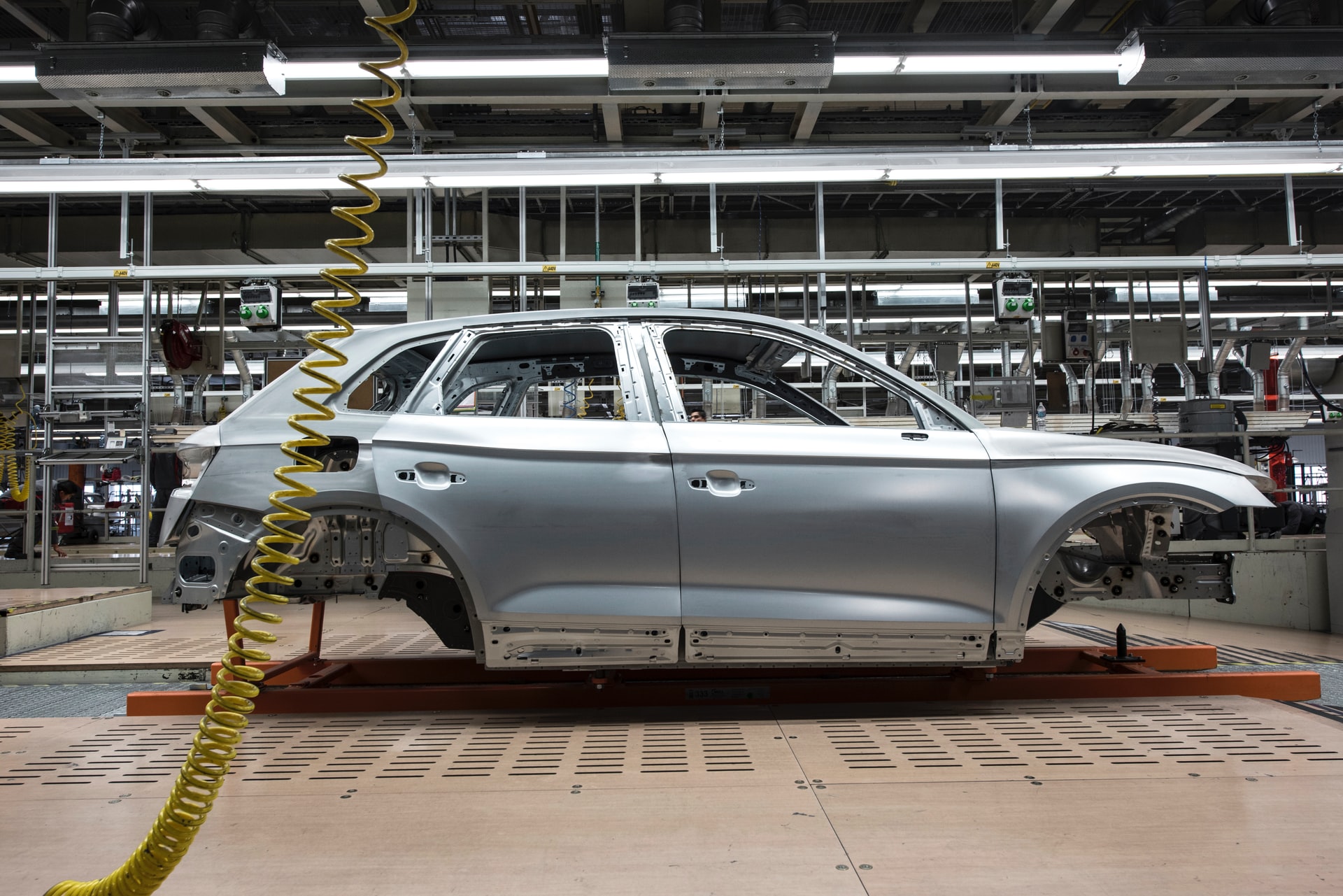
Disruption in European chemicals sector production as a result of a cut-off in Russian gas supply will have severe knock-on effects on the automotive sector’s ability to operate, says Moody’s. Chemical products are a significant part of supply chains for the automotive and manufacturing sectors.
The chemical sector is highly reliant on natural gas. If governments ration natural gas, the credit rating agency expects chemical companies to suffer from lower production volumes and financial losses. Governments would probably prioritise chemical companies supplying essential products or end markets, such as pharmaceuticals or agriculture.
The automotive sector’s production volumes are already under strain as a result of supply chain disruptions. Higher raw material and energy prices are increasing production costs.
“These factors weigh on margins, especially for automotive parts suppliers, because their contracts, especially for non-commoditised materials, in the past did not include price adjustment clauses. By contrast most automakers have successfully passed on higher costs to consumers and are selling more expensive and more profitable vehicles,” Moody’s observes in a note sent to Kallanish.
A Russian gas cut-off would also fuel inflation and increase macroeconomic uncertainties, thereby further weakening consumer confidence, Moody’s adds.
Adam Smith Poland

EU plate market becomes paralysed, direction unclear
Buyers of plate in northwestern Europe are expressing different views over the near future of prices. Overall, uncertainty over price direction appears to be greater than is typically the case at the end of summer.
All buyers speak of a very quiet market with hardly any transactions, as inventories are still well-filled. “Our warehouses are still fully crammed,” a manger of a distribution group lets on, adding that “customers are very sceptical and reserved.”
Most sources also agree on the current level of offers from northwestern European integrated mills, which they see at around €1,100/tonne ($1,098) delivered for S355 grade. Looking ahead, “we do not expect big moves in either direction; maybe €20-30 up or down,” a northern German manager tells Kallanish.
According to a mill source, prices were even somewhat lower in early August, at €1,050/t ex-works, but he finds that activity has resumed slightly now. The overall lack of orientation prevails for mills as well, with a big question mark over whether customers would accept rising energy costs being factored into prices.
“Our latest prices are a couple of weeks old now, and we have not issued new ones yet,” the mill source says, describing the prevailing uncertainty. “People are very reserved, especially with bigger projects, because no one knows what tomorrow will bring.”
Managers at two distribution groups cite low-priced imports as another likely factor to pull domestic prices down. Still, one admits he is not sure either way. “I am really curious about what the autumn will bring. It’s a game on the edge of a knife, and the trend might drift in either direction,” he opines.
Christian Koehl Germany

ArcelorMittal Dunkirk to operate only one blast furnace
ArcelorMittal plans to operate only one of the three blast furnaces at its Dunkirk mill going forward, sources tell Kallanish. This comes after the group announced last week its intention to reduce crude steel output at a number of its integrated plants across Europe, including Spain and Germany, due to increasing energy costs and lack of demand.
The company temporary idled BF2 at Dunkirk during the summer. The furnace was expected to be restarted in September when BF3 would be taken down for further maintenance. Sources are now indicating that BF2 will not restart production and the mill will operate only BF4 for the foreseeable future. Together with BF3, the company is also temporary idling a sinter line and two galvanising lines in Dunkirk.
Last week, local trade unions at Dunkirk confirmed the information in a public note. An ArcelorMittal Group spokesperson told a local press agency that the mill will now operate only BF4, which comprises more than half of the mill’s installed pig iron capacity.
The impact of the current market uncertainty is expected to also hit the group’s rolling mills located nearby, in Florange. The company is preparing to announce possible temporary layoff schemes for both sites in northern France, Kallanish learns from sources.
Emanuele Norsa Italy

European energy crisis prompts widespread steel output cuts; nickel, chrome markets watch and wait
Soaring energy costs have triggered temporary production cuts at several steel mills across Europe, including those in the stainless sector, with speculation about possible further cuts spreading among nickel and chrome market participants.
The impact of rising energy costs has been cited as the reason for the cuts, with the effects already apparent in Spain, France, Germany and Italy.
For example, Spanish steelmaker Acerinox announced on Tuesday August 30 a 15-day closure at its Los Barrios stainless steel plant in Spain from September 1. It then informed workers on August 31 that it will suspend production at its Algeciras stainless plant for 15 days from September 11.
On September 1 and 2, ArcelorMittal also announced production cuts, specifically to carbon and galvanised steel, at locations in Spain, Germany and France.
Italian stainless producer Cogne Acciai Speciali recently halted production, also citing energy costs, although news reports in Italy suggest the company will restart operations from September 6.
Exacerbating fears that the global energy crisis will cause irreparable damage to European industry was Russian state-controlled gas company Gazprom’s decision on Friday to close indefinitely the Nord Stream 1 pipeline from Russia to Germany, causing gas prices to spike on Monday.
In the UK, gas for delivery in October gained more than 35% at one stage in today’s trading from 410p per therm on Friday afternoon – it was still up by almost 10% at 1745 London time at around 450p ($5.17) per therm.
The next-month contract peaked in August at a five-month high of 650p per therm.
As well, the benchmark Brent crude oil price rose by 3% to near to $100 per barrel after oil cartel Opec – of which Russia is a member – agreed on Monday to cut output by 100,000 barrels per day next month.
Rumors spreading, other concerns mounting
Some European steel market participants have expressed concern about the latest developments, saying rumors of more output cuts are widespread. Still, further reductions had not been confirmed at the time of writing.
For example, sources recently told Fastmarkets that there could be production cuts in Turkey following a 50% jump in the cost of electricity for industrial use there.
Other concerns have also been weighing on the market, with one stainless producer source citing the presence of cheaper steel from outside Europe.
“[There are] huge and cheap imports of stainless steel, which are putting enormous pressure on European stainless steel producers that are facing much higher energy costs, although the latter are not the same everywhere in Europe, which is bringing competitive advantage to [those with lower costs],” the stainless producer source in Europe said on Monday.
“The situation is extremely difficult and moving very fast. We are trying to adapt as smoothly as possible for our people and partners,” he added.
Weak demand and high stock levels in the stainless flat steel market are significant challenges, a stainless and carbon steel trader told Fastmarkets.
“We see fewer import offers [for stainless flat steel] due to the low European price. The market and demand are weak at the moment, and in the short term, that’s not expected to change. Stock levels are high due to low demand. Restocking might happen in one month’s time,” the trader said on Monday.
“Due to [production cuts] and a lack of imports, most probably, [steel] mills will attempt to raise prices. I think for some mills, producing stainless has become lossmaking. [But] stocks are high so they will most probably not succeed immediately,” he added.
Reaction in chrome markets
Further upstream, sources in the chrome market have also reported difficulties because of rising energy costs, noting the impact on their customers.
“The current energy prices have pushed a number of our customers to shut down or reduce production,” a ferro-chrome distributor in Europe said.
“But at the same time, it is impacting ferro-alloys producers. Eventually, we have to see how the [supply/demand] balance works out. Regarding prices, the production costs of ferro-chrome are now much higher than what they were three months ago, so we need to see how that impacts the market,” he added.
If stainless steel production cuts are largely driven by energy prices rather than a lack of demand, the likelihood is that alloy prices will decline in the near term but rise shortly afterwards, a ferro-chrome producer in Europe suggested.
“Plants have cut ferro-chrome production and more cuts are planned. This will lead to a shortage of [ferro-chrome],” the producer told Fastmarkets.
“Price increases [could] follow on the spot market due to a shortage of material and uncertainty of [future] availability. Plants producing ferro-chrome in Europe might stay cold for an uncertain period,” he said.
There has been no major reaction in ferro-chrome prices in Europe and the US to the news of steel production cuts.
For example, Fastmarkets’ weekly assessment of the price of ferro-chrome high carbon 6-8.5% C, basis 65-70% Cr, max 1.5% Si, delivered Europe held steady at $2.48-2.55 per lb on August 30, while ferro-chrome high carbon 6-8% C, basis 60-65% Cr, max 2% Si, in-warehouse Pittsburgh edged down by 15 cents at the low end on September 1 to $3.30-3.65 per lb.
Nickel market relatively unfazed for now
Although sources have been expecting periodic steel production cuts for some time, the reports of closures alongside the rumors of further suspensions had yet to unsettle nickel markets as of Monday.
“There has definitely been a reduction with a few mills taking some time out but this has more to do with electricity prices than demand,” one nickel producer said.
At the same time, participants were reluctant to look too far ahead.
“For September, demand remains OK; we are still seeing consumer orders [for nickel] but it is a very uncertain market at the moment – people cannot commit past October,” a trader in Europe said.
Others in the market were calmer.
“I am hearing some rumors but I’m not too concerned; we have been expecting this for some time now,” a distributor noted.
The LME three-month nickel price was under pressure towards the end of last week, trading below the psychological barrier of $21,000 per tonne on September 1 and 2 but trading in relatively stable fashion. Sentiment then appeared to have shifted – the benchmark contract closed at $21,458 per tonne on September 5, an increase of 4.5% from the 5pm close on Friday.
Future market trajectory remains unclear given the demand headwinds that are battling supply constraints globally.
“It’s hard to tell where [nickel] prices and premiums will go in this market,” a second nickel trader said.
Published by: Elina Virchenko, Callum Perry, Claire Patel-Campbell, Ian Templeton


Sweden receives Eur155.7 mil EU grant to achieve energy transition, transform metals industry
Sweden will receive Eur155.7 million ($154.6 million) in EU grants to help the country achieve climate neutrality by 2045, including cutting industrial emissions by transforming its steel, mineral and metals industry, the European Commission said in a Sept. 5 statement.
The funds will come from the EU’s Just Transition Fund, or JTF, which was established to support the EU regions most affected by the energy transition. The grant will go toward the total Eur311.5 million Sweden plans to invest in its energy transition.
Industrial emissions account for 32% of Sweden’s total greenhouse gas emissions, meaning it is essential to transform Sweden’s steel, mineral and metals industry, which the EC said were the country’s main GHG emitters.
Sweden produced 4.7 million mt of crude steel in 2021, and 2.7 million mt in the first seven months of 2022, down 1% year on year, according to data from the World Steel Association.
According to the country’s steel association, Jernkontoret, it has three integrated ore-based iron and steel plants, 11 scrap-based steel plants and about 15 finishing plants. It also produces iron ore.
The country’s steel industry’s energy consumption in 2019 was 21 TWh, electricity consumption that year was 4 TWh and emissions were 1,900 mt of nitrogen oxides and 1,200 mt of sulfur oxides, according to Jernkontoret.
“The JTF will help alleviate this impact by investing in research and innovation and in the retraining and reskilling of workers,” the EC said.
The JTF would also support targeted investments to reduce GHG emissions in activities covered by the Emissions Trading System, such as steel and cement production, the Commission said.
“These investments are essential to maintain jobs in these sectors and will ensure that the emissions will be significantly reduced, in line with the requirements of the JTF Regulation,” it said.
Of the grant, Eur9 million would also go toward increasing the capacity of Gotland island’s electricity grid, which, with an increased share of renewable electricity generation, were “prerequisites” for converting the country’s cement plant, the EC said.
“Sweden’s aim to be climate neutral five years ahead of the EU target is truly commendable,” European Green Deal Executive Vice-President Frans Timmermans said in the statement.
“The support from the Just Transition Fund agreed in this plan will help Sweden meet its targets in an inclusive and fair way, offering new perspectives to workers in the country’s most industry-heavy regions,” he added.
European steel prices have been falling in recent weeks. Platts assessed domestic HRC prices in Northern Europe at Eur755/mt ex-works Ruhr Sept. 2, down 18.1% since the start of 2022, according to S&P Global Commodity Insights data.
— Jacqueline Holman


Swiss steelmaker Stahl Gerlafingen to work shorter hours in Q4 amid high energy prices
Swiss long steel products maker Stahl Gerlafingen told Switzerland’s NZZ am Sonntag on Sept. 4 that it will reduce its operating hours during the months of October to December in the face of sharply rising energy prices, adding that the move has been approved by the government of the canton of Solothurn in the northwest of the country.
Stahl Gerlafingen, which producers wire, wire rod and other long rolled steel products for the construction of houses, bridges and tunnels, estimates that it will have to pay roughly CHF45 million ($45.9 million) for energy in October, more than its usual bill for a whole year.
The electric arc furnace-based company buys electricity on the open market and said it needs around 360 GWh/year — as much as 70,000 households or the city of Bern would consume. The company added that its natural gas needs, used in rolling operations, are 450 GWh/year — enough to heat 16,000 single-family homes.
Stahl Gerlafingen declined to add any further details when contacted by S&P Global Commodity Insights.
According to NZZ am Sonntag, Stahl Gerlafingen said it is concerned that, if the inflated costs are passed on to the market, its steel will be less affordable for the construction industry, and building companies will instead import cheaper steel from Italy, Spain or France, where the steel producers are supported by the state.
In addition, Stahl Gerlafingen said that its managers have sent a letter addressed to several state secretaries and parliamentarians proposing a cap on the price of electricity for industrial users between Oct. 1 and March 31. The measure would give companies planning security and help them avoid stopping production, the company said.
Stahl Gerlafingen is part of Italian group Beltrame and has an annual steelmaking capacity of 700,000 mt. Its daily production totals 2,600 mt/year, which annualizes to over 920,000 mt/year, but due to annual maintenance campaign, its actual yearly output is smaller.
On Sept. 2, in response to weak demand in the European market, as well as surging energy and emission costs, ArcelorMittal announced plans to temporarily shut three blast furnaces this month at three mills in the EU — in Bremen, Germany, in Gijon, in Spain and in Dunkirk, France.
— Ekaterina Bouckley

EU HRC market enters ‘new era’ of cost-driven increases
Tradable ranges were uncertain in the European hot-rolled coil market Sept. 5, as the market digested the viability of the recent mill price increases.
In Northern Europe, official offers were heard as holding firm at Eur800/mt ex-works Ruhr and Northern Europe, though negotiable prices were less certain.
Platts assessed hot-rolled coil in Northern Europe up Eur5/mt Sept. 5, at Eur760/mt ex-works Ruhr.
Buyers reported mixed expectations for price direction, with some seeing increases as “necessary” given sky-rocketing energy costs, while others were less willing to accept higher prices in the low-demand market.
“I’m pretty convinced at this stage that mills have no choice but to increase prices,” a service center source said. “Eur800/mt seems to be something of a balancing point against which they can achieve sufficient coverage of costs, but it’ll still take a couple of weeks to climb to these levels, it won’t happen overnight.”
Other distributors were less accepting of increases, with one saying “I don’t see how prices can increase with stocks so high and all forecasts indicating decline. I understand why costs are pushing offer levels higher but it’s the negotiable price that matters. Everyone will do what they can to drive prices higher, but it just doesn’t seem realistic at the moment.”
Another service center source agreed, “The mills have indeed increased prices but it’s unclear whether the market is ready for it. They’re missing a lot of orders and need to produce, so if an interesting bid hits the table everything suggests they’d accept it.”
While demand is the traditional factor behind price fluctuation, costs are increasingly at the forefront of explanations for higher pricing, a service center source said.
“We’re seeing a new era where prices are driven by costs instead of demand,” the source said. “Normally prices go down alongside volumes, but in the current scenario, we’ll see low volumes yet high prices driven by exploding costs.”
As a result of bullish trends in the EU market, Italian buyers in particular were heard turning toward imports for a portion of required volumes, though the majority of offers were pulled toward the end of last week for upward revision after deals settled at Eur670/mt CFR Italy ex-India and Japan.
New offers have not yet hit the market, but prices were expected to increase Eur40-50/mt, trader sources indicated. Eur660-670/mt CIF was still regarded as achievable by one trader, with the Platts HRC CIF South Europe assessment unchanged at Eur670/mt on the day.
In the Italian domestic market, offers were at Eur800-820/mt ex-works Italy. Sources indicated that discounts were available, though the tradable range was moving closer to Eur800/mt on rising production costs.
Italian service centers were considering introducing energy surcharges on some products to manage rising costs, though whether buyers will accept the passing on of energy costs has yet to be seen.
Platts is part of S&P Global Commodity Insights.
— Benjamin Steven