


Czech industry proposes urgent energy cost mitigating measures
Representatives of energy-intensive industries in Czech Republic, including steelmakers, have asked Prime Minister Petr Fila to implement six measures to mitigate soaring energy prices and prevent industry from collapsing, Kallanish notes.
The share of industry in Czech GDP is about 30%, which ranks the country among the most industrialised in the world. Extreme energy prices threaten the foundations of the Czech economy and social stability, the industry representatives say in an open letter to Fila. The situation is particularly dramatic in energy-intensive industries that supply products to thousands of companies in downstream industries, from construction to agriculture and engineering.
Czech industry faces the threat of being unable to compete from third countries from outside the EU that have affordable energy, but also with firms in other EU countries that have introduced reforms sooner.
“We want the government to look for a domestic solution to the energy crisis. At the same time, we are anxiously awaiting the results of the meeting of [EU] energy ministers, which takes place on 9 September. We must certainly be active at the European level as well and support a reasonable and gradual path to a low-emission economy,” says Czech and Slovak steel association Steel Union chairman Daniel Urban.
The proposed measures include capping energy prices as quickly as possible, and introducing an incentive for large consumers to save natural gas by offering financial compensation in the form of auctions for voluntary reductions in consumption. Also proposed are the start of a European debate on suspending or changing the system of trading emission allowances, and approval of the programme to help companies according to the temporary EU state support framework.
Finally, short-time working packages should be activated in the event layoffs occur, and there should be an intensification of support for the technological and climate transformation of Czech industry, the industry representatives say.
Adam Smith Poland


Swedish steel receives EU support for decarbonisation
Sweden will receive €155.7 million ($154.5m) in EU grants through the Just Transition Fund (JTF) Programme to help industries, including steel, achieve climate neutrality by 2045, Kallanish notes.
The country will mobilise a total investment of €311.5m to ensure this transition does not disadvantage anyone in society.
“Sweden’s aim to be climate neutral five years ahead of the EU target is truly commendable,” says Frans Timmermans, executive vice president for the European Green Deal. “The support from the Just Transition Fund agreed in this plan will help Sweden meet its targets in an inclusive and fair way, offering new perspectives to workers in the country’s most industry-heavy regions.”
“The JTF support will help Swedish industry transition to climate neutrality, while maintaining competitiveness and sustaining economic and employment levels in the counties of Norrbotten, Västerbotten and Gotland,” says a European Commission note.
Industrial emissions account for 32% of Sweden’s total greenhouse gas emissions, meaning the transformation of the steel, mineral and metals industries, the main greenhouse emitters, will have an important socio-economic impact. The JTF will help alleviate this impact by investing in research and innovation, and in the retraining and reskilling of workers, it adds.
Because of the scale of the decarbonisation challenge, the JTF will also support targeted investments to reduce greenhouse gas emissions in activities covered by the Emissions Trading System, such as steel and cement production.
Sweden’s steel industry is at the forefront of decarbonisation among peers in other countries. The Hybrit and H2 Green Steel projects each aim to commission fossil-free iron and steelmaking in the middle of this decade.
Adam Smith Poland
Stahl Gerlafingen goes for short working hours: reports
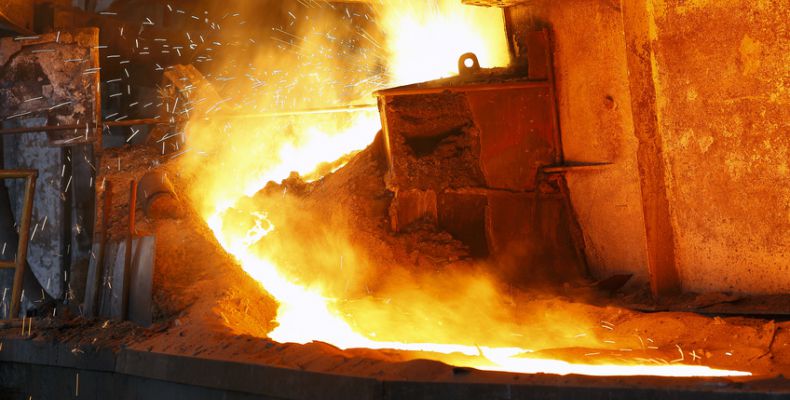
Swiss long products maker Stahl Gerlafingen is preparing to reduce its output in the following months because of rising energy costs. According to Swiss press reports, it has filed with the state government of Solothurn for support to introduce shorter working hours.
“The high energy prices are threatening our existence,” national daily NZZ quotes managing director Alain Creteur as saying. The paper cites an annual consumption of 360 gigawatt hours of power per year for the liquid phase in the electric arc furnace, plus 450 GWh/y of gas for the rolling process. In October alone, the mill would have to pay CHF 45 million ($46m), which is more than the annual cost in normal years, NZZ writes.
Such costs cannot be handed down to customers in the construction industry, which will try to import from neighbouring countries like Italy, France and Spain, Creteur warns. According to other reports, Stahl Gerlafingen is one of Switzerland’s biggest energy consumers, and the first big company in the country to file for short working hours. This has been approved and will initially last from October through December.
Neither Stahl Gerlafingen nor its parent, Beltrame Group, commented on the reports when approached by Kallanish. The Swiss mill makes merchant bar, sections, wide flange beams and rebar, rings and wire mesh. In 2019, it achieved revenue of CHF 370m, with an annual production of around 650,000 tonnes of finished products.
Christian Koehl Germany
Ascometal to stop production on skyrocketing energy: sources
Ascometal, part of Swiss Steel Group, will implement production stoppages in November and December at its two sites in France, in Fos-sur-Mer and Hagondange, market sources tell Kallanish.
The company told unions last week that production will stop for three weeks at each site. Fos-sur-Mer site director Hervé Hansen told French press the firm is being forced to stop output due to skyrocketing energy prices. Le Parisien reported that Ascometal typically pays about €50 ($49.8) per megawatt-hour for electricity in August each year. However, this year the figure ballooned to €850/MWh.
The company plans to pay some €80 million for electricity in 2023 versus €8m in 2022.
Swiss Steel did not respond to request for comment before press deadline.
Natalia Capra France
High electricity costs hit activity at Megasa: sources
High electricity costs are impacting all steelmakers across Europe, both integrated and electric arc furnace-based. On the Iberian Peninsula, EAF-based Megasa is limiting steelmaking activity in Spain and Portugal to periods when conditions are more favourable.
In Spain, the company is evaluating production schedules from day to day. According to local press reports, this has led the company to recently stop production completely on certain days when electricity costs peak, Kallanish notes.
In Portugal, it is halting production during night shifts due to high electricity and gas costs. At the same time, it is calling for the local government to take action in favour of large energy consumers that are bearing the brunt of the energy crisis.
Megasa was unavailable for comment on Tuesday.
In March, Megasa stopped activities at its mills in Spain and Portugal amid the spike in energy prices, but the stoppage was limited to a few days.
During the first seven months of this year, Spain saw crude steel production fall by almost 14% year-on-year to 7.3 million tonnes. This was the second-largest fall recorded in Europe after Finland with 16.5% y-o-y.
Emanuele Norsa Italy
Europe energy crisis creates opportunity for Southeast Asian steelmakers
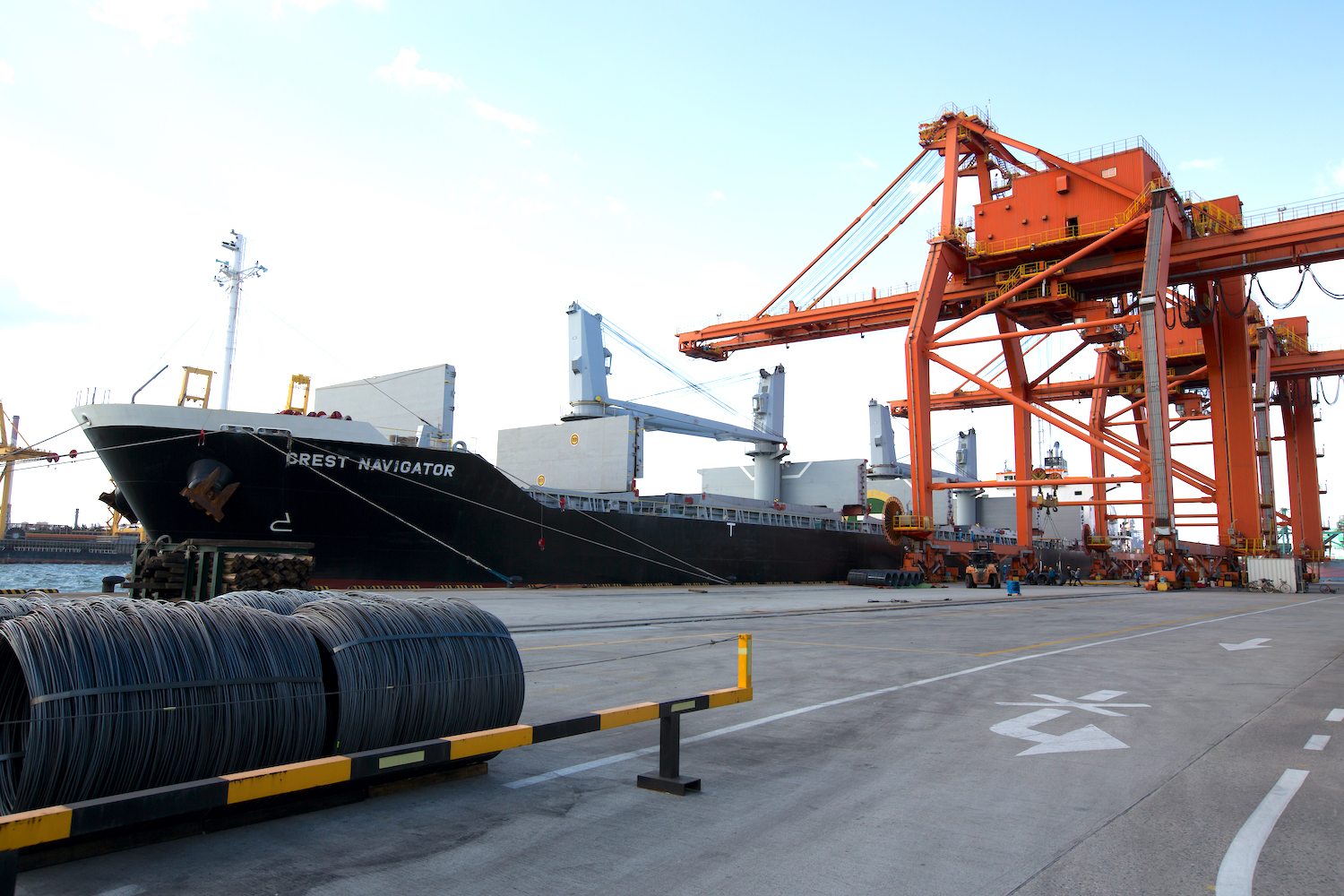
Companies active in the steel industry in Europe are increasingly turning to steel imports from Asia amid spiking energy costs and barriers to imports from the Black Sea region, sources told Fastmarkets on Tuesday September 6.Steel semi-finished products are not subject to import duties or quotas in the EU, while long steel materials from Southeast Asia are seen as replacements for Turkey-origin products, whose costs are also increasing sharply due to the energy prices but which nevertheless routinely take up all of the available EU import quotas.
Asia has become a cheaper market from which to source products, and has not shown any significant energy cost rises because Asian nations are not directly reliant on supplies of Russian gas via the Nord Stream 1 pipeline. Some, such as India and China, have even benefitted from purchasing Russian coal at lower prices in recent months, sources said.
Deals done
Over the past few weeks, semi-finished and long steel sales from Southeast Asia to Europe were estimated to total more than 100,000 tonnes, Fastmarkets heard.
Steel billet was heard sold by blast furnace (BF)-based steel mills in Malaysia and Indonesia at $515-525 per tonne fob recently and will go to buyers in Germany or Poland, according to market participants. At least 30,000 tonnes was sold from Indonesia to Germany and Poland, Fastmarkets heard.
The same BF mill in Indonesia sold a 10,000-tonne cargo to traders late last week at $515 per tonne fob, and this will go to a steelmaker in Turkey, according to sources.
Price arbitrages have been aided by falling costs for bulk freight because ships were widely available. The freight cost for large vessels containing steel shipped from western India to Europe was quoted at $80 per tonne, Fastmarkets heard on Tuesday.
“Buyers in Europe are purchasing billet and finished long steel from Asia because they are worried about steel supply. They may not be able to get steel from their usual suppliers there due to energy costs,” a trader source in Singapore told Fastmarkets on September 5.
European gas prices have soared this year due to the Ukraine-Russia war, with Russian natural gas producer Gazprom shutting the Nord Stream 1 pipeline and cutting off supply to European countries such as Germany. This was widely seen as a reaction to the imposition of trading sanctions on Russian companies and individuals by the west because of their support for Russia’s invasion of Ukraine.
“This is all driven by the [uproar around] energy costs in Europe. The EU cannot allow its own industry to be [destroyed] so I think it will provide subsidies which will stop these steel imports by next month,” a representative of a major Chinese trading firm said.
“EU steelmakers will ask, ‘How can I afford to close my factory?’ It is 100 times more difficult to close factories in Europe than in Asia due to [the difference in] labor laws,” he added.
Europe supports Asia prices
Transactions to Europe and Turkey were helping Southeast Asian BF-based mills to raise their steel offer prices despite tepid import demand in their own region, sources said.
“The Indonesian and Malaysian steel producers are already sold out of October-shipment rebar cargoes, which is why they are not urgently looking to sell rebar into Southeast Asia and can wait for November-shipment negotiations to start,” a fabricator source in Singapore told Fastmarkets on September 5.
Traders said that the major Indonesian mill had increased its offer price for wire rod to $580 per tonne fob this week on account of stable demand, an increase of $10 per tonne from its previous offer, although Asian buyers were not purchasing at that price.
Fastmarkets also heard that the Indonesian steelmaker raised its offer price for 3sp-grade steel billet to $525 per tonne fob on Tuesday, up from $515 per tonne fob last week.
European mills try to raise prices
Energy prices in Europe have been out of control in recent months.
For example, in July 2021, average electricity prices in Italy were around €400 ($397) per MWh, up from about €271 per MWh in June 2022 and sharply up from €103 per MWh in July 2021, according to local energy service company Gestore dei Mercati Energetici (GME). During the week ended August 21, average electricity prices in Italy exceeded €500 per MWh.
In July 2022, the average wholesale price of electricity in Germany exceeded €315 per MWh, nearly four times the price in July 2021. During August, the price for energy in the nation surpassed €500 per MWh for the first time in history, sources told Fastmarkets.
Faced with these unprecedented energy price rises, steel mills have started to increase their prices.
In late August, Europe’s leading steelmaker, ArcelorMittal, announced €50-100 per tonne price rises on all coil products and a €100 per tonne price increase for long steel products
But European steel market fundamentals have been too weak recently to support such huge price rises, especially in the flat steel sector, sources said. European flat steel buyers have been overstocked with commodity grades, while end-user demand from the key automotive industry has been persistently low.
As a result, European mills started to cut their output in an attempt to balance the market.
Notably, ArcelorMittal said recently that it will shut down blast furnaces in Bremen, Germany, and Gijon, Spain, due to the high energy prices and lower demand. It will also shut down the direct-reduction unit at its Hamburg long steel plant – producing wire rod – from the fourth quarter, and will reduce hours for workers at other locations.
“The high costs of gas and electricity are a heavy burden on our competitiveness. In addition, from October, there will be the gas levy planned by the federal government, which will continue to burden us,” ArcelorMittal Germany chief executive Reiner Blaschek said on September 2.
“As an energy-intensive industry, we are [very seriously] affected. With gas and electricity prices increasing tenfold within just a few months, we are no longer competitive in a market that is 25% supplied by imports. We see an urgent need for political action to get energy prices under control immediately,” he said.
Wire rod buyers look for new sources
European non-integrated wire rod processors have been strongly reliant on imported wire rod deliveries.
Since 2016, EU mills have been selling less wire rod in the spot market because they have preferred to process it themselves and sell directly to end-users, sources told Fastmarkets.
The import safeguard measures introduced in 2019 made imports more complicated for European buyers, with several key suppliers constantly exceeding their quota allocations for wire rod.
Among the major wire rod suppliers to the EU are Turkey, Russia, Belarus and Ukraine.
For example, in 2021, total wire rod imports to the EU amounted to 2.8 million tonnes, according to data from regional industry association Eurofer. Of that amount, Turkey supplied 347,730 tonnes (13% of total imports), Russia 330,974 tonnes (12%), Belarus 225,658 tonnes (8%) and Ukraine 194,785 tonnes (7%).
But Russia’s war against Ukraine has changed trade flows drastically.
As a result of the military actions since the invasion on February 24, Ukraine has been cut off from its major sea ports, Odessa and Mariupol, and can no longer export steel products by sea. Ukrainian producers have had to seek alternative routes, such as rail or road deliveries, but the volume of steel exports from the nation has dropped.
In March 2022, the European Commission imposed a ban on imports of finished steel products from Russia and Belarus. As a result, these two countries were granted no new safeguard import quota volumes for the second quarter of 2022.
With those wire rod volumes, as well as material from Ukraine, missing from the market, European buyers are now booking cargoes from countries that do not have individual quota allocations, such as India, Indonesia and Egypt.
Indonesia has increased its wire rod deliveries to the EU significantly. In the first six months of 2022, it exported 65,159 tonnes to Europe, up from 27,162 tonnes for the entire year of 2021.
India has also boosted shipments to the region. In January-June 2022, it delivered 69,158 tonnes to the EU, up from 23,875 tonnes in the full 12 months of 2021.
Published by: Julia Bolotova, Paul Lim, Lee Allen


EU coil mills limit time slots for offers
Following official announcements of price increases last week, northwestern European coil mills appear to be playing back-and-forth games with their offer conditions.
According to a buyer at a fabricator company, a leading mill stated last Friday morning that it would leave the market, and soon thereafter other mills echoed the same. “I was wondering if that was a case for the cartel office to look into,” he quips. The market leader announced it would still sign some deals at previous prices for a limited time frame on Monday, and then refrain from offering until Thursday.
Still, on Monday, the fabricator company would have faced a price premium of €100/tonne ($99) over the values of late August. “We then ended up signing for material from another mill, still at the old price,” the buyer tells Kallanish.
Mills are apparently not as harmonised as it appeared on Friday, and it is touch and go with opportunity windows opening and closing. One big mill group, for example, seems to be more willing to make concessions because it is nearing the end of its business year and likes to have some more deals in its books, the buyer believes.
Still, mills’ attempts at setting deadlines “should make us beware that the mills mean it”, the buyer says. Even if hikes do not hold yet, he believes that sinking prices are unlikely. Like other market sources, he sees hot rolled coil, for example, at between €750/t and €800/t, and not notably shifting above the upper line, as last week’s announcement would have it.
Christian Koehl Germany
European HRC producers maintain high offers, buyers hold back
Trading in the European hot-rolled coil market remained quiet on Tuesday September 6 despite massive output cuts announced by producers recently.
Fastmarkets calculated its daily steel HRC index, domestic, ex-works Northern Europe at €765 ($758.94) per tonne on Tuesday, up by just €3.33 per tonne from €761.67 per tonne on Monday.
The calculation of the index was up by €30 per tonne week on week but down by €60.83 per tonne month on month.
Producers in the region maintained official offers for HRC at €800-850 per tonne exw. But buyers’ pricing ideas were lower, at €750-760 per tonne exw.
A sale of Italy-origin HRC to Germany was reported at €800 per tonne delivered earlier this week.
Traded volumes, however, have remained limited – buyers are reluctant to accept higher HRC offers against a backdrop of persistently weak end-user demand and poor prospects for steel consumption in Europe given fears of a looming recession.
On the other hand, European producers claimed the price increase was absolutely necessary because production costs have soared recently.
“We will see if the market accepts higher offers; if not, we’d rather stop than do a loss-making sale,” a mill source in Germany told Fastmarkets.
European steelmakers have been gradually reducing output recently to adjust to weak market fundamentals; however, the effects of the production cuts have yet to show up.
Fastmarkets’ calculation of its daily steel HRC index, domestic, exw Italy was €752.50 per tonne on Tuesday, up by €7.50 per tonne day on day.
The calculation of the Italian index was up by €47.50 per tonne week on week but down by €24.50 per tonne month on month.
Official offers from mills in the country were reported at €800-820 per tonne exw, but no trading has been reported at this level so far.
Some buyers estimated the achievable level for HRC in Italy at €740-750 per tonne exw while noting that buying activity has been very weak recently.
The tradeable level for HRC in the nation was closer to €780 per tonne exw, one producer said.
Several sources claimed that Arvedi – one of the major local steelmakers in the region – is mulling production stoppages in case market activity does not pick up.
“Arvedi has stopped hot flow completely in August – they will do the same in September if buyers reject price rises,” a trading source told Fastmarkets.
HRC offers from Asia to Italy were reported at €670-680 cif for delivery at the end of 2022 and early in 2023.
Published by: Julia Bolotova

Austrian steelmaker Voestalpine sees jump in orders as air travel recovers
As air traffic returns to pre-pandemic levels, Austrian steelmaker Voestalpine is seeing a significant increase in orders from the aerospace industry with total contracts through 2030 valued at Eur300 million ($298.62 million).
Voestalpine’s High Performance Metals division secured a contract extension, and several new and extensive orders for the supply of heavy-duty structural parts from US aircraft manufacturer Boeing.
Also, Germany’s engine manufacturer MTU Aero Engines has commissioned Voestalpine to supply over the coming years highly critical forged parts for installation in a variety of aircraft models, including Airbus A320neo.
The aviation market continues its recovery after it almost came to a standstill at the start of the COVID-19 pandemic.
In the April 1, 2021-March 31, 2022, business year, Voestalpine’s revenue in the aerospace segment was around Eur255 million, up from the prior year’s level of Eur180 million.
The High Performance Metals division produces die forgings from titanium alloys, high-alloy steels and nickel-based alloys at the Kapfenberg site, high-tech titanium sheets in Mürzzuschlag, and special profiles for engines in Bruckbach in Lower Austria.
Over the past five years, the company has invested Eur140 million in the aerospace-orientated capabilities at its Austrian sites alone with most of this spent on enhancing product quality, process automation, and digitalization, it said.
— Ekaterina Bouckley

Slovakia’s US Steel Kosice idles No. 2 blast furnace for 60 days as EU mills wind down production
Slovakia’s US Steel Kosice has idled its No. 2 blast furnace of Sept. 4 for a period of 60 days, while Nos. 1 and 3 remain operational.
The company described the move as a planned outage and said it would continue to adjust maintenance schedules according to demand.
Mills have recently cut discounts in order to secure volumes, though the price decline failed to substantially stimulate demand leading into the traditional period of recovery in September post-summer slowdown.
“Price is irrelevant when demand is so low– inventories are the issue, not expense,” a distributor source said.
As such, market participants see production cuts as the best mechanism to realign supply and demand. Reduced demand is primarily motivated by high inventory levels, with extra stocking costs reportedly extinguishing any advantage to be gained on discounted purchasing.
ArcelorMittal recently idled furnaces at several sites, in line with expectations that further output cuts would hit the European flat steel market on rising production, and more specifically, energy costs.
A North European mill source estimated that mills have already reduced production capacities by around 10-15%, on top of existing stoppages.
While production cuts are indeed viewed as necessary to bring supply and demand back into balance, some in the market see foreign imports as claiming a larger market share on competitive pricing while EU production is reduced.
“EU mills can cut capacities, but I don’t see the commission cutting quotas in line any time soon — it’s a golden opportunity for traders,” a mill source said.
Alongside production cuts, mills have announced an increase in offer levels, with the majority of North European mills offering at around Eur800/mt ex-works Ruhr and Northern Europe. Tradable levels are currently uncertain in the low-demand environment as the market digests the recent increase.
Platts assessed hot-rolled coil in Northwest Europe at Eur760/mt ex-works Ruhr Sept. 5, up Eur5/mt on the day, according to data from S&P Global Commodity Insights.
— Benjamin Steven