


Southern Europe rebar prices rise despite weak end-user consumption
Trading activity remained slow across Southern Europe in the week to Wednesday September 7.
Long and flat steel producers continued to reduce production to manage skyrocketing energy costs in the region.
Despite the slow market, mills have continued to target higher prices to pass on costs to consumers, Fastmarkets heard. Uncertainty about how high prices could go while demand remains very weak continued to plague the market.
Sources say government intervention may be the only recourse to cap energy costs and regulate prices in the region.
Italy
Mills in Italy have managed to raise prices since July to manage surging energy costs. While demand picked up in late August, it dropped off in early September, sources told Fastmarkets.
Fastmarkets’ price assessment for steel reinforcing bar (rebar) domestic, exw Italy was €975-1,020 ($968-1,012) per tonne on Wednesday, up by €35-45 per tonne from €940-975 per tonne a week earlier.
Rising prices combined with slow demand continued to create uncertainty among market participants.
Mills in Italy have been raising prices since July to manage energy costs. Mills will look to target new increases of €50 per tonne in the coming week, Fastmarkets heard.
Whether the market accepts this remains to be seen, especially considering demand is dropping.
One producer source in Italy told Fastmarkets: “This week, demand is not so good. Everyone bought last week before the price increase. Producers are worried about energy costs. Some mills say that if energy costs don’t decrease, it will become impossible to continue producing and to remain in the market.”
A buyer source in Italy said: “The market is quiet, but producers cannot accept lower prices due to the high costs of energy and gas. They have already announced there will be further increases this week.”
The potential impact of inflation, a long-term contraction of end-user consumption rates and high energy costs continued to weigh on market confidence.
A second mill source in Italy: “Mills are cutting their output. They don’t produce when energy costs are higher, but they don’t have a clear strategy for the future. They go on a day-by-day basis.”
Spain
In the Spanish rebar market, prices continued to rise despite slow demand as well, Fastmarkets heard.
Fastmarkets’ price assessment for steel reinforcing bar (rebar), domestic, delivered, Spain was €980-1,000 per tonne on Wednesday, up by €110-120 per tonne from €860-890 per tonne a week earlier.
Similar to other producers across Europe, Spanish mills are raising their prices to manage the energy crisis, sources told Fastmarkets.
Demand has remained sluggish, however.
A Spanish trader told Fastmarkets: “There are very few deals in the market because traders cannot pass on increases downstream. The construction industry simply will not accept these price rises.”
A buyer source said mills had no choice but to keep raising prices, regardless of demand.
If mills significantly cut production, demand for scrap could drop too. This in turn could result in domestic and international scrap prices falling.
While scrap prices rose in late August, they have been falling since early September.
Fastmarkets’ daily index for steel scrap, HMS 1&2 (80:20 mix), North Europe origin, cfr Turkey was €363.16 per tonne on Wednesday, down by $30.32 per tonne from $393.48 per tonne a week earlier.
Published by: India-Inés Levy


Ovako, SKF advance in net-zero bearing production
Bearing producer SKF has produced a spherical roller bearing (SRB) with 90% less carbon emissions than its standard SRB by using Ovako’s bearing steel, Kallanish learns from the Swedish steelmaker.
The steel is produced from 97% recycled steel at Ovako’s Hofors mill and manufactured in SKF’s net zero factory in Gothenburg, Sweden. The bearing has already been installed in a crane at the Hofors mill, where it is one of hundreds of connected bearings that enable smoother operations and less unplanned downtime, Ovako says.
It describes the partnership as an example of how collaborations can speed up the transition to a sustainable society. Ovako claims it has carbon neutral operations at all its mills as a result of 97% recycled content, fossil-free electricity, process improvements and investments.
SKF’s factory in Gothenburg is the third SKF factory to achieve net zero status, part of the SKF’s Group ambitions to achieve net zero emissions across all its operations by 2030.
Christian Koehl Germany


Metinvest Trametal supplies more HRC to Ukraine
Metinvest’s trading arm, Metinvest-SMC, has delivered a new batch of Italian hot rolled coil to its metal centre in Ternopil, Ukraine, Kallanish notes.
The manufacturer of the product is Italian subsidiary Metinvest Trametal SPA, which helps Ukrainian buyers with rolled metal products that are currently in short supply, the enterprise claims.
Over 1,130 tonnes of sheet have arrived in Ukraine and is already ready for onward shipment, Meyinvest-SMC says. The sheet is supplied in steel grades S235JR+N and S355J2+N.
“We are grateful to colleagues from Italian enterprises for their help in the supply of rolled metal products and we are expecting new arrivals soon,” the company notes.
In August, Metinvest-SMC arranged the import into Ukraine of scarce thick plate and HRC from its assets in Italy (see Kallanish passim). The total volume of planned deliveries to Ukraine is about 3,500t.
Metinvest-SMC has started supplying HRC for the manufacture of elements used in production of military vehicles in Ukraine.
The firm also supplied cold rolled coil for Doors Bulat’s Chernihiv factory. Since 2013, the steel door producer has been supplying to EU countries.
Traditionally, before the outbreak of war in Ukraine, Metinvest’s Mariupol-based plants would supply plate and HRC to the Italian market, as well as slab for re-rolling at its Italian plants.
Metinvest decreased crude steel production in the first half of the year by 45% on-year to 2.41 million tonnes. Pig iron output fell by 49% to 2.25mt.
The stoppage of production at the Mariupol plants – Azovstal and Ilyich Steelworks – has been partially offset by production at Kametstal.
Svetoslav Abrossimov Bulgaria

Future depends on energy availability: Alfa Acciai
The future of the long steel market in Italy will depend on energy and gas availability, disruption to which is responsible for a sharp slowdown in demand, says Italian steelmaker Alfa Acciai chief executive Amato Stabiumi in the company’s 2021 financial report monitored by Kallanish.
Alfa Acciai registered a positive start to 2022. In the first quarter, both production and sales increased but skyrocketing prices of raw materials and energy together with uncertainty related to the continuing war in Ukraine have caused the current market downturn.
The company reported improved results year-on-year in 2021 thanks to strong steel consumption in Italy and Europe. The group says it managed to protect its margins “by leveraging volumes, price and efficiency in a year characterised by a continuous rise in raw material prices, especially scrap, electricity, and gas”. Revenue increased by as much as 80% compared to 2020 to €1.2 billion ($1.2 billion), while the steelmaker’s exports were up 40% on-year.
2021 crude steel production amounted to almost 1.8 million tonnes, up 20% on 2020, while Ebitda doubled compared to pre-pandemic 2019 to €65 million.
Last year, the company invested about €34m focusing on upgrades, energy efficiency and reducing its carbon footprint. It says it is continuing to invest in energy transition, increasing the share of renewable sources in the energy supply mix.
Natalia Capra France

Italian ministry issues energy cap proposal
The Italian Ministry of Ecological Transition (Mite) has sent its proposal to the EU to cap energy prices by introducing a maximum price at which natural gas can be traded.
The cap would cover all physical and financial transactions and should be high enough compared to pre-Ukraine war levels in order to be attractive for producers and exporters, it says in a document obtained by Kallanish.
The cap would be at well above energy production costs, so as to represent a strong incentive to keep on producing and exporting. In 2017-2020, Italian electricity prices never exceeded €30/MWh. The cap value should be high enough to continue to encourage energy savings and fuel switching, as member states would have to continue to rapidly reduce their dependence on Russian gas, the ministry recommends.
The measure should be complemented by a public compensation mechanism “to refund importers of the difference between international prices above the cap and the cap for marginal resources required to ensure security of supply … An appropriate and coordinated framework for demand management and allocation criteria should be included to be triggered both in the case of achievement of the cap level [and] in the case of physical shortage of natural gas supply.”
The ministry is also calling for a substantial reduction in the extra profits generated by gas exports to Europe, limiting the financing of the invasion of Ukraine by Russia. TTF spot prices have risen from €20/MWh at the beginning of 2021 to more than €200/MWh on average in August, with spikes in recent weeks at above €300/MWh. “In countries exposed to marginal gas prices also in the electricity sector, the increase has resulted in increasing power prices from €50-60/MWh up to above €600/MWh,” the document concludes.
Representatives from across European industry have written to the European Commission asking for the swift imposition of a cap on gas prices and their decoupling from electricity rates. The letter, signed also by European steelmakers association Eurofer, underlines that gas prices peaked recently at a level 15 times higher than pre-crisis rates. It also indicates that European prices are ten times higher than in the US, as well as above Asian prices (see Kallanish 8 September newsletter).
Natalia Capra France

Northwest European coil market approves production cuts
A reduction in working hours and closures of key facilities at major European mills could be a move welcomed by the wider market. Until recently, various players suggested output cuts would be best to synchronise sluggish demand and supply.
“Apparently, the mills have not yet succeeded in bringing output into balance with demand, although they have taken good measures to cut production seriously,” a Dutch manager observes. A German manager concurs that mills ought to bring down volumes to be able to assert price increases. “I wish for a controlled slowdown [of production], which would help to stop the volatility,” he tells Kallanish.
Pretty much all sources at stockholders and steel users do not believe the latest price hikes announced by several mills will be accepted. “There is hardly any demand, all decisions are postponed, and without noteworthy demand the increases do not take effect. So, who cares about prices?” another German buyer asks provokingly.
Other market players agree. “Here and there, we see mills making offers for spot quantities to very large consumers at extremely low prices,” another Dutch source observes. “It confirms our impression that steelmakers have relatively few orders,” and are trying to keep their facilities running.
Although he does not give figures, this suggests that deals for hot rolled coil below €750/tonne ($747) are occurring. The minimum of €800/t targeted by mills is currently still the maximum payable level, if that. For hot-dip galvanized coil, players see the range from €930/t to €980/t.
A manager at a fabricator that buys from service centres (SSCs) tells of offers from mill-owned SSCs that were €100/t above those of independent SSCs. “It pays to ask twice,” he says.
Christian Koehl Germany
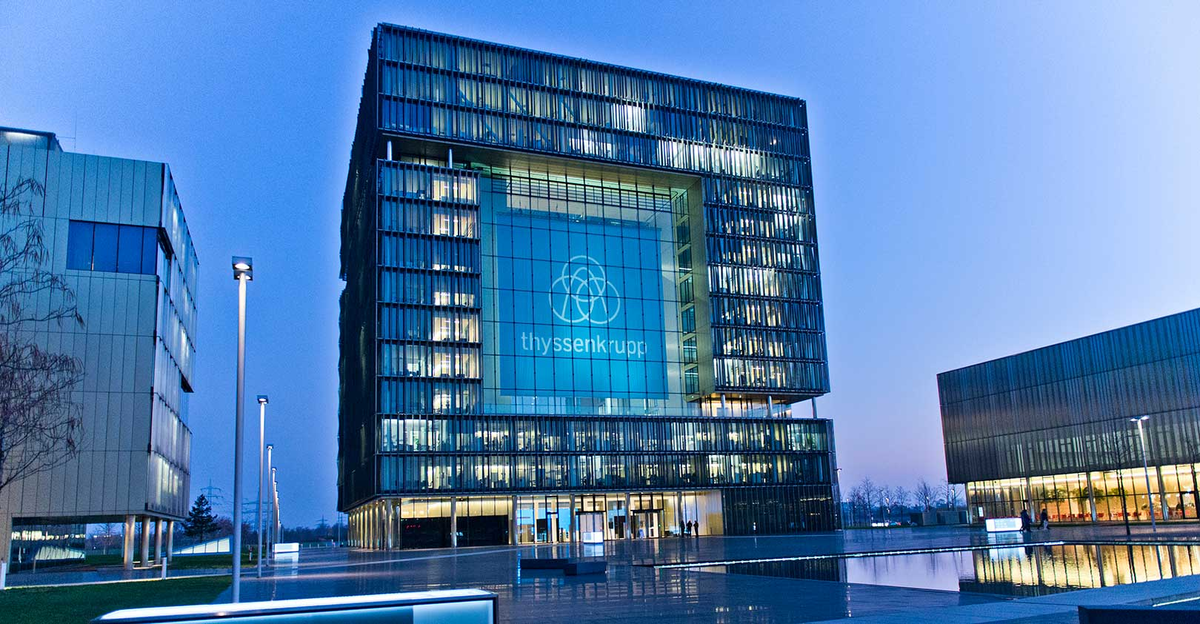
Thyssenkrupp to invest Eur2 bil in first direct reduction plant for low-carbon steel
Thyssenkrupp will invest more than Eur2 billion ($2 billion) in its first direct reduction plant for low-carbon steel at its Duisburg site in the Ruhr region to accelerate its green transformation, the German steelmaker said Sept. 8.
The company’s executive board approved the project and released the corresponding capital resources for the construction of the plant, which was supported by the supervisory board, the company said, although it added that the major project remained subject to public funding.
The contract for the project is due to be awarded in autumn 2022, with production planned to start in 2026.
The plant will have a capacity of 2.5 million mt/year and will avoid the emission of 3.5 million mt/year of CO2, Thyssenkrupp said.
The company aims to produce 5 million mt/year of low-carbon steel by 2030, cutting emissions by more than 30%, and is aiming to achieve climate neutrality by 2045, it said.
The plant will be the first of four planned at Duisberg as part of Thyssenkrupp’s tkH2Steel transformation project, which will allow the steelmaker to replace the coal-based blast furnace route with direct reduction plants where iron ore is reduced using hydrogen instead of coal.
The plant’s downstream melters will be powered by renewable electricity to produce electric furnace iron comparable to conventional hot metal, which can then be further processed into high-quality flat steels in a subsequent step, the company said previously.
In March, Thyssenkrupp signed a memorandum of understanding with German power company Steag for the supply of renewable hydrogen and oxygen from the adjacent planned HydrOxy Walsum 520-MW electrolyzer.
“The release of this enormous investment comes in the midst of the company’s transformation, in what is also for all concerned an extremely challenging environment,” Thyssenkrupp CEO Martina Merz said.
“We are thus underlining our claim to make a significant and, above all, rapid contribution to the green transformation — also where steel is concerned,” she added.
The company would be reducing the CO2 emissions of its production by just under 20% in the first step, which was 5% of the Ruhr region’s greenhouse gas emissions, Thyssenkrupp Steel Europe Chairman Bernhard Osburg said.
“With today’s decisions, we are continuing to set the pace on our path to climate-friendly steel production,” he said.
The Platts contract DR pellet premium was assessed at $95/dmt for September, on a 65% Fe fines basis, according to S&P Global Commodity Insights data.
— Jacqueline Holman


EU HRC market remains bullish despite minimal trading
Limited activity was heard in the bullish hot-rolled coil European market, with rising prices driven by costs rather demand revival.
Platts assessed HRC in Northern Europe stable on the day, at Eur790/mt ex-works Ruhr.
Distribution sources continued to report volumes tradable at Eur780-800/mt ex-works Ruhr, although indications at the bottom end of the range are rarer by day. Mill sources see achievable prices slightly higher at Eur790-800/mt ex-works.
What little transactional activity exists in the market was limited to small tonnages, with most distributors refraining from substantial restocking on high inventory levels.
The Italian market was assessed above Northern Europe at Eur800/mt ex-works due to comparatively higher acceptance to the Eur800/mt ex-works offer level.
A mill source reported small tonnage deals at a Eur800/mt ex-works minimum, with only one Southern integrated producer offering discounts at Eur780-800/mt ex-works. No deals were heard at these levels, however.
Market participants said the quicker adoption of higher pricing could be explained by rising energy prices, tighter supply from mill output cuts and a pre-existing lack of competing producers compared to the Northern market.
New offers were not yet heard for Italian imports, but sources expected offer levels to increase to Eur720-730/mt CIF in the near term.
Platts is part of S&P Global Commodity Insights.
— Benjamin Steven

China’s rising steel output, improving seasonal demand set to keep prices volatile
Chinese steel prices are likely to remain volatile through September in the wake of strong seasonal demand and low inventories and rising steel production, industry sources said.
Crude steel production is expected to increase in September after rebounding in August following two straight months of declines. September and October typically see seasonally strong demand and the government is unlikely to order steel output cuts, market sources said.
Daily pig iron output rose 3.3% month on month to an average 2.35 million mt/day in August, while crude steel production increased 2% from July to 2.680 million mt/day, China Iron and Steel Association data showed.
Pig iron output was up 1.8% on the year in August, but crude steel slipped 0.2% over the same period, according to the CISA.
Finished steel inventories at steel mills and spot markets monitored by the CISA fell 7.2% from end-July and 1% from a year ago to 25.13 million mt Aug. 31.
Some sources expect China’s September crude steel output to rise to nearly 3 million mt/day, largely offsetting pricing gains due to recovering demand.
“Due to the drag from the debt-laden property sector and another round of COVID resurgence, end-user demand, especially for long steel, has been modest so far in September,” a market participant said. “Oversupply could surface again if demand fails to improve further.”
Limited benefit from additional stimulus
China’s top planning bodies, the National Development and Reform Commission and the Ministry of Finance, in separate statements Sept. 5 urged the relevant authorities to effectively implement stimulus policies introduced in 2022 to boost China’s infrastructure construction and residential consumption.
The steel market’s reaction to the statements was, however, muted.
Some market participants said a further boost to steel demand from previously introduced stimulus was likely to be limited and further stimulus was not likely until after October at the earliest.
The 20th National Congress of the Chinese Communist Party that will broadly set the tone for the next five years of policy will be held Oct. 16.
— Staff
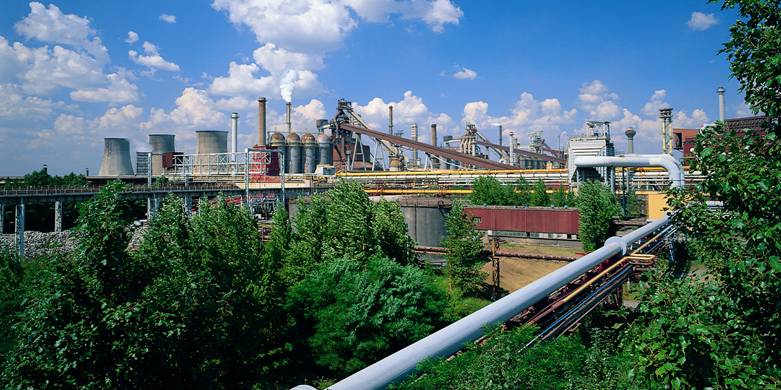
Steelmaker ArcelorMittal moves to idle fourth blast furnace in EU this month
ArcelorMittal Poland said Sept. 8 it is temporarily suspending operations at one of its blast furnaces due to the market environment and high energy prices.
At the end of September, the company will stop blast furnace No. 3 — one of two blast furnaces, both installed at its plant in Dabrowa Gornicza, southern Poland. These are ArcelorMittal Poland’s only remaining operational blast furnaces after it permanently shut the blast furnace at its Krakow mill in 2020, a spokesperson for the company told S&P Global Commodity Insights.
The management of ArcelorMittal Poland decided to reduce metal production at Dabrowa steelworks after an in-depth analysis of the deteriorating market environment in recent weeks.
“We are observing a decrease in demand, and the order portfolio is below the level of technological operation of at least two blast furnaces,” ArcelorMittal Poland CEO Frederik Van De Velde said in a statement.
ArcelorMittal Poland does not disclose the capacities of individual furnaces, but the company’s factbook for 2014 says the mill in Dabrowa Gornicza has 4.4 million mt/year of pig iron capacity, meaning that taking one of the two furnaces offline will likely halve this potential maximal output.
ArcelorMittal Warszawa — another division of ArcelorMittal in Poland — does not have any blast furnaces; it has one electric arc furnace and this continues to operate normally, a spokesperson for ArcelorMittal Warszawa told S&P Global.
Aside from a slowdown in economic activity in Europe, the company also listed growing steel imports into the EU, record high prices of CO2 emission permits, and an increase in gas and energy prices, as the other reasons behind the decision.
In August, the EU Emission Trading System price for CO2 reached Eur99 ($98)/mt.
And earlier this month, ArcelorMittal said it would temporarily shut three blast furnaces at its mills in Bremen, Germany, in Gijon, Spain, and in Dunkirk, France, also citing weak demand and surging energy and emissions costs.
Eurofer, the association representing the European steel industry, was among a few associations to send a joint letter to European Commission President Ursula von der Leyen on Sept. 7 urging her to take decisive EU-wide action on gas and electricity prices.
— Ekaterina Bouckley