


Energiepreise werfen Automobil-Zulieferer aus der Spur
Explodierende Energiekosten und mangelnde Kundenkooperation werfen Autozulieferer gerade komplett aus der Spur. Und das aktuelle Entlastungspaket wird es nicht schaffen, Unternehmen wieder auf eine sichere Route zu lenken. „Wir erleben bei unseren meist mittelständischen Mitgliedsunternehmen maximale Unsicherheit. Ohne staatlichen Deckel, ein breiteres Stromangebot und unternehmensorientierte Maßnahmen werden die Energiekosten in Deutschland zum maßgeblichen Standortnachteil. Gleichzeitig brauchen die Mittelständler sofortige Unterstützung durch ihre Kunden“, unterstreichen sieben Verbände in einer gemeinsamen Presseerklärung. Sie kommt von den Industrieverbänden Blechumformung (IBU), Massivumformung (IMU) und Härtetechnik (IHT), den Fachverbänden Pulvermetallurgie (FPM) und Metallwaren- und verwandte Industrien (FMI) sowie dem Verband der Deutschen Federnindustrie (VDFI) und dem Deutschen Schraubenverband (DSV).
„Es ist fünf vor zwölf“ – Energie ist die Grundlage für industrielle Produktion
Ausgangspunkt sind wahnwitzige Energiekosten: Strompreissteigerungen um das 15-Fache des Vorjahres und 1.000-prozentige Gaspreisanstiege katapultieren Zulieferer in ausweglose Lagen. „Es ist fünf vor zwölf“, warnt IBU-Geschäftsführer Bernhard Jacobs. „Wenn der Staat die Energiepreise jetzt nicht deckelt, ruiniert er in kürzester Zeit die Unternehmen und viele Tausende Arbeitsplätze.“ Tobias Hain, IMU-Geschäftsführer, ergänzt: „Wir fordern zur Preisberuhigung eine breit aufgestellte Stromproduktion. Und den Fall der überkommenen Strompreisbildung, des sogenannten Merit-Order-Prinzips. Der Staat muss alle denkbaren Maßnahmen und Regelungen ergreifen und dabei deren langfristige Auswirkungen bedenken.“
Kooperative Geschäftsmodelle haben Zukunft
Mittelständische Unternehmen brauchen jetzt Tempo und dazu die Kooperationsbereitschaft ihrer Kunden. Geschäftsmodelle, die das alleinige Beschaffungsrisiko beim Zulieferer sehen, haben sich überlebt. „Erfolgreiche Automobilisten denken die Zukunft ihrer Zulieferer bereits mit“, weiß FMI-Geschäftsführer Werner Liebmann. „Natürlich verhandelt jedes Zulieferunternehmen selbst mit seinen Kunden. Die Branche wird aber nicht länger der Puffer sein können, der unternehmerische Risiken von Kunden fernhält“, unterstreicht DSV-Geschäftsführer Hans Führlbeck. Konkret bedeutet das: Zahlungsziele, Savings-Rituale und die Verbindlichkeit von Bestelldaten brauchen eine Anpassung an aktuelle Marktverhältnisse.
Transparenz und Konsequenz gefragt
Transparenz und Konsequenz sind für Dirk Hölscheid, Geschäftsführer der Verbände FPM und IHT, Schlüssel zur Problemlösung. Er sieht keine Zeit mehr „zum Taktieren und Auf-Zeit-Spielen. Zulieferer, die ihre Kosten offen und nachvollziehbar darlegen, haben das Recht, von Kunden Fairness, Akzeptanz und schnelles Handeln einzufordern.“
Zulieferer denken über Ausstieg nach – erkennen Autobauer die Gefahr?
Noch erklären liquide Automobilhersteller die Themen Energie- und Logistikkosten zum alleinigen Lieferantenproblem. Sie spielen auf Zeit und bemühen den Begriff „Painsharing“. Ihre Strategie könnte allerdings scheitern: Erste Zulieferer denken über ihren Ausstieg aus der automobilen Lieferkette nach. Bernhard Jacobs (IBU): „Sie suchen nach neuen Geschäftsfeldern und kooperativen Kunden. Weil sie keine Lust mehr auf die alten Verhandlungsrituale haben.“ „Werden ihre Kunden – Automobilhersteller und Systemlieferanten – die daraus folgende Gefahr rechtzeitig erkennen? Oder den Bogen überspannen?“, fragt sich Tobias Hain (IMU). Letzteres würde die Automobilproduktion empfindlich ausbremsen. Bleibt zu hoffen, dass die Autobauer rechtzeitig die Kurve bekommen. Und die Politiker ihre Entscheidungen beschleunigen.
Quelle: IBU Industrieverband Blechumformung / Foto: Fotolia
von Hubert Hunscheidt
Hohe Energiepreise drücken deutsche Wirtschaft in Rezession
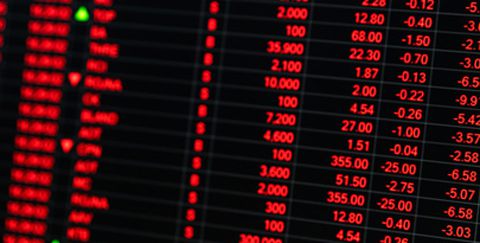
Die deutsche Wirtschaft befindet sich im Abwärtssog. Die jüngsten Preissprünge bei Strom und Gas werden die Kaufkraft der privaten Haushalte spürbar verringern und zu einem Rückgang der privaten Konsumausgaben führen. Zudem werden die seit dem Sommer weltweit eingetrübten wirtschaftlichen Aussichten nicht nur die Exporte, sondern auch die Investitionstätigkeit merklich dämpfen. Im Ergebnis wird die deutsche Wirtschaft erneut in eine Rezession abgleiten, in einer Phase, in der sie sich gerade von den pandemiebedingten Rückschlägen erholte. In unserer Sommerprognose waren wir noch davon ausgegangen, dass die Auftriebskräfte trotz der Belastungen durch den Krieg in der Ukraine überwiegen würden und das Bruttoinlandsprodukt kräftig steigen würde.
Nun rechnen wir für das laufende Jahr nur noch mit einem Anstieg des Bruttoinlandsprodukts um 1,4 Prozent (Sommerprognose: 2,1 Prozent). Im kommenden Jahr dürfte es sogar um 0,7 Prozent zurückgehen (Sommerprognose: +3,3 Prozent). Im Jahr 2024, wenn die belastenden Faktoren an Wirkung verlieren, wird das Bruttoinlandsprodukt wohl um 1,7 Prozent steigen. Sofern die Preise für Strom und Gas für längere Zeit hoch bleiben – so wie es sich derzeit abzeichnet – wird die Inflation ausgehend von ihrem Rekordniveau von 8 Prozent im laufenden Jahr im Jahr 2023 voraussichtlich auf 8,7 Prozent steigen, da die Marktpreise für Strom und Gas die Verbraucherpreise erst mit einiger Verzögerung erreichen. Erst im Jahr 2024, wenn die Energiepreise wieder nachgeben, dürfte sich die Inflation deutlich beruhigen.
Die Rezession wird auch Spuren am Arbeitsmarkt hinterlassen. Aufgrund des Fachkräfte-mangels dürften sie jedoch vergleichsweise gering ausfallen. Die Arbeitslosenquote steigt von 5,3 Prozent im laufenden Jahr auf 5,6 Prozent im kommenden Jahr. Trotz erheblicher Mehrausgaben für das Abfedern der hohen Energiepreise wird sich der Finanzierungssaldo des Staates voraussichtlich kaum verschlechtern, da der hohe Preisauftrieb für Mehreinnahmen sorgt. Der Bruttoschuldenstand in Relation zum nominalen Bruttoinlandsprodukt dürfte sogar von 68,7 Prozent im Jahr 2021 auf 64,6 Prozent im Jahr 2024 zurückgehen, da das nominale Bruttoinlandsprodukt aufgrund des insgesamt hohen Preisauftriebs kräftig steigen wird.
Quelle: KIEL INSTITUT FÜR WELTWIRTSCHAFT / Foto: Fotolia
von Hubert Hunscheidt
Wetter Group launches project to improve performance in steel construction
The digitalization project of the Wetter Group in Stetten is currently underway together with Kaltenbach.Solutions GmbH. In order to be able to provide customers in the steel construction industry with individually tailored offers, the family-run Swiss steel construction company has been investing in forward-looking technologies for generations. By using the digital measuring device BoosterBOX 4.0 and the associated software on machines and systems in production, the company is striving for sustainable optimization of the performance and the machine environment.
In 1946, Hans Wetter founded a locksmith’s shop in Stetten; today, H. Wetter AG is a family-run group of companies with over 150 employees. In the 70s, the company started building turnkey halls for industry and in 2003, the then most modern steel construction production line in Switzerland was realized. Currently, under the management of Gabriel Wetter, the company supports customers in the planning and realization of supporting structures made of steel and steel composite construction. In addition, energetic refurbishments, the construction of mountain railroads and real estate development are part of the range of services.
The Wetter Group has its own plant with assembly team and continuously invests in future-proof technologies. In 2019, the company installed a photovoltaic system that produces over 800,000 kWh. Wetter uses the BoosterBOX 4.0 from Kaltenbach.Solutions both on the machines in prefabrication and on the systems for assembly and welding. Based on data from ongoing operations, this makes the productivity of workflows and the organization around the machines visible. A project team consisting of employees from the work preparation, machine operation and management departments then jointly defines the next steps with the aim of achieving a sustainable increase in performance.
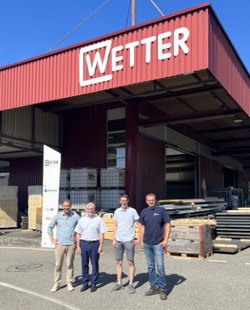
Pictured from left to right: Gabriel Wetter (CEO of the Wetter Group), Valentin Kaltenbach (Managing Partner of Kaltenbach.Solutions), Jürg Mäder (Head of Lean Manufacturing at Wetter) and Mario Vidovic (Production Manager at Wetter in Stetten)
About us
KALTENBACH.SOLUTIONS GmbH strives for long-term cooperation with both the processing industry and machine manufacturers and aims to become a preferred partner. As a full-service provider with decades of experience in the steel industry, it develops innovative web- and AI-based industry solutions to improve performance in operations. Thanks to its deep expertise, KALTENBACH.SOLUTIONS has succeeded in connecting the world of machinery and equipment with the digital world. This unique link guarantees measurable success for customers worldwide and creates sustainable added value.
Press contact
Nicola Chlench
T +800 454 0 2345
marketing@kaltenbach-solutions.com
www.kaltenbach-solutions.com
Breisach, September 12, 2022


247TailorSteel beginnt die Produktion in der neuen Produktionsstätte in Langenau

Genau vor einem Jahr hat 247TailorSteel, führender „smarter“ Hersteller maßgeschnittener Metallbleche, Rohre und Kantteile, mit dem Bau der neuen Produktionsstätte in Langenau bei Ulm begonnen. „Mit dem Bau der neuen Fabrik in Langenau verstärken wir unsere Position im Markt und bieten für unsere Kunden in Süd-Deutschland und Österreich mehr Möglichkeiten“, erklärt Carl Berlo, CEO des Unternehmens.
Maschinenpark 100% in eigener Hand
Der Maschinenpark von 247TailorSteel wächst mit der neuen Produktionsstätte auf mehr als 40 Laserschneidmaschinen, 30 Abkantpressen und 10 Rohrlaser. Auf einer Produktionsfläche von 15.000 m² wird Langenau zunächst mit 4 Laserschneidmaschinen, 4 Abkantpressen, 3 Rohrlasern und 2 Maschinen für die Kantenverrundung ausgestattet. Es ist für das Unternehmen die dritte Produktionsstätte in Deutschland. „ Dank des eigenen Hightech-Maschinenparks und des online Sophia®-Portals können unsere Kunden ihre Bestellungen 24 Stunden am Tag, 7 Tage die Woche online aufgeben, in nur einer Minute ein Angebot erhalten und ihr Produkt innerhalb von 48 Stunden liefern lassen“, erklärt Berlo.
Neue Arbeitsplätze für die Region
Durch die Errichtung der neuen Fabrik werden im ersten Schritt 100 neue Arbeitsplätze geschaffen, längerfristig werden rund 250 Beschäftigte erwartet. „Mit der neuen Produktionsstätte gelingt hier eine zukunftsweisende Industrieansiedlung. 247TailorSteel wird so eine Bereicherung für Langenau und für die Region“ sagt der Bürgermeister von Langenau, Daniel Salemi.

Internationale Expansion
247TailorSteel ist seit der Gründung im Jahr 2007 der führende Pionier auf dem Markt und verfügt mittlerweile über einen großen, treuen Kundenstamm. Neben den Standorten in Varsseveld (NL), Oyten (DE), Hilden (DE) und Langenau (DE) sind auch jeweils eine Produktionsstätte in Belgien und Österreich und eine weitere Niederlassung in den Niederlanden und Deutschland geplant. Insgesamt sollen im Jahr 2025 zehn Produktionsstätten aktiv sein.
Allgemeine Fakten
- Umsatz 2021: 160 Millionen Euro
- Anzahl der Mitarbeiter: Über 700
- Mehr als 30.000 Kunden
- 185.000 m 2 Standortfläche an 6 Standorten: Varsseveld (Niederlande – Zentrale), Oyten (Deutschland, bei Bremen), Hilden (Deutschland, bei Düsseldorf), Langenau (Deutschland, bei Ulm), Hooglede (Belgien, bei Kortrijk) und Oud Gastel (Niederlande, bei Roosendaal) – die letzten zwei sind gerade im Bau
Über 247TailorSteel
247TailorSteel ist Europas führender „intelligenter” Hersteller von maßgeschnittenen Metallblechen, Rohren und Kantteilen . Dank des Portals Sophia® können Kunden ihre Bestellungen rund um die Uhr online aufgeben, in nur einer Minute ein Angebot erhalten und die Produkte innerhalb von 48 Stunden liefern lassen. Das Unternehmen wurde 2007 gegründet und hat seinen Hauptsitz in Varsseveld (Niederlande). Weitere Produktionsstätten befinden sich in Oyten (Niedersachsen), Hilden (Nordrhein-Westfalen) und Langenau (Baden-Württemberg). 247TailorSteel. On demand. On time.
Quelle und Fotos: 247TailorSteel
von Hubert Hunscheidt
ArcelorMittal shuts down one more BF in Europe
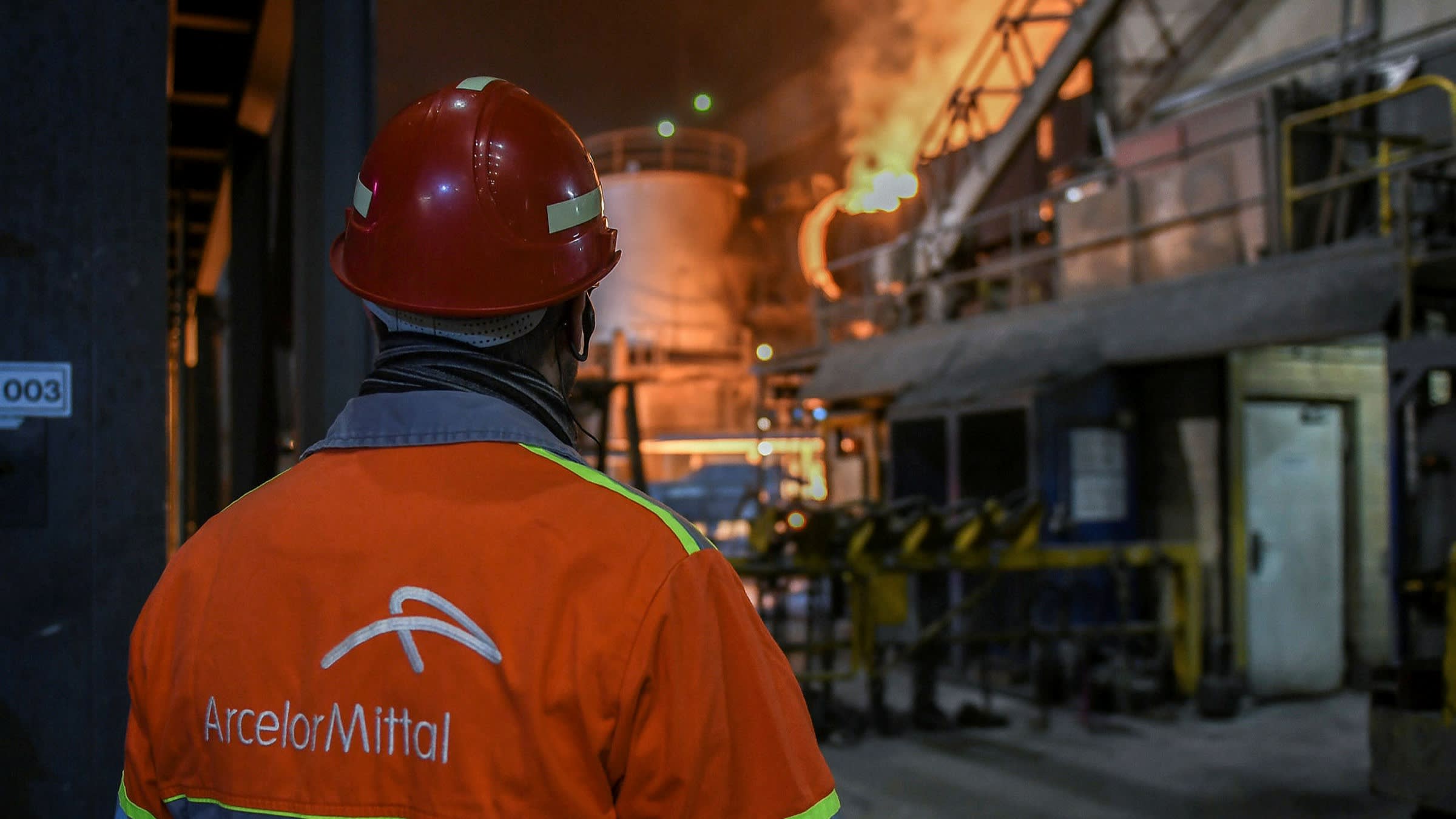
ArcelorMittal will idle another blast furnace in Europe – this time in Poland – amid high costs and weak demand for steel products, the company said on Friday September 9 in a release seen by Fastmarkets.Operations at the company’s 2.3-million-tonne-per-year BF No 3 in Dabrowa Górnicza, Poland, will be suspended before the end of September, it said.
The main reasons for the output cut were cited by ArcelorMittal as the soaring price of energy, which has undermined its competitiveness, weak demand for finished steel products and increased levels of steel imports to the European Union.
“The market in Europe has weakened even more during the summer period. We are observing a decrease in demand, which leads to an order book below the minimum working point of two blast furnaces,” Frederik Van De Velde, chief executive officer of ArcelorMittal Poland, said.
The Dabrowa Górnicza site operates two BFs with a combined capacity of 2.7 million tpy of pig iron. Only BF No 2 will remain operational at Dabrowa Górnicza from the fourth quarter 2022.
The BF stoppage at Dabrowa Górnicza will also affect coil output at ArcelorMittal’s Krakow site, Fastmarkets understands.
ArcelorMittal permanently closed the hot end at Krakow steelworks in 2020 amid poor market fundamentals.
Since then, the slab to feed Krakow’s 3.3 million tpy hot-rolling mill were supplied from ArcelorMittal’s Dabrowa Górnicza steelworks. Krakow steelworks also produces cold-rolled coil, hot-dip galvanized coil and organic-coated coil, according to Fastmarkets’ information.
Dabrowa Górnicza steelworks has installed capacity to produce 5 million tpy of crude steel. The company can manufacture 3 million tpy of steel slab and about 3 million tpy of billet and bloom. Dabrowa Górnicza also produces merchant bars and long rails.
In recent weeks, ArcelorMittal has been gradually reducing steel output across its European sites to adjust operations amid challenging market fundamentals.

Published by: Julia Bolotova


German steel market sees Sept prices to rise amid low supply, high costs: survey
German steel producers and traders expect prices to increase over September amid low supply and high costs, according to data from S&P Global Commodity Insights’ monthly steel sentiment survey.
In the survey, traders and producers were seen almost equally bullish on pricing, with the September index at 75 points, up from around 54 points in August.
Both the expectations of producers and traders for a price increase rose to 75 points on the index for September from 58 and 50 points in August, respectively.
One Benelux-based long steel distributor expected prices to firm up amid high energy costs as customers also showed more acceptance of higher prices. “Mills are talking about rescheduling production to cheapest hours. But, even that is not enough to produce enough quantity. So, prices will stay firm or go up,” the distributor said.
One long steel seller source also projected prices to move up amid an expected increase in energy costs.
Platts assessment of TSI Northwest Europe Rebar rose Eur35/mt to Eur990/mt ex-works on Sept. 7, according to S&P Global Commodity Insights data. Platts assessment of European medium sections price (category 1, S235 JR) also increased Eur25/mt on the week to Eur1,250/mt delivered Sept. 8.
“It seems mills are finally reducing capacities rather than offering further discounts,” said a German flat-steel distributor source. “With mills across Europe cutting output, I wouldn’t be surprised to see another attempted price rise in the near term. Energy costs are ridiculous, but demand still hasn’t recovered, so the state of the market is pretty static with an uncertain future.”
“Price direction is definitely upward,” a flat steel producer said. “Buyers recognize we’re moving away from the floor now given production costs, for a lot of mills producing cannot be profitable so increases are necessary.”
Platts assessment of TSI North European Hot-rolled coil was stable on the day at Eur790/mt ex-works Ruhr on Sept. 8, according to S&P Global data.
The index for production outlook increased to 30 points for September, compared with approximately 18 points in August, indicating that market participants expected production levels to increase to meet anticipated demand following the summer holidays. However, this also indicated that mills might continue to operate at lower capacities. Trading sources were more bullish on the production outlook with 35 points for September, compared with 20 points in August, while the index for producers’ sentiment stood at 25 points for the month, compared with around 16 points in August.
Inventory expected to strengthen
The index for German inventory sentiment stood at approximately 41 points, compared with around 34 points in August, suggesting that market participants expected stored steel volumes for September to be slightly higher on the month. Although traders and producers both expressed a bullish trend in inventory outlook for September, traders expected the levels to be stronger, compared with producers at 45 points, up from 35 points in August. The index for steel producers for September stood at around 37 points, compared with 33 points in August.
— Rabia Arif, Benjamin Steven


Current gas, electricity prices threaten European steelmaking viability: Eurofer
The EU needs to take immediate emergency measures to overcome the region’s current “life-threatening energy crisis,” European Steel Association Eurofer said Sept. 9. High energy prices are putting the viability of steelmaking in Europe at risk, and have forced numerous mills to halt installations, it said.
Eurofer’s statement, coinciding with an extraordinary meeting of the EU Energy Council in Brussels, called on EU policymakers to provide immediate relief against high energy prices and costs also for energy-intensive industries exposed to international competition.
According to The European Council’s website, the Sept. 9 Energy Council meeting was a discussion between EU ministers on temporary emergency measures and policy options to alleviate the burden of high energy prices on citizens, public services, businesses and industry. The measures would need to be implemented at EU-level in a short timeframe, because the energy crisis was seen to have significantly worsened in recent weeks.
“The discussion conveyed four main areas in which the member states expect the Commission to act. These include capping the revenues of electricity producers that face low production costs; a possible price cap on gas; measures for a coordinated electricity demand reduction across the EU; measures that would help to solve the issue of decreased liquidity,” the EC website report said.
“Ministers called for swift action and the presidency expressed its determination to handle the forthcoming Commission proposals in an expedited manner,” it said.
Formal proposals to alleviate the situation are to be made by mid-September, according to the EC report.
Eurofer said in its statement that “conventional trade and energy policy measures are clearly insufficient” and would put the survival of EU steelmakers and other energy-intensive industries exposed to international competition at risk. These are “the backbone of the EU’s value chain,” the association said.
“The current gas and electricity prices threaten the viability of steelmaking in Europe, while third country producers not subject to such constraints or whose governments do not take similar action against the Russian aggression take advantage of the situation by exporting massively to the EU at distorted prices,” Axel Eggert, Eurofer director general, said.
“As a consequence, in Europe we are witnessing steel plant closures, production curtailments and layoff programmes. The war in Ukraine and the subsequent, necessary EU sanctions against Russia have thrown the EU into an exceptional crisis which requires exceptional and immediate measures by EU policymakers to prevent the destruction of Europe’s industrial base,” Eggert said.
Steel imports into the EU continued to increase significantly in the first quarter of 2022, rising 28.8% year on year, Eurofer said in its late-August economic report. Despite a limited year-on-year rise of 0.4% in Q2, import penetration over the last quarters has remained considerably high, the association said.
Some of the exporters to the EU do not share the region’s climate ambitions, Eggert noted.
A Eurofer spokesperson was not aware of any specific Eurofer meeting scheduled with EU authorities or policymakers on the energy topic at this stage. However, the European steel industry is ready to contribute to the efforts of European policymakers in developing concrete solutions to overcome the crisis and deliver a more united and prosperous EU, Eggert said.
“An EU-wide response is necessary for Europe to overcome the emergency, while pursuing further integration of the national energy markets. Given the severity of the crisis, a package of different solutions is needed, and no option should be left off the table,” the statement said.
Output cut, prices still falling
Companies including ArcelorMittal, Salzgitter, Arvedi, Acciaierie d’Italia, Marcegaglia, NLMK Strasbourg, Acerinox, Stahl Gerlafingen, Izmir Demir Celik, Liberty Ostrava, HBIS Serbia, US Steel Kosice and Metinvest have halted steelmaking or rolling capacities in Europe over recent weeks, or announced forthcoming stoppages or delays in equipment restarts, as a result of high energy prices and/or weakening market demand, particularly from the automotive and white goods sectors.
Platts assessed hot-rolled coil down Eur30/mt at Eur760/mt ($763.80) ex-works Ruhr Sept. 9, with market participants seeing potential to negotiate discounts amid high stocks and uncertainty over impending energy cap decisions, according to S&P Global Commodity Insights.
The product’s price has plunged from a peak of Eur1,460/mt on March 18, after Russia’s invasion of Ukraine provoked fears of supply tightness.
The EU steel sector typically has a turnover of around Eur125 billion and directly employs around 310,000 highly skilled people, producing on average 153 million mt/year of steel, at more than 500 production sites across 22 EU member states.
— Diana Kinch

Some EU mills offer discounts to secure small tonnage HRC deals
Market participants saw potential to negotiate discounts on offers in the European hot-rolled coil market Sept. 9, with some small tonnage deals establishing a lower tradable range.
In Northern Europe, offers were heard in a range of Eur800-850/mt ex-works Ruhr, though buyers saw lower prices as achievable on the day.
The market was heard as split between mills holding at Eur800/mt and higher, versus mills willing to cut discounts for deals around Eur750/mt, ex-works Ruhr and Northern Europe.
Most indicated a Eur750-760/mt ex-works range as workable, with mill and trader sources reported deals at Eur750/mt mark for minor tonnages. A service center source also reported a deal at Eur800/mt delivered Central Europe, the equivalent of Eur750-760/mt ex-works Ruhr.
Demand in the northern market remains low on high stocks and uncertainty relating to impending energy cap decisions, with more interest in later arrival import material, in comparison to prompt delivery domestic coil.
Platts assessed HRC down Eur30/mt at Eur760/mt ex-works Ruhr.
In the Italian market, offers continue to be reported at around Eur800/mt ex-works, but sources suggested this level could be negotiated into a delivered price without much resistance. The equivalent ex-works price on current transport costs was cited at around Eur750-770/mt ex-works Italy.
Deals were reported at Eur800/mt ex-works Italy, though for specifications non-representative of the commodity market where the tradable range was lower.
The domestic assessment thus moved down Eur50/mt on the day to Eur750/mt ex-works Italy.
On the import side, a wide range of offers were reported on a range of Eur700-750/mt CIF Italy ex-Japan, India, Turkey, and Taiwan – including anti-dumping duties where applicable.
Taiwanese material was the cheapest heard, and Japanese the most expensive in a bullish import market.
With buyers planning to restock for Q1, and EU mills limiting current offers to Q4 delivery, import material is increasingly attractive to forward looking buyers.
The South European import HRC assessment was up Eur20/mt Sept. 9, at Eur720/mt CIF.
Platts is part of S&P Global Commodity Insights.
— Benjamin Steven, Maria Tanatar

EU plate prices up, South Korea offers slab to Italy
Domestic prices for heavy plate increased across Europe in the week to Sept. 9, supported by healthy demand and rising energy costs.
Although Italian rerollers had originally anticipated the increase of import slab offers, a supplier from South Korea has started to give competitive offers following an accident at Pohang plant earlier this week.
Platts assessed plate in Northern Europe up by Eur75/mt on the week at Eur1,175/mt ex-works Ruhr on Sept. 9.
Tradable value has been heard at Eur1,100-1,200/mt ex-works Ruhr and offers have been reported at Eur1,200-1,250/mt ex-works Ruhr.
“Demand is good and lead times enlarging starting October minimum,” an Italian source said.
“Demand for plate is healthy as some projects still seek for material and stocks are not as high,” an Italian reroller said. “In addition, there was a massive gap in supply earlier this year after slab deliveries from Black Sea stopped and it resulted in balanced plate supply and demand.”
Platts assessed plate in Southern Europe at Eur1,010/mt ex-works Italy on Sept. 9, up by Eur50/mt week on week.
Deals have been reported at Eur980-1,030/mt ex-works Italy. The prices are likely to move further up as market participants estimated tradable value at Eur1,000-1,050/mt ex-works Italy. And one source said that the material was available at prices above Eur1,000/mt ex-works Italy.
Surging energy prices had bigger impact on rerollers than on integrated mills operating blast furnaces, market participants said.
One Italian reroller said that the costs of slab rerolling into heavy plate “tripled this year.” Another producer source said that the cost increased to Eur200-300/mt.
As a result, European rerollers needed to push for higher heavy plate prices to cover the rising production costs, sources said.
Offers of slab from India and Brazil have been reported at $700-$710/mt CIF Italy.
Offers of slab from South Korea have been heard at $650/mt CIF Italy. One source said that bids for the material have been “below $650/mt CIF and no deals were made.” Another trading source said that negotiations for the material have continued, and the estimated price was $630/mt CIF Italy. Another source said that the price was $610/mt CIF.
An Italian reroller was reported to negotiate a deal for 100,000 mt South Korean slab, several market sources said.
Platts assessed import slab in Southern Europe at $650/mt CIF Italy on Sept. 9, unchanged week on week.
An accident at a South Korean rolling mill resulted in the withdrawal of competitive import plate offers – the latest heard at Eur820-830/mt CIF Italy – have been withdrawn and the supplier started to look for buyers for its slab.
Platts is part of S&P Global Commodity Insights.
— Maria Tanatar, Benjamin Steven
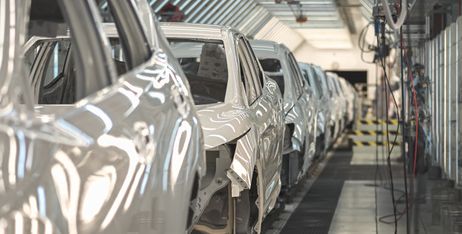
German automotive suppliers question traditional relationships
Exploding energy costs and a lack of customer cooperation are throwing Germany’s automotive suppliers off track, and making them question their long-standing ties to the sphere of the carmakers.
Seven industry associations, mostly steel/metals users, have reiterated in a joint press release their call for government support for a cap on energy prices, and broader electricity supply and company-oriented measures. The call comes on behalf of the associations for sheet metal forming (IBU), massive forming (IMU), hardening technology (IHT), powder metallurgy (FPM), metal goods (FMI), spring-makers (VDFI) and screw-makers (DSV).
The current relief package presented by the government some days ago will not succeed in steering companies back onto a safe route, they argue. Electricity price increases are currently peaking at 15 times those in the previous year, and at a 1,000% increase for gas prices. “It’s five to twelve,” warns IBU managing director Bernhard Jacobs. “If the state doesn’t cap energy prices now, it will ruin companies and many thousands of jobs in no time.”
According to the letter, carmakers still have the attitude that energy and logistics costs need to be solved by suppliers. They are playing for time and using the term “pain-sharing”, Kallanish hears from Jacobs. However, their strategy could fail: the first suppliers are thinking about leaving the automotive supply chain, he admonishes.
Many suppliers are looking for new business fields and cooperative customers, because they are tired of the old negotiating rituals, he says. He wonders if the carmakers will recognise this danger in time.
Christian Koehl Germany
