

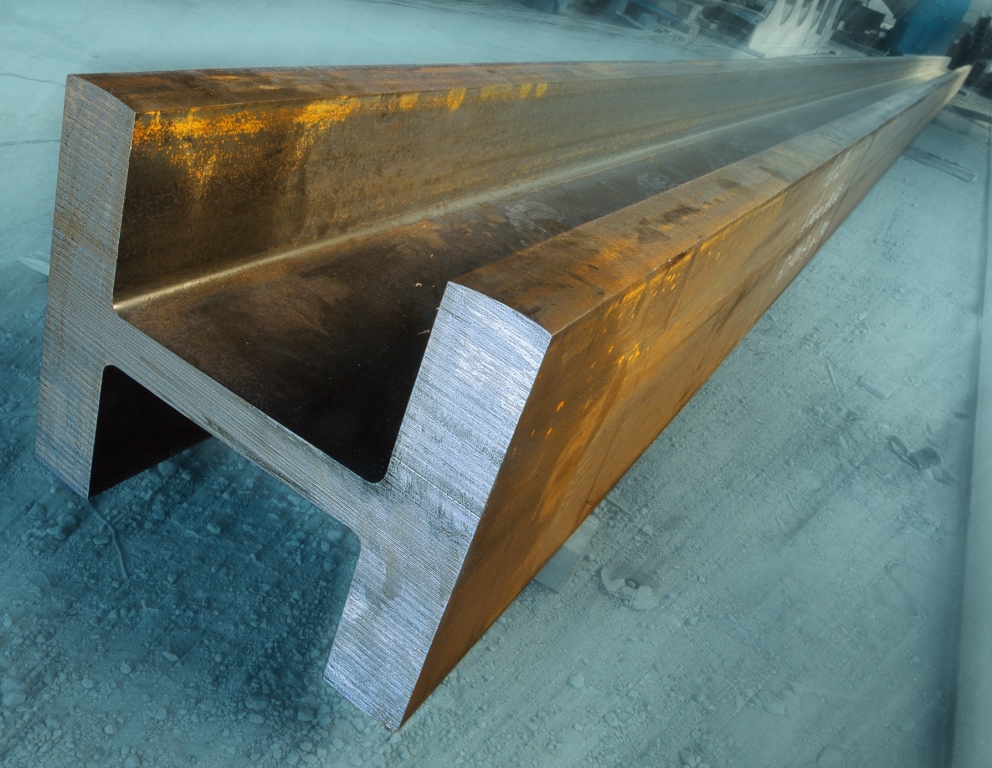
Demand for steel sections in Europe rests on EU plans to tackle energy crisis
Steel hollow sections trading was strong in some parts of Southern Europe but slow in Northern Europe in the week to Wednesday September 14, with traders awaiting European Union plans to combat the energy crisis, sources told Fastmarkets.
Fastmarkets’ weekly price assessment for steel sections (medium) domestic, delivered Southern Europe was unchanged at €1,050-1,200 ($1,049-1,199) per tonne on Wednesday.
On Wednesday, the European Union’s executive arm proposed emergency measures to mitigate soaring energy costs, mainly driven by Russia’s decision to cut off gas supplies via the Nord Stream 1 pipeline and in preparation for further disruptions this winter.
The EU has accused Russia of using energy supplies as a political weapon in response to international sanctions imposed after Russia’s unprovoked invasion of Ukraine in February.
The EU’s emergency proposals include capping renewable, nuclear and coal-fired energy firm revenues at €180 per Megawatt hour (MWh), a windfall levy on fossil fuel energy companies and a mandatory target to cut gross electricity consumption in member states during selected peak hours.
An emergency summit will be held on September 30, when member countries will be given the opportunity to sign off on the EU proposals.
Prior to the EU announcement, a producer source from Southern Europe told Fastmarkets that steel mills were very much dependent on the decisions of politicians.
Despite some competitors reducing production because of rising energy costs, the producer source said its mill was still running at full capacity due to bookings made before the summer holidays, with buyers needing to rebuild their inventories.
“What will happen in one or two months is difficult to say and depends on the decision from the EU,” the producer source said.
“If the EU can find a solution or some way to reduce and keep energy costs under control, there will be a rebound in demand [that will] bring it back to usual levels or even higher,” the source added.
Other market participants said the levels of trading activity for steel sections varied across Europe, with some countries such as Italy seeing more trade taking place since the end of the summer holidays.
But some traders said that business had slowed this week, following pushes for price increases by mills in the week to September 9, with only limited inquiries in central Europe so far this week, with the market participants now awaiting the outcome of the EU proposals.
Fastmarkets’ weekly price assessment for steel sections (medium) domestic, delivered Northern Europe was €1,050-1,200 per tonne on Wednesday, stable week on week.
Market participants also shared concerns about future consumption for the rest of 2022 and into next year.
“If prices go sky-high in the sections market, [trading] will stop because there is a limit to what our customers will pay,” a trader source in Northern Europe told Fastmarkets.
“But for the moment we don’t know very much about prices – we have [just] been told they will increase. A few months ago the price was about €250 higher than it is now and we sold at that level,” the source added.
Prices for sections and other steel products rose to €1,700-1,780 following the onset of the war in Ukraine and through March, but then fell considerably in April, May and June.
The Northern European trader source said consumption could become a key issue due to high energy costs, rising inflation and high interest rates.
“Ongoing construction projects [will be less affected], of course, because they have to finalize projects; the problems [will arise] with new projects,” the trader source said.
“If prices get too high, there will be no new projects or they will be put on hold, and that is what we are a bit worried about now. If the prices are potentially going up again, I think the projects will be put on hold due to the [rising] costs,” the trader source added.
A European distributor source told Fastmarkets that Europe was rapidly heading for a recession, but that the current economic situation differs from the financial crisis of 2008 because, at that time, there was still production going on.
“[In 2008, steel mills] made production cuts but costs at that time were stable,” the distributor source said.
“Now, the cost level has increased massively, [so the mills] will also bring down their production and that is something we have never seen before,” the source added.
Prices for hot-rolled coil feedstock fell in the week to September 14.
Fastmarkets’ calculation of its daily steel hot-rolled coil index domestic, exw Northern Europe was €763.33 per tonne on Wednesday, down by €6.67 per tonne from €770 per tonne a week earlier.
Published by: Holly Chant


Depressed demand plagues rebar market in Italy, Spain
Trading activity in the Southern European rebar market remained sluggish in the week to Wednesday September 14 due to weak demand, competitive import prices and a continued wait-and-see attitude among buyers, market sources told Fastmarkets.
Producers have been raising prices since July to manage surging energy prices. The market has accepted these prices up till now; however, the extent to which customers will continue to absorb price rises remains to be seen.
With end-user consumption severely reduced due to construction projects being cancelled or postponed, customers are unlikely to continue accepting surging prices, Fastmarkets heard.
While some mills are selling at discounts to offload stock, other mills are cutting production. It remains to be seen how and when the impact of these production cuts will be reflected in prices.
Italy
The price of rebar in Italy remained largely stable this past week, with some sources forecasting prices will drop in the coming weeks.
Fastmarkets’ weekly price assessment for steel reinforcing bar (rebar) domestic, exw Italy was €980-1,020 ($987-1,027) per tonne on Wednesday, narrowing upward by €5 per tonne from €975-1,020 per tonne on September 7.
Rising prices combined with slow demand continued to create uncertainty among buyers.
“Demand is very low these days. We had better demand at the end of August and at the beginning of September. Since then, customers have stopped buying. Customers are waiting to understand what trend the price will go in over the next few weeks,” a market source in Italy told Fastmarkets.
While some market participants think prices could continue to rise, others think a decline is on the horizon.
A producer source told Fastmarkets that it has become difficult for mills to manage the volatility of ever-changing energy prices.
“It is a very difficult period for producers to manage energy costs. For two days, for example, energy costs could explode. The next two days they could drop again, before surging again,” the producer source said.
“Mills will stop production during peak hours, for example during the times of 7:00-10:30 pm, in order to manage costs,” the source added.
A significantly reduced export market combined with competitive imports have been a drag on demand for domestic material, Fastmarkets heard.
Other countries have access to much cheaper energy, sources said. This means they can offer reduced rates compared to domestically produced material.
Protectionist duties as well as increased domestic production of long steel products in countries like Algeria and Canada have led to severe reduction in export market over the last few years, Fastmarkets heard.
Spain
In the Spanish rebar market, prices have remained stable amid low trading activity, Fastmarkets heard.
Fastmarkets’ weekly price assessment for steel reinforcing bar (rebar), domestic, delivered, Spain was €980-1,000 per tonne on Wednesday, unchanged from September 7.
Similar to other producers across Europe, Spanish mills are raising their prices to manage the energy crisis, Fastmarkets heard.
But low demand and high input costs have resulted in a stand-off between buyers and mills.
“Producers keep targeting increasing prices to manage energy costs, but it appears the market isn’t able to accept higher price,” a source in the region said.
While some buyers seen the price increasing over the next few weeks, others see the price dropping due to low demand.
International scrap prices jumped in July and early August but have dropped since late August. These price drops are not enough to compensate for rising energy costs, Fastmarkets heard.
Fastmarkets’ daily calculation of the index for steel scrap, HMS 1&2 (80:20 mix), North Europe origin, cfr Turkey, was €346.43 per tonne on Wednesday, down from $363.16 per tonne a week earlier.
Published by: India-Inés Levy

Steel plate prices largely flat in Italy, further rises questionable
Steel plate prices flattened in Italy in the week to Wednesday September 14 amid moderate buying activity, with further increases questionable, sources told Fastmarkets.
Italy
Steel plate was traded in Italy at €980-1,000 ($987-1,007) per tonne exw during the assessment week, relatively stable over the past seven days.
Traded volumes, however, were still limited because big buyers were largely making hand-to-mouth bookings, sources said.
Further price increases were, therefore, doubtful because end-user demand was also quite slow.
In the secondary market, plate was offered at €1,050-1,100 per tonne cpt, the same as last week.
Fastmarkets’ weekly price assessment for steel domestic plate, 8-40mm, exw Southern Europe, was €980-1,000 per tonne on Wednesday, narrowing from €970-1,030 per tonne exw on September 7.
Local re-rollers were selling plate to Germany at around €1,000 per tonne exw, which nets back to about €1,050-1,060 per tonne delivered.
Northern Europe
Fastmarkets’ weekly price assessment for steel domestic plate, 8-40mm, exw Northern Europe, was at €1,100-1,150 per tonne on Wednesday, unchanged since August 31.
The assessment reflected lower end of offers, deals, and market sources’ estimates of achievable prices.
Integrated mills in the region offered plate to the market at €1,150-1,200 per tonne exw, with some of them aiming for €1,200-1,250 per tonne exw, sources said.
Buyers, meanwhile, were looking to pay closer to €1,100 per tonne exw, sources said.
Traded volumes, however, were not big, sources said, mainly because the market was still overstocked with commodity grades.
Local integrated mills enjoyed strong order books, mainly thanks to projects, including those involving offshore wind turbines, shipbuilding and bridge construction.
Alternatively, demand from mechanical engineering industries was quite low.
Several bookings of Italy-origin plate to the region were reported at €1,050-1,060 per tonne cpt during the assessment week, but the volumes were small, sources told Fastmarkets.
Poland-origin plate was offered to the south of Germany at around €1,100 per tonne cpt, sources said.
Published by: Julia Bolotova

Trading remains limited in European HRC market, prices stable to slightly weaker
European hot-rolled coil prices remained broadly flat on Wednesday September 14 despite producers pushing for higher levels, with high inventories held by buyers and weak demand from end-user sectors remaining key issues, market sources told Fastmarkets.
European HRC buyers continued to maintain a wait-and-see attitude with only small tonnages being traded in the spot market recently, sources added.
In fact, several large stockholders told Fastmarkets that they can postpone restocking for several week because their inventories were still rather high, while the order intake from end users was quite low.
For their part, producers have been trying to secure price increases since the beginning of September on account of high costs, but poor demand has been constraining price growth.
“The current [offer] prices are not working; buyers refuse to pay it, they simply wouldn’t be able to pass the increase downstream,” a steel trading source in Germany said.
Fastmarkets calculated its daily steel HRC index, domestic, ex-works Northern Europe, at €763.33 ($768.79) per tonne on Wednesday, down by just €1.67 per tonne from €765.00 per tonne on Tuesday.
The latest calculation of the index is down by €6.67 week on week and by €10.84 per tonne month on month.
Offers for HRC from the mills in the region were still reported at €800-850 per tonne exw, but those levels were not sealed in deals, market sources said.
A transaction for a small volume of HRC in the region was reported at €770 per tonne exw on Wednesday, sources added.
An integrated mill in the region secured a sale of a small tonnage of high-strength HRC at €830 per tonne exw earlier this week, but the price was not representative since the transaction was done for a special grade, according to sources.
In fact, most buyers estimated a tradeable level for HRC in the region at €750-770 per tonne exw, with some transaction for minor volumes reported within that range in Germany.
Fastmarkets’ calculation of its daily steel HRC index, domestic, exw Italy, was €751.25 per tonne on Wednesday, down by €6.25 per tonne from €757.50 per tonne on Tuesday.
The latest calculation of the Italian index is down by €10.42 per tonne week on week and by €18.75 per tonne month on month.
HRC offers from the local mills were heard at around €800 per tonne exw, while buyers’ estimates of achievable prices were heard at €750-780 per tonne exw, depending on a tonnage.
Mills sources, however, said that an HRC price of €750 per tonne exw was actually below costs for them.
But Italian buyers were largely not interested in domestic HRC bookings and were looking for imported alternatives instead, market sources said.
Most stockholders were now looking to restock for the first quarter of 2023 and therefore were looking at offers from Asian suppliers.
“We do not need material for 2022, so we are checking on import with lead times in January-February,” a major buyer in Italy told Fastmarkets.
Last week, a small HRC tonnage from South Korea was booked to Italy at €700 per tonne cfr.
Sources said that some HRC offers from Asia were still available at €680 per tonne cfr, but for large tonnages.
Turkey-origin HRC was offered to Italy at €720-730 per tonne cfr, but the sellers were reportedly ready to consider bids of €700 per tonne cfr.
However, Turkish suppliers were offering HRC with delivery at the end of the fourth quarter, while most buyers were looking to restock for the first quarter of next year, sources said.
“It is risky to book something with delivery at the end of the quota period,” a second buyer in Italy said, referring to the end of EU safeguard quarterly quotas.
Published by: Julia Bolotova
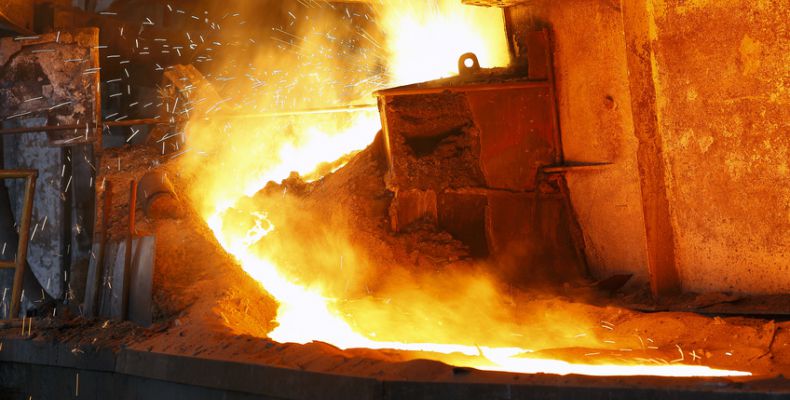
Risk for serious disruptions in Turkish steel production rises: Colakoglu CEO
With the Turkish steel industry facing accelerating production cuts in the last three months, amid low demand and higher energy costs, there were risks for more serious disruptions to output in the coming months, Turkish Steel Exporters’ Union Vice President and Colakoglu CEO Ugur Dalbeler told S&P Global Commodity Insights Sept. 14.
“The constriction in Turkish steel production reached 13% on the year in June and 21% in July amid output cuts,” he said, adding that a main reason for the decline was lower EU steel demand, which was traditionally one of Turkey’s top export markets.
“Exports to the EU nearly came to a standstill in the last three months,” Dalbeler said.
Flat steel exports to the EU region fell 20% year on year in the three-month period, while bar exports declined 18%, he said, adding that the decline in export volumes continued in August.
Falling industrial output in Turkey had also impacted steel demand, Dalbeler said.
According to the latest Turkish Statistical Institute (TUIK) data, industrial production in Turkey fell 6.2% month on month in July.
“These unfavorable market conditions have been pulling down Turkish steel mills’ capacity utilization rates and have been causing temporary stoppages,” Dalbeler said.
The share of energy in steel production costs was up more than fivefold year on year due to rising energy prices, which was harming mills’ competitiveness, he said.
Mills’ input costs had also jumped due to a 50% increase in electricity and natural gas prices for industrial use announced Aug. 31.
Another risk was the Ukraine war, with Turkey importing around 7 million mt/year of raw materials from the CIS region before the war and alternative sources being further away and more costly, Dalbeler said.
Turkey’s scrap imports from Russia, traditionally one of its top suppliers, slumped 62% year on year to 408,000 mt in January-June, while imports from Ukraine totaled 358,000 mt, up from 190,000 mt a year ago, according to TUIK data.
Platts, part of S&P Global, assessed Turkish imports of premium heavy melting scrap 1/2 (80:20) at $349.50/mt CFR Sept. 13, down $2/mt on the day.
Highlighting Canada’s circumvention investigation opened against steel bars imports, which were produced using Russian billet, Dalbeler said said similar investigations could become widespread in the coming months.
European producers’ continuing efforts for new protection measures targeting Turkey were also a risk to steel production, he said, as steel output will continue to decline in these circumstances and could result in the suspension of new investments.
“If the uncertainties will continue for the coming period, exports could fall further and the steel sector may come to a stopping point and disemployments could start as of year end,” Dalbeler said.
— Cenk Can


European CRC, HDG squeezed between costs and demand pressures
The downstream coils market was heard as under higher pressure in comparison to other flat-rolled products Sept. 14, squeezed between low demand and high production costs.
In Northern Europe, cold-rolled coil was down Eur15/mt on week, assessed on the day at Eur845/mt ex-works Ruhr. Hot-dipped galvanized material was stable at Eur890/mt ex-works Ruhr.
Market participants reported prices in a wide range, with most seeing tradable value at around Eur850/mt ex-works Ruhr, but lower prices were considered achievable in comparison to firmer offers on other products such as hot-rolled coil.
The lower end of offers was reported at Eur830/mt ex-works Ruhr, with the high end cited above Eur850/mt for longer-term orders and project-based material.
“CRC and HDG are still under substantial pressure,” a distributor source said. “There are different dynamics at play than in the hot-rolled market. Mills are really struggling for additional orders and will cut discounts for special deals. There aren’t really any target prices — these are problematic products, and we don’t anticipate a healthy rebound as with other flat-rolled material.”
Mixed signals were heard from the automotive sector, with order intake reported as low but increasing. Given the long automotive backlog, expectations were cautiously positive that orders would be maintained going forward.
A second distributor was pessimistic, however, reporting continuing cancellations from the automotive sector, instilling a mixed and case-by-case automotive outlook among sources.
Due to a lack of offers for Q1 2023, forward-looking buyers were heard as turning to import material to cover necessary volumes. An import deal was reported into the Northern market at Eur830/mt CIF ex-South Korea for January arrival, in line with offers heard the previous day at Eur830/mt CIF Antwerp ex-Taiwan.
Energy costs continued to be the primary talking point as relates to downstream products, with production particularly exposed to jumping energy prices, and natural gas prices in particular.
The Italian market — where supply is more strongly represented by EAF route producers or rerollers — has less potential to capture gas from integrated blast furnace production for electricity generation or other related uses, pushing production costs higher in Southern Europe.
As such, despite a lack of demand, downstream coils in South Europe were assessed higher than their North European equivalents, at Eur890/mt and Eur910/mt for cold-rolled and galvanized material, respectively, ex-works Italy.
Platts is part of S&P Global Commodity Insights.
— Benjamin Steven, Maria Tanatar

Northwest European domestic rebar prices soften as buyers hold back
Northwest European domestic rebar prices softened during the week to Sept. 14, as sources reported slow demand.
The Platts assessment of TSI Northwest Europe Rebar was down Eur15/mt to Eur975/mt ex-works Sept. 14, according to S&P Global Commodity Insights data.
One seller source noted slow demand in the market and added, “no actual price level because there are no inquiries.” He indicated that workable levels for rebars in the Northwest European domestic market seemed stable week on week at Eur1,000/mt delivered.
One distributor source based in the Benelux region noted that customers are in wait-and-see mode.
“The market is very anxious about what will happen regarding energy prices because if it’s not taken care of, the increase for households might be four to six times higher, which is not affordable for anyone,” he said.
The source noted that the European Commission was trying to devise a plan to tackle the energy crisis in Europe and buyers were holding back to see what might happen, as in case energy prices come down, prices for long products might as well.
The source indicated a workable level for rebars in the domestic market at Eur995/mt delivered Benelux.
One European mill source indicated a workable level for rebars in the domestic Northwest European market around Eur950-Eur1,000/mt delivered.
Elsewhere, the Platts assessment of European medium sections price (category 1, S235 JR) was stable at Eur1,250/mt delivered Sept. 14 week on week.
One Benelux-based distributor source indicated a workable level at Eur1,275/mt delivered Benelux, while another distributor source in the region cited a tradable level for 500-1000 mt of beams at Eur1,250/mt delivered Benelux.
One European mill source put mill offers for category 1 medium sections at Eur1,300/mt delivered, with a tradable value of Eur1,270-Eur1,280/mt delivered. The source noted that demand was low, but it was expected since it picked up strongly after the summer holidays.
Another European mill source indicated a tradable value for beams at Eur1,200-Eur1,225/mt delivered, adding that the mill was targeting Eur1,275/mt delivered, but workable levels were less since demand was low.
— Rabia Arif, Staff

Decarbonisation slows down: Eurocoke conference
The current economic environment with a war raging in Eastern Europe, energy prices skyrocketing in Western Europe, and some raw materials becoming scarce will likely dampen international efforts for decarbonisation.
Participants at a panel discussion at the Eurocoke Summit 2022 in Düsseldorf largely agreed that the ambitions expressed by governments and industries to lower their carbon footprints may have to be scaled down.
“My personal opinion is we will keep moving in that direction, but possibly slower. There are more pressing problems for governments to cope with right now,” said Aleksander Sobolewski of the Poland-based Institute of Energy and Fuel Processing Technology, who moderated the debate.
The “Fit for 55” package by the European Union, for example, “sounds good on paper, but how realistic is it?” asked Ranjana von Wendland of Dow Jones. “With the costs we are facing now you have to rethink that package and cut back on the targets. It is too super-ambitious.”
Chris Urzaa of Jellinbah Group suggested that the steel industry for a while might be exempt from the green transition. Other sectors, like transportation, “are easier to de-carbonise, [and] maybe the EU will confine itself to that initially,” Kallanish heard him say.
Christian Koehl Germany


Russian-Ukrainian war impacts European coke market: Eurocoke
The Russian invasion into Ukraine has had a negative impact on Ukrainian coke production, which has also impacted the European coke market, says director of the Polish Institute for Chemical Processing of Coal Aleksander Sobolewski at Wednesday’s Eurocoke Summit in Dusseldorf.
Ukraine had 14 major coke plants before the war and most of them are located in East Ukraine, where the main fighting and destruction are. They produced 19 million tonnes/year of coke.
“The leading producer was Metinvest’s Avdeevka coke plant with 4m t/y capacity, which now doesn’t work due to the destruction during hostilities and Russian occupation,” Sobolewski noted at the event attended by Kallanish. “According to the latest data, this year coke output in Ukraine will be only around 9.5m t/y, down by almost 50% on-year or even less.”
Before the war, Ukraine’s steelmakers purchased 15m t/y of coking coal from domestic producers, imported 7m t/y from Russia, and 4m t/y from other countries like Kazakhstan.
“Today, Ukrainian plants purchase only 3.6m t/y, less by more than five times on-year,” he observed. “The major Ukrainian state company and institute for the coke Industry Hiprokoks was also destroyed in the city of Harkiv. The lost of such skill specialists lead to even more negative consequences for the coke industry in Ukraine.”
The European coke market will have to reorganise due to the lack of coal and coke from Ukraine, he adds.
Last week, Ukraine’s government introduced a ban on exports of coal in order to ensure supply for the heating season that will influence the activities of steel companies in the country (see Kallanish passim).
Ukraine’s Zaporizhkoks plant, part of Metinvest, decreased production of blast furnace coke in January-August to 466,700 tonnes, down by 19.3% on-year following raw material shortages.
In August, Kazakhstan introduced a ban on exports of coal by road for six months, effective 1 August (see Kallanish passim).
Prior to the Russian invasion of Ukraine, ArcelorMittal Kryvyi Rih (AMKR) purchased 350,000 t/month of coking coal, with the main supply coming from ArcelorMittal’s Kazakhstan-based Temirtau steelworks. Previously, the plant received 30% of the required coal from Kazakhstan, which was shipped by rail through Russia. Now, this option has been removed.
Svetoslav Abrossimov Bulgaria

European stainless steel flats demand restarts
European stainless steel flats demand restarts European stainless steel flats demand is coming back to the market after a very long period of deadlock during which prices weakened and buyers purchased only small volumes. While producers in Europe and around the world are mothballing their plants due to the high costs of energy, demand from buyers has been surging over the past weeks, Kallanish hears from market sources throughout Europe.
Service centres and re-rollers forecast that the price slide in European stainless hot and cold rolled coils has come to an end and values are expected to increase in the coming weeks. Some producers have already started pushing up their values although stocks throughout Europe remain high.
Most steelmakers are not quoting coils for October delivery. In August, European CRC values reached an average of €3,000/tonne ($2,993) and approximately €2,700/t delivered for HRC. These levels, however, are now passé and no longer available. Some producers have already started quoting €3,300/t delivered for CRC with a second half of October lead-time. A large service centre says that “two weeks ago the market was dead but now everyone is looking for material.”
Asian producers are also increasing their coil prices. Some Chinese sellers quote about €3,300-3,350/t cfr northern European port for CRC but some other steelmakers in countries like India and Korea are not quoting.
Because coil output is been reduced globally, overcapacity will gradually fade away and stocks will deplete fast, sources forecast.
Stainless steel producer Aperam is extending its scheduled summer production stoppages into September at its steelworks in Genk, Belgium, due to the unsustainable cost of energy. In Spain, Acerinox is also implementing a temporary lay-off scheme. Outokumpu announced this month it will delay the restart of one of its three ferrochrome furnaces after a planned maintenance break due to record-high electricity costs. In Asia, the Pohang plant of South Korea’s Posco Steel burst into flames earlier this month. Two fires took place at the Second Stainless Steel Factory and the Second Hot Rolling Factory (see Kallanish passim). The company is also not quoting and has suspended production. A large Chinese producer is also said to be reducing output by 30-40%.
Natalia Capra France