

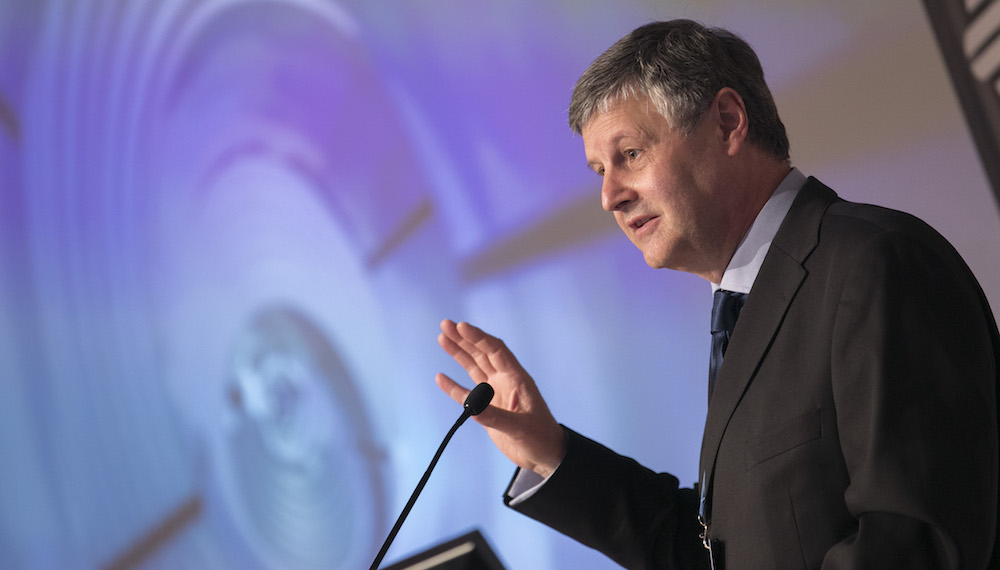
BF decarbonisation necessary but will take time: Basson
Saudi Arabia will find it much easier than other regions to roll out hydrogen-direct-reduced-iron-route steelmaking but a solution will still need to be found to decarbonise blast furnaces globally, says worldsteel director general Edwin Basson.
At last week’s Saudi International Iron & Steel Conference in Riyadh, for which Kallanish was programme partner, Basson said Saudi has the right conditions to accelerate hydrogen-based DRI-EAF steelmaking development. However, this route alone will not be able to produce enough steel to meet global demand.
A solution must therefore be found for making low-carbon steel in blast furnaces, which will take a lot of time and research and development, Basson noted.
Also important will be the efficiency of how steel is used. Particular attention must be paid to the way buildings are designed for easy deconstruction and re-use of steel, Basson concluded.
Adam Smith Poland


Vallourec forecasts continued growth this year
French pipemaker Vallourec continues to foresee positive market dynamics thanks to higher drilling and OCTG prices, driven by global demand recovery and the inflationary environment, the company says in an investors’ presentation obtained by Kallanish.
Thanks to continued improvement in its tube division, particularly in North America, which is forecast to offset lower performance at Vallourec’s iron ore mine, the firm is targeting increased Ebitda this year in a range of €650-750 million ($648-748m). However, “with normalised iron ore mine production, Ebitda would have been approximately €1 billion in 2022,” the company says.
Vallourec continues to enact a drastic transformation plan. With its financial restructuring now completed, it reports a €1.7 billion debt reduction and the refinancing of residual debt with five-year maturity. The pipemaker is pursuing a “strategy of value over volume via reduction of 700,000 tonnes of unprofitable rolling capacity in Europe” transferring some of its European output to low-cost production regions, it says.
In 2021 and 2022, Vallourec divested its non-core assets, which include Valinox Nucleaire and Vallourec Bearing Tubes. It rationalised its European output by shutting down its German and some French assets, and transferring its O&G activities to Brazil. It acquired the minority interests in its strategic assets in VSB, Vallourec Star and VAM USA in 2021. Such actions have led to the full ownership of Brazilian and North American assets (see Kallanish passim).
The firm says it now benefits from a “stronger balance sheet and simplified organisation”. By 2024, the firm will reach a 750,000 tonnes/year steel and rolling capacity in North America, and 950,000 t/y steel capacity and 1.1 million t/y re-rolling capacity in South America. In China, it plans to reach 600,000 t/y of re-rolling capacity.
The group’s first-half-year revenue stood at €2 billion, up 33% year-on-year, driven by the price mix effect and sales volume hike in the Oil & Gas division in North America and EA-MEA. H1 Ebitda stood at €205m versus €228m in H1 2021.
Natalia Capra France
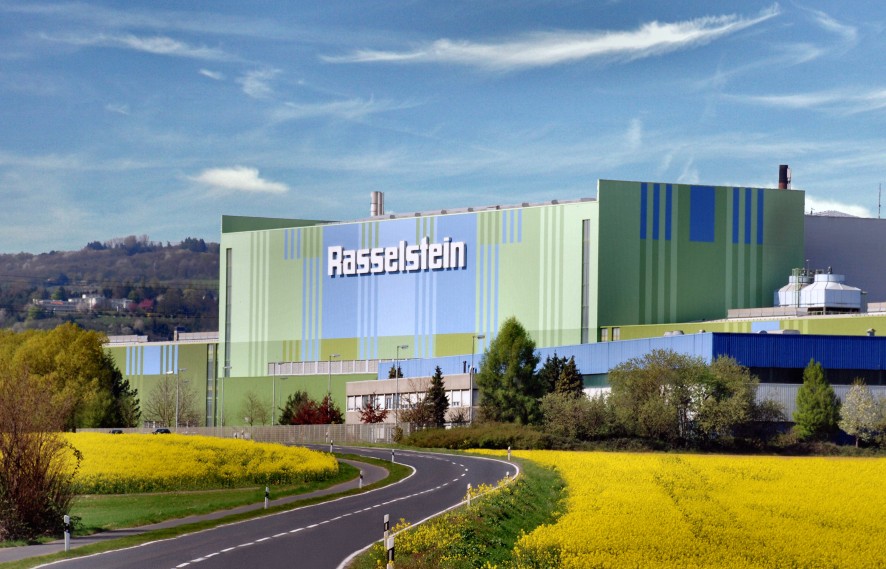
Thyssenkrupp Rasselstein starts new tinplate coating line
After three years of construction and an investment of €120 million ($120m), thyssenkrupp Rasselstein has commissioned its tinplate coating line 13.
The new plant uses chromium(III) in the manufacturing process instead of the chromium(VI) previously used, Kallanish learns from the company. Thus, the new manufacturing process fully complies with the requirements of EU REACH regulation. The new production plant is the largest single investment at the Andernach site in around 15 years.
The new coating line enables the chrome-plating of even wider and thinner sheets, the company explains. It claims that, technologically, line 13 is the most modern plant of its kind – also because more efficient and energy-saving processes are realised with a digitalised workflow. Chrome-plated material is used for lids and bases for pet food cans, valve disks on aerosol cans, crown corks or printing ink cans.
“This major investment marks an important and very special milestone in the history of thyssenkrupp Steel,” says Bernhard Osburg, chief executive of Rasselstein parent thyssenkrupp Steel. He adds that the world’s largest production site for packaging steel adheres to the highest sustainability standards.
Christian Koehl Germany
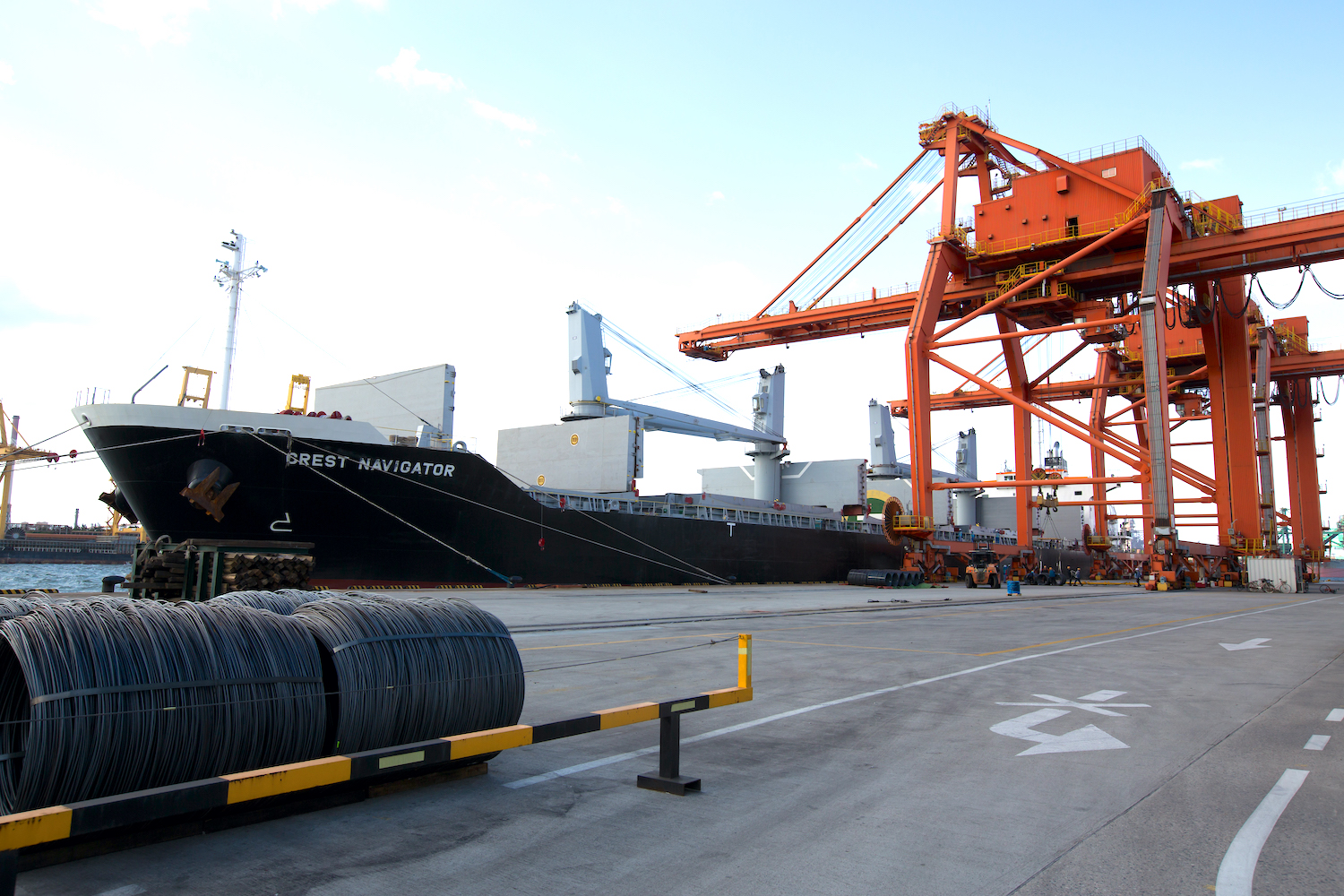
Metinvest Italian mills secure Europe, Asia slab supply
Metinvest’s Italian plants are receiving slab feedstock for rolling from European, Asian and Latin American suppliers, says the company’s general director, Yuriy Ryzhenkov.
“Semi-finished products are also coming from Zaporizhzhia, where one of the group’s assets – the Zaporizhstal plant – is located,” he noted in an interview with Ukraine’s NV newspaper. “Before the full-scale Russian invasion of Ukraine, the company’s Italian enterprises received slab from Azovstal in Mariupol, which now is occupied.”
According to Ryzhenkov, the enterprise is now buying slab in Southeast Asia, looking at Brazilian slab and also purchasing European slab, including from Acciaierie di Italia. Negotiations are also underway with US Steel Kosice and Liberty Steel, he adds. “We are looking for slab in small batches,” Ryzhenkov observes.
The process of setting up production of slab is still ongoing at Zaporizhstal. “This is a rolled slab, but we already have the first successes. We make an ingot from converter steel at Kametstal; after that we roll it into a slab at Zaporizhstal,” he explains. The slab then goes to European units for rolling.
In addition, Ryzhenkov talked about the situation with the supply of coke to Ukrainian plants. Following the shutdown of the Avdiive coke plant, Metinvest is using other available capacities for its production. In particular, there are two plants in Kamiansk and one in Zaporizhzhia.
“There are two more coke plants, where we deliver our coal for processing – ArcelorMittal in Kryvyi Rih and the former DMZ in Dnipro,” the general director says. “At the current steelmaking utilisation, we have enough of these capacities. If we increase production, we will have to look for additional coke.”
Earlier this month, Metinvest delivered a new batch of Italian hot rolled coil to its metal centre in Ternopil, Ukraine from its Italian subsidiary Metinvest Trametal SPA (see Kallanish passim).
In August, the Ukrainian steelmaker arranged the import into Ukraine of scarce thick plate and HRC from its assets in Italy. The total volume of planned deliveries to Ukraine is about 3,500 tonnes.
Svetoslav Abrossimov Bulgaria

Low steel demand brings down Spanish scrap prices
Spanish scrap prices are seeing a downward correction, Kallanish learns from local market sources. After reaching a three-month high in the last days of August, prices have so far fallen €20/tonne ($19.95/t) in September. This trend is set to continue as values are impacted by softening domestic demand, production cuts at certain large mills, and a relatively quiet international scrap market.
“The deceleration of local demand could force Spanish prices to move down a further €30/t in the week,” a local merchant says. “It is difficult to predict how the market will evolve by the end of this month. What is really certain is that the planned shutdown of one of ArcelorMittal’s two blast furnaces in the Asturias region since 28 September will further worsen the already difficult situation for the Spanish steel industry and consequently the scrap supply chain, which is forced to lower its prices.”
Spanish scrap prices are also expected to fall to align with lower international market levels, another source comments. “Turkey does not have much demand and prices in Europe are still higher than they are there, so it is understood that scrap levels will drop by at least €30/t in the next weeks. This adjustment equals the difference in freight we have compared to Turkey,” says a market participant.
New E8 quality in the domestic Spanish market is now offered at €410/t delivered. E40 and demolition quality grade (E3) are at €360/t and €345/t delivered, respectively. E1 quality is delivered at €290-300/t.
Todor Kirkov Bulgaria

Benelux scrap market questions price recovery
Market participants in the Benelux are seen questioning a possible price recovery following an EU-origin scrap deal in Turkey.
On Friday, a western long steel mill bought an EU-origin cargo comprising 18,000 tonnes of HMS 1&2 80:20 at $344/tonne, 12,000t of shredded at $364/t and 10,000t of bonus grade at $364/t cfr Turkey.
Compared to the latest UK-origin HMS 1&2 80:20 deal done at $342/t cfr by the same producer the previous week, this new European deal points to a recovery in prices.
However, although suppliers are interpreting this as an increase in prices, most market participants in Turkey question if other mills will also accept paying these values as most were resisting prices above $340/t cfr and preferred to wait.
A Turkish mill tells Kallanish: “The producer might have paid this price due to the high tonnage of shredded and bonus in the cargo. If this was just an HMS 1&2 80:20 cargo, no one would accept to pay this price.”
Another mill says: “I think scrap should be at around $300/t cfr levels. When you look at the prices of billet and slab in the international market, obviously Turkey has no competitive power with the current finished and semi-finished steel prices.”
A Benelux scrap supplier comments: “I agree that steel sales are not doing well but, on the other hand, collection is interrupted at these prices due to higher collection costs. Scrap prices cannot fall further.”
Dock prices in the Benelux, meanwhile, decreased to €275-290/t ($275-290) delivered on Monday, down from €285-295/t on Monday last week. Material flow, however, remains quite weak at these levels.
In the Indian sub-continent, demand for scrap remains subdued, putting pressure on prices. While the Pakistani economy is suffering in the aftermath of flooding, weak finished steel demand and the arrival of previously booked bulk cargoes in India are hampering new scrap demand. Containerised shredded offers were seen standing at $440-450/t cfr Nhava Sheva on Monday.
Burcak Alpman Turkey

Thyssenkrupp to build new metals service center in Mexico
Thyssenkrupp Materials Services will invest $37 million to build a new metals service center in Mexico that will serve automotive customers in North America, the company said Sept. 19.
The new site in San Luis Potosí, which is expected to start operations in mid-2023, will specialize in supplying lightweight steel and aluminum products to support lower-emission automobiles and electric vehicles, according to a statement. Products will include aluminum and high-strength steel blanks that will be cut at the plant’s Schuler blanking line, Thyssenkrupp MS added.
“The needs and requirements of the industry are changing rapidly,” CEO Martin Stillger said in the statement. “Against the background of the major transformation themes of electro-mobility, sustainability, and supply chain resilience, Mexico is a clear growth market for us.”
Thyssenkrupp MS, a subsidiary of diversified German industrial group Thyssenkrupp, said the project in Mexico represents a key expansion of the company’s footprint in North America, where it has invested over $100 million in the last 12 months.
The materials and service provider already operates three service centers in Mexico located near automotive OEMs and automotive industry suppliers. The company’s new San Luis Potosí location and existing Silao service center will be the only facilities in the country to offer aluminum blank cutting services, according to the company.
Parent company Thyssenkrupp also operates steelmaking assets in Europe.
— Nick Lazzaro
