


SSAB and Norsk Stål AS start partnership in fossil-free steel for the Nordic Market
SSAB has entered into an agreement with the Norwegian steel distributor Norsk Stål AS, as the first external distributor to deliver fossil-free steel on the Norwegian Market, starting 2026.
“I am happy to welcome Norsk Stål as a fossil-free steel partner. Together, we are contributing to reduced carbon dioxide emissions by introducing fossil-free steel to the Norwegian market,” says Matts Nilsson, Head of Sales Sweden & Norway at SSAB. “Together, we are building fossil-free value chains all the way to the end customer.”
“Norsk Stål considers fossil-free steel to be essential on our journey toward more sustainable steel distribution. We have long had a close relationship with SSAB and we are very happy with the collaboration on fossil-free steel. We look forward to adding this product to our Miljømetall portfolio and to offering our customers the same high quality as before, but with an even stronger sustainability profile,” says Helge Runer, CEO at Norsk Stål AS.
SSAB plans to revolutionize the entire steelmaking process. We aim to deliver fossil-free steel to the market at a commercial scale during 2026 and to largely eliminate carbon dioxide emissions from our own operations in around 2030. SSAB works with iron ore producer LKAB and energy company Vattenfall as part of the HYBRIT initiative to develop a value chain for fossil-free iron- and steelmaking, replacing the coking coal traditionally used for iron ore-based steelmaking with fossil-free electricity and hydrogen. This process virtually eliminates carbon dioxide-emissions in steel production.
Miljømetall is a collection of products within the Norsk Stål portfolio which has a reduced CO2 footprint of at least 50%. Read more about Miljømetall on www.norskstaal.no.
Norsk Stål AS is an independent privately owned Norwegian steel and metal distributor with 12 locations throughout Norway and an annual turnover of 2,8 bn NOK. Steel and metals are important elements in the development of a sustainable society. Norsk Stål takes responsibility to continuously develop and provide sustainable and efficient stockholding, with great logistics, digital development, extra services and processing.
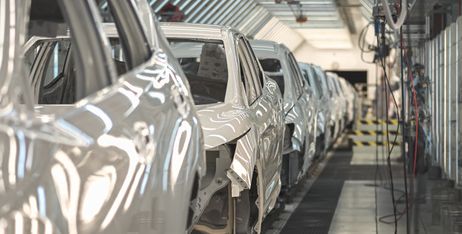
EU new car sales rise for first time in more than a year, still below pre-pandemic levels
Sales of new passenger cars in the European Union returned to growth in August, following the 13 consecutive months in decline because of the global semiconductor shortage, according to the European Automotive Manufacturers Association (Acea).In August EU new car sales increased by 4.42% to 650,291 units, with the EU’s four largest markets all gaining, Acea said on Friday September 16.
The August rise follows a 10.40% year-on-year decline in July when 738,226 units were sold.
It is unclear whether the rise in August is related to the end of the global semiconductor shortage or in comparison with a particularly poor August in 2021.
With earlier declines weighing negatively on cumulative results, EU new car sales fell 11.91% from January to August to just under 6 million units.
January-August new car sales fell by 18.42% in Italy to 865,044 units; by 13.81% in France to 1,126,543 units; by 9.75% in Germany to 1,820,589 vehicles and in by 9.39% in Spain where 588,313 new cars were sold.
Demand from the EU automotive industry plays an important role for the struggling regional steel flat steel market, because, on average, about 900kg of steel is used in each car, according to the World Steel Association (Worldsteel).
Fastmarkets’ weekly price assessment for steel hot-dipped galvanized coil, domestic, exw Northern Europe was €880-900 ($880-900) per tonne on Wednesday September 14, unchanged week-on-week, but down from €920-950 per tonne on August 17 . A year ago the price was 1,280-1,300 per tonne exw.

Published by: Elina Virchenko

Dunaferr effectively halts steelmaking in Hungary with closure of second BF
Integrated steelmaker Dunaferr has effectively shut down its steelmaking operations in Hungary with the closure of a second blast furnace at its Dunaújvárosdue facility, due to interrupted coke supplies, sources confirmed to Fastmarkets on Tuesday September 20.The company had said on September 16 that had been forced to stop the second blast furnace because Donau Brennstoffkontor (DBK), “which has been supplying the essential raw material coke for decades, unexpectedly [failed] to deliver.”
Dunaferr halted its smaller blast furnace at Dunaújváros in August due to weak steel market fundamentals and high production costs.
The company’s two blast furnaces have a combined capacity of 1.40 million tpy of pig iron, which it uses to produce hot-rolled, cold-rolled and hot-dipped galvanized coil products.
“The forced shutdown due to a lack of coke means that there is currently no possibility of pig iron and steel production at Dunaferr,” the company said.
The company said the bigger BF would need to be restarted “as soon as possible because a long-lasting shutdown would make the restart of pig iron production at the BF impossible due to technical risks and costs.”
Dunaffer added that “the only solution would be for DBK to restart the delivery of the necessary quantity and quality of coke within a week at the latest.”
DBK could not be reached for comment by the time of publication.
Dunaferr is is owned by Ukrainian company Industrial Union of Donbass (ISD) through the Cyprus-based company Steelhold, which is reportedly has ties to Russia, notably through the Russian state development bank VEB.
ISD used to own another steelmaking facility in Europe, Huta Czestochowa in Poland, but lost control of that in 2019, when the facility was declared bankrupt

Published by: Julia Bolotova

Metinvest to build ore plant in Europe
Metinvest Group is considering the possibility of building a plant in the EU for the processing of iron ore raw materials produced at Metinvest’s mining and beneficiation plants in Kryvyi Rih, says the company’s general director Yuriy Ryzhenkov.
“At first, we had the idea of rolled production, but it was calculated on the presence of the lost Azovstal slabs,” he noted in an interview with Ukraine’s NV newspaper. “We will not see these slabs in the near future. Therefore, we began to look in another direction, based on DRI raw materials and the electric steel smelting method of production.”
According to him, this will become an additional opportunity for the sale of Ukrainian steel products abroad.
“Currently, the export of ore is significantly limited by the sea blockade and the congestion of railway tracks in the west of Ukraine. However, the company sees opportunities to expand the capacity of existing routes,” he adds.
At the same time, the company will invest in projects that will help improve existing or establish new production at the group’s Ukrainian assets, in particular at Zaporizhstal and Kametstal, Yuriy Ryzhenkov.
“It will also help to expand bottlenecks, especially in the production of high-quality rolled products, and it will allow enterprises to be recharged,” he said. “We tested the production of high-quality blast furnace pellets at PivnGZK in August. They can even be brought to the level of DRI-pellets, which were previously produced only at CGZK.”
However, the company will not make large-scale investments in long-term projects in Ukraine until the country’s convincing victory in the war with Russia, Ryzhenkov adds.
In June, Metinvest said that it is considering building a new plant in Bulgaria, where the enterprise already has a re-rolling mill (see Kallanish passim). The enterprise is said to be accelerating the development of its planned new steel mill in San Giorgio di Nogaro, northern Italy.
Meanwhile, Metinvest’s Italian plants are receiving slab feedstock for rolling from European, Asian, and Latin American suppliers.
Svetoslav Abrossimov Bulgaria


Salzgitter supplies low-carbon plate to Norsk Stål
Ilsenburger Grobblech – a subsidiary of Salzgitter AG – and Norway’s Norsk Stål are expanding their long-standing cooperation to include the processing of low-CO2 heavy steel plates.
The low CO2 plates have a footprint of 0.65 tonnes of CO2e per 1t of heavy plate, marking a leading position in the current field of so-called greener steel, Ilsenburger claims. The production takes place via the EAF route and is based on more than 90% recycled scrap. This is the first step in the direction of green steel, and will later be followed by the hydrogen-based direct reduction process, Kallanish hears from Dillinger.
Norsk Stål is a Norwegian company with nationwide production and sales activities. It markets and distributes products and related services to various customers in construction, energy, engineering, and the marine sector.
“The building and construction industry is a strategic target sector for Ilsenburger Grobblech GmbH,” says the company’s managing director, Sebastian Bross. “Therefore, this customer segment is a perfect fit for our portfolio of green and renewable steel.”
Christian Koehl Germany
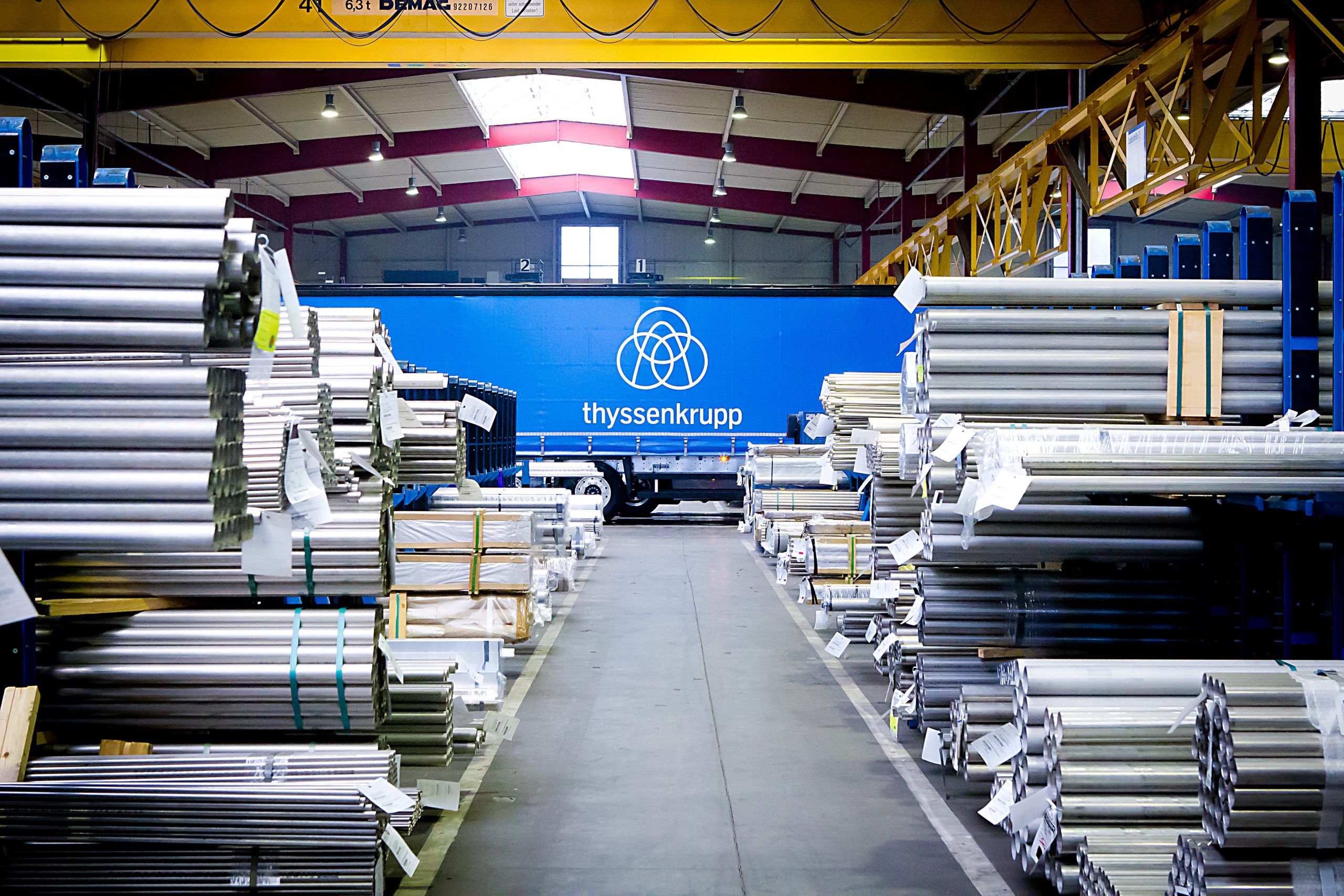
Thyssenkrupp tests reuse of carbon dioxide
In cooperation with two universities, thyssenkrupp Steel Europe is testing the recycling of CO2 directly in a process dubbed NuCOWin, Kallanish has learned.
Its R&D partners are the Universität Duisburg-Essen (UDE) and the Clausthal University of Technology. The aim of the project is to answer the fundamental questions of process and plant technology for implementation on an industrial scale, UDE says in a statement. It notes that NuCoWin is intended as a transitory concept until the industry takes its big step with the transition to hydrogen-based DRI production.
“The big challenge is to develop economic processes within the transformation in the steel industry, but also in other industrial sectors, that no longer release CO2 into the atmosphere,” explains project leader Professor Rüdiger Deike from the UDE Institute for Technologies of Metals. “To do this, one should understand: due to their high energy density, carbon compounds will continue to be indispensable, but the CO2 will remain in the cycle.”
Within the funding programme KlimPro for the avoidance of climate-relevant process emissions in industry, the Federal Ministry of Education and Research is funding the project for three years with a total of €1.2 million ($1.2m).
Christian Koehl Germany

European Commission actively supports trade measures
The European Commission this week published its annual report on the EU’s trade defence activities in 2021. It concluded that some 462,000 European jobs were directly protected by trade measures in 2021, with the steel sector being among those benefitting the most.
In 2021, the European Commission (EC) opened only a handful new anti-dumping investigations for steel products as the existing safeguard mechanism regulates the import market in Europe effectively. Kallanish understands that the cancellation of the safeguard measures would again increase the EC’s activity on anti-dumping measures for steel.
Earlier last week, Fabrizio di Gianni from Van Bael & Bellis law firm said that a big change in safeguard measures is not expected. In May, a WTO panel raised some questions to the European Commission on the safeguard measures, following a complaint by Turkey.
The European Commission now has until the end of the year to respond to the WTO questions, but sources believe it will mainly reiterate its stance rather than proposing changes to the system in place.
While AD investigations on steel imports have seen a strong reduction in Europe, the Commission is now actively stepping up its monitoring efforts to identify and sanction economic operators who evade duties, in particular through circumvention.
Currently, the EC is investigating stainless hot-rolled flat products consigned from Turkey to determine whether there is a case of circumvention of the AD duties on Indonesian products. This case could serve as an indication on future trade defence measures applied by the Commission: Turkish processors are being scrutinised to determine whether the use of Indonesian supply constitutes circumvention of existing AD duties in Europe.
Finally, Fabrizio di Gianni explained that in the short term importers should keep an eye on the developments linked to the existing HRC AD measures for Brazil, Iran, Russia, and Ukraine (AD635). The measure is set to expire on 7 October and so far a formal review to extend the measure has not been announced. Since the imposition of the measures, Russian finished steel products have been banned from Europe and Ukraine has been granted a free trade agreement with Europe. Brazilian and Iranian HRC could nevertheless become available duty-free in case the measure is not extended.
Emanuele Norsa Italy

Italian rebar prices weaken
Italian rebar prices are beginning to fall in some contracts by some €40/tonne ($40.1/t) compared to last week. According to sources the current high prices of rebar, mesh, and all other long products in Europe are unsustainable, and the wave of increases announced in September has had the effect of slowing activity and the construction sector in Italy.
Distributors tell Kallanish that, after the August holiday break, some private residential construction companies have not re-opened and are now putting new projects and building sites on hold. Some construction contractors are prioritising the most profitable building sites and waiting for prices to go down for others. Public projects are also slowing pace because of the sharp increases in all construction raw materials such as steel, timber, and cement.
A steel buyer noticed that when rebar prices decreased in the past, clients resumed ordering.
“Demand is still there, but new price increases continue to slow the market,” he comments, forecasting a sharp rebar price decline in October. Distributors continue to report high stocks.
This week rebar is selling for between €680-700/t base, ex-works. Including size extras, values are at €940-960/t ex-works. Mesh is between €810-820/t ex-works, depending on tonnages, sources suggest.
Natalia Capra France

Corinth Pipeworks awarded contract for 28km Greek pipeline by Saipem
Greece-based Corinth Pipeworks has been awarded a contract by Italian energy services company Saipem to provide steel pipes for an offshore and onshore natural gas pipeline stretching 28 km, the steelmaker said Sept. 20.
Corinth Pipeworks will provide SAWL steel pipes, including anti-corrosion coating and concrete weight coating, produced at the 1 million mt/year steel products plant in Viotia, Greece. Deliveries are scheduled to begin in 2023.
The Alexandroupolis floating storage and regasification unit will be connected to Greece’s natural gas transmission system through which the gasified LNG will be transmitted to Northeastern Europe, with the prospect of also supplying Ukraine.
The development of the pipeline comes amid challenging times and it could play a decisive role in the energy security of Greece, strengthening its strategic role as an energy hub for the wider Northeastern European region, the company said in a statement.
Asian iron ore prices slipped Sept. 19 on dull downstream steel demand amid already weak steel margins. Platts, part of S&P Global Commodity Insights, assessed the 62% Fe Iron Ore Index at $97.70/dry mt CFR North China Sept. 19, down $0.75/dmt from Sept. 16.
— Annalisa Villa


Beltrame Romania announces rebar prices while mill revamp continues: CEO
European long steelmaker Beltrame Group has received all certifications and technical approvals required to sell rebars from its newly acquired Donalam SBQ rolling mill in Targoviste, Romania, and has announced price levels, Beltrame CEO for Romania and France Carlo Beltrame told S&P Global Commodity Insights Sept. 20.
Beltrame estimated the sale price of the rebar at Eur900-940/mt ($899-939/mt) ex-works Romania, taking into account the current economic context.
“We have decided on this price range in particular after having taken into account the current electricity and gas prices,” Beltrame said.
Beltrame acquired the Targoviste plant in March with the aim of resuming local production of rebar steel.
The company also launched an investment plan to modernize the steel plant, which produces hot rolled steel bars and special steels for use in the construction sector.
Beltrame told S&P Global that the company had revamped rolling mills No. 1 and No. 2, which had restarted production in June and August, respectively, allowing it to produce around 40,000 mt of rebars by October.
The electric arc furnace was supposed to restart production by October, but this has been delayed to March or April 2023 due to high energy costs, Beltrame said, adding that the company was using billets shipped from the company’s other sites.
The new mill’s emissions are expected to be below the 50 kg CO2/mt limit, Beltrame said.
In July, the company pledged to invest around Eur300 million to build a 600,000 mt/year greenfield steel plant in Romania and a 100 MW solar farm.
The company’s board has yet to give the new investments the green light, which is expected by the end of September, Beltrame said.
Platts assessed TSI Northwest Europe rebars at Eur975/mt ex-works Sept. 16, up from Eur790/mt ex-works at the start of the year, but down from the intra-year high of Eur1340/mt ex-works on March 30, according to S&P Global data.
— Annalisa Villa