


Six steel associations came together for a UK Steel Forum


Yesterday the 1st UK Steel Forum took place in London at the iconic Ironmongers’ Hall, with links to the iron trade for over 700 years.
This event co-organized by EUROMETAL and the 5 trade associations BCSA, BIRFA, ISTA, NASS and UK Steel brought together 85 participants.
Our president Fernando Espada started the event by welcoming all the participants and praising the result of a common organization of several associations united for the benefit of the entire steel industry.
The meeting continued with the UK, Europe and the World economic outlook presented by Matt Watkins from CRU and trade data on UK production and imports in 2022 with outlook 2023 presented by Steve Andrews from ISSB.
During the afternoon, Gina Swenters and Peter Larose from the Conti-Lines Group drew attention to the problems caused by Covid and the conflict in Ukraine in the logistics sector and Gabriele Coppo, partner of law firm Van Bael & Bellis based in Brussels and London, addressed the latest developments in international trade relevant to the UK steel sector.
The event concluded with a dialogue between Julian Verden (Stemcor) and Gareth Stace (UK Steel) highlighting and summarizing the main issues affecting the UK Steel Industry and advocating collaboration between the associations to better defend and protect it.

Global steel production falls 3% on year in August: worldsteel
Global crude steel production totaled 150.55 million mt in August, down 3.0% year on year, although it was 1.1% higher than July’s six-month low, according to World Steel Association data published Sept. 22.
This brought total production for the first eight months of 2022 to 1.25 million mt, down 5.2% on the year.
China produced 83.9 million mt in August, up 0.5% from a year ago and rising 3.0% from July’s six-month low, making up 55.7% of total global crude steel output.
This brought January-August steel production in China to 693.2 million mt, down 5.7% year on year.
The world’s second-largest steel producer India also saw production grow 1.2% year on year in August to 10.2 million mt, which was also up 1.7% month on month, the data showed.
India’s cumulative January-August output also rose 7.1% to 83.5 million mt, according to worldsteel.
Japan’s August production was 7.3 million mt, down 7.4% on the year but up 0.2% from July’s six-month low, with January-August output down 5.2% on the year to 60.7 million mt.
US output in August of 7 million mt was down 7.1% year on year but up 1.1% on the month, taking January-August production to 54.9 million mt, down 3.7% year on year.
Russia was estimated to have produced 5.9 million mt in August, falling 5.5% from August 2021 and down 1% from July, bringing its estimated January-August output to 48.9 million mt, down 5.8% on the year.
South Korea produced an estimated 6.1 million mt of crude steel in August, down 0.4% year on year and 0.1% lower month on month, with the eight-month volume down 3% on the year to 46 million mt.
Europe January-August output down 7.3%
For Europe, including the UK and Turkey, crude steel production fell 14.8% on the year in August to 13.3 million mt, which was also down 9.1% from July to the lowest monthly volume since April 2020, the data showed.
Europe’s January-August volume was 126.13 million mt, dropping 7.3% on the year.
Germany, the largest steel producer in Europe, saw its crude steel production fall 2.3% on the year in August to 2.9 million mt, which was also down 3.3% on the month to a two-year low, as high energy costs dented demand and the auto sector remained impacted by the ongoing semiconductor chip shortage.
In January-August, Germany produced 25.4 million of crude steel, down 4.8% year on year, the data showed.
Domestic prices for hot-rolled coil in Europe have been weakening since the second half of March on low demand, with Platts assessing domestic HRC prices in Northern Europe at Eur740/mt ex-works Ruhr Sept. 21, down 19.7% since the start of 2022, according to S&P Global Commodity Insights.
Turkey August production down 21% on year
Turkey’s August output also fell 21% year on year to 2.8 million mt, according to the data, although this was up 3.8% from July’s volume. Eight-month production was down 8.8% on the year to 24.4 million mt.
Brazil produced 2.8 million mt in August, down 11.3% year on year, but up 0.6% from July, while Iran’s monthly output was at 2.1 million mt, up 64.7% on the year and 2.6% higher than the previous month.
Brazil’s January-August production fell 4.5% on the year to 23.1 million mt, while Iran’s output for the eight-month period rose 7.8% to 19.5 million mt.
August production of pig iron from 38 countries was 106.3 million mt, down 3.8% year on year, the data showed, while direct reduced iron produced worldwide amounted to 8.7. million mt, up 13.0% year on year, the data showed.
Pig iron output over the January-August period totaled 865.15 million mt, down 5.3% year on year, while DRI production for the period rose 6.9% on the year to 73.4 million mt.
Crude steel data covers the 64 countries that report to worldsteel, accounting for about 98% of the world’s crude steel production.
— Jacqueline Holman


Ukraine’s Metinvest says studying construction of DRI-fed EAF steel plant in EU
Ukrainian mining and steel company Metinvest is studying options for the construction somewhere in the EU of a plant to process the company’s iron ore into direct reduced iron (DRI) and then convert it into steel, according to Metinvest CEO Yyriy Ryzhenkov, with Italy or Bulgaria seen as the likeliest options.
Initially, Metinvest had been considering expanding rolling capacity at its plate and coil mill Ferriera Valsider in the province of Verona, Italy, or building a finishing facility to process slab shipped from Azovstal Iron and Steel Works in Mariupol, in east Ukraine’s Donetsk Oblast, which is currently under Russian occupation.
Now, with Azovstal slabs unavailable for the foreseeable future, the company is looking at shipping iron ore to the EU instead, converting it into DRI and then smelting it into steel. Routes for iron ore transportation into the EU that are already in place could be expanded if necessary, Ryzhenkov said in an interview with local media. The company confirmed his comments following a request by S&P Global Commodity Insights.
In early 2022, Metinvest said it intended to replace the majority of its blast furnaces and basic oxygen furnaces at its two Mariupol-based steelworks — Azovstal and Ilyich — with electric arc furnaces by 2040, with the first EAF and at least one DRI module expected online by 2030.
With eastern regions of Ukraine being occupied and investments in industrial upgrades elsewhere in Ukraine deemed unrealistic for the time being, Metinvest is looking for ways to offset its slab capacity losses.
In Q2 2021, the company allocated $1 billion to revamp its rolling operations at Ilyich and contracted Italian engineering company Danieli to supply a 1.6 million mt/year cold-rolling, galvanizing and color-coating complex. The company also intended to complete the construction of the air separation plant at Ilyich and to rebuild de-dusting systems at Azovstal’s BOF shop.
At this stage, it is not clear though whether those investment commitments could now be switched to secure different equipment for the potential EU plant, which would turn Metinvest’s iron ore into high value-added steel products.
The company had already been developing the production of DR-grade pellets at its Central iron ore mining and beneficiation complex (GOK) in Dnipropetrovsk region, eastern Ukraine, since 2020, with 2021 output reaching 2.2 million mt, and before the war it was looking to set up a 5 million mt/year capacity DR-grade pellet plant at its Severny, or Northern, GOK too. However, although Severny has recently tested the production of high-quality pellets, as a prerequisite of improving it further to DR-grade material, implementing the project in full requires investments, and these will not be possible while the war is ongoing.
To feed its re-rolling mills outside Ukraine — in Bulgaria, Italy and the UK — Metinvest continues to sourcing third-party slabs, including from Southeast Asia and the EU, where it purchases semis from Italian flat steel producer Acciaierie d’Italia.
In addition, the company has developed production of rolled slabs at its 49%-owned Zaporizhstal iron and steel works in Zaporizhia, south Ukraine, which processes ingots supplied by long-rolled steel producer Kamet Steel, based at Kamianske in Ukraine’s Dnipropetrovsk region.
— Ekaterina Bouckley

Decarbonising ferrous needs $1.4 trillion investment: Wood Mackenzie
Decarbonising the steel and iron ore industry by 2050, in line with the Paris Climate Agreement, will require $1.4 trillion of investment and revolution across every stage of the value chain, Wood Mackenzie says.
This presents an urgent challenge and enormous opportunity, Kallanish reads in the consultancy’s research report.
The report points to the industrialised world’s reliance on steel, with 2.2 billion tonnes of production required to meet global steel demand by 2050 – a 15% increase from 2021.
From iron ore mining to steel manufacturing, the industry is highly carbon intensive. Iron and steel production emit a combined 3.4 billion t of carbon annually – equal to 7% of global emissions.
“Decarbonising the steel industry is a staggeringly big task. To meet Wood Mackenzie’s 1.5°C accelerated energy transition scenario by 2050, steel emissions must reduce by 90% from current levels. There is an urgent need to act now to decarbonise the iron and steel sectors. Business as usual is no longer sustainable,” says Malan Wu, research director at Wood Mackenzie and lead author of the report.
Wood Mackenzie’s shows $800-900 billion will be essential to abate carbon from existing steelmaking infrastructure, such as setting up new hydrogen-based direct reduced iron and electric arc furnace plants.
“Mining companies will need to play an active role in cutting their operational emissions as well as invest in new high-grade mines and green pellet capacities to feed green steel. In turn, this will require five times the current supply of high-grade pellet feed, an equivalent to 750 million tonnes, translating into an investment of $250-300 billion,” the consultancy says.
To achieve net zero by 2050, it says three-quarters of steel production will have to use low-carbon technologies, requiring the commercialisation and uptake of new technologies such as DRI and molten oxide electrolysis running on renewable energy.
Switching to clean energy will also require around 2,000 gigawatts of dedicated renewable generation capacity, equivalent to two-thirds of current global renewable generation capacity.
“A hydrogen ecosystem will also need to be developed for green steel, as decarbonisation will require around 50 million tonnes per annum of competitively priced green hydrogen, with commercial viability versus conventional steelmaking routes requiring green hydrogen supply at $2/kg,” Wu adds.
The report warns that these measures will still fall short of emissions targets, necessitating an incremental $200-250 billion investment in carbon offset measures, such as carbon capture, utilisation and storage (CCUS). The industry will need to capture and store 470 million tonnes of carbon to reach 2050 emission targets.
Green premiums are also inevitable, given new technologies and low carbon feedstocks are likely to inflate steel production costs by 15-20%. Steelmakers will pay approximately $100/tonne by 2050 to align themselves to a 1.5 °C goal by 2050, according to Wood Mackenzie estimates.
Siew Mung Tan Malaysia

HYBRIT starts pilot hydrogen cavern storage in Sweden
HYBRIT partners SSAB, LKAB and Vattenfall confirmed on Thursday the pilot green hydrogen storage facility to serve the fossil-free steel project is now fully operational, Kallanish reports.
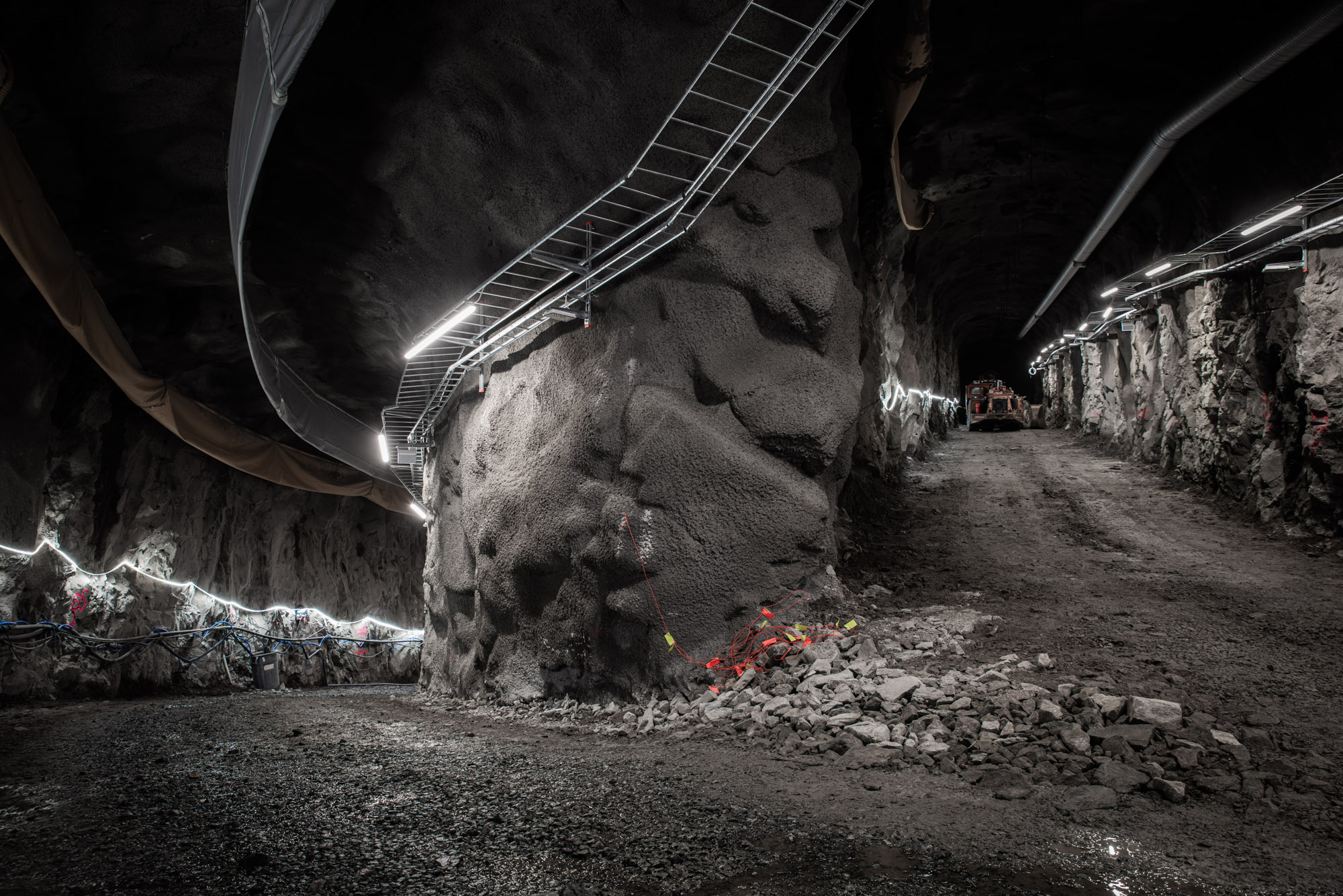
The 100-cubic-metre facility at Svartöberget in Luleå, Sweden, entered a commissioning phase in June. Upon successful completion of tests, it reached the maximum operating pressure of 250 bar meeting all safety requirements.
It will now run a two-year test period to provide insight for a full-scale facility. The HYBRIT project will demand pressurised storage capacity for 100,000-200,000 cubic metres of hydrogen gas. At this scale, the facility would store up to 100 gigawatt-hour of hydrogen, enough to power a full-size sponge iron factory for about three to four days.
According to the Swedish companies, this is the first time in the world that lined rock cavern (LRC) technology is used for hydrogen storage, as opposed to typical natural gas.
“The fact that this technology is now working is great news, and is an important milestone in the development of a fossil-free value chain for ore-based iron and steel production,” comments Mikael Nordlander, Vattenfall director industry decarbonisation.
“The use of large-scale hydrogen storage means that the industry will have a more robust and plannable supply of hydrogen from fossil-free electricity, even when the electricity system becomes more dependent on the weather,” he adds.
Gabriela Farhangi UK
Market deadlock to last until year-end: Italian distribution
The Italian distribution sector is forecasting slow sales throughout the value chain to continue until the end of the year for long products and coil derivatives. Some restocking may happen towards December to accommodate year-end financials.
Companies tell Kallanish the second and third quarters have been weak in terms of sales volumes, with apparent demand at virtually zero. While real demand is still there, the strong September price increases announced by all producers on finished long and flat products have further slowed sales. Some sources believe price falls may trigger a demand resumption.
“We are going back to a normal level of demand, but we are all used to the huge sales volumes of last year caused by the post-pandemic rebound and producers do not want to lower their volumes and price expectations,” a distributor comments. Due to the market stagnation, some companies are beginning to delay payments as financial struggles are again resurfacing in the market.
Significant overcapacity is being reported for coil derivatives, such as welded tubes and sheets. Welded tube discounts are hovering at 20 points and sheet prices are also falling significantly. Some sellers remain aggressive on tube and sheet prices, with the aim of recovering volumes.
Increases for merchant bar did not stick and prices flattened at €670-690/t ($670-690) ex-works. Some sales, however, are happening for sections, for which steelmakers are quoting at €1,300/t ex-works for the first category including size extras. They are being challenged by imported material sold at €1,230-1,250/t delivered in Italy. Following the latest increases, many firms are importing cheaper rebar, wire rod and sections, sources suggest.
Natalia Capra France

Bureaucracy to impede green transition in Germany: conference
The transition to low-emission steelmaking will not only be costly, but will also mean additional struggles with slow-moving authorities to get permissions and approvals, said speakers at the ecoMetals Day in Düsseldorf this week.
In a presentation attended by Kallanish, lawyer Michael Neupert addressed typical hurdles, for example, when it comes to plan pipelines for hydrogen. “In one of the federal states, they had all of one person in charge for the permission of pipelines. I got hold of him regularly after 8pm – not a conventional time for public servants to works,” he said. “And when that one person leaves, who will have the knowledge to fill in?”
The shortage of personnel was also bemoaned by the head of Salzgitter’s SALCOS project, Martin Zappe, He defended the people working at the offices as truly committed, but they are overworked. “When we come knocking with 35 projects items that need to be cleared, their department needs to hire additional personnel,” Zappe said.
Nepert recommended to be early with applications especially when inland waters are under consideration: “That is a typical bottleneck you need to address at an early stage,” he warned. “Water protection is not trivial; they are very strict with it, especially when water shortage becomes an issue, as has been the case with the recent draught waves.”
Even minor measures to improve the green footprint, like insulation to preserve energy, face delays – a problem addressed by Guther Kegel, president of ZVEI, the German Electro and Digital Industry Association. “Even a plain application for insulating your building façade takes seven months,” he said in his keynote speech. “Now that energy preservation has become a broader topic, such applications may wait four times that. We absolutely must cut down on regulation that goes too far.”
Christian Koehl Germany
UK steel output to hit ‘record low’ this year; 2023 prospects uncertain: UK Steel Forum

The UK steel industry is set to produce at a record low this year, its lowest since World War II, and it’s hard to say if 2023 will see an upturn, an official with the UK-based International Steel Statistics Bureau said Sept. 22.
Output is set to fall to below 7 million mt of crude steel in 2022, from 7.2 million mt in 2021 and 7 million mt in 2020 when it suffered a COVID-19-related markets slump, said Steve Andrews, the bureau’s commercial manager, at the first UK Steel Forum. The forum was held in London and organized by a group of six steel industry associations including producers’ group UK Steel, UK-based International Steel Trade Association ISTA and European steel distributors’ association EUROMETAL.
This year’s fall in output occurs in a context of falling steel production globally, Andrews noted. The World Steel Association announced Sept. 22 that global crude steel production was down 5.1% on the year in the January-August period, to 1.25 billion mt: the only region to show an increase in output during the period was the Middle East, which has suffered less with energy price rises than other regions in recent months.
“UK steel production has been falling for decades,” Andrews said at the event, convened by the six associations with a view to enhancing mutual cooperation to the benefit of the overall industry. “In 2000 UK production was 15 million mt, and now it’s half that level.”
The sector lost some capacity around six years ago on Teesside, with the closure of the Sahaviriya Steel Industries UK (SSI) steel slab plant, he said.

‘Subdued’ second half
In the UK, the second half of the year will be “subdued” in terms of market demand, particularly in the automotive sector, while “rampant” inflation — currently hovering around 10% on an annual basis — will have a knock-on effect on consumer confidence and spending, Andrews said.
Construction industry PMI indicators at below 50 are at their lowest level for “quite some time”, and a dampener on the market, the ISSB executive continued. On the brighter side, a recovery in the aerospace sector supports production of specialized products, while a higher oil price could support the tube and pipe market.
Steel import levels into the UK at 3.15 million mt in January-June this year were virtually stable on the year, though slightly less originated this year from the European Union, which supplied 58% of the total, and slightly more from the rest of the world, which supplied 42%, according to ISSB data.
Other factors seen impacting the health of the UK steel sector this year are the increasing energy costs which have more than offset the benefits of lower raw material costs, a large disparity between prices in Asia and Europe and higher interest rates threatening mortgage availability.
ISSB figures show that in 2020 it cost just over GBP400 ($450.20), including electricity and other costs, to produce a metric ton of long steel via an electric arc furnace in the UK, and in August 2022 it cost around GBP790/mt. Now, even with the energy price cap introduced Sept. 21 by the UK government for the October 2022-March 2023 period it will cost around GBP970/mt, which is currently above average market prices for long products in Northern Europe.
Platts assessed domestic EXW NW Europe rebar at Eur960/mt ($944/mt orGBP834/mt) Sept. 21. Platts is part of S&P Global Commodity Insights.
UK Steel Director General Gareth Stace said that what is important to UK steel producers is “the relative price of energy compared to our competitors rather than the absolute price.”

With the new energy price cap introduced by the government, UK steelmakers will now be paying less for their energy than German and French steelmakers although “we expect the German and French governments to take further action,” Stace said. With the price cap, UK producers will be paying GBP199/Mwh, compared to GBP278/Mwh in Germany and GBP217/Mwh in France, Stace said.
Stace added that there are expectations that the UK steel sector will grow in future.
However, “investments will come only if the government creates a competitive business landscape, including competitive energy prices and business rates, and if the government is able to create a market for green steel, favoring green steel from the UK to go into infrastructure projects,” he said. “Energy is still five times higher than the last five-year average,” he said.
The UK’s crude steelmakers belong mainly to foreign-based groups: Tata Steel UK (a subsidiary of India’s major Tata industrial group); British Steel (acquired by China’s Jingye Group in 2020); Liberty Steel, owned by Sanjeev Gupta’s GFG Alliance; Spanish Celsa Steel, Finnish Outokumpu; and UK Ministry of Defence-owned Sheffield Forgemasters. There are also numerous rolling and distribution facilities.
— Diana Kinch