

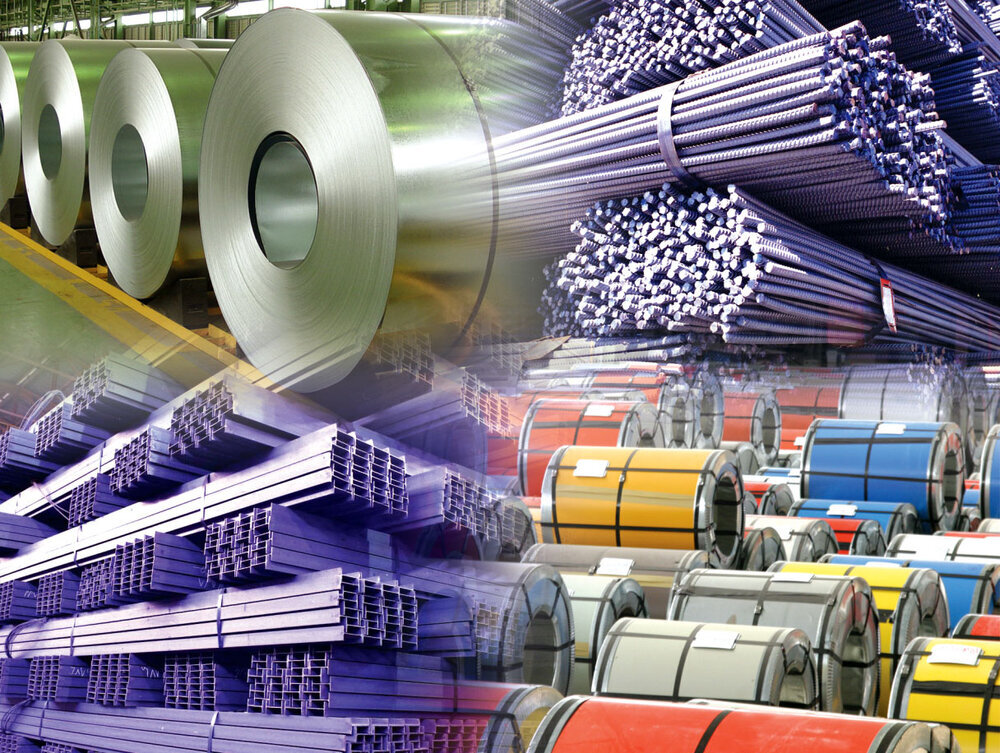
Steel industry leaders support decarbonisation plan
Steel industry leaders are showing support for the Mission Possible Partnerships’ (MPP) decarbonisation plans in order to meet emissions’ standards goals outlined by the Paris climate agreement.
Kallanish understands that several international steelmakers including ArcelorMittal, Liberty Steel, SSAB, Tata Steel, Thyssenkrupp, and Vale have joined alongside nearly 200 other industrial leaders to back the organisation’s plans to help meet the Paris Agreement’s goal of curbing global heating to 1.5 degrees above pre-industrial levels by 2050.
“This strategy has laid down the challenges for the steel industry to decarbonise. We are collaborating with suppliers, downstream partners, start-ups, academia, and communities within our area of influence to work towards mitigating the threat of climate change,” explains Tata Steel’s vice president for safety, health, and sustainability Sanjiv Paul.
According to the Mission Possible Partnerships, the international steel industry combined with both the aluminium and renewable energy industries accounts for nearly 17% of global greenhouse gas emissions.
“Support for these strategies from more than 200 industry leaders sends a signal of hope: companies around the world are committed to invest at scale for a net zero-emissions economy,” adds Faustine Delasalle, vice chair for a founding MPP partner, Energy Transitions Commission.
Zach Johnson USA


Georgsmarienhütte signs supply contract for green electricity
Georgsmarienhütte Group has agreed a power purchase agreement (PPA) with northern German energy supplier EWE for its electric arc furnace-based steel plant in Georgsmarienhütte near Osnabrück, Germany.
Through the Burhafe solar park in East Frisia, Georgsmarienhütte GmbH is expanding its share of green electricity, which has already partly been fed by wind power. In total, about 30% of the Georgsmarienhütte steelworks’ electricity needs will be covered by sustainable renewable energies in the future, Kallanish learns from the maker of special bar quality steels.
Earlier, GMH Gruppe, distribution company Heine + Beisswenger, and Sandvik Coromant founded a green steel partnership among medium-sized companies to reduce CO2 emissions along the supply chain.
GMH Gruppe will contribute CO2-neutral steel bars and the transport of the material by LPG-powered trucks. As the distributor, Heine + Beisswenger will make maximum use of renewable energies, including green logistics to the customer. Tool manufacturer Sandvik Coromant will provide final machining services. The results of the CO2 balances will be audited and certified by external bodies.
Christian Koehl Germany
Green trend could restructure business relations
The ambition of many industries, especially in the EU, to offer low-emission products could create new business connections between end users and steel producers.
Processor companies may increasingly seek relations with upstream steelmakers to make sure they get low-carbon steel and secure volumes they would normally receive from intermediate sources. “Quite a number of companies are coming knocking that we have not served before,” a source from a steelmaking company told Kallanish on the sidelines of the ecoMetals day in Düsseldorf last week.
The electric arc furnace mill uses most steel it makes for in-house rolling, but also releases a six-digit tonnage to the market, for example for further hot-rolling of billet and slab at other operations. Recently, it received requests from cold-roller companies as well, which is a relatively new twist. “On the EAF route, our steel comes with lower emissions than that from the blast furnace route, which is attractive to downstream companies that normally buy from our customers,” he says.
Cold-rollers of strip to a large extent serve automotive and other sophisticated industries, where low-emission products are gaining increasing relevance. This is partly because of OEMs’ own ambitions, partly for a greener image, and partly because their customers increasingly ask for it. As a consequence, processors are now trying to contract volumes from primary sources, before the product gets forwarded to the first rolling stage.
Christian Koehl Germany

Spain’s Sidenor halts Reinosa rolling mill
Spanish special steelmaker Sidenor says it is halting production at the rolling mill at its Reinosa plant in northern Spain. The measure is effective from 26 September, Kallanish notes.
Last Friday, the company’s management held an extraordinary meeting with representatives of the workers’ council to inform them that 16 of the 138 workers on the production line will be affected by the decision. They will however be relocated to other facilities, without the need to apply the so-called temporary employment regulation – ERTE.
“The reason for the production cut is based on the soaring energy prices. Electricity has grown 153% since last year, while gas did so by 521%,” Sidenor says.
The rolling mill produces special steel bar for the automotive sector.
Todor Kirkov Bulgaria

EU apparent flats demand seen bottoming out: supplier
Apparent steel demand for flat steel products in Europe has been decreasing for months, but the bottom of the negative cycle is now in sight, according to a senior source at a major European flats supplier.
Mills are seeing apparent demand in Europe bottoming out and hope that a mild rebound will materialise in the coming weeks, as buyers prepare orders for the first quarter of 2023.
“Destocking aggressively intensified since mid-August among distributors and service centres in Europe,” the source confirms to Kallanish. “We expect a different approach in early Q4. All negative factors impacting the market have now been factored in; some positive signs from the demand side could be looming.”
In its latest outlook published in August, Eurofer indicated that apparent steel demand in Europe should move down 2.6% year-on-year in Q4, following falls of 4.3% and 5.9% in Q3 and Q2 respectively. A strong rebound of 6.2% is expected in Q1 2023.
“The negative sentiment in the market hit in September harder than expected, but now demand is bottoming out or even trending up,” the source adds. “Sentiment will also be lifted by the effect of production cuts at European mills, having a real impact on the market from October onwards.”
The source calculates that some 20% of European flat steel supply could have been temporarily idled in recent weeks and months. Other observers believe this percentage could go up as high as 24%.
Flats demand has suffered strongly from the ongoing weakness of the automotive sector in Europe. The source notes, however, that while automotive production in Europe has been running at low levels for some months now, there are some small encouraging signs coming from steel shipments and demand from OEMs.
According to the latest figures issued by ACEA, new European car registrations in August marked the first positive y-o-y monthly growth (+4.4%) since Q3 2021.
Emanuele Norsa Italy

EU HRC market sees slow activity as mills, buyers show different market outlook
Trading activity in the European hot-rolled coil market remained low on Sept. 26, while steelmakers and distributors showed different views on market fundamentals.
The mood among buyers has been strongly bearish due to high stocks of flat steel they had accumulated as a result of panic buying in the first half of the year following Russia’s attack on Ukraine. Additionally, weaker demand from end consumers added to the bearish mood, and a majority of buy-side sources believed that neither demand nor prices would recover in the short run.
Steelmakers, in the meantime, highlighted that the production cuts and furnaces stoppages across Europe were expected to have a strengthening effect on prices, resulting in more balance supply and demand. Market sources estimated that steelmakers capacities dropped about 20%-25%.
In addition, the automotive industry and some other end consumers have been showing some signs of demand recovery, steelmaker sources said.
“[The] Automotive industry in Germany is not kicking up, but in France and some other countries the demand from carmakers is good,” a Northern European producer said.
Platts assessed hot-rolled coil in Northwest Europe at Eur740/mt ex-works Ruhr on Sept. 24, up by Eur5 day on day.
A Northern European producer reported transactions for HRC done by German mills at Eur720-750/mt ex-works Ruhr.
A trader estimated tradable value at Eur740-750/mt ex-works Ruhr. Another trader said that although official offers from German mills have been as high as Eur800/mt ex-works Ruhr, prices of Eur730-760/mt ex-works were still achievable.
A Southern European producer reported offers at Eur800-820/mt delivered Germany, the equivalent of Eur740-770/mt ex-works Italy.
Platts assessed hot-rolled coil in southern Europe stable on day at Eur750/mt ex-works Italy Sept. 26. The assessment was based on achievable prices heard at Eur740-760/mt ex-works Italy and official offers reported at Eur780/mt ex-works Italy.
Platts is part of S&P Global Commodity Insights.
— Maria Tanatar

Arvedi resumes production at its EAFs mill in Cremona
Arvedi, Italy’s largest flat steel producer, has restarted production at its mill in Cremona, northern Italy, after previously suspending output amid high raw materials costs and low demand, an executive close to the company told S&P Global Commodity Sept 26.
On Sept. 22, Arvedi restarted one electric arc furnace and and the other on Sept. 23, while one of its EAFs in Terni was still in a planned outage.
Arvedi’s two electric arc furnaces have capacities of 1.4 million mt/year of crude steel 2.6 million mt/year.
According to sources, it was not clear yet what Arvedi was planning to do in Cremona in October with the company still pondering the market but hoping to continue production.
A spokesperson declined to comment on output from Cremona’s EAFs but confirmed that one of the two EAFs at its plant in Terni was still not in operation.
The two EAFs in Terni have a combined capacity of around 1.1 million mt/year.
Steelmakers across Europe are cutting production to sustain prices in moves that steel end users hope will continue to rebalance demand and re-stabilize margins.
Platts assessed hot-rolled coil in southern Europe stable on day at Eur750/mt ($724/mt) ex-works Italy Sept. 23. The assessment was based on offers and achievable prices heard at Eur740-780/mt ex-works Italy.
— Annalisa Villa, Maria Tanatar

German August steel sales rise slightly on year, stocks elevated
Sales by German steel stockholders and distributors increased marginally year on year in August, while stocks rose as economic uncertainty and high energy costs hurt activity in most end-user sectors.
Total sales of steel products were up 0.2% year on year and 6.1% month on month at 836,707 mt in August, data from German stockholders and distributors association BDS showed Sept. 26.
Flat product sales increased the most with volumes up at 499,825 mt in August, from 492,927 mt a year ago and 459,016 mt in July.
Long product sales rose to 277,854 mt in August, from 262,653 mt a year ago and 261,685 mt recorded in July.
High stocks
Stocks of all steel products in the German stockholding and distribution segment rose 5.1% year on year to 2.22 million mt in August but fell 2.2% month on month from July, when they reached 2.27 million mt, the highest since 2019.
Stocks of long products slipped to 782,198 mt in August, from 788,585 mt a year ago, while stocks of flat products rose to 1.40 million mt, from 1.30 million mt, over the same period.
Germany continued to produce lower crude steel volumes as steel output declined for six straight months in August, S&P Global Commodity Insights reported earlier. The output fell 2.3% year on year to 2.87 million mt in August as steelmakers temporarily cut production.
Hot-rolled coil prices in Northern Europe were at Eur850/mt ($842/mt) ex-works Ruhr at the beginning of August and closed at Eur780/mt base ex-works Aug. 31, according to S&P Global data. Platts, part of S&P Global, assessed hot-rolled coil in Northwest Europe at Eur735/mt ex-works Ruhr Sept. 23, unchanged day on day.
— Annalisa Villa