


Steel plate prices stabilize in Italy, Northern Europe amid sufficient trading activity
Steel plate prices in Italy and Northern Europe flattened in the week to Wednesday September 28 amid sufficient daily demand, while the availability of cheap slab has had no effect on the Italian market yet, sources told Fastmarkets.
Italy
Sources reported that trading activity in Italy’s plate market has been quite good during the month of September.
Local re-rollers are reportedly sold out until mid-November.
During the assessment week, transactions for small volumes of steel plate with end-November/early-December delivery were reported at €970-1,000 ($933-962) per tonne exw, which is largely unchanged from the preceding week.
The downtrend in import slab market has had no effect on the local plate prices so far, sources said.
Notably, South Korea-origin slab was offered to Italy at $580-610 per tonne cfr during the week to September 23, depending on the volume.
In fact, sources said that they are currently using slab bought at higher prices, while high energy costs in Europe were offsetting any benefit of being able to acquire lower-cost slab.
The average monthly wholesale electricity price in Italy was around €431.47 per megawatt hour in September, up sharply from a monthly average of €158.59 per megawatt hour in September 2021, according to local energy service company Gestore dei Mercati Energetici.
Fastmarkets’ weekly price assessment for steel domestic plate, 8-40mm, exw Southern Europe, was €970-1,000 per tonne on Wednesday, unchanged from the preceding week.
In the secondary market, steel plate was offered and traded at €1,050-1,070 per tonne cpt, but traded volumes were quite limited, sources said.
Northern Europe
Fastmarkets’ weekly price assessment for steel domestic plate, 8-40mm, exw Northern Europe, was at €1,100-1,150 per tonne on Wednesday, also unchanged week on week.
The assessment reflects the lower end of offers, deals and market sources’ estimates of achievable prices.
Offers from integrated mills in the region were reported at €1,150-1,200 per tonne exw, while buyers’ estimations of tradeable prices were heard at €1,070-1,100 per tonne exw.
Trading activity in the region was still subdued, with mainly small tonnages traded, sources said.
“Buyers tend to concentrate on selling off their devaluing stocks rather than buying new tonnages,” a local trading source said.
Local integrated mills have good order books, mainly thanks to projects, including those involving offshore wind turbines, shipbuilding and bridge construction.
Alternatively, demand from mechanical engineering industries was quite low.
Italy-origin plate was sold to Germany at €1,050-1,070 per tonne cpt during the week.
Published by: Julia Bolotova


Weak demand, cheaper imports put pressure on European flat steel prices
European flat steel prices were stable to slightly weaker in the seven days to Wednesday, September 28, amid limited end-user demand, overstocking and competitive cold-rolled coil import offers, sources told Fastmarkets.
The subdued demand from key end-user sectors – including the automotive industry – that have high stock levels, has kept trading activity at a minimum in the cold-rolled and hot-dipped galvanized (HDG) coil markets across Europe.
European mills are trying to keep their offer prices unchanged because of rising costs, but buyers have been refusing to pay, claiming they are unable to pass on any increases to downstream customers.
CRC
Official offers for CRC in Italy were reported at €870 ($837) per tonne exw, while prices were closer to €900 per tonne exw in Northern Europe.
Buyers said an achievable price level would not exceed €850 per tonne exw, with some transactions reported at €830-850 per tonne exw in Southern Europe for November-delivery CRC during the week.
Fastmarkets’ weekly price assessment for steel CRC, domestic, exw Southern Europe, was €830-850 per tonne on Wednesday, narrowing down by €20 per tonne from €850 per tonne on September 21.
Market participants said, that some suppliers from Japan were being quite aggressive, offering CRC with early first-quarter 2023 delivery at €770 per tonne cfr Italy, while offers from Taiwan were reported at even higher levels – €800-810 per tonne cfr Italy.
Fastmarkets’ corresponding weekly price assessment for steel CRC, domestic, exw Northern Europe, was €830-850 per tonne on Wednesday, narrowing down from €850 per tonne seven days earlier.
HDG
Fastmarkets’ weekly price assessment for steel HDG, domestic, exw Southern Europe, was €870-890 per tonne on September 28, stable week-on-week
Trading activity in Italy’s HDG market has been subdued by non-existent end-user demand and high stocks at buyers, although local mills were still offering HDG for November delivery, sources said.
Some overseas HDG was on offer from India and Southeast Asia at €940-950 per tonne cfr for 0.5mm HDG, but these price levels were not considered workable by buyers.
Fastmarkets’ corresponding weekly price assessment for steel HDG, domestic, exw Northern Europe, was €870-890 per tonne on September 28, widening down by €10 per tonne from €870-900 per tonne seven days earlier.
Producers of HDG in the region were targeting €930-950 per tonne exw, while buyers were looking to pay closer to €870-890 per tonne exw, sources told Fastmarkets.
Published by: Julia Bolotova
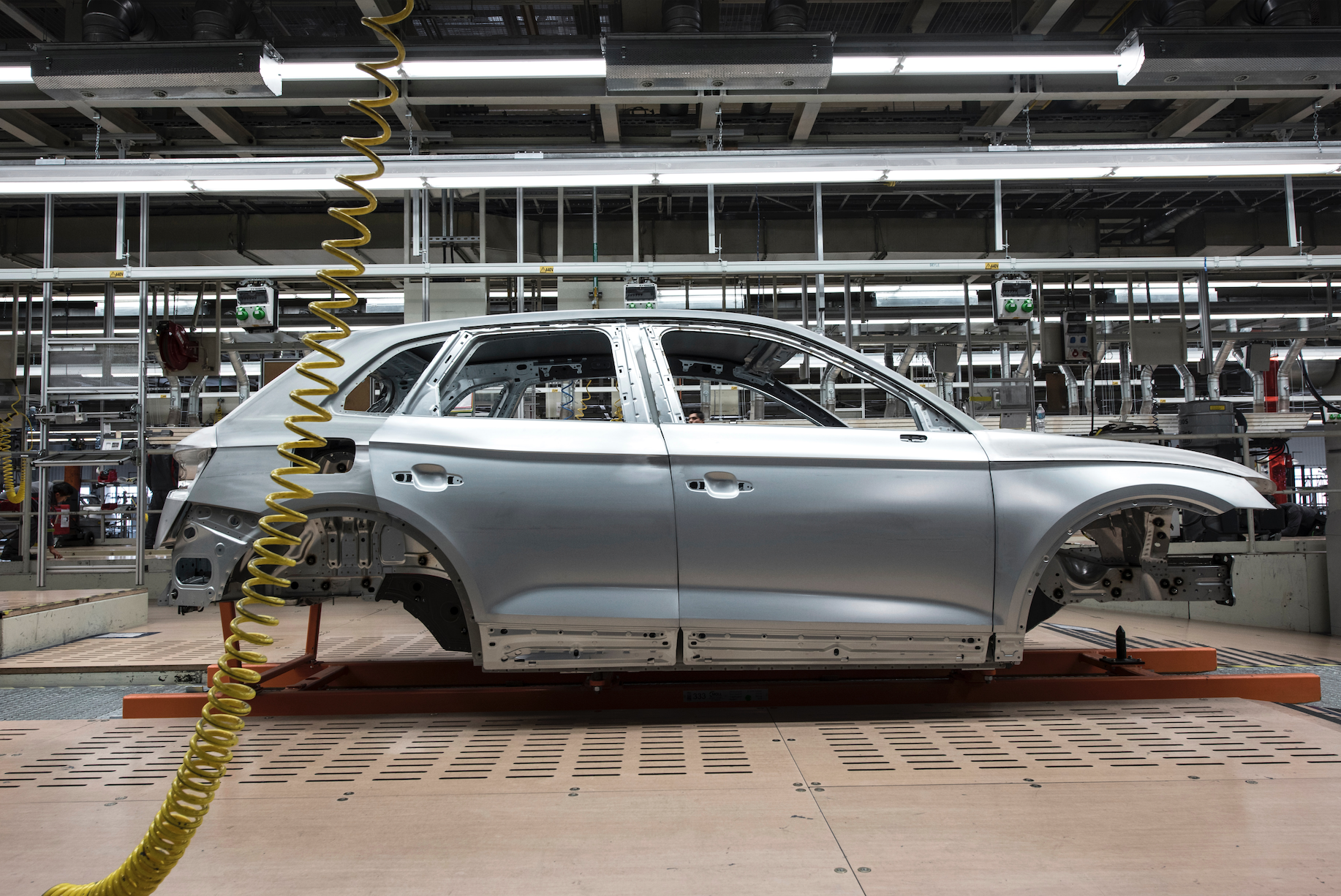
Auto suppliers need stockkeeping support from carmakers: conference
Suppliers to the automotive industry need to put more emphasis on maintaining stock for longer periods, a challenge brought by the ups and downs in demand from carmakers in recent times, Kallanish heard at an industry meeting this week.
Most of all, the suppliers need the support of carmakers to be able to maintain larger stocks, which they get for electronics more than for steel parts, says Wojciech Dembinski of Westfalia Automotive. At the MBI Stahltag conference in Frankfurt, he spoke about the risks of fluctuations in car production, in correlation with unforeseen supply shortages.
His company manufactures towbars – a steel-made element coupled with microcontrollers. Over the past two years, it has repeatedly faced the situation of carmakers not calling off the towbars at the projected times in the course of an annual contract. This means a challenge for a supplier’s own inventory management. “Rather than lowering their demand right away, carmakers instead tend to push their intake further back,” he said of a typical conflict of interest between the two sides.
Lately, though, he has observed more willingness from carmakers to make concessions. “Meanwhile, they ask us proactively to keep up our inventories ready for six months,” which he says is a consequence of the shortages seen for semiconductor chips and for wire harnesses from Ukraine.
However, he is missing a similar tolerance from carmakers for the pure steel parts, which they consider the supplier’s business to take care of. “We need to convince them to assume some responsibility for the steel parts, too,” Dembinski told Kallanish on the sidelines of the event.
Christian Koehl Germany

Celsa creditors present restructuring plan to court
Creditors of Spanish electric arc furnace-based steelmaking group Celsa submitted a restructuring plan to a court in Barcelona on Monday, Kallanish learns.
According to a statement issued by the creditors, the restructuring plan aims to “provide a comprehensive solution to Celsa´s financial situation, reducing its indebtedness by €1.29 billion [$1.24 billion] through the capitalisation of the convertible debt and part of the jumbo debt”. The proposal also foresees a five-year extension of the maturity date for the remainder of the liabilities, as well as maintaining Celsa´s operations centres in Spain and employment across the entire group.
After months of negotiations over the restructuring of Celsa´s debt of €2.8 billion, the latest action has coincided with the entry into force of Spain’s new bankruptcy law on 26 September. This opens the possibility for creditors to be able to present a plan in court, without this implying an insolvency proceeding or the suspension of payments.
“The plan reduces the debt below the levels previously proposed by the company, thus guaranteeing the continuity of the business in the long term. It offers a solution secured with totally private capital and does not contemplate or require any financing from Spain’s public fund, Sociedad Estatal de Participaciones Industriales (SEPI) and taxpayers,” adds the statement.
The creditors, who represent 90% of the jumbo debt and 89% of the convertible debt, have asked the court to appoint an expert to guarantee the progress of the restructuring plan, which could mean that the investment funds take over 100% ownership of the Rubiralta family-owned steelmaker.
“Celsa Group will continue negotiating with investment funds as it has been doing in recent months,” says the steel company. “The company, which acts with the utmost transparency, is sure that common sense will prevail and a beneficial agreement for all parties will be reached shortly.”
Celsa is the largest private industrial group in Spain, with its main steelmaking activities near Barcelona and in the north of the country. Outside Spain, the group produces steel in France, the UK, Norway and Poland.
Todor Kirkov Bulgaria

Danieli forecasts another good year on green steel plants and machinery orders
Italian engineering company and steel producer Danieli has published a bullish outlook for the upcoming financial year, expecting a significant order book as its customers invest in new green steel plants and more efficient and sustainable steel production.
This will continue to sustain voumes and margins within Danieli’s Plantmaking segment, the company said in its 2021-22 earnings statement.
Danieli said it expects the steel market to continue to perform well even as “it foresees the possibility of distortions or slowdowns, especially in Europe due to the energy crisis triggered by the sanctions applied to Russia, a situation that without corrective action by the European markets authority could continue into 2023 as well.”
The company stressed that all steel producers are becoming increasingly committed to running their plants sustainably and reducing energy consumption with mills that are increasingly flexible.
According to Danieli, the average plant utilization factor, compared to the maximum theoretical level, is stable at 80%-85% after the most polluting plants were shut down in China and plants with more modern technologies started up in India.
During the period from July 1, 2021, to June 30, 2022, Danieli’s steelmaking unit, ABS Group, which produces long special steel products, sold about 1.3 million mt, up from 1 million mt in the same period the previous year, and the company aims to maintain or further increase these volumes in the next year.
Danieli also said that it will bring its Croatian unit ABS Sisak and the new wire rod and ball mills at ABS S.p.A. up to maximum efficiency.
The company also said that ABS Group is mulling a major new investment plan of around Eur700 million to increase production volumes by about 1 million mt with the distinction of being the only steelworks to produce quality steels in a range of products from 5.5 to 500 mm diameter on a single site.
Platts, part of S&P Global Commodity Insights, assessed TSI Northwest European rebar at Eur802/mt ex-works Sept. 27, down Eur13/mt week on week.
— Annalisa Villa


Steelmaker ArcelorMittal, Zeleros to collaborate on hyperloop project in Europe
ArcelorMittal’s rail business in Europe and European hyperloop developer Zeleros are collaborating to find the right steel material to scale up Zeleros’ hyperloop to perform in ultra-high-speed conditions, the companies said Sept. 28.
A hyperloop is an ultra high-speed transportation system for public and goods transport.
As part of the collaboration, the partners have built a spinning wheel facility to test how certain steels perform in ultra-high-speed conditions.
The testing facility, built at ArcelorMittal’s Rail Excellence Centre in Spain, can reach linear speeds of up to 500 km/hour, the two said.
The results of the testing would “provide data to further advance the selection of the best steels for hyperloop use, considering safety, energy efficiency, cost and scalability as the main decision criteria,” the companies added.
Platts, part of S&P Global Commodity Insights, assessed TSI Northwest Europe Rebar at Eur802/mt ex-works Sept. 27, down Eur13/mt on the week, while European domestic steel section prices strengthened on the week to Sept. 27, as mills remained firm at elevated levels.
“Thanks to the continuous improvement of steel, we can radically reduce infrastructure costs and assure energy efficiency and infrastructure viability,” Zeleros Chief Technology Officer Daniel Orient said.
“The work we have been doing with Zeleros reflects the importance we place on our involvement in innovative projects using steel in infrastructure and transportation, and that contribute to reducing CO2 emissions,” according to Nicoleta Popa, portfolio leader for Construction Applications, Infrastructures and Long Products at ArcelorMittal Global R&D.
The two companies have been in partnership since 2017 with ArcelorMittal’s R&D centers and Zeleros jointly developing together studies to analyze the way in which materials behave in high-speed conditions, measuring the main characteristics for hyperloop technology, such as the electromagnetic properties of steels as hyperloop designs propose the use of magnetic levitation.
— Annalisa Villa

Demand in the European CRC, HDG market minimal
Trading activity in the European cold-rolled and hot-dipped galvanized coil market has been close to zero in the week to Sept. 28 due to high distributor stocks and reduced demand from end consumers.
Distributors still have high inventories of the downstream coil as a result of panic buying that followed Russian attack on Ukraine. The stocks reduction has been slow due to limited demand from major end-users, such as automotive and white goods industries.
In Northern Europe, cold-rolled coil was down Eur5/mt on week, assessed on the day at Eur835/mt ex-works Ruhr. Hot-dipped galvanized material was also down by Eur20/mt on week to Eur870/mt ex-works Ruhr.
Offers and tradable values for CRC have been reported at Eur820-850/mt ex-works Ruhr. And offers and achievable prices for CRC have been reported at Eur850-900/mt ex-works Ruhr.
European steelmakers have also been showing little interest in sales of commodity grade CRC and HDG due to high production costs.
Several mill and trader sources said that current prices have been at least Eur100/mt below production costs.
“Price for HDG needs to be at least Eur1,000/mt ex-works to cover costs and for CRC minimum price that mills need is Eur950/mt ex-works,” a Northern European mill source said.
The main reason behind a significant cost jump were surging energy prices in Europe. Impact from the higher costs has been limited for hot-rolled coil, used as feedstock for CRC and HDG. But for the downstream coil the situation has been different, sources said.
“Traditionally CRC has about Eur80-100/mt premium over HRC, but with chase in energy prices it should be substantially higher,” a German source said.
Platts assessed hot-rolled coil in Northwest Europe at Eur735/mt ex-works Ruhr Sept. 28.
Platts is part of S&P Global Commodity Insights.
— Maria Tanatar