


Italian authorities greenlight Cognes Walsin Lihwa acquisition
The Italian prime minister’s office, Presidenza del Consiglio dei Ministri, has issued the official approval for Taiwan’s Walsin Lihwa’s buyout of Italian long stainless steelmaker Cogne Acciai Speciali (CAS), Kallanish learns from Cogne.
Approval has also come from the Ministry of Economic Development (Mise) and Taiwan’s antitrust authority. The deal closing will be concluded before the end of the year.
In June, Walsin signed a contract to buy 70% of CAS. The partner will invest over €110 million ($98.1m) in Cogne’s Aosta plant between 2022-2024. The growth strategy involves gaining market share in Europe and Asia and developing the group’s presence in the US. Cogne confirms it intends to boost output by adding shifts and hiring more workers.
The strategy is “to create the world’s largest group in the production of special long stainless steels, with concrete ambitions to further widen the perimeter of operations in Europe and the Americas,” Cogne president Giuseppe Marzorati said in June (see Kallanish passim).
Last year, Cogne achieved a turnover of €645m. Walsin Lihwa’s Basic Material division, the company’s long stainless steel business, employs 7,000 workers and posted a €4.7 billion turnover last year.
Natalia Capra France

Decarbonisation should moderate falling steel demand: BHP
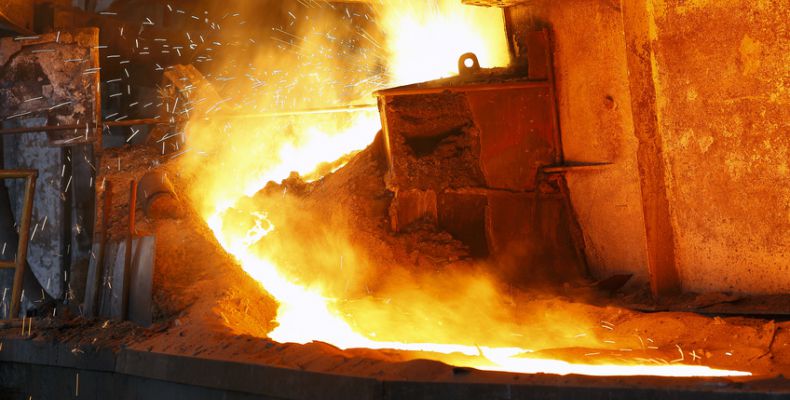
Mining giant BHP has raised its global finished steel demand forecasts for 2030 and 2050 as decarbonisation of power is expected to boost steel consumption, Kallanish notes.
Compared to the previous tonnages, the firm has lifted its forecasts for steel consumption by 2% or 42 million tonnes for 2030, and 4% or 76mt for 2050, due to increased demand from green power.
The figures were released in a presentation to analysts on a site tour this week. Though the presentation did not include absolute numbers for BHP’s steel demand forecasts for 2030 and 2050, the revision in both absolute and percentage terms implies 2030 and 2050 demand are forecast at around 2.1 billion tonnes and 1.9 billion t respectively. Demand would therefore still decline by some 200 million t between 2030 and 2050.
“Looking solely at steel demand from the wind and solar segment, it is expected to increase five-fold from today to 2050,” BHP says.
According to BHP, power generation currently provides less than 2% of global steel demand.
“That is expected to triple by 2050, noting every percentage point increase in share in that year will equate to between 20mt and 25mt,” it says.
BHP notes the decarbonisation of power will be dominated by onshore wind and solar photovoltaic (PV), with complementary roles to be played by offshore wind, hydro and nuclear energy.
Where pure steel intensity per megawatt of capacity is concerned, wind and hydro power are the clear standouts, it says.
It also says offshore wind capacity requires 190 tonnes of steel per MW, and onshore capacity requires 124t.
Hydro capacity requires 161t, while solar is less steel intensive, at 45t per MW.
“But the sheer scale of the projected solar buildout makes it the second largest contributor to the overall uplift in steel demand from power generation, behind only onshore wind,” it says.
Siew Mung Tan Malaysia

Norway’s September EV sales slide 18.4% on year: agency
New zero emission electric or hydrogen vehicle sales in Norway fell 18.4% year on year in September 2022 to 11,384 units, according to the latest data released Oct. 3 by the Norwegian Road Information Authority.
The volume, however, was up 23.1% from August’s volume and was at a three-month high.
The volume made up 77.7% of the month’s total 14,646 new passenger car registrations, which was also 18.6% lower year on year due to the pandemic and the war in Ukraine creating major production and delivery challenges, although the volume was up 18.5% month on month.
“The figures for both September and the year so far underline the clear turnaround we see in new car sales: The vast majority want to ‘drive green,’ ” authority Director Øyvind Solberg Thorsen said.
“And in a very challenging time, manufacturers and importers have so far managed to deliver a high number of electric cars to customers who ordered a long time ago.”
For the first nine months of 2022, zero emission vehicles totaled 79,930 units, down 0.8% year on year and making up 77.8% of the total 102,760 vehicles sold in Norway during the period.
Increased demand for EVs has driven up battery metal prices, with Platts seaborne lithium carbonate and lithium hydroxide assessments surging 120.4% and 149.2%, respectively, since the start of 2022 to $74,500/mt CIF North Asia and $79,000/mt CIF North Asia as of Oct. 3, S&P Global Commodity Insights data showed.
Registrations of new hybrid cars in September dropped 19.7% year on year to 2,481 units, although this was up 5.3% from August, making up 16.9% of the total sales.
Of these, 1,669 were rechargeable hybrids and 812 were not rechargeable.
Meanwhile, sales of petrol engine cars amounted to only 327 units, or 2.2% of total new vehicle sales in September, the lowest market share since January 2022.
The total dropped 40.3% on the year but was also up 13.5% from the previous month.
Sales of diesel engine cars in Norway in September climbed 11.3% from a year ago but fell 3.8% from August to 454 units, a 3.1% share.
According to S&P Global, Norway’s plug-in light duty EV sales are forecast to reach 161,860 units in 2022, up from 147,120 units in 2021, with this rising to 200,520 units in 2025 and 206,800 in 2030.
Norway has been one of Europe’s front-runners in EV adoption, with its total 2021 light duty PEV sales ranking sixth in the world after China, Germany, the US, the UK and France, according to S&P Global.
EV sales have been boosted by government incentives, including no purchase/import taxes, exemption from 25% VAT on purchase, reduced annual road tax, 50% toll road and ferry charges, cheaper municipal parking fees and access to bus lanes, among others.
— Jacqueline Holman


Voestalpine invests near Eur200 mil on sustainable, digital research projects
Voestalpine has budgeted around Eur196 million ($192 million) for research and development in the current business year, the Austrian steelmaker said Oct. 3.
“Research and development play a major role at voestalpine,” said Herbert Eibensteiner, CEO of voestalpine AG. “By consistently investing in new products and processes, we are solidifying our position as a global player in demanding product segments. Another research focus is greentec steel.”
Greentec steel is voestalpine’s phased plan for green steel production on which part of the existing blast furnace route will be replaced by a hybrid electric steel route.
The first step will be reducing CO2 emissions by one third starting in 2027.
The company is studying how to produce high-quality steel with a different raw material mix as well as digital simulation methods and processes to prepare and support the transformation of steel production.
On the product side, voestalpine R&D is also examining the development of new digital and smart technologies such as “intelligent” cold-rolled steel strip, with conductor tracks for sensors integrated into a special high-quality coating layer.
Voestalpine is a key steel producer for flat products for the automotive and white goods industries as well as the aerospace and oil and gas industries.
Domestic prices for hot-rolled coil moved down in Europe Sept. 30 due to low demand from both end-users and distributors. Platts, part of S&P Global Commodity Insights, assessed hot-rolled coil in Northwest Europe at Eur730/mt ex-works Ruhr Sept. 30, down Eur5/mt on the day.
— Annalisa Villa
ArcelorMittal postpones shutdown of Bremen blast furnace, looks to reduce output at site
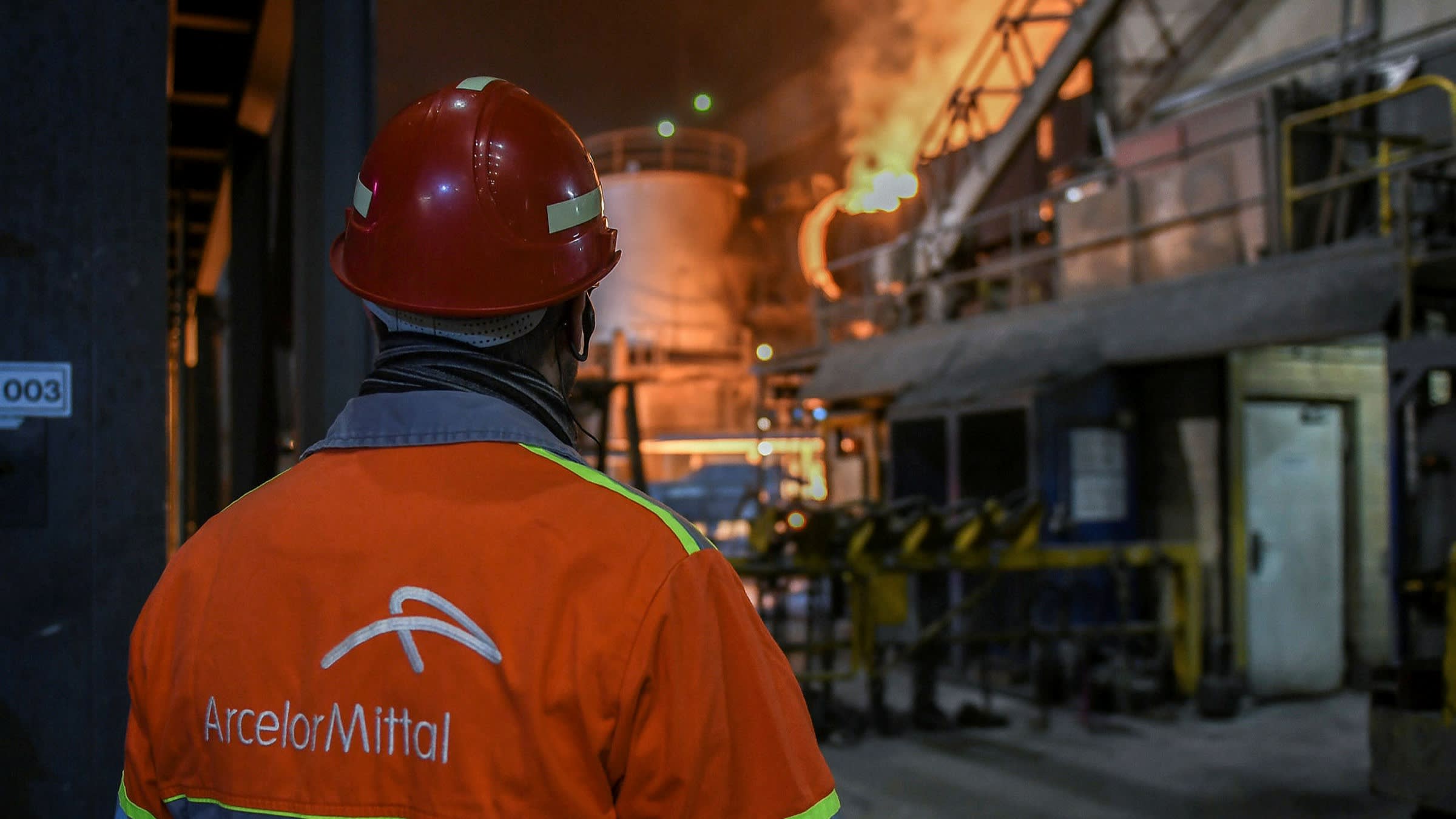
Steelmaker ArcelorMittal said it has postponed the shutdown of one of the blast furnaces at its Bremen site in Germany, and is instead planning to reduce the production of both blast furnaces at the mill in a move to reduce its power costs.
“As an energy-intensive company, we are dependent on our own power supply,” Reiner Blaschek, the CEO of ArcelorMittal Germany, told S&P Global Commodity Insights.
“With the decision to keep both blast furnaces running at a low production level, we are more independent and cost-effective with our own electricity supply. This is an advantage in what is currently a very volatile and difficult market,” he added.
At the beginning of September, ArcelorMittal Germany announced it would temporarily shut down parts of its production facilities at its sites in the country due to weak demand, negative market prospects and extremely increased energy costs.
This also included the 600,000 mt/year direct reduction plant at its Hamburg long steel plant. It said at the time that short-time work had already been in place at its Bremen and Hamburg plants and would remain at its production sites in Duisburg and Eisenhuettenstadt.
The two blast furnaces at Bremen have a combined capacity of 3.8 million mt/year. The company did not disclosed by how much production would be reduced by.
European steelmakers are currently experiencing low demand and high energy costs.
Domestic prices for hot-rolled coil moved down in Europe on Sept. 30 due to low demand from both end-users and distributors. Platts, part of S&P Global, assessed HRC in Northwest Europe at Eur730/mt ex-works Ruhr Sept. 30, down Eur5/mt on the day.
On Sept. 29, ArcelorMittal idled Blast Furnace A at its 4.5 million mt/year Gijon plant in Spain, as planned at the beginning of September, together with other temporary stoppages at sites in Poland and France.
In France, ArcelorMittal stopped production at its 1.8 million mt Blast Furnace 3 in Dunkirk Sept. 19, with relining started and due to last six to seven weeks, the company said.
In Poland, ArcelorMittal previously confirmed to S&P Global that the company’s 2.2 million mt/year No. 3 blast furnace would be idled some time in the first week to 10 days of October.
— Annalisa Villa

EU HRC distributors in ‘destocking mode,’ demand to return for Q1 purchasing
Transactional levels were relatively stable in the European hot-rolled coil market on Oct. 3, although market participants continued to lament unsatisfactory demand.
Distribution sources reported tradable value in a range of Eur700-730/mt ex-works Ruhr, although the sell side saw workable price levels higher at Eur720-750/mt ex-works Ruhr and Northern Europe.
Repeatable deals for commodity grades were confirmed at around Eur740/mt ex-works Northern Europe by a mill source.
Platts assessed hot-rolled coil stable on the day at Eur730/mt ex-works Ruhr. In South Europe, HRC was also assessed stable at Eur725/mt ex-works Italy.
Market participants reported service centers and distributors were in a destocking or wait-and-see mode, suggesting no intention to purchase substantially in the near-term. Steel consumption from core industries remained poor, limiting the rate at which distributors could deplete relevant inventories.
“The latest info we have from service centers and other distributors is that they are in a destocking or wait-and-see mode,” a mill source said. “General demand will stay down for a few weeks at least before buyers come back for [the first quarter] – prices could rebound then.”
Platts is part of S&P Global Commodity Insights.
— Benjamin Steven, Maria Tanatar